
Review · USA
Learn to Surf – Destin
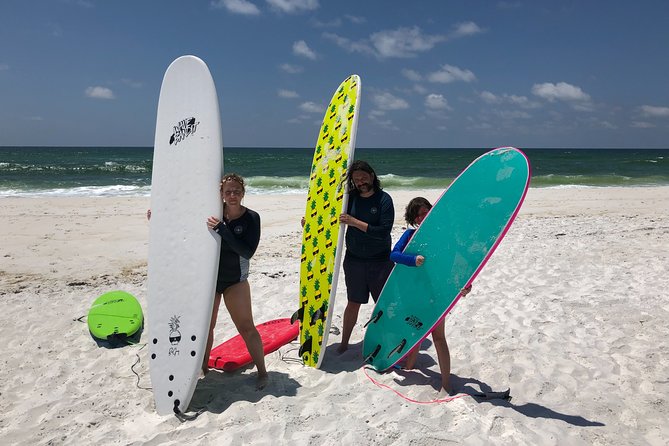
Learning to surf here is less about looking cool on a board and more about getting the basics right before you meet a wave. At Okaloosa Island, AC begins with conditions, marine life, safety, and etiquette, then works through the pop-up on land before helping you catch waves.
I like the small-group format, capped at 10 people, and the way instruction moves from dry-land practice to hands-on help in the water. I also like that the board rental and bottled water are included, so you can focus on learning rather than arranging extra gear.
The main consideration is weather. Surf conditions control the lesson, and you’ll need a moderate level of fitness for paddling, getting up from the board, and handling the water. Rash guards, wetsuits, and sunscreen are not included.
Key points to know before you book
- AC teaches the full beginner sequence: safety, etiquette, paddling, prone position, pop-up, and stance.
- The lesson begins at Okaloosa Island Pier: you meet there and return to the same point when the activity ends.
- The water portion is adjusted to conditions: the instructor decides how much time to spend on getting through the waves.
- A maximum of 10 people keeps the class personal: AC can help with line-up placement and push you into waves when needed.
- Board rental and bottled water are included: you need to bring your own sunscreen and surf clothing.
- Weather can change the plan: poor conditions may lead to a new date or a full refund.
Starting at Okaloosa Island Pier
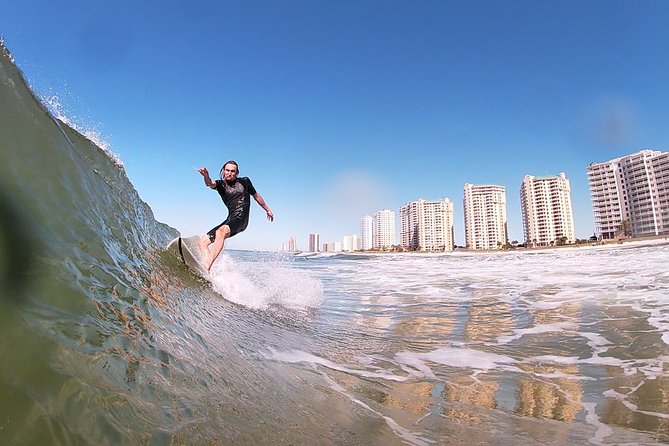
The lesson begins at Okaloosa Island Pier, in Okaloosa Island, Florida. This is both the meeting point and the end point, which keeps the logistics simple. You do not need to arrange a separate ride between the beginning and end of the activity.
The scheduled operating hours are 9 a.m. to 5 p.m., Monday through Sunday, for the listed operating period. Your booking confirmation will provide the details for your selected time, and the activity is available in English.
The pier is a sensible place to begin. You can meet your instructor, get oriented, and hear the first report on current water conditions and marine life before heading into the lesson. That opening report is more useful than it may sound. Surfing is not just about standing on a board. You need to understand where you are going, what the water is doing, and how to share the area safely.
The activity is near public transportation, which helps if you are staying nearby and do not want to drive. Still, the information provided does not specify parking arrangements, changing facilities, or a place to store belongings. I would plan your clothing and personal items with that in mind.
More Surf Lessons in the USA
- Maui: Two Hour Beginner Group Surf Lesson in Kihei
★ 5.0 · 950 reviews - Open Group Surfing Lesson in Waikiki, Hawaii
★ 4.5 · 582 reviews - Outrageous Surf ScHool Lesson on Lahaina Side
★ 4.5 · 547 reviews
The first 30 minutes: safety, stretching, and surf basics
The instruction starts with a group introduction, followed by a look at current conditions and marine life. Then comes water safety and surf etiquette. This is the right order for a first lesson. Before you learn to stand, you need to know how to fall, how to avoid interfering with another surfer, and how to move around a board without creating a problem.
Stretching follows. Expect practical preparation rather than a long fitness class. Surfing uses more than your legs. Paddling calls on your shoulders and arms, while the pop-up asks you to move quickly from lying on the board to a stable standing position.
The land class covers the core movements:
- Proper prone position on the board
- Paddling technique
- The pop-up
- Correct foot placement
- Proper stance
This section may be the most valuable part for a complete beginner. A few minutes of practice on land can make the water feel far less confusing. You can think about hand placement, where your feet need to go, and how to keep your weight balanced before waves and moving water add pressure.
AC’s role is not just to explain the movements once. The small-group size gives the instructor a realistic chance to watch each person and correct basic mistakes. With a maximum of 10 people, this is still a group class, but it is not an enormous line of students waiting for one brief turn.
Getting from the sand to the waves
The lesson includes instruction on how to get through the water, with the exact amount of time adjusted to the conditions. This part can include methods such as ducking under a wave, rolling with the board, or handling the nose of the board when needed. The important point is that you are not sent straight into the surf with only a pop-up lesson.
Conditions matter here. Some days allow more time for practicing how to move toward the break. On other days, the instructor may keep the focus on safer, simpler techniques. That flexibility is a good sign, particularly for beginners who may not know how much force even a modest wave can have.
You should expect a moderate physical workout. The activity description does not require advanced athletic ability, but it does ask for a moderate fitness level. You will paddle, repeatedly get into position, and try to stand. If your shoulders, knees, or back make those movements difficult, you may find the session tiring.
The board is included, which removes one large barrier for first-time surfers. You do not need to work out what type of board to rent or whether your equipment is suited to a beginner. The school supplies the surfboard used during the lesson.
Practicing with a real wave
After the land class, AC helps each surfer find a suitable position in the line-up. That personal placement matters. Beginners need to be close enough to catch manageable waves but not placed where they are in the way of more experienced surfers or exposed to conditions beyond their ability.
If you need help, AC can push you into waves. This is one of the most useful features for a first lesson because timing the start of a wave is difficult when you are also trying to paddle, keep the board straight, and remember your foot placement.
The goal is not to produce a polished surfer in two hours. The goal is to give you a fair chance to feel the board accelerate, get your feet underneath you, and understand what a successful attempt feels like. One piece of feedback describes the first wave as exhilarating, especially the feeling of paddling, sensing speed, and standing up. That is exactly the small victory this kind of lesson is built around.
You may stand several times, or you may spend much of the session learning to paddle and balance. Both outcomes are normal for a first attempt. Surfing depends on conditions, timing, fitness, and comfort in the water. A good lesson gives you useful habits even when the waves do not cooperate.
Same coast, a different way into the water:
- Dolphin and Manatee Stand Up Paddleboard Tour in Daytona Beach
★ 5.0 · 2,328 reviews - Oahu North Shore Experience: Activities, Waterfall & Free Time
★ 5.0 · 1,799 reviews - Raccoon Island: Exploration on SUP/Kayak
★ 4.8 · 1,289 reviews - Dolphin, Manatee and SeaTurtle SUP Adventure Tour of St Augustine
★ 5.0 · 1,219 reviews
Why the small group matters
The class size is limited to 10 people. That is not the same as a private lesson, but it gives you a better chance of receiving direct help than a large beach class.
A smaller group helps in three ways. First, the instructor can watch your pop-up and stance. Second, AC can help place you in the line-up. Third, the instructor can provide a push when you are ready for a wave but have trouble generating enough speed on your own.
The strongest praise for this activity focuses on AC’s attitude and teaching. The guide is described as cool and informative, which suggests a relaxed teaching style without giving up the practical details. Good communication also matters before the lesson. When weather required a schedule change, the staff stayed in contact and worked flexibly with the booking.
That is useful in a surf school because the calendar is not the only factor. A lesson can be scheduled for a day when wind, waves, or other conditions make it a poor fit. Flexibility does not guarantee perfect conditions, but it reduces the frustration of trying to force a bad session.
What the two-hour schedule really includes
The total activity lasts about two hours, with roughly 1.5 hours devoted to instruction and board rental. The remaining time allows for the group introduction, conditions report, safety material, stretching, transitions, and getting organized.
That makes this a focused introduction, not an all-day beach program. You will not spend hours waiting around for a lesson to begin, but you also should not expect unlimited time in the water.
The structure is sensible for beginners. You receive enough explanation to understand what you are doing, then get a chance to try it. A shorter class might rush the safety material. A much longer first session could leave you worn out before your technique has a chance to improve.
You should arrive ready to use the time well. The supplied details do not say that a rash guard or wetsuit is available, so bring suitable surf clothing for the conditions. Sunscreen is also not included. Since the activity takes place outdoors, pack it yourself rather than assuming it will be supplied.
Bottled water is included. That is a small but useful touch, especially after paddling and repeated attempts to stand.
Okaloosa Island as the setting
Okaloosa Island gives the lesson a clear beach setting with the pier as an easy landmark. The pier is used as the meeting and return point, while the lesson itself focuses on the island’s surf area.
The setting is practical rather than elaborate. You are coming here to learn a physical skill, not to tour several attractions. The appeal is the chance to practice in the Gulf environment with an instructor who can adjust the lesson to the day’s conditions.
The pier also gives the experience a recognizable start and finish. If you are meeting friends or family nearby, it is easier to explain where you will be. The activity does not list additional sightseeing stops, transport, meals, or beach equipment beyond the surfboard and bottled water.
That limited scope is a strength if you want a straightforward activity. It may feel too narrow if you are looking for a full-day coastal outing.
Value for your time and money
No price is provided here, so I cannot judge whether the dollar cost is a bargain for your travel dates. I can still assess what you receive. The package includes about two hours of time, approximately 1.5 hours of instruction and board rental, a professional instructor, bottled water, and hands-on help in the water.
For a beginner, the board is an important part of the value. Renting a board separately can create uncertainty about size and suitability. Here, the equipment is part of the lesson, and the teaching covers the movements you need to use it.
The small-group limit also adds value. You are paying for more than access to the beach. You are paying for guidance on safety, etiquette, paddling, the pop-up, stance, water entry, wave positioning, and timing. The practical value will be highest if you are new to surfing and would otherwise spend much of your time guessing what to do.
The value is less clear for an experienced surfer. If you already know how to paddle, stand, position yourself, and manage the surf, the beginner instruction may repeat material you do not need.
Who will enjoy this lesson most
This is designed for beginner surfers of all ages. Families can consider it if everyone meets the moderate fitness requirement and is comfortable following water-safety instructions. The information does not set a specific minimum age, so you should confirm age details when booking if you are bringing a young child.
It also suits adults who want a first try without committing to a long surf camp. The two-hour format is manageable during a beach vacation, and the English-language instruction keeps the lesson easy to follow for English speakers.
You should choose this activity if you value coaching over simply renting a board. You should also be willing to accept that standing up is not guaranteed. The lesson gives you instruction and support, but the waves and your own balance still decide how much progress you make.
It may not suit you if you want a private instructor, need fully supplied clothing and sun protection, or have physical limitations that make paddling and repeated pop-ups difficult. The maximum group size is modest, but it is still a shared class.
Weather, cancellations, and practical planning
Surf lessons depend on good weather and workable conditions. If poor weather causes a cancellation, you can receive a different date or a full refund. The same applies if the minimum number of participants is not reached, with the option of a different date or experience, or a full refund.
You can cancel for a full refund if you do so at least 24 hours before the start time. Changes or cancellations made inside that window are not accepted for a refund. Cut-off times use the local time in Destin.
I would keep your schedule flexible around this lesson if possible. Do not place it immediately before an important departure or another activity you cannot move. The staff has shown flexibility when weather caused a schedule change, but you should still follow the stated 24-hour rule for changes you initiate.
Bring sunscreen and suitable surf clothing. The provider does not include a rash guard or wetsuit. Since the included items are limited to a board and bottled water, plan for everything else you need during your time outdoors.
Should you book Learn to Surf in Destin?
Book it if you want a clear, beginner-friendly introduction with a professional instructor, a board included, and real help catching your first waves. AC’s teaching covers the right building blocks, and the small group gives you a reasonable chance to receive individual guidance.
I would be especially comfortable recommending it to a first-time surfer who wants a short activity rather than a full course. The main risks are the conditions, the physical effort, and the fact that the lesson does not include sunscreen or a rash guard.
If you are new to surfing, moderately fit, and willing to let the instructor adjust the session to the weather, this is a practical way to try the sport on Okaloosa Island. If you already surf well, spend your time on the water independently instead.
FAQ
Where does the surf lesson begin?
The lesson begins at Okaloosa Island Pier in Okaloosa Island, Florida. The activity also ends back at this meeting point.
How long does the activity last?
The activity lasts approximately two hours. About 1.5 hours are allocated to instruction and board rental.
Is a surfboard included?
Yes. A surfboard is included with the lesson.
Is bottled water provided?
Yes. Bottled water is included.
Are wetsuits, rash guards, or sunscreen included?
No. You need to bring your own rash guard or wetsuit and sunscreen.
How many people can join the lesson?
The activity has a maximum of 10 participants.
What happens if the weather is poor?
If poor weather causes the activity to be canceled, you will be offered a different date or a full refund.
Just added around the USA
- Surfing Lesson in Santa Barbara (2 Hours)★ 5.0 · 10 reviews
- Private Surf Lesson in Morro Bay★ 5.0 · 42 reviews
- Private Surf Lessons At Stinson Beach In Marin★ 5.0 · 2 reviews
- Beginner Surfing in San Francisco at Pacifica Beach★ 5.0 · 45 reviews
- Learn to Paddle Board on the San Francisco Bay!★ 5.0 · 4 reviews
- Beginner Surf Lessons At Stinson Beach★ 5.0 · 5 reviews
- San Francisco Bay Kayak Or Paddle Board Tour★ 4.5 · 4 reviews
- Private Surf Lesson★ 5.0 · 13 reviews
USA Surf Trips, compared.
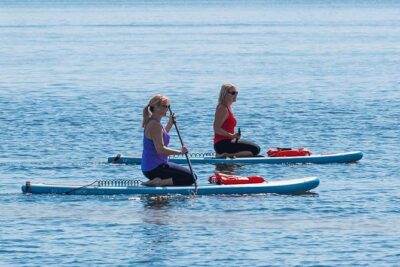
Dolphin and Manatee Stand Up Paddleboard Tour in Daytona Beach
Read our review →
Oahu North Shore Experience: Activities, Waterfall & Free Time
Read our review →
Dolphin, Manatee and SeaTurtle SUP Adventure Tour of St Augustine
Read our review →
Guided Island EcoTour: CLEAR/Standard Kayak, SUP – Bonita Springs
Read our review →
UTV Dune Cruise and Surf at Coral Pink Sand Dunes
Read our review →
Browse the lists this tour appears in