
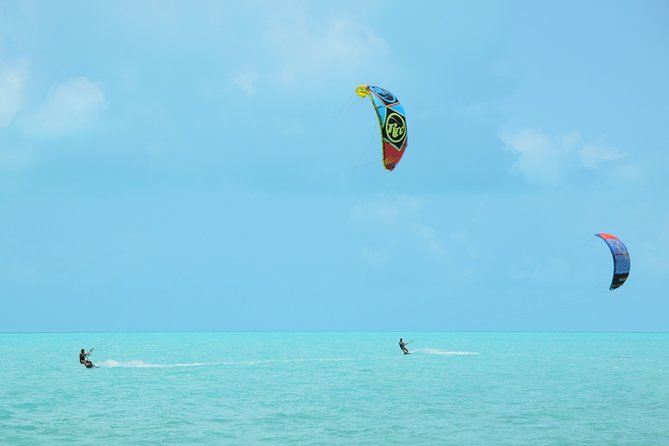
Review · KITESURFING LESSONS
Fast-Track Kiteboarding Camp: Best for Beginners
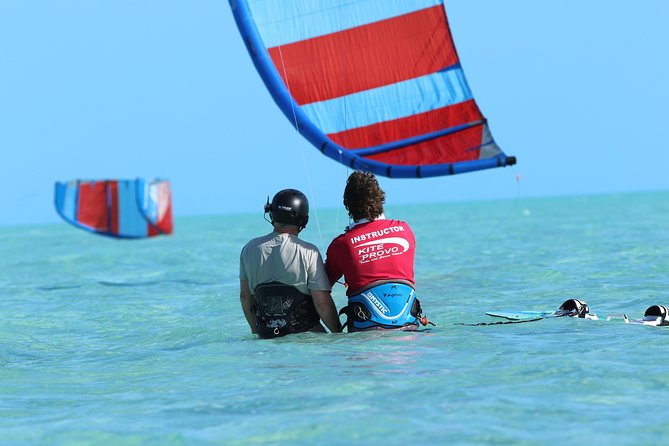
Kiteboarding looks wild from the beach, but this three-hour beginner camp gives you a sensible way in. You start with teaching aids on the sand, learn the safety systems, then work toward controlling the kite and making your first waterstart. The goal is not a quick thrill ride. It is to give you the basic skills to begin riding.
I like the small group size, limited to two or three people, and the fact that jet ski support is included. I also like the teaching sequence: sand first, water next, board last. The main catch is timing. Your lesson must take place at low tide, so the exact start time is sent after booking and may not match the time you first had in mind.
Key points at a glance
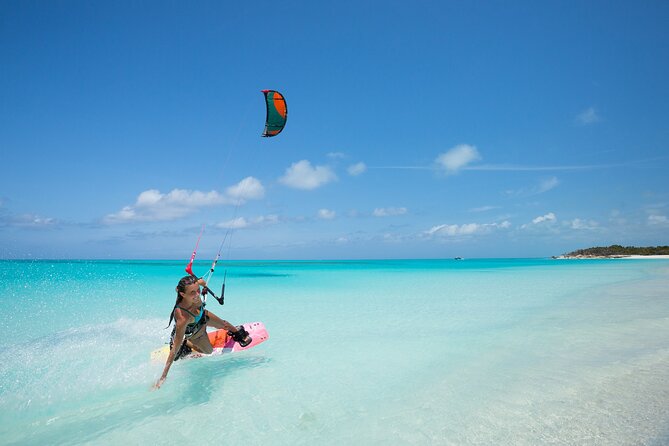
- First lesson built for beginners: You need no previous kiteboarding skills.
- Two to three people per group: You get a lower price than a private lesson while keeping personal instruction.
- Low tide controls the schedule: The exact time is confirmed after you book.
- Kite Provo experience: The school began in 2006 and traces its roots to the early days of kiteboarding.
- Board work comes late: You first learn setup, kite control, safety, relaunching, and body surfing.
- Bring sun protection and water: Sunglasses with a strap, snacks, sunscreen, and drinking water will make the session easier.
Your first three hours on a kiteboard
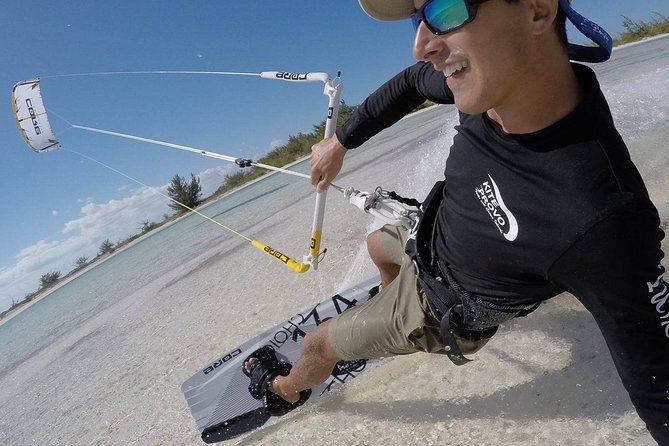
This camp is designed to take you from no experience to your first starts on the board in one lesson. That is an ambitious target, but the structure makes sense. Kiteboarding is not just a matter of standing on a board and holding a kite. You need to understand wind power, safety, kite movement, body position, and what to do when the kite falls.
You begin at the meeting point at Swaying Palms on Joe Wood Drive in Leeward Settlement. The activity returns to this same spot, and hotel transportation is not included, so you need to make your own way there. The school operates Monday through Saturday from 8:00 a.m. to 6:00 p.m.
The exact lesson time is set by the tide. You need low tide so you can stand and walk in the water, and those times change each day. Do not assume the departure time shown while booking is your final appointment. Kite Provo sends the confirmed time after you reserve.
That tide-based system can be inconvenient if you are trying to build a tight vacation schedule. It is also a practical safety and teaching choice. Standing depth lets you work on kite control without immediately having to swim, and it gives the instructor a better way to help you reset your equipment.
More Kitesurfing Lessons in the world:
- Private Kitesurf Lesson in Lo Stagnone Sicily
★ 5.0 · 101 reviews - KiteSurfing or Surfing Experience in Essaouira
★ 5.0 · 91 reviews - Kitesurf – Advanced course with individual lessons
★ 5.0 · 88 reviews
Why the beach lesson matters
The first stage uses teaching aids on the beach to cut down on wasted time in the water. You learn how the equipment fits together and how the kite generates power before you have to manage waves, water, and a board at once.
You also learn how to set up the gear. This is one of the least glamorous parts of kiteboarding, but it matters. If you understand what each piece does, you are less likely to feel lost when the kite changes direction or needs to be relaunched.
The instructors also cover every safety system. That is important for a first lesson, since the kite can produce more power than a beginner expects. The aim is to help you control that power and know how to reduce it when needed.
A licensed instructor leads the session, and Kite Provo says its instructors are trained in communication. That point matches the experience described by people who worked with Alan and Mike. Alan is praised for patient and encouraging instruction, while Mike is described as keeping a good pace and explaining kite control clearly.
From kite control to body surfing
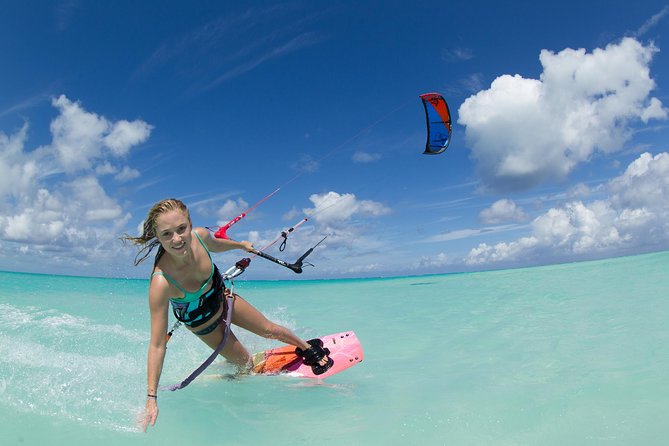
Once the basic setup is clear, you move into the water to work on kite control. This is where the lesson begins to feel like a real sport rather than a beach briefing.
You practice steering the kite and learning how small movements affect the amount of power it creates. The instructor can help you recognize when the kite is pulling too hard and how to manage that force. You also learn how to relaunch the kite if it falls onto the water.
The relaunch lesson is worth your attention. A beginner may focus only on keeping the kite in the air, but falling kites are part of learning. Knowing how to get one moving again gives you a useful skill before you add the board.
Body surfing is also part of the session. This helps you work with the kite while your body is in the water, without asking you to stand on the board right away. It gives you practice handling the pull of the kite and finding a workable position.
This water portion may be the most tiring part of the lesson. You should expect to use your arms, legs, and core while staying alert to the kite. A moderate level of physical fitness is required, and a power bar, dried fruit, or nuts can be useful if you need a quick lift.
Your first waterstarts
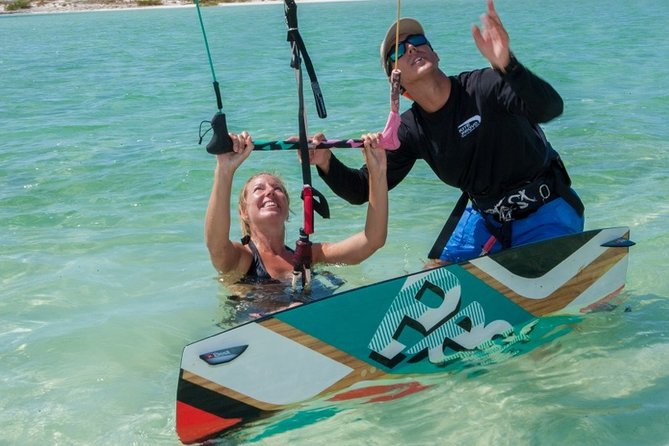
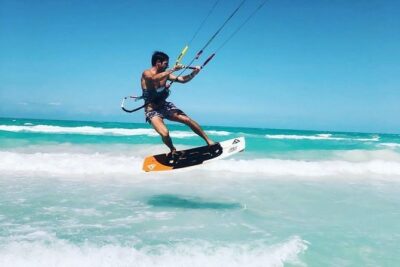
The final goal is the waterstart, your first attempt to get moving on the board. You use the kite’s power to bring the board under your feet and rise into a riding position.
You may not leave the lesson riding long distances. The stated aim is your first exciting starts, not mastery. That distinction matters when you decide if the $450 price is right for you. This is an introduction with equipment, instruction, and support included, not a full course that promises independent kiteboarding after one visit.
The progression is well judged. You first learn the kite on land, then in the water, then add the board. One person described working with Mike through those exact stages, from flying a kite on the sand to controlling it in the water and finally using the board. That order gives you a better chance to understand what is happening instead of trying to manage every skill at once.
Parents should note that the minimum age is 10, the minimum weight is 80 pounds, and the full group can have no more than three people. A 15-year-old and a 12-year-old were able to take the lesson with a parent, and all three took part with the instructor. Still, children should be comfortable with the physical demands and able to follow safety directions.
More Beginner Surf Lessons in the world:
- Legian Beach, Bali: Beginner or Intermediate Surf Lessons
★ 4.9 · 1,019 reviews - Maui: Two Hour Beginner Group Surf Lesson in Kihei
★ 5.0 · 950 reviews - Uluwatu: Beginner & Intermediate Surf Lesson with Equipment
★ 4.9 · 832 reviews - Kuta/Bali: Private Beginner & Intermediate Surf Lessons
★ 4.9 · 563 reviews
What makes the small group format useful
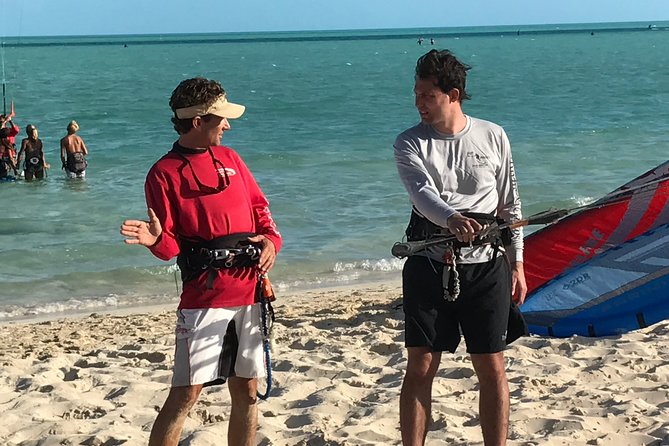
A semi-private lesson with two or three people is a good middle ground. You pay less than you would for a private session, while the instructor can still watch each person closely.
You will not have constant one-on-one time. The instructor may need to move between students, and people in the same group may learn at different speeds. That is the main tradeoff. If you need a very slow pace or want every minute focused on you, a private lesson may suit you better, though this experience is specifically offered as a semi-private camp.
For many beginners, the small group can make the first session less tense. You get a little breathing room while watching another person try the same skill. The maximum of three keeps the class from turning into a crowded beach lesson.
The strongest praise goes to the instruction itself. Alan is described as thorough, patient, and encouraging. Mike is praised for a steady pace and clear coaching. Those qualities matter more here than flashy claims. Kiteboarding has several moving parts, and a calm instructor can make the difference between useful practice and confusion.
The value of $450 per person
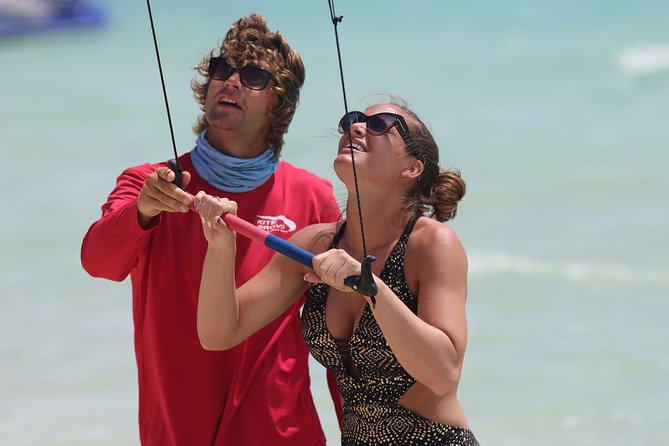
At $450 per person, this is a significant activity expense. You are paying for about three hours, all equipment needed for the lesson, licensed instruction, applicable government taxes, and jet ski support.
The value depends on what you want from the session. If you only want a quick beach activity, the price may feel high. If you want a serious introduction to a demanding sport and hope to keep learning, the equipment and instructor time make the cost easier to justify.
You also avoid buying or transporting any kiteboarding gear. The equipment is supplied, which keeps your first attempt simple. You do not need to guess what kite size, board, lines, or safety gear to use.
The lesson is also more focused than a casual water activity. You are not just being pulled along for a ride. You learn setup, kite control, relaunching, safety systems, body surfing, power control, and waterstarts. I would book it early if kiteboarding is high on your list. The experience is often reserved about 17 days ahead, and the most useful times are tied to the tide.
What to bring to Swaying Palms
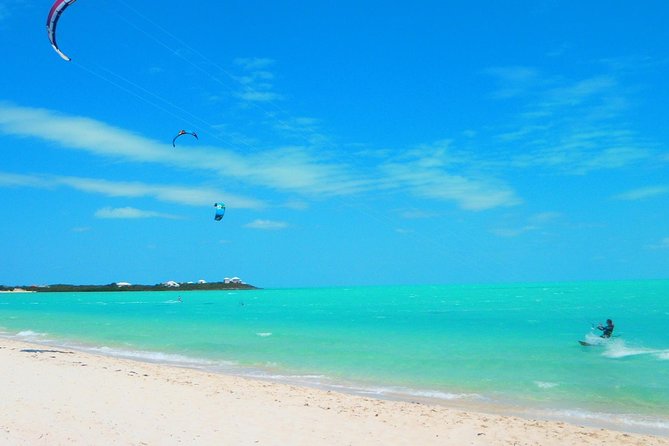
The sun can make a three-hour lesson feel longer, especially when you spend time standing in shallow water and working on the beach. Bring sunscreen and drinking water. High-energy snacks such as a power bar, dried fruit, or nuts are also recommended.
Inexpensive sunglasses with a strap are a smart choice. Do not bring expensive sunglasses, since they may be exposed to salt water or lost during practice.
Water shoes or neoprene booties are optional and usually not needed. You can bring them if you are concerned about your feet, but they are not part of the required equipment list.
The activity is near public transportation, and service animals are allowed. Hotel pickup and drop-off are not included, so plan your route to Swaying Palms before the lesson day. The mobile ticket is useful for keeping your booking details available on your phone.
Weather, tides, and the cancellation rule
Kiteboarding depends on both wind and water conditions. If poor weather forces a cancellation, you are offered another date or a full refund.
You can cancel for a full refund up to 24 hours before the scheduled start time. Changes or cancellations made less than 24 hours ahead are not accepted, and the cutoff follows local time.
The tide is a separate planning issue. Even with good weather, the school needs low tide for the lesson, so the confirmed time can shift from day to day. Keep some flexibility in your schedule, especially if you are planning dinner reservations, another water activity, or a long drive afterward.
Who will enjoy this camp most
This is a strong fit if you want to learn a new sport rather than simply watch it from the beach. You should be comfortable with moderate physical activity, able to follow safety instructions, and willing to spend part of the session repeating basic skills.
It also suits families with older children who meet the age and weight requirements. The small group format lets family members learn together, though each person still needs to be prepared to work at their own pace.
I would be more cautious if you want a fixed morning or afternoon appointment. The low-tide schedule controls the timing, and the exact departure is sent after you book. I would also think twice if you dislike water-based activity that can be tiring or if your main goal is a long ride rather than instruction.
The experience received a 4.9 rating from 40 reviews, with 95 percent recommending it. The specific praise centers on patient coaching, a good learning pace, and the satisfying step from kite control to the board. Those are the parts that matter most for a first lesson.
Should you book the Fast-Track Kiteboarding Camp?
Book it if you want a well-structured first attempt, appreciate a small class, and can work around the low-tide schedule. The best reason to choose it is the clear progression from beach setup to water control to first waterstarts, supported by an instructor and jet ski.
I would book early, keep your day flexible, and bring sun protection, water, snacks, and strapped sunglasses. If you want a private lesson or a guaranteed time of day, ask before committing. For a beginner ready to work, this is a focused and active way to spend three hours in Providenciales.
FAQ
Where does the kiteboarding lesson meet?
The meeting point is Swaying Palms on Joe Wood Drive in Leeward Settlement, Turks and Caicos Islands. The activity ends back at the same meeting point.
How long does the experience last?
The lesson lasts approximately three hours.
What time does the lesson start?
Times vary each day because the lesson must take place at low tide. Your exact time is sent after booking.
How many people are in each group?
The semi-private lesson has two to three people. The maximum group size is three.
What is the minimum age?
The minimum age is 10 years old.
Is there a minimum weight?
Yes. Participants must weigh at least 80 pounds.
Is equipment included?
Yes. The equipment needed for the lesson is included, along with instruction and jet ski support.
Is hotel transportation included?
No. Hotel pickup and drop-off are not included.
What happens if the weather is poor?
If the activity is canceled because of poor weather, you can choose another date or receive a full refund. You can also cancel up to 24 hours before the start time for a full refund.
Just added around the world
- Surfing Lesson in Santa Barbara (2 Hours)★ 5.0 · 10 reviews
- Private Windsurf Experience in Puerto Rico★ 5.0 · 7 reviews
- San Juan Surfing Lessons: Ride the Waves in Puerto Rico★ 5.0 · 30 reviews
- Sunrise SUP tour & breakfast – Private stand up paddle boarding experience★ 5.0 · 20 reviews
- Surf the Basque Country Day trip – Private experience★ 5.0 · 5 reviews
- Private Surf Lesson in Morro Bay★ 5.0 · 42 reviews
- San Juan | Paddleboard | Kayak | Snorkeling | Guided Tours★ 4.5 · 4 reviews
- 120 Min Surf Lesson / Great for All Levels★ 5.0 · 8 reviews
Kitesurfing Lessons, compared.
Semi-private kitesurfing lessons in Tarifa (adapted to every level)
Read our review →
Group Kitesurfing lesson with a Local in Essaouira Morocco
Read our review →
Browse the lists this tour appears in