
Review · AGADIR
Agadir: 2h Surf Lesson with Local Instructors
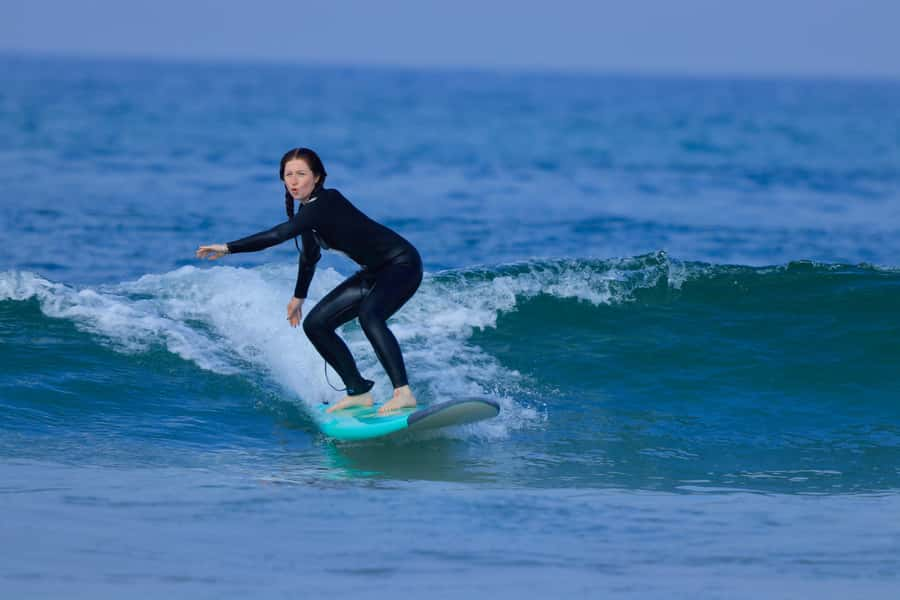
Agadir’s broad beach gives beginners a forgiving place to learn the basics of surfing, and this two-hour lesson keeps the focus where it belongs: on getting you safely onto a board and helping you catch a wave. Local instructors such as Ayoub, Othman, and Abdel work with small groups, so you are not simply left to copy someone else.
I like two things right away. First, the session includes surf coaching and equipment, which makes it easy to try surfing without packing a board or wetsuit. Second, the teaching is practical: a warm-up and sand briefing come before water practice, and the instructor adjusts advice to your ability.
The main consideration is that surfing depends on the sea. If conditions are poor, the lesson may need to move to another day, as happened for one family. That is sensible for safety, but it means you should keep a little flexibility in your Agadir schedule.
Key points to know before booking
- Two full hours on Agadir Beach: Enough time for a briefing, practice, and repeated attempts in the water.
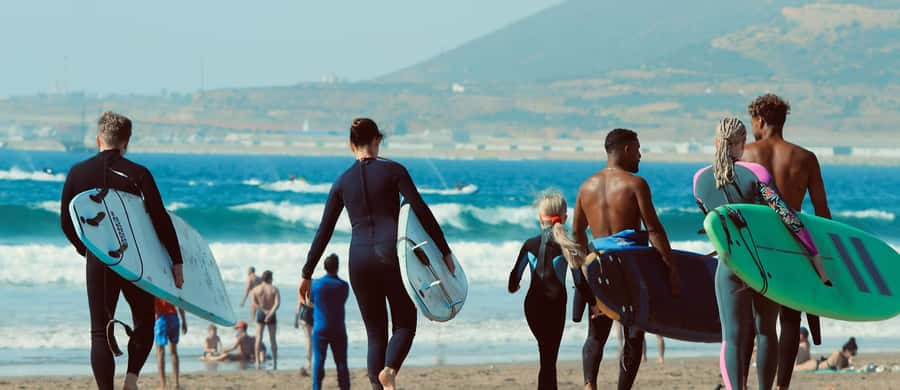
- Small groups of about five or six: You get more personal help than in a large class.
- Strong choice for first-timers: Beginners have been helped to stand on the board during their first session.
- Local instructors with several languages: Coaching is available in English, French, Arabic, and Spanish.
- Equipment is included: You need to bring swimwear, a towel, sunscreen, water, and beachwear.
- Photos may be available: A professional photographer has captured useful action shots, though photos are not listed as part of the included package.
Why Agadir Beach works well for a first lesson
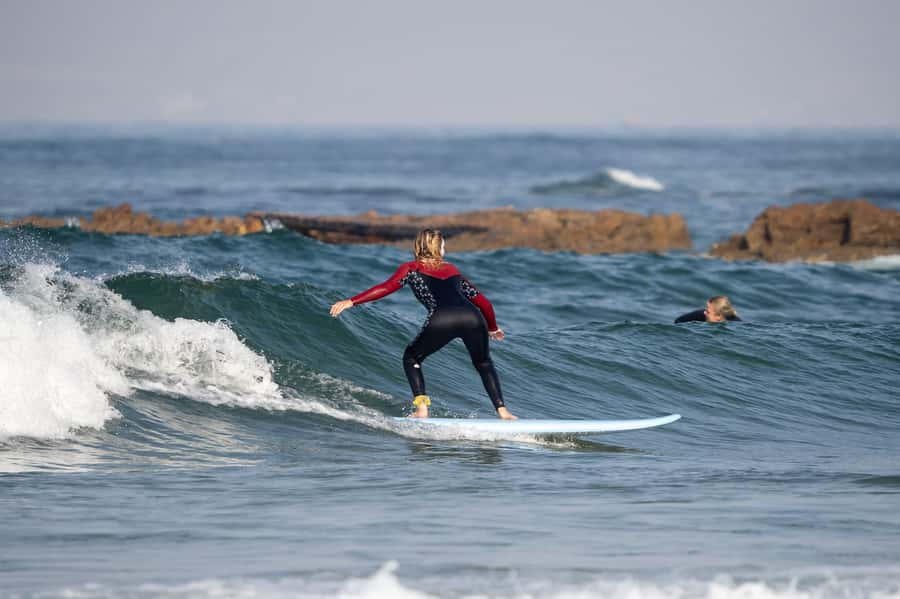
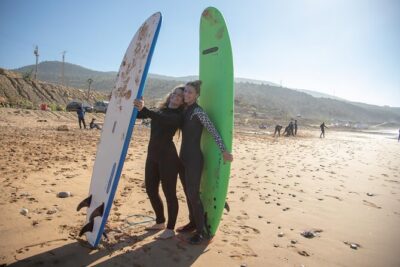
Agadir is one of Morocco’s best-known surf areas, and this lesson takes place directly on Agadir Beach. That beachfront setting matters. You are not spending the short session on transport before reaching the water, and the open beach gives the instructor room to explain the basics and watch your progress.
For a beginner, the first few minutes can feel like a jumble of board, leash, waves, and unfamiliar instructions. A beach lesson simplifies that. You can first learn how to handle the board and how to stand while still on the sand, then carry those movements into the water.
The setting also gives the class a distinctly local feel. You are learning from Moroccan instructors who work in the area, not following a generic indoor course. The lesson is built around surf culture in Agadir, with a friendly atmosphere and an easygoing approach.
Do not expect a private coaching session unless your group happens to be very small. The activity is described as a small-group lesson, and group sizes of around five or six have been reported. That is still a useful size for personal feedback, but the instructor must divide attention among several people.
More Surf Lessons in Agadir
- Agadir: Taghazout Beach Surf Lesson with Lunch and Transfer
★ 4.8 · 298 reviews - Agadir: Beginner Surf Lesson – Equipment Included
★ 4.9 · 155 reviews - 2 hours surf lesson in Agadir
★ 5.0 · 55 reviews
The first stage: meeting the instructors and getting ready
The exact meeting point is sent after booking, and it is on Agadir Beach. Since the beach can cover a long stretch, read the arrival message carefully rather than assuming that any point along the shore will do.
One useful feature is the direct communication before the session. A parent booking for a 13-year-old was contacted soon after making the reservation, asked about wetsuit size, and given clear directions to the meeting point. That sort of small detail can remove much of the uncertainty that comes with a first surf class.
Bring your swimwear, towel, sunscreen, water, and beachwear. The supplied information does not give a changing-room arrangement, so arrive prepared to use the facilities and setup available at the beach rather than counting on hotel-style comforts.
The activity includes surf equipment, which is a real saving in both money and effort. You do not need to arrange a board independently, and the instructor can provide equipment suited to the lesson. Specific board or wetsuit brands are not given, so do not book this expecting a named premium model.
Sand practice before the water
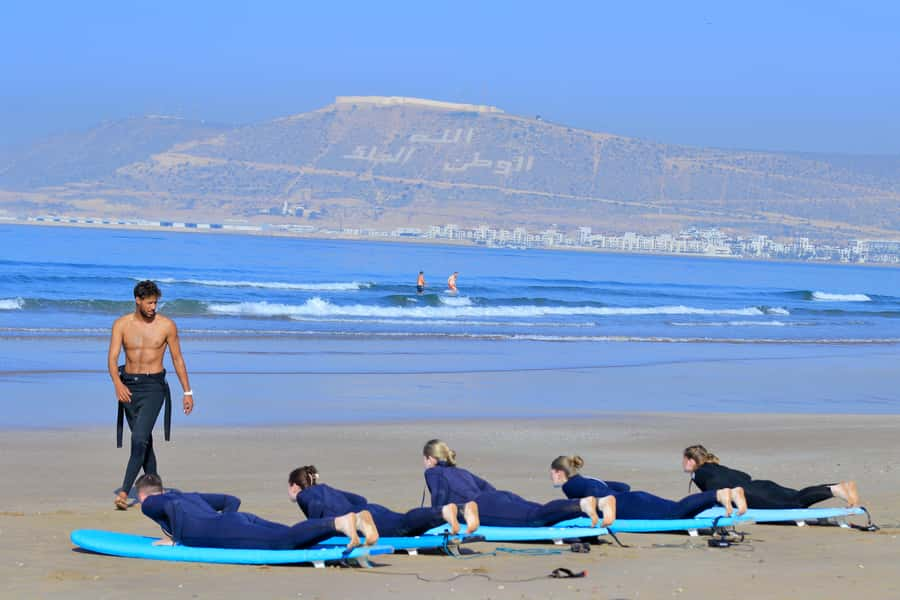
The lesson begins with preparation on the beach. A warm-up and a briefing on the sand cover how to manage the board and how to stand up. This is the part many eager beginners want to skip, but it is where the basic movement becomes less intimidating.
You will likely practice the standing motion before dealing with moving water. The aim is not to look polished on the sand. It is to give your body a simple sequence to repeat when the board begins moving.
This early instruction has been especially useful for first-time surfers. Beginners have described receiving clear explanations, small corrections, and enough practice to stand up during the session. That does not mean every person will ride a wave on the first attempt, but it shows that the lesson is designed to make early progress possible.
The instructor also explains how to manage the board. That matters for safety as well as comfort. A surfboard can feel awkward at first, and knowing where to place yourself and how to respond to the water helps you avoid turning every attempt into a wrestling match with the equipment.
Moving into the water with personal coaching
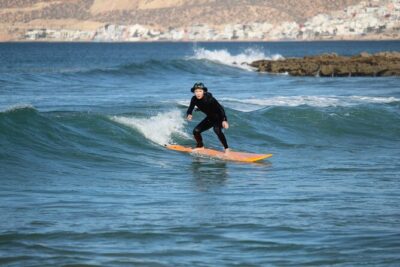
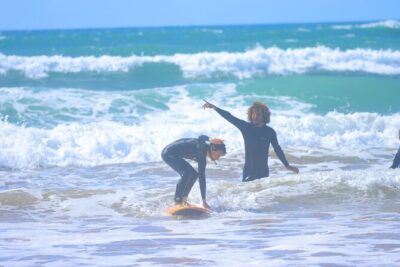
After the beach briefing, you take the board into the water and begin trying the skills for real. This is where the small-group format earns its keep. The instructor can stay close, offer a correction, and help you choose a better moment to try again.
Ayoub is specifically praised for giving each person help based on what they needed. That is important in a mixed group, since one person may be standing consistently while another is still learning how to lie on the board. Good instruction does not give both people the same speech and walk away.
The coaching also appears to be calm and encouraging. Beginners have been guided through their first attempts without being made to feel foolish, while people with a little experience have received tips to improve their technique. That makes the session suitable for a first try, but not limited to people who have never touched a surfboard.
You should still keep your expectations realistic. A two-hour class is an introduction, not a complete surf education. You may stand up, catch a short wave, and learn what to practice next. You will not master every part of surfing in one morning or afternoon.
Conditions can also be challenging. One beginner described rough waves but still felt safely guided by the instructor. That is encouraging, though it also shows why the instructor’s judgment matters. If the surf is not suitable, the lesson can be moved rather than forced through.
More Surf Lessons in Morocco
- Learn to Surf with a Local – One Day Surf Experience
★ 5.0 · 51 reviews - Private Surf Lesson in Taghazout/Agadir
★ 5.0 · 36 reviews - Surf Lessons in Taghazout | Learn to Surf in Morocco
★ 5.0 · 33 reviews - 2 Hours Activity Surfing lessons in Taghazout
★ 5.0 · 32 reviews
What the two-hour format really gives you
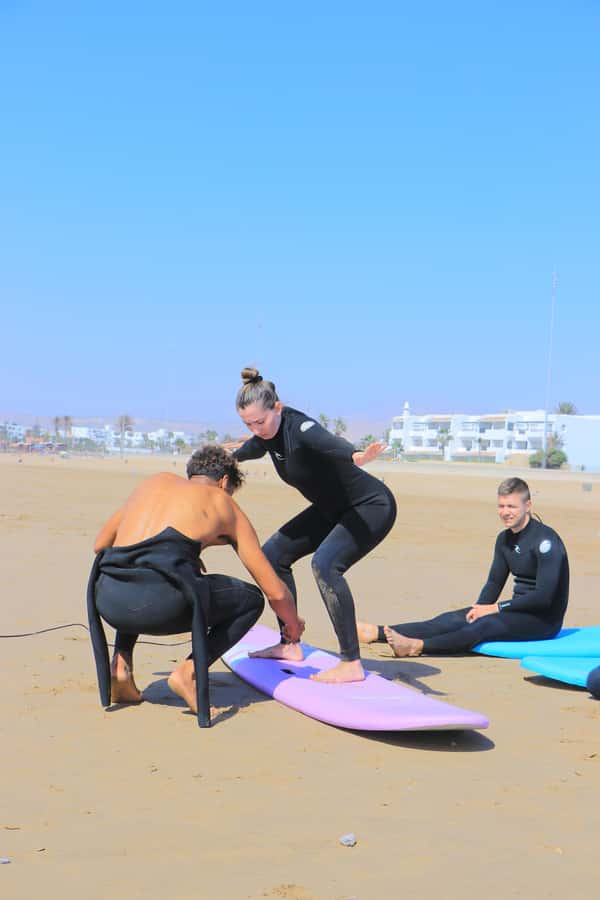
Two hours is a good length for a first session. It gives you time to hear the instructions, try the movement, make mistakes, and try again. A shorter class might leave you just as the first useful attempt begins.
The tradeoff is physical effort. Surfing asks you to paddle, push up, balance, and repeatedly get back on the board. Even a relaxed class can leave you tired, especially if you are not used to ocean sports.
The full session also allows the instructor to adjust the lesson as you improve. Early attempts may focus on simply getting onto the board. Later advice can address balance, timing, and small changes in technique. The experience is more useful when you treat each attempt as practice rather than judging the entire class by the first wave.
For families, the format has worked well. A family of first-time surfers managed to stand by the end of the lesson, and another booking was made for a 13-year-old who enjoyed the experience. Children and teenagers still need to be comfortable in the water and able to follow instructions, but the lesson can suit them when those basics are in place.
The value of local instructors
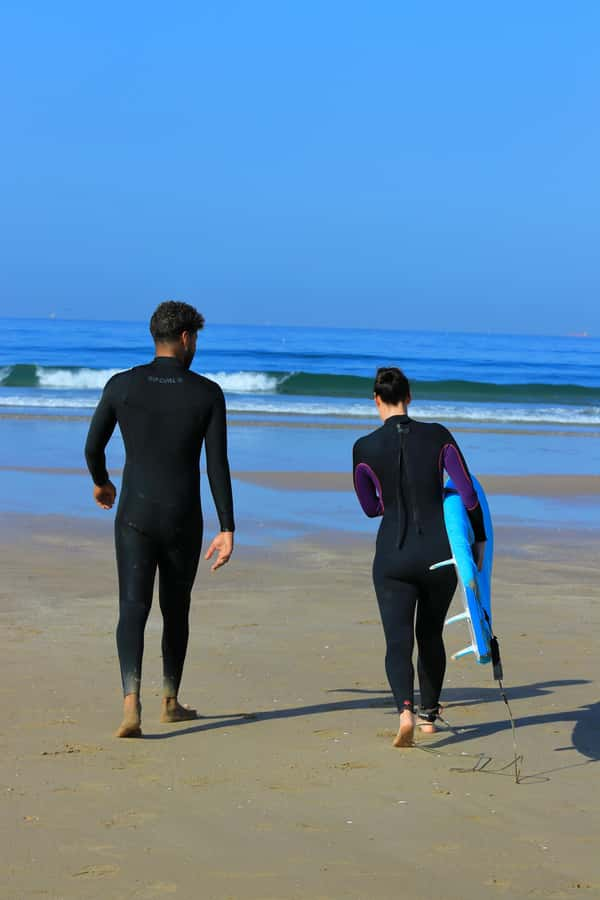
The local teaching team is one of the strongest reasons to choose this class. You get coaching from people connected to Agadir’s surf scene, along with an introduction to the friendly, relaxed side of Moroccan beach life.
Ayoub is the instructor most often named in the available feedback, with Othman and Abdel also praised for family instruction. Specific instructor assignments can change, so you should not assume that a particular person will teach your session unless that is confirmed when you book.
The language choice is helpful for international visitors. Instruction is available in English, French, Arabic, and Spanish. Clear communication matters in the water, where a short instruction about timing or board position needs to be understood quickly.
The teaching style is described as professional but laid-back. That combination is useful. You want enough structure to learn safe board handling, but not such a stiff atmosphere that you are afraid to make mistakes.
Small groups and the quality of attention
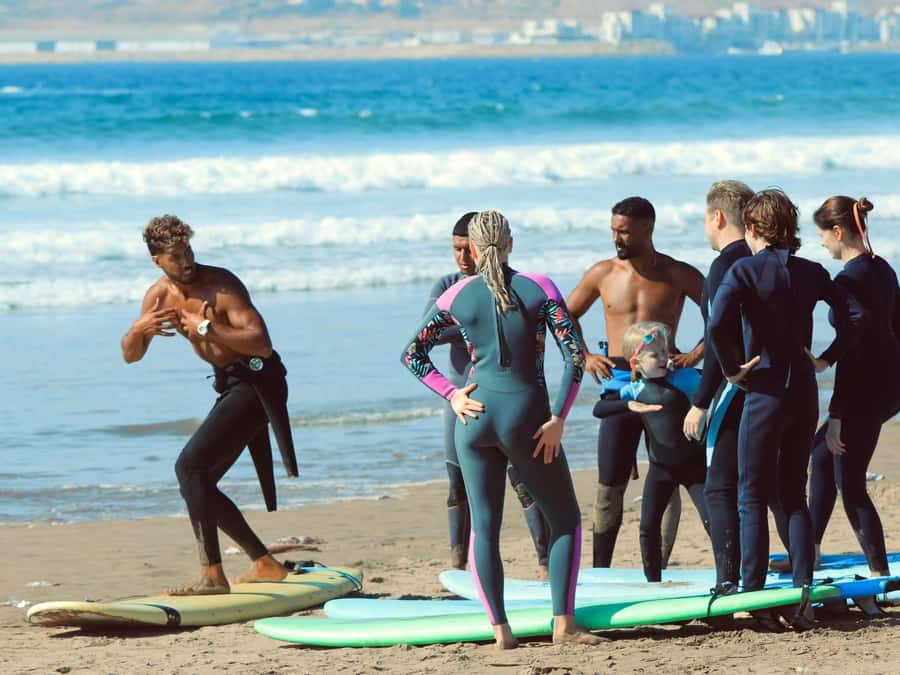
Group size can change the feel of a surf lesson. A large class may be cheaper, but you can spend a lot of time waiting while the instructor helps somebody else. Here, the group is kept small, with examples of roughly five or six people and, on one occasion, just two students.
That makes the class more personal. The instructor can spot when your feet are too far apart, when you are standing too early, or when you need a simpler instruction. It also gives you more chances to ask questions without holding up a crowd.
Small does not mean private. If the group fills, you will still share the instructor and the waves. But compared with a mass lesson, this arrangement offers a better chance of receiving useful feedback during the two-hour window.
I would especially choose this format for a nervous beginner, a family with mixed ability, or a person who learns better by doing than by listening to a long lecture. More experienced surfers may prefer a longer coaching session focused on technique, but the class can still help refine basic skills.
Photos and the memories you can take home
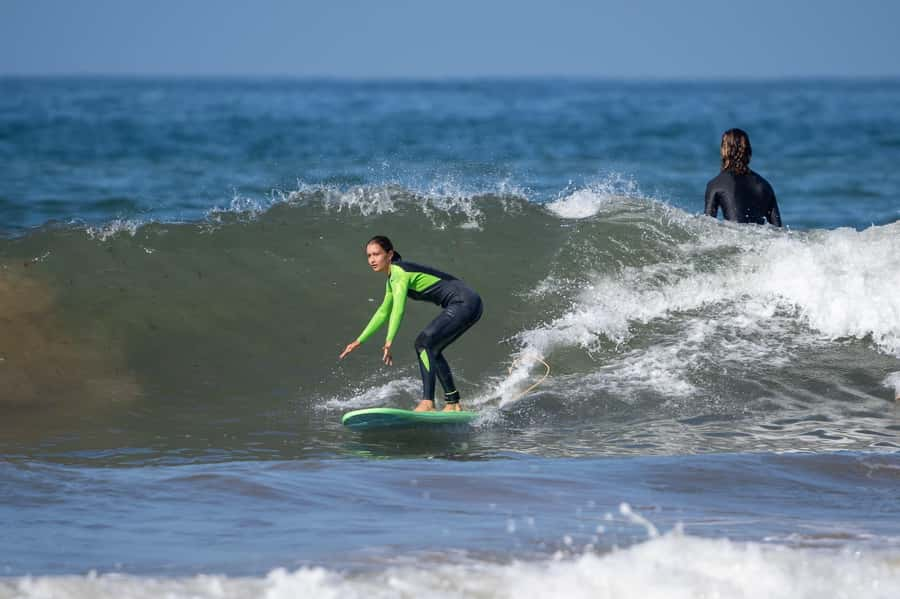
A photographer may be present during the lesson, and several participants have found the resulting photos worth buying separately. These can be more than holiday decoration. Action shots can show your body position, board angle, and timing in a way that is hard to notice while you are in the water.
Photos are not included in the stated price, so treat them as an optional extra. If you want them, ask about availability and cost before assuming they are part of the package.
The photos also help if you are trying surfing for the first time and want a record of the moment you stand up. One first-time surfer described the images as a lasting memory, while another specifically praised their quality.
Do not let the photography distract you from the class itself. The core value is the coaching and equipment. The images are a bonus, not a reason to book if you are mainly looking for a professional photo shoot.
Price, timing, and booking flexibility
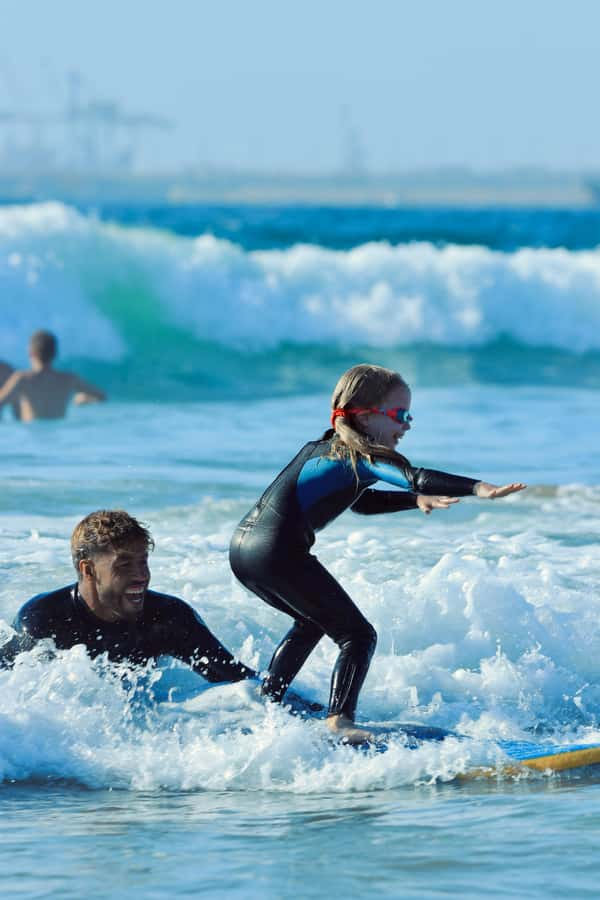
At $31 per person, this is good value if you want a proper two-hour introduction rather than a brief tryout. The price includes coaching and equipment, two of the main costs that can make a surf lesson more expensive when arranged separately.
The value improves if you are a beginner who would otherwise need to rent a board and figure out the basics alone. It is less compelling for a strong surfer seeking advanced, highly technical instruction, since the class is aimed at learning or improving general surf skills and no advanced coaching program is specified.
Starting times depend on availability. The exact meeting details arrive after reservation, and reserve-now, pay-later booking is offered, so you do not have to pay at the time of booking. Free cancellation is available up to 24 hours in advance for a full refund.
The sea may require a change of plan. One family was kept informed when the original day did not offer good surf, and the lesson went ahead a couple of days later. I consider that a positive sign, but you should avoid scheduling the class immediately before a flight or an unmissable excursion if your plans are tight.
Who should book this surf lesson
I would recommend it most strongly to:
- First-time surfers who want clear, patient instruction.
- Couples or friends who want an active two-hour beach experience.
- Families with older children or teenagers who can follow water-safety instructions.
- Visitors who prefer a small group over a large commercial class.
- People who want to meet local instructors and get a taste of Agadir’s surf culture.
- Beginners who like the idea of action photos after the lesson.
You should think twice if you have a pre-existing medical condition, since the activity is not suitable for people in that category. Surfing is physical, and the class involves repeated movement in the water.
You should also consider your comfort with changing sea conditions. The instructors can adapt the session and reschedule when conditions are not suitable, but you cannot guarantee a particular wave quality on a particular day.
What to bring and how to prepare
Keep your packing simple:
- Swimwear
- Towel
- Sunscreen
- Water
- Beachwear
Apply sunscreen before the lesson, even if the day feels mild. You will spend time on bright sand and in open water, and the class may keep you outside for the full two hours.
Drink water before and after the session. The supplied information does not say that water is provided, so bring your own bottle.
Arrive ready to listen before rushing toward the waves. The sand briefing is not filler. It is the quickest way to understand the board, remember the standing movement, and make the water practice more productive.
Should you book the Agadir surf lesson?
Book it if you want a friendly, fairly priced introduction to surfing with local instructors, included equipment, and a real chance to stand on the board during your first session. The small groups, multilingual coaching, and repeated personal help make this a stronger choice than a large class where you spend much of the time waiting.
I would not book it as an advanced surf clinic or a guaranteed perfect-wave experience. Sea conditions can change, photos cost extra, and the exact instructor is not guaranteed. For most beginners, though, $31 for two hours on Agadir Beach is a sensible way to try surfing without taking on much planning or equipment cost.
FAQ
Where does the surf lesson take place?
The lesson takes place on Agadir Beach in the Souss-Massa region of Morocco. The exact meeting point is sent after you reserve.
How long does the activity last?
The surf lesson lasts two hours.
What is included in the price?
Surf coaching and surf equipment are included.
How much does the lesson cost?
The listed price is $31 per person.
Is the class suitable for complete beginners?
Yes. The lesson is designed for people learning to surf as well as those who want to improve. First-time participants receive a sand briefing before entering the water.
How large is the group?
It is a small-group lesson. Groups of about five or six people have been used, though the exact size can vary.
Which languages do the instructors speak?
Instruction is available in English, French, Arabic, and Spanish.
Which instructors may teach the lesson?
The local team includes instructors such as Ayoub, Othman, and Abdel. A specific instructor is not guaranteed in the activity details.
What should I bring?
Bring swimwear, a towel, sunscreen, water, and beachwear.
Are photos included?
Photos are not listed among the included services. A photographer may be available, and photos can be purchased separately.
Can I cancel for a full refund?
You can cancel up to 24 hours in advance for a full refund.
Can I reserve now and pay later?
Yes. The activity offers reserve-now, pay-later booking.
Is the lesson suitable for people with pre-existing medical conditions?
No. The activity is not suitable for people with pre-existing medical conditions.
More 2-Hour Experiences in Agadir
- 2 hours surf lesson in Agadir
★ 5.0 · 23 reviews - Surf Lessons in Taghazout – 2 Hours
★ 5.0 · 15 reviews - Agadir : 2 hours Surf Lesson at luxurious Sofitel
★ 5.0 · 9 reviews - 2H Surf Lesson In Agadir
★ 5.0 · 7 reviews
Just added around Agadir
- 7-Day All Inclusive Yoga and Surf Class Experience in Tamraght★ 5.0 · 2 reviews
- From Agadir or Taghazout 2 Hour Surf Experience with Transfer★ 5.0 · 4 reviews
- 8 Day Outstanding Surf & Yoga Holiday in Tamraght, Agadir★ 5.0 · 18 reviews
- Surf Lessons in Taghazout Ride the Waves with Expert Instructors★ 5.0 · 9 reviews
- Surf lessons and guiding in Agadir★ 5.0 · 18 reviews
- 7 Nights Surf and Yoga Package in Morocco★ 4.5 · 9 reviews
- 2 Hours Activity Surfing lessons in Taghazout★ 5.0 · 32 reviews
- Surf With Mehdi in Taghazout Morocco★ 5.0 · 5 reviews
Agadir Surf Trips, compared.
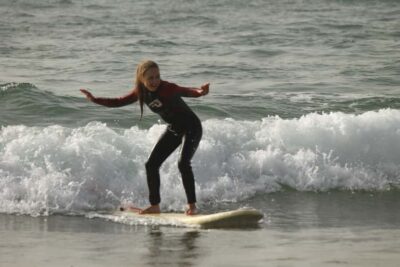
Taghazout Beach Surf Lesson with Lunch and Transfer
Read our review →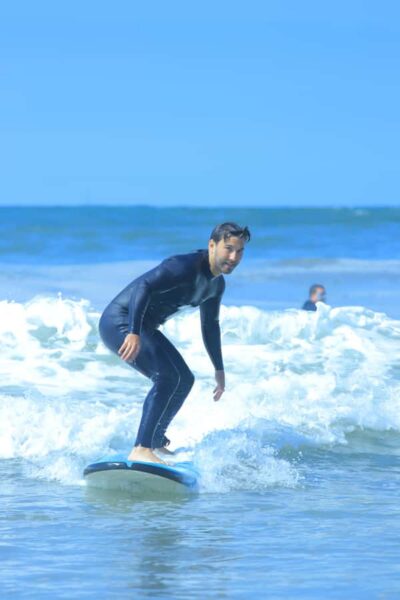

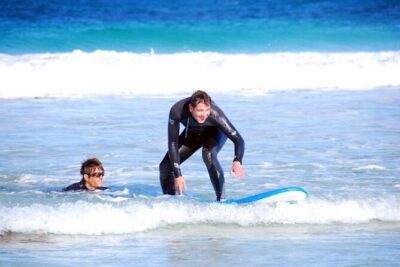
Learn to Surf with a Local – One Day Surf Experience
Read our review →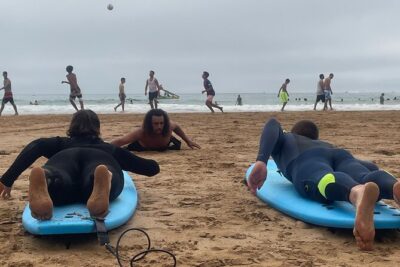
Surf Lessons in Taghazout | Learn to Surf in Morocco
Read our review →Browse the lists this tour appears in