
Review · SPAIN
El Palmar de Vejer: Surf Lessons
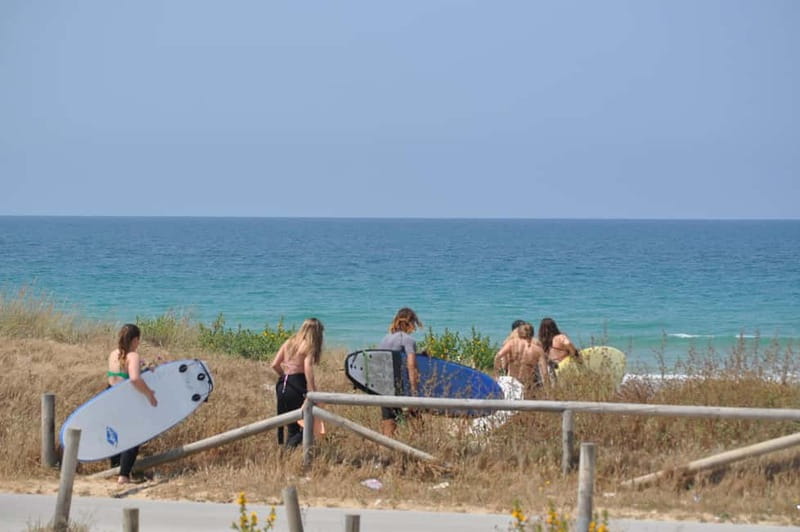
El Palmar’s appeal is simple: you learn to surf right on a broad Andalusian beach, with a small group and a school that treats the lesson as more than a quick stand-up attempt. You start on the sand, practice in the water, then can keep working on balance at the school’s free surfskate ramp.
I like the maximum group size of eight, which gives the instructor room to watch your technique. I also like the practical extras: board, wetsuit, leash, rash guard, showers, changing rooms, and basic liability insurance are included in the $41 price.
The main catch is the sea itself. Surf lessons depend on the waves, and one June 2025 class had too few for ideal practice. The school offered another course as compensation, a generous response, but you should still expect nature to set the schedule.
Key points
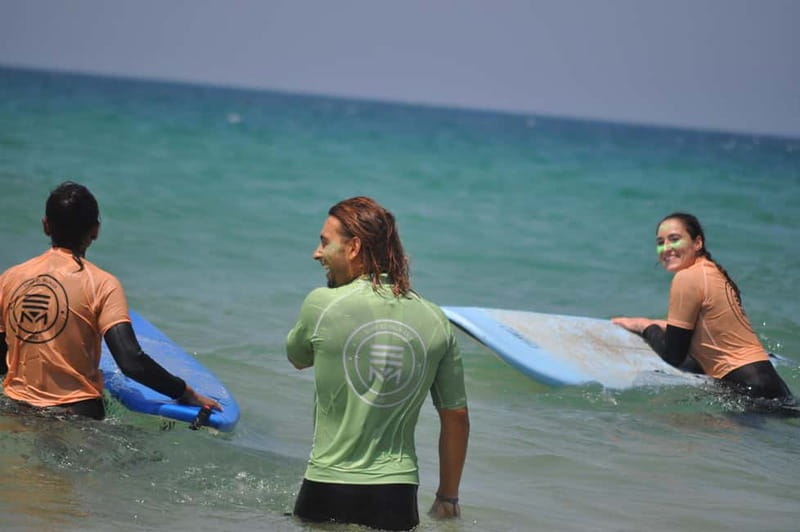
- Two hours on El Palmar beach: Begin with sand-based instruction, then take the lesson into the water.
- Small groups of up to eight: You get more personal attention than in a large beach class.
- Equipment included: The price covers the board, wetsuit, leash, rash guard, and use of changing facilities.
- Extra balance practice: Use the free surfskate ramp before or after the water session.
- English or Spanish instruction: Choose the language that lets you follow safety and technique advice clearly.
- Good value at $41: A full lesson with equipment and facilities costs less than arranging each part separately.
Learning to surf on El Palmar beach
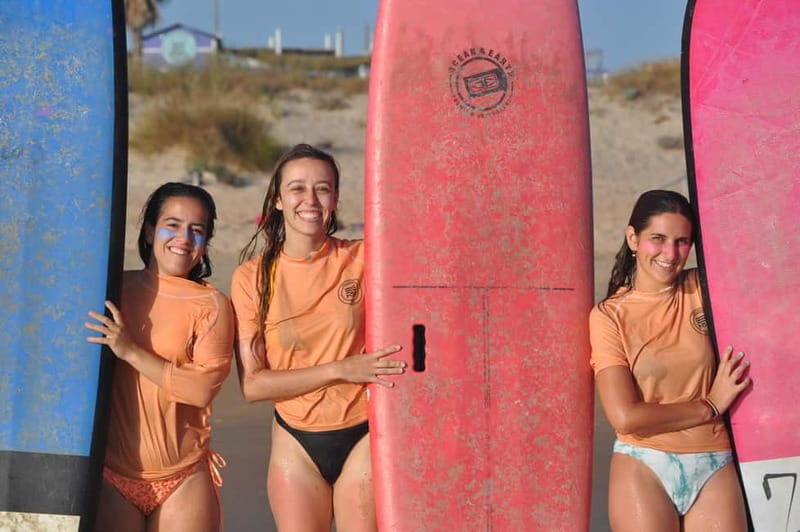
El Palmar is in Cádiz province, on Andalusia’s Atlantic coast. This activity puts you directly on the beach rather than asking you to travel from a city base to a separate surf spot.
That matters because surfing lessons work best when the transition from theory to water is quick. You meet at the school, collect the supplied equipment, and begin with the basics on land. There is no need to bring a board or wetsuit, which makes this an easy choice if you are adding one active morning or afternoon to a wider Andalusian trip.
The meeting point is between Papaya Bar and the sandy area. Look for a grassy path leading to the school. That landmark is useful, since a beach meeting point can otherwise be vague, especially if you arrive with a board bag, towel, or wet clothes.
The setting has a local surf-school feel rather than a polished resort operation. You have access to showers and changing rooms, and the surfskate ramp gives the place a social, hands-on character. You can practice balance on land, talk with other surfers, and spend time at the school without treating the class as a quick transaction.
More Surf Lessons in Spain
- Tenerife: Surfing Lesson for All Levels, Photos included
★ 4.9 · 1,314 reviews - Group Surfing Lesson at Playa de las Américas, Tenerife
★ 5.0 · 1,072 reviews - Playa de las Américas: Private or Small-Group Surf Lesson
★ 4.8 · 980 reviews
What happens during the two-hour lesson
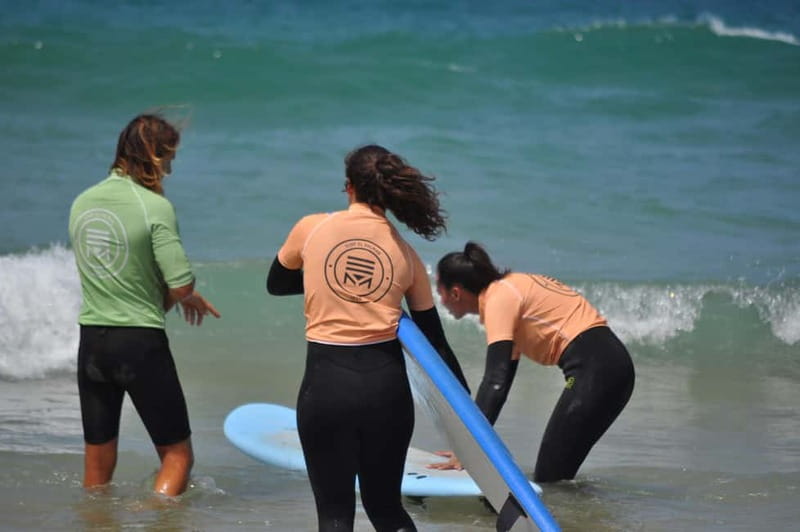
The class opens with a short introduction on the sand. This is where you learn the basic parts of surfing, including how to position yourself on the board, paddle, and move from lying down to standing.
That beach section is more important than it may sound. A first attempt in the water can feel chaotic, with the board moving, waves arriving, and your attention split between balance and direction. Practicing the sequence on sand lets you focus on body position before the sea adds motion.
You also learn basic paddling technique. Paddling is not just a way to reach a wave. It affects your balance, timing, and ability to position the board. A clear land explanation can save you energy once you are in the water.
Next comes the water portion of the lesson. The instructor stays with the group and helps you apply the steps from the beach. Beginners work on catching small waves and getting to their feet, while more experienced surfers can use the session to improve technique.
The class is designed for all levels, but that does not mean every participant will receive the same lesson. If you have never touched a board, you need a careful introduction to safety and balance. If you already surf, you can ask for help with your stance, paddling, or timing. Tell the instructor your experience level at the start so the advice fits your needs.
The total duration is two hours. That includes the introduction, preparation, and water practice, so do not read it as two full hours of continuous surfing. Surf lessons need time for fitting equipment, explaining safety, and regrouping between attempts. The format gives you a proper introduction without taking over an entire day.
Why the group size matters
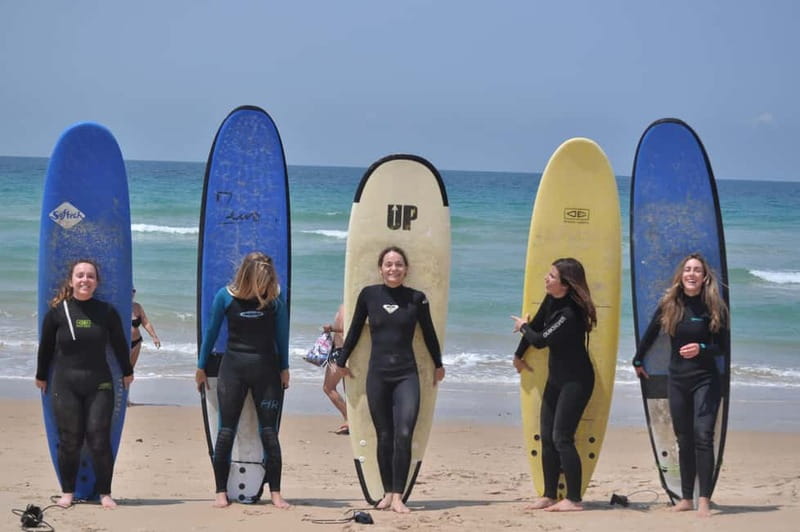
The class is limited to eight participants. That is a useful middle ground. You get the energy of a shared lesson, but the group is small enough for an instructor to notice basic errors and offer corrections.
Surfing is hard to assess from inside your own body. You may think your feet are in the right position when your weight is actually too far forward. You may also stand up too quickly or paddle with poor timing. Individual attention helps turn those mistakes into clear adjustments.
The activity description does not name individual instructors, but it specifies certified and experienced local instructors. Teaching is offered in English and Spanish. If you are not comfortable with technical instructions in both languages, choose the one that lets you react quickly to safety guidance.
Small groups also make the social side easier. You have a chance to meet other people at the school without being lost in a large crowd. That friendly atmosphere is part of the experience, especially if you are traveling alone or trying surfing for the first time.
Still, eight is not a private lesson. Your instructor will divide attention among the group, and the quality of the class can depend on how evenly people are matched. A first-time surfer and a confident intermediate surfer may need very different advice. The school’s all-level format is convenient, but it is worth stating your goals clearly.
Board, wetsuit, leash, and rash guard included
The $41 price includes the core equipment you need for the class: a surfboard, wetsuit, leash, and rash guard. That makes the cost easier to judge than a bare lesson price that adds rental fees later.
The wetsuit is especially useful for comfort in the Atlantic. You do not have to pack or rent one separately, and you can change at the school before and after the session. The leash keeps the board connected to you, while the rash guard adds another layer between you and the equipment.
A board is supplied, but the information does not specify board sizes or models. Beginners are commonly matched with stable equipment in a lesson setting, but you should not assume a particular board style. If you have surfed before and care about board choice, ask the school what is available for your level.
Equipment damage caused by misuse is not included. That is normal for an activity involving boards and water, but you should listen carefully to the handling instructions. Carry the board with care, follow the instructor’s directions, and do not treat the equipment roughly on the sand.
You also get use of the showers and changing rooms. These are small details with real value. After a saltwater lesson, being able to rinse off and change before heading back to your accommodation or continuing your day is much easier than packing wet gear into a car or day bag.
Same coast, a different way into the water:
- Ibiza Beach Hopping Cruise with Paddleboards, Drinks and Food 6h
★ 5.0 · 5,588 reviews - Ibiza: Beach Hopping Cruise w/ Paddleboard, Food, & Drinks
★ 4.5 · 3,224 reviews - Ibiza: Snorkeling and SUP Paddle, Beach and Cave Tour
★ 4.7 · 1,264 reviews - Barcelona: Sunrise Paddleboarding with Instructor and Photos
★ 4.9 · 782 reviews
The surfskate ramp adds value before and after the water
The free surfskate ramp is one of the more unusual features here. Surfskating lets you work on balance and turning on land, using a skateboard designed to mimic some surfing movements.
You can use the ramp before class to get comfortable with weight shifts, or after class to repeat the movements while the water session is still fresh in your mind. It is not a replacement for actual waves, but it gives you another way to practice.
This feature is most useful if you enjoy learning through repetition. Surfing involves small changes in posture, pressure, and balance. The ramp gives you a dry place to keep trying without waiting for the next wave.
There is also a social benefit. A surf school can feel quiet once the lesson ends, but a ramp gives people a reason to stay, watch, and practice. You can spend more time around the local surf scene instead of simply collecting your belongings and leaving.
Waves are the one part no school can control
The biggest variable is wave quality. A verified class on June 18, 2025, had fewer waves than hoped. The participant still had fun, and the school offered a voucher for another course because conditions limited the session.
That response is worth noting, but it does not change the basic rule of surfing: a paid lesson cannot guarantee perfect waves. Wind, swell, tide, and weather can all affect what happens in the water. The school can teach technique, manage safety, and adjust the class, but it cannot create surf on demand.
If you are booking this as your one and only chance to stand on a board, keep your expectations flexible. You may get a memorable session with repeated attempts, or you may spend more time practicing balance and paddling than riding waves.
The school’s approach appears practical in poor conditions. Offering a replacement course when the waves were unusually weak shows an effort to protect the value of the booking. Before reserving, check the cancellation and weather terms, and ask how a second session works if conditions are unsuitable.
The activity allows free cancellation up to 24 hours before the start time. You can also reserve now and pay later, which helps if your Andalusian plans are still moving around. Starting times depend on availability, so check the schedule rather than assuming the lesson runs at a fixed hour.
Is $41 a fair price?
At $41 per person, this is a reasonable package for a two-hour lesson. The price includes instruction, the board, wetsuit, leash, rash guard, showers, changing rooms, surfskate access, and basic liability insurance.
The value improves if you do not already own surf equipment. Buying or arranging each item separately would make a short lesson more complicated, especially if you are staying nearby for only a few days.
You are also paying for supervision and structure. A board rental alone does not teach you how to paddle, stand, or stay safe around other people in the water. The sand introduction and guided practice are the parts that turn equipment into an actual lesson.
The price is less compelling if you want a private coach or a long session aimed at advanced surfing. This is a shared, two-hour class for all levels. Its strength is access and support, not a highly specialized training plan.
With only two published ratings and an average of 4.4, the available feedback is positive but limited. I would treat that score as a useful signal, not a complete picture. The strongest specific point is the school’s response to weak waves, when it offered another course rather than simply accepting a poor session.
Who should book this experience?
This class suits a first-time surfer who wants an organized introduction without buying equipment. You get the basic theory, supervised water practice, and a chance to continue working on balance at the surfskate ramp.
It also suits a casual surfer who wants a refresher while visiting Cádiz province. The local instructors can help you return to the water without committing to a multi-day surf camp.
The small group works well for solo visitors, couples, and friends who want an active beach session. The English and Spanish options make it practical for an international audience.
Non-swimmers should not book. The activity specifically excludes non-swimmers, and that restriction matters. Surfing takes place in the sea, so you need enough swimming ability to follow safety instructions and manage yourself in the water.
The age limit also excludes children under two. The supplied information says the activity is wheelchair accessible but separately lists wheelchair users as not suitable. That is a direct conflict, so anyone using a wheelchair should contact Escuela Surf El Palmar before booking and ask about current access, changing facilities, and water participation.
Practical details for a smooth visit
Wear or bring normal beach clothing, but remember that the school supplies the surf equipment. You should still plan for time before and after the class to change, use the shower, and manage wet clothing.
Arrive at the meeting point between Papaya Bar and the sand. The grassy path leading to the school is the key landmark. If you are unfamiliar with El Palmar, allow enough time to find that path rather than arriving exactly at the lesson start.
The class is available in English and Spanish. State your preferred language when you arrive, especially if several groups are using the school.
Keep your expectations tied to learning rather than guaranteed wave count. Your first session may be about paddling, balance, and safe technique. If conditions are weak, the replacement-course voucher offered in the June 2025 case gives you a useful fallback, but you should confirm the school’s current policy.
Should you book El Palmar surf lessons?
Book this if you want a friendly, equipment-included introduction to surfing at a manageable price. The small group, local instructors, showers, and free surfskate ramp make it more useful than a simple board rental.
I would choose it especially for a first lesson, a solo visit, or a short stay in El Palmar. Just make sure you can swim, accept that wave conditions may limit the session, and clarify the accessibility contradiction before paying. If those points fit your plans, $41 buys a practical way to meet the Atlantic and learn the first real steps toward surfing independently.
FAQ
Where does the surf lesson meet?
Meet at Escuela Surf El Palmar, between Papaya Bar and the sandy area. A grassy path leads to the school.
How long does the activity last?
The surf lesson lasts two hours. Starting times vary, so check availability when booking.
Is surf equipment included?
Yes. The class includes a surfboard, wetsuit, leash, and rash guard. Showers and changing rooms are also available.
What languages are spoken?
The instructors teach in English and Spanish.
Can a non-swimmer join?
No. Non-swimmers are not suitable for this activity.
Can I cancel the booking?
You can cancel up to 24 hours in advance for a full refund. The activity also offers a reserve-now, pay-later option.
Just added around Spain
- Sunrise SUP tour & breakfast – Private stand up paddle boarding experience★ 5.0 · 20 reviews
- Surf the Basque Country Day trip – Private experience★ 5.0 · 5 reviews
- 4 Hour Surf Lesson★ 4.5 · 19 reviews
- Hawaiian Canoe, Kayak and Surfski Tour★ 5.0 · 10 reviews
- Surf Experience in Cotillo★ 5.0 · 5 reviews
- “Best Beaches Mallorca Experience with Guide, SUP, and Snorkel”★ 4.0 · 6 reviews
- Sunset SUP Tour in Marbella★ 4.5 · 8 reviews
- Paddle Boarding Tour on the beautiful Marbella Coast★ 4.5 · 9 reviews
Spain Surf Trips, compared.
Ibiza Beach Hopping Cruise with Paddleboards, Drinks and Food 6h
Read our review →
Beach Hopping Cruise w/ Paddleboard, Food, & Drinks
Read our review →
Surfing Lesson for All Levels, Photos included
Read our review →
Snorkeling and SUP Paddle, Beach and Cave Tour
Read our review →
Playa de las Américas: Private or Small-Group Surf Lesson
Read our review →
Sunrise Paddleboarding with Instructor and Photos
Read our review →
Paddleboarding at Sunrise. Includes: instructor, photos, equipment
Read our review →
Kayak and Paddleboard Excursion Through Crystal Clear Caves
Read our review →Browse the lists this tour appears in