
Review · FUERTEVENTURA
Intermediate & Advenced Surf Course in Fuerteventura’s south
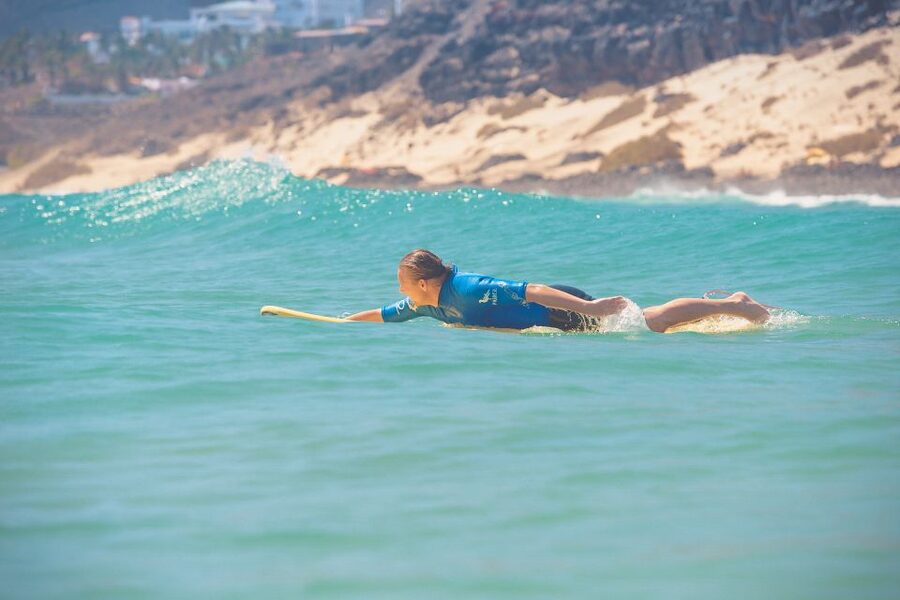
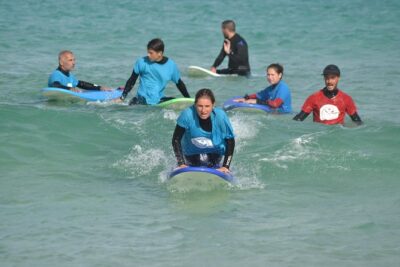
The next big step after standing in whitewater is learning to read and catch unbroken green waves. This course takes you to the south of Fuerteventura, where the beach changes with the wind, tide, and swell, and an instructor works with you on the skills you most need.
I like the small groups of four to eight students per instructor, and I like that the beach is not fixed in advance. You are taken to the spot with the best conditions for your level, rather than being sent to the same beach every day. The main consideration is that surf conditions control the schedule and meeting point, so you need to watch for a WhatsApp message or text before setting out.
Key points
- Green-wave practice: Move beyond foam waves and learn to paddle into unbroken surf.
- Beach choice changes daily: The instructor selects the southern beach with the best conditions for the group.
- Coaching in the water: Get help choosing waves and correcting your technique while you surf.
- Small groups: Four to eight students per instructor allows the lesson to match your goals.
- Proper boards for your level: Intermediates use soft-covered Ocean+Earth boards, while advanced surfers use epoxy boards.
- Video coaching on three-day courses: Review your surfing with video feedback when you book the longer option.
From whitewater to green waves

This is a course for surfers who already know the basic motion. You should be able to stand up in the foam before joining. The focus is not on your first pop-up. It is on what comes next: getting outside the breaking foam, choosing a wave, paddling at the right time, and riding the open face.
That shift can feel like a small change on paper and a large one in the water. Whitewater gives you a push. An unbroken wave asks you to read its shape, match its speed, and commit before it reaches you. The instructor helps you make that change step by step.
You may work on paddling through the surf, catching green waves, riding along the face, or making turns. The exact task depends on what you already do well and what you want to learn next. This matters because intermediate and advanced surfers can have very different needs. One person may still be working on wave selection, while another wants cleaner turns.
Before the course begins, you are asked what you did the last time you surfed and what you would like to learn now. Give a useful answer. If you have trouble paddling out, say so. If you can catch open waves but struggle to turn, say that instead. The more exact you are, the easier it is for the instructor to shape the session around you.
More Surf Lessons in Fuerteventura
- Fuerteventura: Surfing Lesson in the south of Fuerteventura
★ 4.8 · 354 reviews - Fuerteventura: Surf Lesson for All Levels and Ages
★ 4.8 · 205 reviews - Fuerteventura : Corralejo Surf Lesson
★ 4.7 · 186 reviews
Choosing a southern beach each day
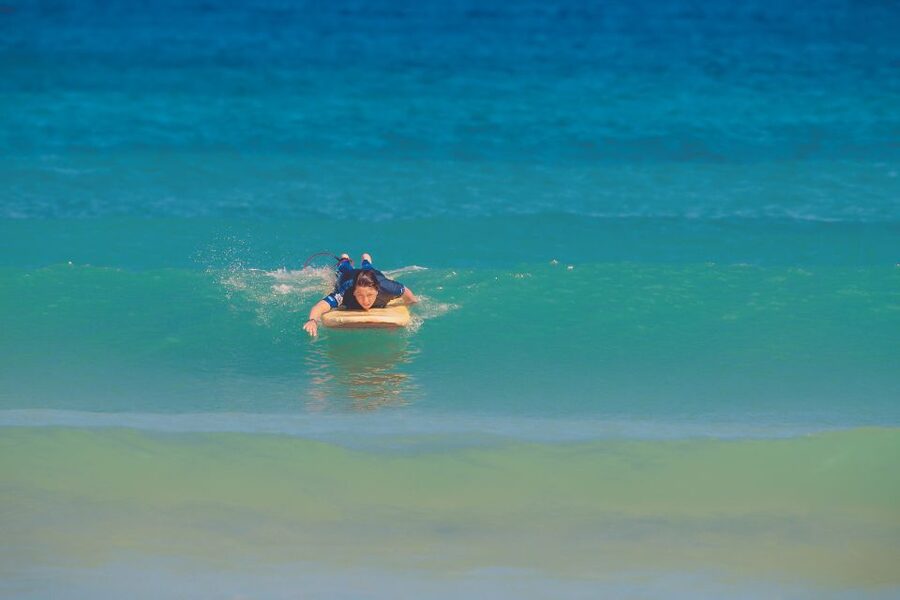
The course takes place at famous surf beaches in the south of Fuerteventura, but you are not promised one particular beach. Wind, tide, and weather decide where the group goes. That flexibility is one of the best parts of the experience, though it also means you need to stay flexible yourself.
A fixed beach sounds simple, but it may not be the right choice on a given day. A beach that works well for one surf level may be too powerful, too flat, or poorly timed for another. Here, the instructor chooses the day’s spot based on the conditions and the ability of the group.
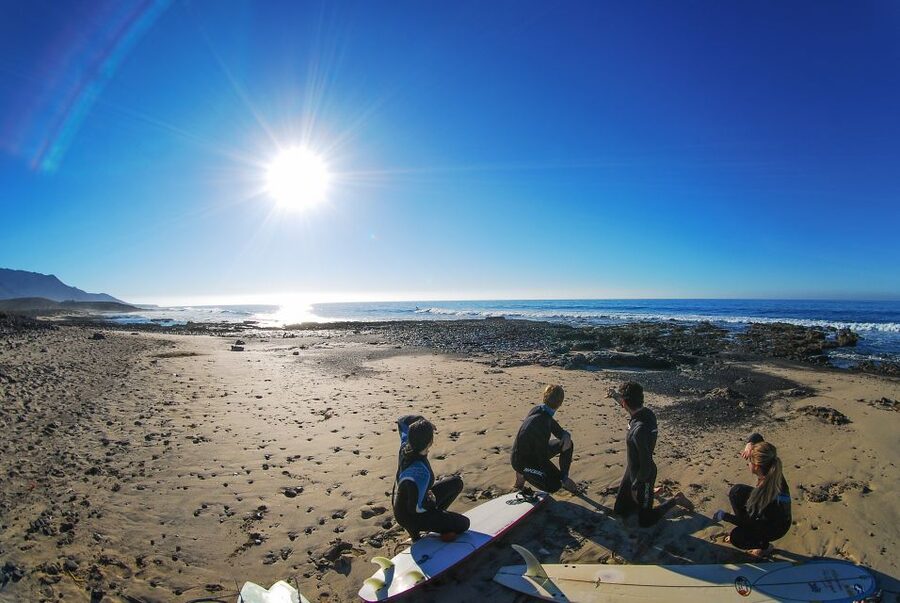
At the beach, the instructor explains the currents, tides, and waves before you enter the water. Do not treat this as a quick safety speech to endure before surfing. It is practical information that helps you understand where to paddle, where the current may carry you, and which waves are suitable for your level.
The changing location also gives the course a sense of place. You are not simply practicing in a training pool with an ocean view. You are learning how different surf spots behave, with the Atlantic as your classroom. The clear, warm blue water is a pleasant bonus, especially on a long lesson.
What the lesson looks like on the sand
The session starts with a short warm-up. After that, the instructor explains the main task for the day on land. This may include how to paddle through the breaking section, how to angle your board into an unbroken wave, or how to turn once you are riding.
That land briefing is especially useful for intermediate surfers. You may understand the general idea but still make the same mistake every time you enter the water. A clear explanation on the beach gives you one thing to focus on instead of a long list of corrections.
The course is not presented as a one-size-fits-all lesson. The instructor talks with the group about current ability and goals, then adapts the teaching. In a group of four to eight students, you will not receive nonstop private coaching, but the group remains small enough for individual feedback.
Bring your questions to the beach. If you are unsure when to begin paddling, ask. If you keep falling because the board turns too quickly, explain what happens. The instructor can only correct the problem that you communicate or can see.
Coaching where the waves break
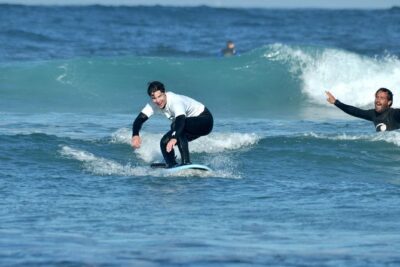
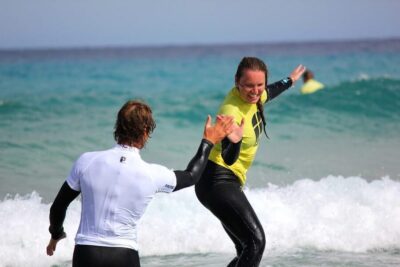
Once the land explanation is finished, you head into the water. The instructor stays in the water with you, helps you choose waves, and offers tips as you work. That is a meaningful difference from a lesson where the instructor watches from shore and gives advice only after you return.
The goal is not to catch every wave. You are learning to choose better waves and make better decisions. A missed wave can still teach you something about timing, position, or paddling speed. The instructor’s job is to help you understand why a wave worked or did not work.
For intermediate surfers, paddling out may be one of the hardest parts. Breaking waves can drain your energy before you reach the area where the better waves form. The course includes instruction on how to get through the surf, so you can spend more time in position instead of repeatedly being pushed back toward shore.
Once you reach the right area, the focus turns to wave selection and timing. You need to paddle strongly enough to match the wave, but not so early that you lose your position. The instructor can guide you toward waves that fit your ability rather than encouraging you to chase every larger set.
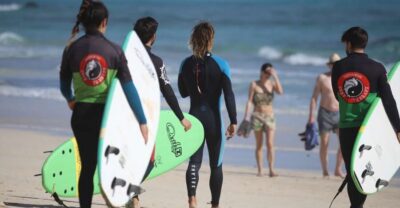
Advanced surfers can use the course to work on manoeuvres and more precise technique. The equipment also changes at this level. Advanced participants use epoxy surfboards, while intermediates use Ocean+Earth boards with soft foam covers. Ask about the board provided if you are between levels, since the school assigns equipment according to your surfing ability.
More Surf Lessons in Spain
- Fuerteventura South: Learn to surf on stunning beaches!
★ 4.8 · 162 reviews - Surf Class at Corralejo
★ 4.5 · 122 reviews - 1 Day Surf Lesson Beginner
★ 4.5 · 87 reviews - Fuerteventura: Learn to Surf Lesson
★ 4.9 · 65 reviews
Three days and video coaching
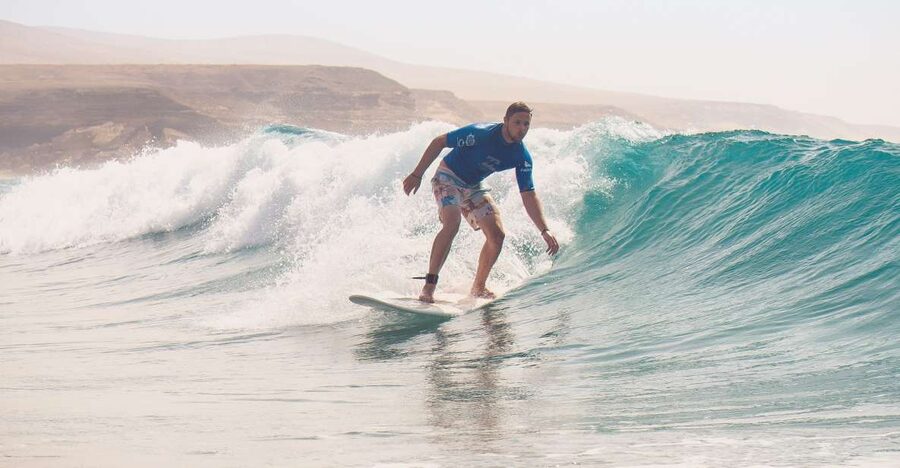
The course is offered in options ranging from 3.5 to 13.5 hours. A three-day surf course includes video coaching, which makes the longer booking more than a simple repeat of the same lesson.
Video can show details that are hard to feel while you are surfing. You may think you are turning your shoulders, standing too far back, or paddling early, but footage can make the issue clear. The supplied information does not specify how much filming or review is included, so ask the school about the exact video-coaching format before booking if that feature matters to you.
A longer course also gives you time to work through the normal frustrations of surfing. You may spend one session getting comfortable with the beach and the currents, then use the next session to focus on wave entry or turns. The course works best when you treat it as a progression, not three unrelated lessons.
A shorter option may suit you if you have limited time or want a focused session during a Fuerteventura holiday. Just keep your expectations realistic. Surfing improves through repetition, and a single lesson can give you useful direction without guaranteeing a major change in ability.
Boards, wetsuits, and what to bring
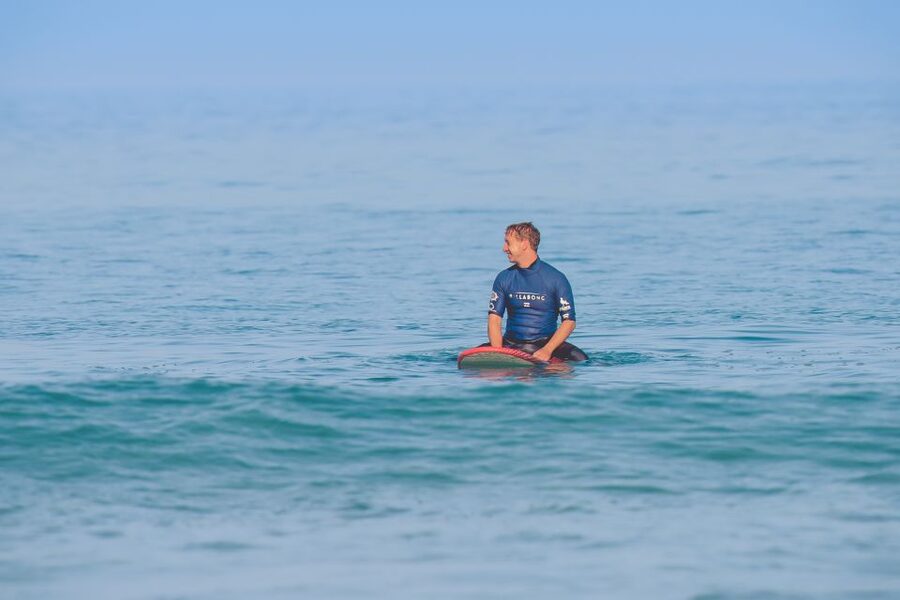
The school provides Billabong wetsuits and surfboards. Intermediate surfers use soft-covered Ocean+Earth boards, while advanced surfers use epoxy boards. You need to send your height and weight in advance so the school can prepare suitable equipment.
Pack swimwear, a towel, water, and sunscreen. Food and drinks are not included, so bring what you need for the day. The long duration range means this matters, especially if your booking runs toward the longer end.
The Atlantic sun can be strong even when the air feels comfortable. Put on sunscreen before the lesson and bring enough water. A towel and dry clothing will also make the return trip easier, though only the listed items are specifically required.
The equipment setup is sensible for a mixed-level course. Soft foam-covered boards are forgiving for intermediates, while epoxy boards provide a more performance-focused option for advanced surfers. Still, the board is only part of the equation. Your ability to paddle, position yourself, and read the wave will matter more than the brand name.
Small groups and different ability levels
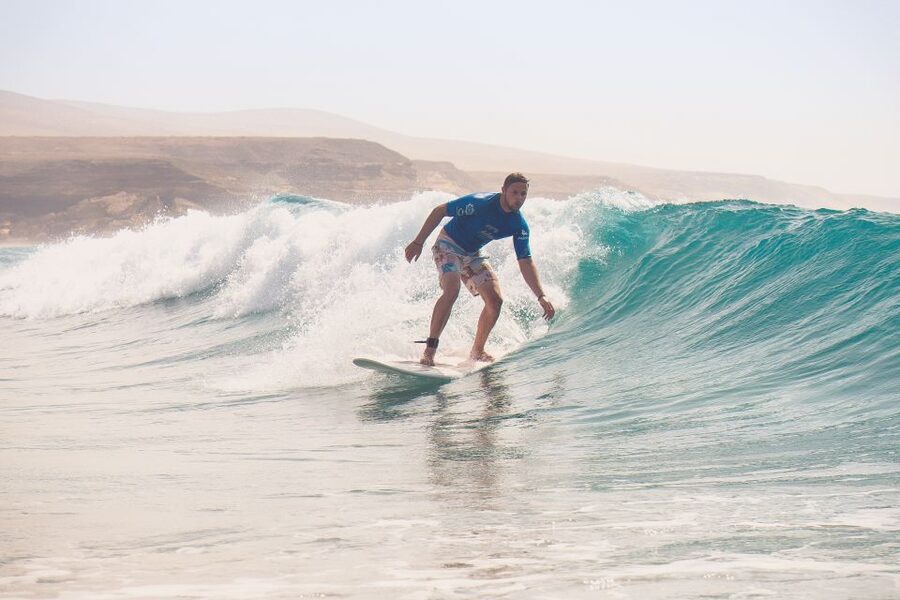
The group size is limited to eight participants per instructor, with groups described as four to eight students. This is not private coaching, so you may sometimes wait while another surfer takes a wave or receives feedback. That is normal in a group surf lesson.
The advantage is that the instructor can adapt the session to the people present. The school asks about your recent surfing and your goals, then uses that information to shape the learning task. If the group contains a range of ability levels, the instructor can still give different students different targets.
You should book this course only if you already have basic surfing experience. The stated starting point is the ability to stand up in the foam. If you have never surfed or cannot yet stand on a whitewater wave, you need a beginner course instead.
For an intermediate surfer, the course is a good fit if you want help making the move into open waves. For an advanced surfer, it may be useful if you want an instructor’s eye on turns, wave choice, or positioning. The exact benefit depends on how clearly you explain what you want to improve.
The shuttle, meeting point, and daily timing
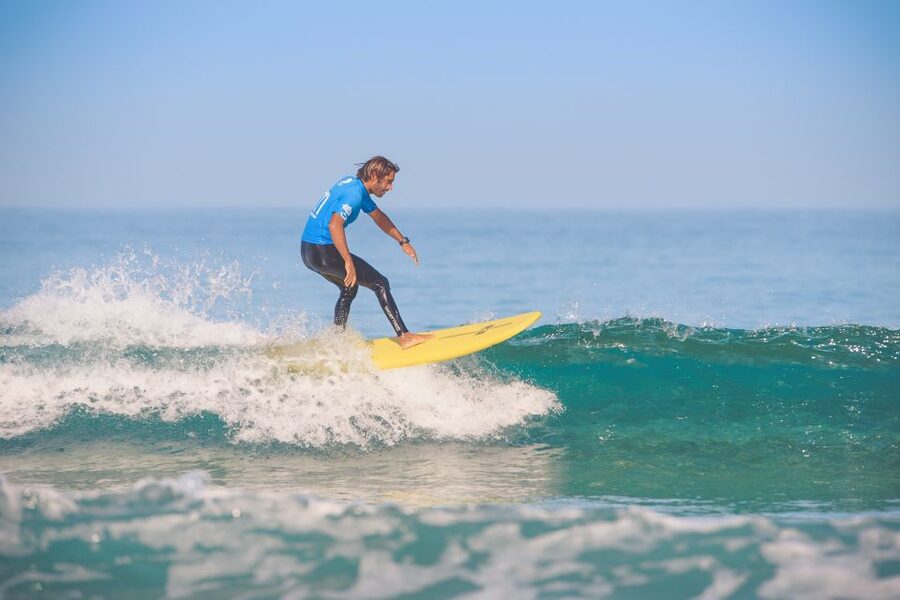
Beach transport is included, but the exact meeting point and time are not fixed in the information provided. At least one day before the course, you receive a text or WhatsApp message with the details. Check your phone and keep your schedule open enough to handle a changing beach location.
Optional pickup costs 8 euros from accommodation in Morro Jable, Jandia, Esquinzo, Butihondo, Costa Calma, La Pared, or La Lajita. If you want pickup, send the hotel name or accommodation address, your mobile number, height, weight, recent surfing experience, and learning goal.
The flexible meeting system makes sense because the surf beach can change with conditions. It does require a little planning from you. Do not assume that a map pin from a previous day will still apply, and do not leave your phone switched off the night before.
The beach shuttle adds real value at a surf destination. You do not need to work out how to reach a different beach each day or carry a board across town. The tradeoff is that you have less control over the exact beach and start time.
Is $60 a fair price?
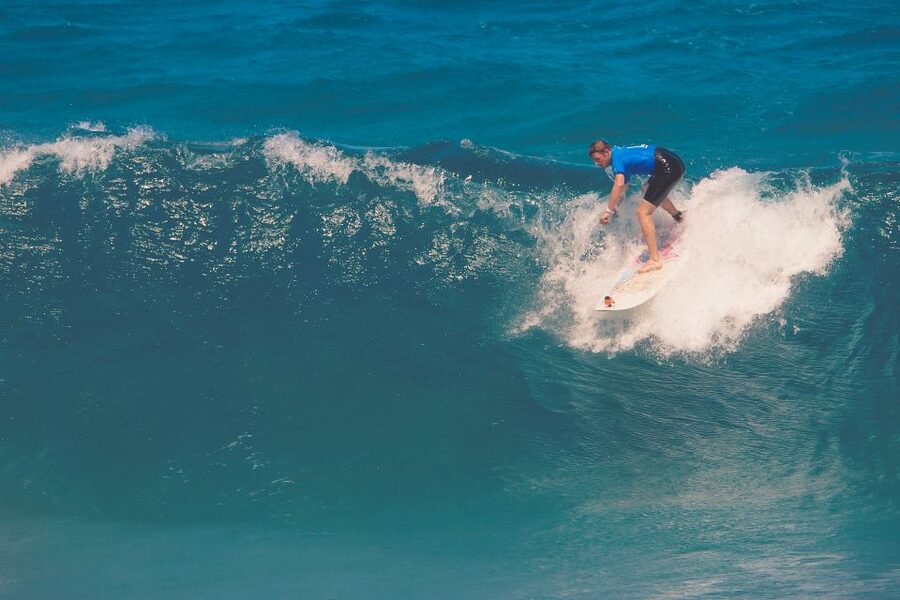
At $60 per person, the course offers more than board rental. You receive beach transport, a wetsuit, instruction on land and in the water, and equipment suited to your level. The small group size also makes the price more attractive than a basic rental session, especially if you need help with wave choice and technique.
The value depends on how much coaching you want. If you can already surf confidently at several beaches and only need a board, renting independently may cost less. If you are trying to catch green waves or correct a recurring problem, instruction can save you a great deal of unproductive time.
The three-day option is likely the better choice for someone serious about progress, mainly because it includes video coaching and gives you more practice. A shorter booking makes more sense for a compact holiday schedule or a first lesson at this level.
Pickup is an extra 8 euros. That is a reasonable convenience fee if your accommodation is in one of the listed areas, but you can compare it with the time and cost of reaching the meeting point yourself.
Who should book this course?
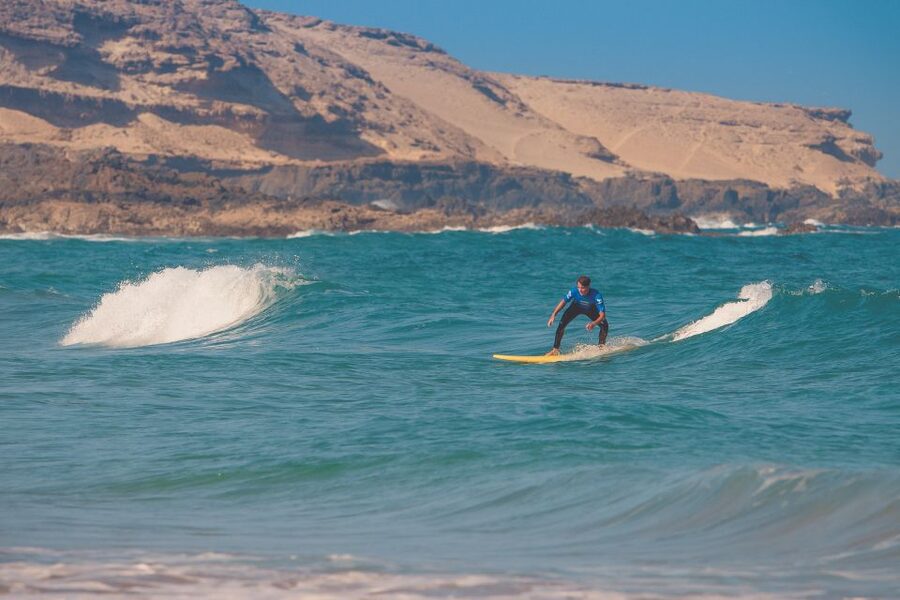
I would point this course toward surfers who can stand in foam waves and are ready to work on open-water skills. It suits you if you want an instructor in the water, prefer small groups, and are willing to let conditions decide the beach.
It is also a good option for surfers who feel stuck. Perhaps you can stand up but cannot catch green waves. Perhaps you catch them but ride straight without turning. Perhaps you lose energy paddling out. These are clear goals for an instructor to address.
It may be less suitable if you want a fixed itinerary, a guaranteed beach, or a private lesson. The beach and meeting point change, and the group format means your time is shared with other students. The course also will not suit a complete beginner who still needs to learn the basic pop-up.
Should you book it?
Book this course if you already have the basics and want to learn the part of surfing that happens after the foam. The strongest reasons are the changing beach choice, in-water coaching, and small groups limited to eight people per instructor.
Choose the three-day option if you want a more useful progression and video coaching. Choose a shorter session if your schedule is tight or you mainly need a lesson to solve one clear problem.
Before paying, send your phone number, height, weight, recent surf experience, and goal. Then keep an eye on WhatsApp, pack water and sunscreen, and accept that the best beach for the day may not be the beach you first imagined. For intermediate and advanced surfers, that flexibility is the point.
FAQ
Who is this surf course for?
It is for intermediate and advanced surfers who already know the basics and can stand up in foam waves. The course focuses on paddling into unbroken waves, riding them, and learning new manoeuvres.
How long does the course last?
Available options range from 3.5 to 13.5 hours. Check availability for the starting times and course length offered on your chosen date.
What is included in the price?
The course includes transport to the beach with the best conditions for the group, surf equipment, a Billabong wetsuit, instruction, and small-group coaching. Video coaching is included with the three-day course.
Are surfboards provided?
Yes. Intermediate surfers use Ocean+Earth surfboards with soft foam covers. Advanced surfers use epoxy surfboards.
How many people are in each group?
Groups are limited to four to eight students per instructor.
Will the course take place at the same beach every day?
No. The instructor chooses the beach according to wind, tide, weather, and the surfing level of the group.
Is pickup from my accommodation available?
Optional pickup is available for an extra 8 euros from Morro Jable, Jandia, Esquinzo, Butihondo, Costa Calma, La Pared, or La Lajita.
What should I bring?
Bring swimwear, a towel, water, and sunscreen. Food and drinks are not included.
How will I receive the meeting point and time?
You will receive a text or WhatsApp message at least one day before the course starts. Send your mobile number when booking so the school can contact you.
Just added around Fuerteventura
- 4 Hours Surf Class in Corralejo, Fuerteventura★ 4.5 · 14 reviews
- Kitesurf School in Corralejo Book Your Classes★ 5.0 · 37 reviews
- SUP taster course in the picturesque bay of Morro Jable★ 4.5 · 4 reviews
- Learn to surf the most beautiful sandy beaches of Fuerteventura★ 5.0 · 2 reviews
- Learn to windsurf in the beautiful bay of Costa Calma★ 5.0 · 6 reviews
- Kids and Family Guided Surf Course at Fuerteventura Beaches★ 5.0 · 7 reviews
- Learn to surf on the endless beaches in southern Fuerteventura★ 5.0 · 31 reviews
- Come surf with me! Surf In Fuerteventura by Sealover★ 5.0 · 31 reviews
Fuerteventura Surf Trips, compared.
Lezioni di Surf per Beginner e Intermedi (6 persone a istruttore)
Read our review →
Fuerteventura South: Learn to surf on stunning beaches!
Read our review →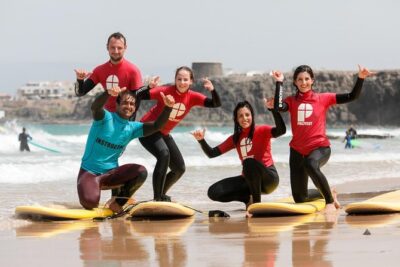
Browse the lists this tour appears in