
Review · PORTUGAL
Costa da Caparica: Surf Lesson 2 hour All levels
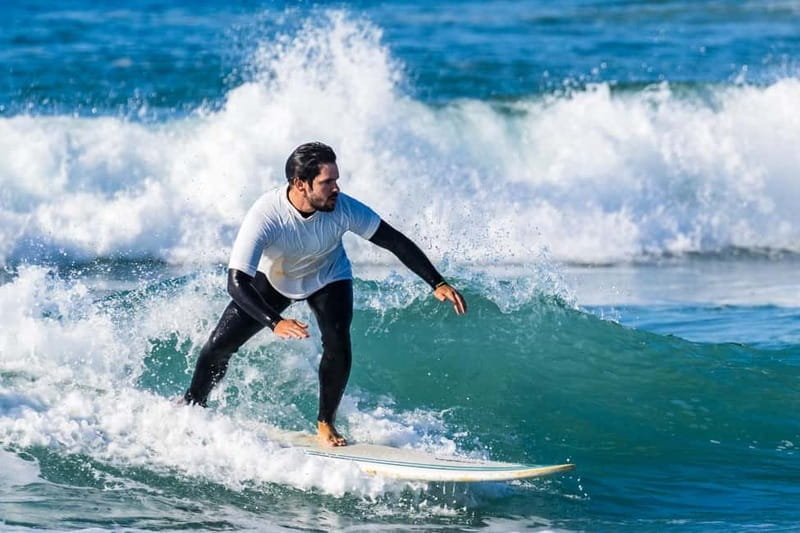
Costa da Caparica gives first-time surfers a proper taste of the Atlantic without sending you far from Lisbon. This two-hour lesson covers the key moves, then gets you into the water to try them for yourself, which is far more useful than watching a long beachside demonstration.
I like the small groups, capped at five participants per instructor, and the clear focus on safety before anyone starts chasing waves. I also like that the price includes a board suited to your level, a warm 4/3 mm wetsuit, sun protection, and insurance.
The main consideration is time. Two hours goes quickly once you include equipment and instruction, and one booking found that French was not available despite being listed among the teaching languages. If French support matters to you, confirm it before booking.
Key points to know before you book
- Just 20 minutes south of Lisbon: Costa da Caparica is an easy coastal escape from the city.
- No more than five participants per instructor: You get a better chance to receive useful corrections than in a large class.
- Designed for first-timers and rusty beginners: The lesson covers board handling, safety, paddling, and the pop-up.
- Most of the lesson takes place in the water: You are not paying for a long lecture on the sand.
- Equipment is included: Your board, 4/3 mm wetsuit, sun protection, and insurance are covered.
- French may need confirming: Portuguese, Spanish, French, and English are listed, but French was not available on one booking.
Why Costa da Caparica works for a first surf lesson
Costa da Caparica is one of the most practical places near Lisbon to try surfing. You are only about 20 minutes south of the city, so the lesson fits neatly into a day that also includes Lisbon sightseeing, a beach afternoon, or a meal along the coast.
That short distance matters. You get an Atlantic beach setting without arranging a long trip to a distant surf town. At the same time, this is not an indoor training session or a dry demonstration. You are introduced to the basic habits of ocean surfing, then asked to use them in the water.
I would choose this experience if you want a first taste of the sport rather than a full surf holiday. Two hours is enough to understand the basic movements and try catching a wave, but it is not enough to develop polished technique. Think of it as a useful first step, with a chance to find out if surfing suits you.
The lesson is open to all levels, but its structure is especially friendly to beginners. It also suits someone who has surfed before and wants to refresh the basics. The class does not assume you already know how to handle a board, read the immediate conditions, or stand up correctly.
More Surf Lessons in Portugal
- Matosinhos: Surfing Lesson with Equipment
★ 4.8 · 926 reviews - Albufeira: Surf Lesson
★ 4.7 · 699 reviews - Porto: Small Group Surf Lesson with Transportation
★ 4.9 · 594 reviews
The first minutes: equipment and beach safety
Your lesson begins with an introduction to the equipment. You learn about the different types of surfboards and receive a board suited to your level. That may sound basic, but it is important. A board is not just a floating platform. Its size and shape affect stability, paddling, and how easy it is to stand.
A beginner needs to know how to handle the board before reaching the water. The instructor’s job is to make the equipment feel less mysterious, so you can focus on body position and the next wave instead of wondering what every part does.
You also receive a 4/3 mm wetsuit. This is included in the $32 price, along with sun protection and insurance. The wetsuit helps make a two-hour Atlantic session more comfortable, particularly when you are spending much of the class in the water rather than standing on the beach.
Safety is treated as a central part of the lesson. You learn about the waves and the beach before practicing. That is valuable for first-timers, since surfing involves more than lying on a board and waiting for whitewater. You need to understand how to behave around the ocean and how to practice without creating problems for yourself or other people.
I like this part of the plan because it keeps the experience grounded. The goal is not simply to get a photograph of you standing on a board. You are learning how to take part in an ocean sport with sensible habits.
On the sand: learning the pop-up
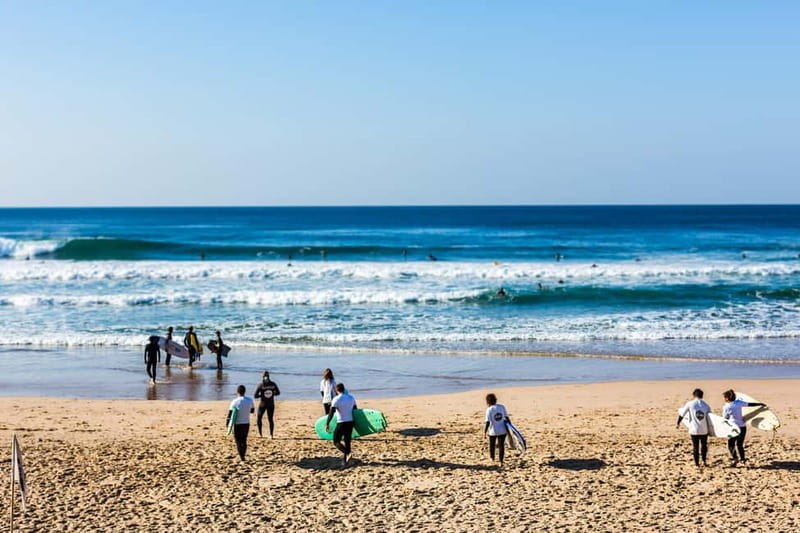
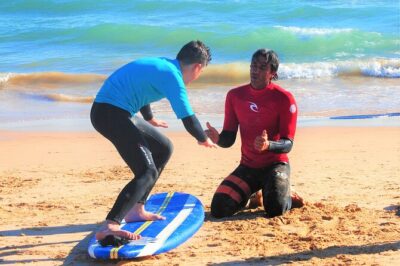
Once the basic safety information is covered, the instructor teaches the main movements on land. You learn how to lie on the board, paddle, and move from a lying position to standing. That final movement is the pop-up, the brief moment that makes surfing look easy and feel surprisingly demanding.
Your body position matters from the start. Lying too far forward or too far back affects the board. Poor paddle technique can leave you tired before a suitable wave arrives. The instructor helps you repeat the movements so the sequence becomes familiar before you try it in the water.
This is where the small-group format earns its price. With no more than five participants per instructor, the teacher has a reasonable chance to see what each person is doing. You are not simply copying a demonstration from the back of a crowded group.
The class is also useful for people who have tried surfing before but never developed a reliable pop-up. A short refresher can help you correct a habit that has become automatic. You may not leave with expert form after one session, but you should have a clearer idea of what to work on next.
Do not expect a quiet private lesson. It is still a group experience, and your exact amount of individual instruction can vary with the number of people present and the conditions on the day. The five-person limit is a helpful safeguard, but it does not turn the session into one-to-one coaching.
In the water: putting basic skills to work
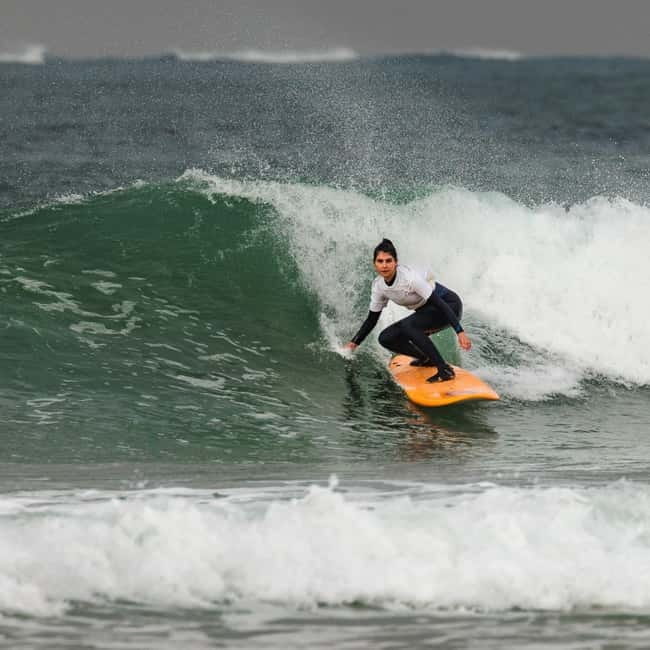
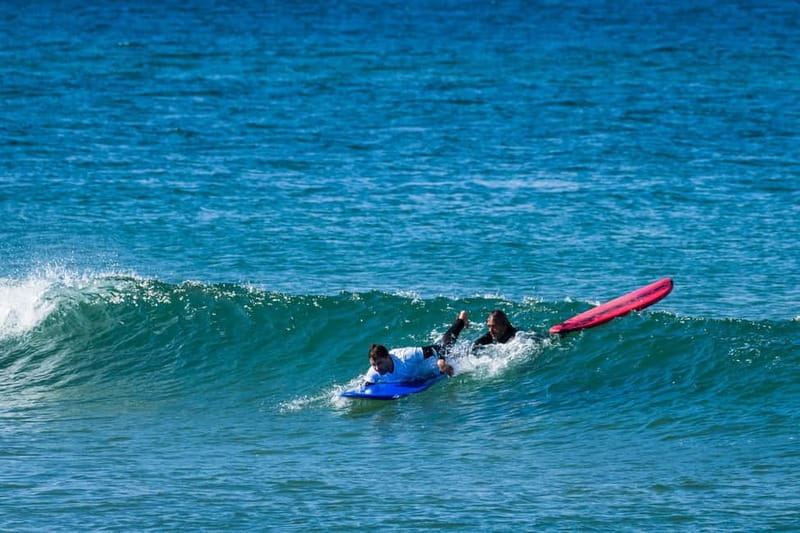
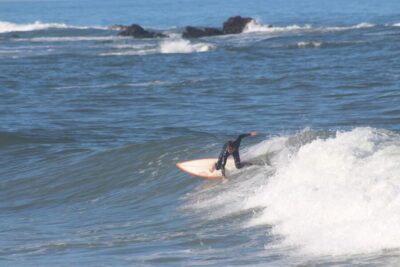
The lesson’s most important feature is the time spent practicing in the water. After learning the basic movements, you use the board, paddle, and try to catch waves. This practical section is where the class either becomes a real introduction to surfing or remains a beach talk. Here, the aim is clearly to get you practicing.
Your first successful ride may be short. That is normal for a beginner lesson. The useful result is not a long run down the beach. It is learning how the board responds, how to time your effort, and how to move your body quickly enough to reach a standing position.
The instructors also help build confidence. That matters because new surfers often hesitate at the exact moment they need to commit to the movement. A calm teacher can help you understand that falling or missing a wave is part of the learning process, not proof that you cannot surf.
The supplied equipment reduces another source of worry. You do not need to bring a board or figure out which board to rent. The school provides a board for your level, a wetsuit, sun protection, and insurance.
Still, the sea is not a machine. The number of waves you catch and how easy the lesson feels can vary. The activity promises practice and instruction, not a guaranteed perfect ride. If you want the best chance of standing up, listen closely to the safety briefing and focus on the body movements instead of trying to force every wave.
Same coast, a different way into the water:
- Lisbon Surf Experience
★ 4.9 · 876 reviews - Albufeira: 2-Hour Falesia Beach Surf Lesson
★ 4.8 · 464 reviews - Albufeira: Learn to Surf in Chill Beach Vibes & Good Times
★ 4.7 · 439 reviews - Surf Experience in Cascais
★ 5.0 · 423 reviews
How the small group changes the experience
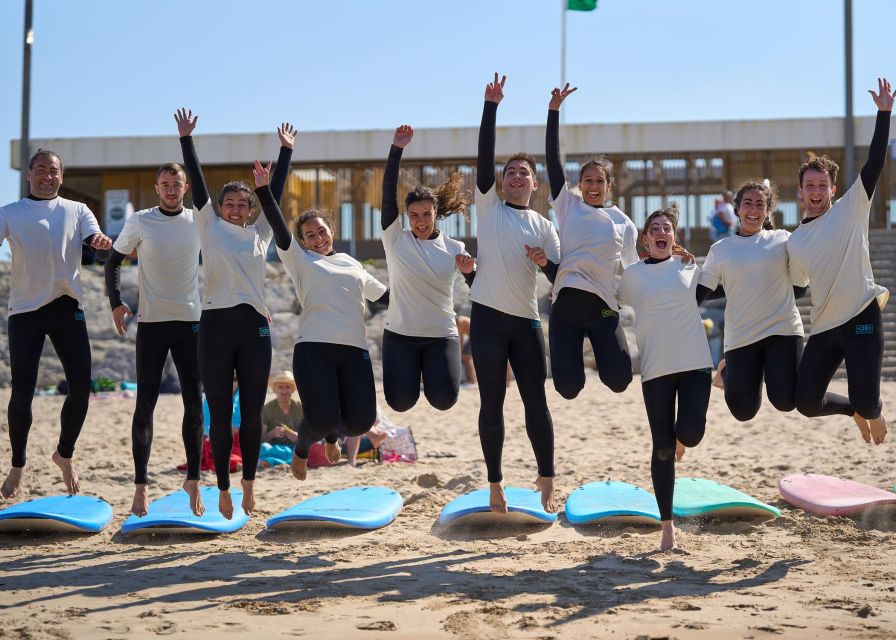
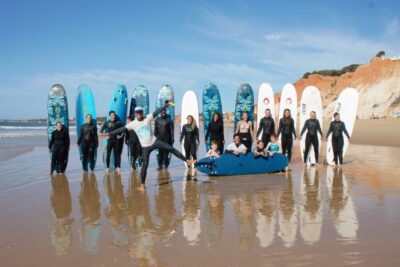
The limit of five participants per instructor is one of the strongest reasons to consider this class. Surf lessons can become frustrating when too many people share one teacher. You may spend a long time waiting, miss a correction, or copy another person’s mistake.
A smaller group gives the instructor more room to watch. It also makes it easier to ask a question without holding up a large crowd. If you are nervous, that personal attention can make the first attempt feel more manageable.
The class still has a social side. You are learning alongside other people at a similar stage, which can make the awkward first attempts feel less serious. Everyone is working through the same basic problems: balancing, paddling, timing, and standing at the right moment.
I would not book this expecting the intensity of a private coaching session. The instructor must divide attention among the group. But compared with a large class, five people per instructor is a sensible arrangement, particularly when the lesson includes both safety teaching and water practice.
The teaching team is described as qualified and friendly, and the strongest praise focuses on the teachers and the small number of participants. That matches what you should value here: patient instruction, not a flashy presentation.
Language choices and an important French check
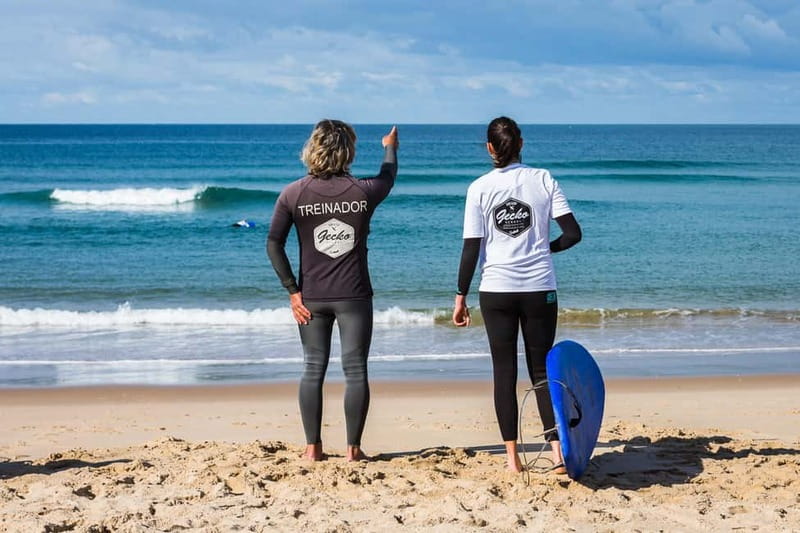
Instruction is listed in Portuguese, Spanish, French, and English. For many visitors to Lisbon, that makes the lesson easier to arrange, especially if you are not comfortable receiving technical instructions in Portuguese.
There is one practical wrinkle. A booking reported that the lesson was not in French, despite French being listed as an available language. I would confirm the teaching language before paying if French is essential to your safety briefing or comfort in the water.
English, Portuguese, and Spanish are also listed. The available language can affect how quickly you understand instructions about positioning and safety, so it is worth checking rather than assuming.
No instructor names are provided, so you cannot choose a particular teacher in advance. That is not unusual for a surf school, but it is useful to know if you prefer a named guide or want to request someone you have already met.
What $32 gets you
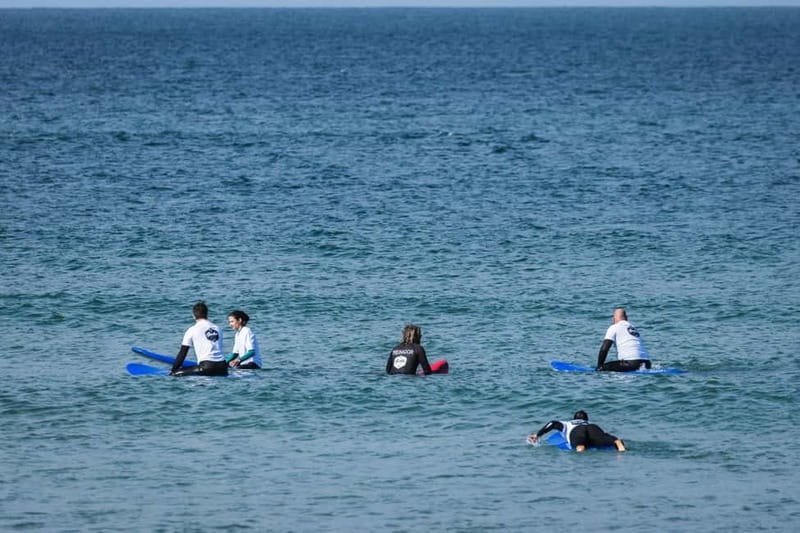
At $32 per person, the lesson is priced as an accessible introduction to surfing. You receive two hours of instruction, a board matched to your level, a 4/3 mm wetsuit, sun protection, and insurance.
The value comes from the combination. Renting equipment separately would add cost and effort, while a first lesson without an instructor would leave you guessing about safety and technique. Here, the essential gear and guidance are bundled together.
You should budget separately for food and drinks, since neither is included. Hotel pickup and drop-off are also not included, so you need to make your own way to Costa da Caparica. The short distance from Lisbon helps, but the total cost of your day will be higher if you need separate transport.
A photo package is available for purchase after the lesson. Treat that as an optional extra rather than part of the activity. The included price covers the lesson and core equipment, not a set of photographs.
The reserve-now-and-pay-later option can help if you are still arranging your Lisbon schedule. You can book a place without paying immediately, according to the stated booking terms. Free cancellation is available up to 24 hours in advance for a full refund, which gives you some protection if your plans change.
Who should book this lesson
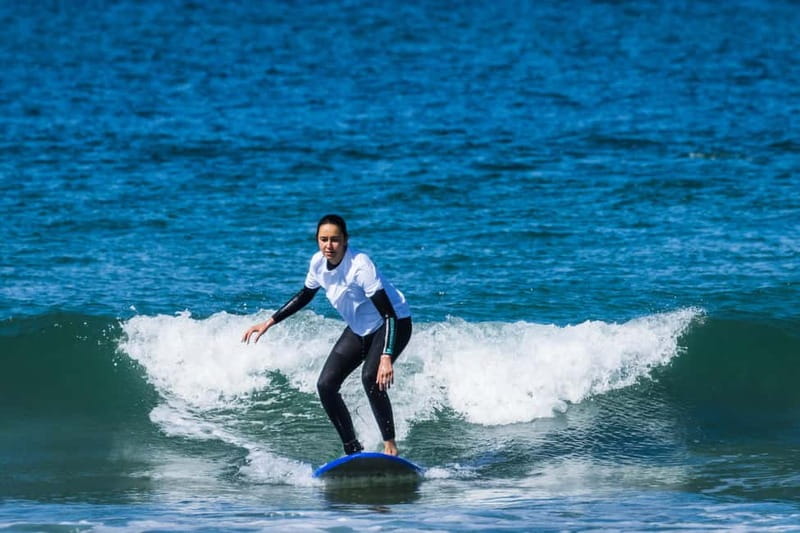
This class is a good match for adults and children aged 12 or older who want a first, practical introduction to surfing near Lisbon. It also suits people who tried surfing once before and need help rebuilding the basics.
You should book it if you value a small class, included equipment, and a lesson that puts you in the water. It is also a sensible choice if you want to test surfing before committing to several days of lessons.
I would be cautious if you want advanced coaching, a full-day surf program, or extensive personal analysis. Two hours is a compact session. You can learn the foundation, but you will need more practice to build consistency.
The activity is not suitable for children under 12 or pregnant women. It is listed as wheelchair accessible, though the available information does not explain the exact arrangements, so ask the provider about the practical details if access support is important to you.
Small details that can make the lesson better
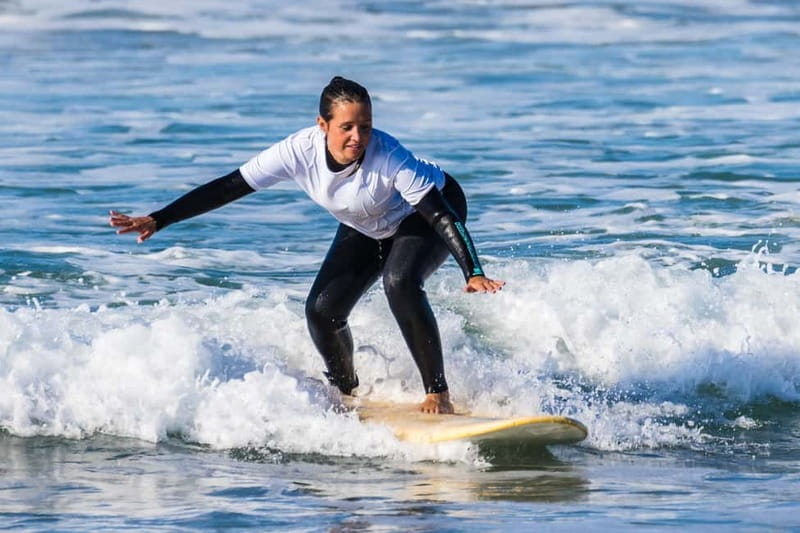
Arrive ready for an active two hours. The school supplies the board, wetsuit, sun protection, and insurance, but food and drinks are not included. Plan those before or after the lesson rather than expecting refreshments as part of the class.
Keep your expectations realistic. Your first wave may be a brief ride, and you may spend time practicing the same movement more than once. That repetition is useful. Surfing looks simple from shore because the movements happen quickly, but beginners need a clear sequence to make the pop-up work.
Pay attention during the safety talk even if you are eager to reach the water. It gives you the basic rules for handling the beach and waves, and it helps you practice with more confidence.
If you want photos, ask about the package after the lesson. It is an optional purchase, so do not assume photographs are included in the $32 price.
Should you book Costa da Caparica Surf Lesson?
Book this if you want an affordable first attempt at surfing close to Lisbon, with equipment included and no more than five participants per instructor. The strongest reasons are the small group, the focus on safety, and the fact that most of your two hours is set aside for practice rather than talk.
Skip it if you want a long session, private coaching, or a guaranteed string of impressive rides. Also confirm the teaching language first if you need French, since that was not available for one booking even though it is listed.
For a first taste of the sport, this is a well-focused choice. You learn the basics, test them in the Atlantic, and leave with a clearer answer to the most important question: do you want to surf again?
FAQ
How long does the Costa da Caparica surf lesson last?
The lesson lasts two hours. Starting times vary, so check availability when choosing a date.
How much does the surf lesson cost?
The listed price is $32 per person.
What equipment is included?
The price includes a surfboard suited to your level and a 4/3 mm wetsuit. Sun protection and insurance are also included.
Is the lesson suitable for complete beginners?
Yes. The class covers basic board handling, ocean safety, lying on the board, paddling, and the pop-up. It is also suitable for people who want to refresh basic skills.
How many people are in each group?
There are no more than five participants per instructor.
What languages are available?
Instruction is listed in Portuguese, Spanish, French, and English. If you need French, confirm availability before booking because it was not available for one booking.
Is the activity suitable for children and pregnant women?
The lesson is not suitable for children under 12 or pregnant women.
Can I cancel or pay later?
You can cancel up to 24 hours in advance for a full refund. A reserve-now-and-pay-later option is also available.
More 2-Hour Experiences in Portugal
- 2-Hour Surf Lesson in Alentejo
★ 5.0 · 243 reviews - Algarve: 2-Hour Beginner Surf Lesson
★ 4.8 · 192 reviews - Quarteira: 2-Hour Surf Lesson at Falésia Beach
★ 4.9 · 78 reviews - Sintra: 2-Hour Group Surf Lesson at Praia Grande
★ 4.5 · 16 reviews
Just added around Portugal
- Guided surf tours from Porto city to the beach★ 4.5 · 10 reviews
- Surfing Lesson | Porto: Small Group Surf Lesson with Transportation★ 5.0 · 34 reviews
- Self-guided tour Bike + Surf★ 5.0 · 6 reviews
- Tour to Gerês in 4×4 full day with option of SUP Tour★ 5.0 · 2 reviews
- Surf Lesson | Surf Lessons★ 5.0 · 39 reviews
- Stand Up Paddle discovering desert beaches of Douro River – Pick Up included★ 5.0 · 11 reviews
- Surf Lessons in Porto with transfer at Porto Surf School★ 5.0 · 42 reviews
- Porto Surf Experience★ 5.0 · 28 reviews
Portugal Surf Trips, compared.
Learn to Surf in Chill Beach Vibes & Good Times
Read our review →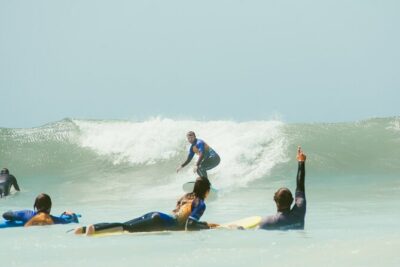

Browse the lists this tour appears in