
Review · KITESURFING LESSONS
A little Taste of Kiteboarding
At St. Joris Bay, you learn the part of kiteboarding that matters most at the start: how to control the kite. The two-hour lesson begins on shore with setup, wind, and safety instructions, then moves into the water, where your instructor helps you turn wind power into motion.
I like the shallow and deeper sections of the bay, since they let you practice more than one part of the sport. I also like that the package includes current kite gear, water shoes, rash guards, and an intercom radio, so you can focus on instruction rather than assembling equipment.
The main drawback is simple: this is a first taste, not a full kiteboarding course. You need to be able to swim and have a moderate level of fitness, and two hours may leave you eager for more rather than fully riding across the bay.
Key points at St. Joris Bay
- The lesson focuses on kite control first, which is the foundation of safe kiteboarding.
- Shallow and deeper water give you room to practice different skills during the same session.
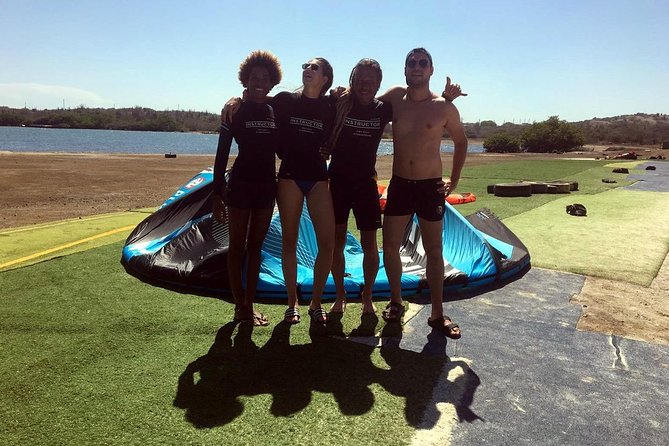
- Lara is one instructor associated with the experience, and her coaching has been praised for making a birthday lesson feel relaxed and fun.
- An intercom radio lets you hear instruction in the water, where wind can make ordinary conversation difficult.
- Return transport from your accommodation is available, adding useful convenience if you are not renting a car.
- This is a private activity for your group, rather than a large class with strangers.
Why this short lesson works for first-time kiteboarders
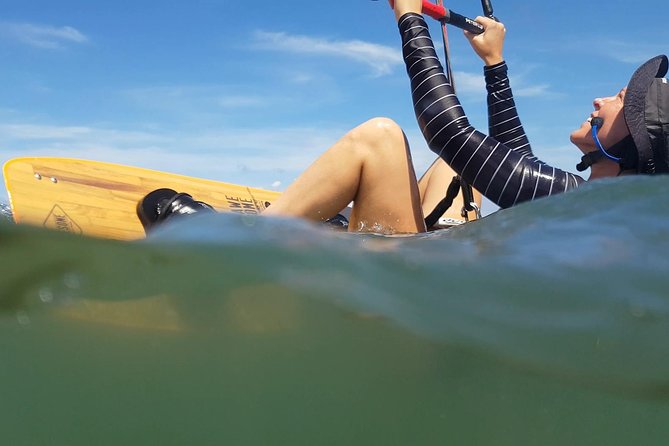
Kiteboarding can look like one smooth act from shore: a person holds a bar, catches the wind, and glides over the water. In practice, the kite is the machine that drives everything. Before you worry about standing on a board, you need to understand how small movements of the control bar change the kite’s position and power.
That is why this introduction begins with the kite rather than rushing straight to board work. You learn how to steer it, manage its pull, and use the wind as your engine. For a first session, this is a sensible order. A board can be exciting, but an uncontrolled kite can quickly become confusing.
The lesson lasts about two hours. That is enough time to get oriented, handle the equipment, receive a safety briefing, and work with the kite in the water. It is not enough time to promise expert control or reliable independent riding. Think of it as a useful first chapter, not the whole book.
The private format helps here. Your group participates on its own, so the instructor can keep the pace closer to your ability. If you pick up kite control quickly, you may spend less time waiting for others. If the first attempts feel awkward, you are not trying to keep up with a busload of beginners.
More Kitesurfing Lessons in the world:
- Private Kitesurf Lesson in Lo Stagnone Sicily
★ 5.0 · 101 reviews - KiteSurfing or Surfing Experience in Essaouira
★ 5.0 · 91 reviews - Kitesurf – Advanced course with individual lessons
★ 5.0 · 88 reviews
Arriving at the kite school
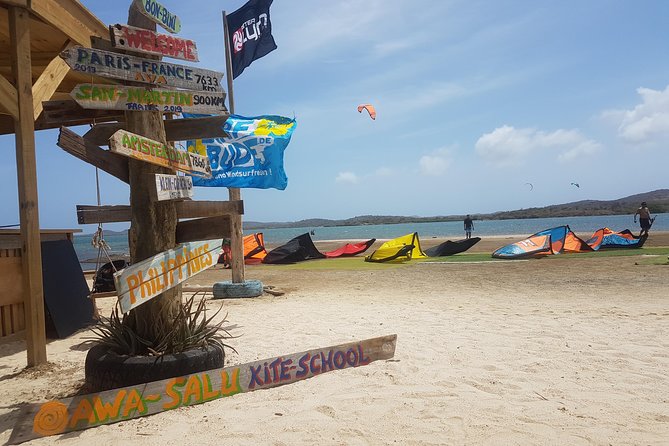
The activity starts at Awa Salu Kiteboarding Curaçao, at The Spot on the road to St. Joris Bay. The meeting point is both a kite school and shop, and the session ends there as well.
Return transport from your accommodation is available, which can make this easier to fit into a Curaçao day. Confirm the transport arrangement when you book, since the stated meeting point remains the school at St. Joris Bay. If you drive yourself, allow enough time to arrive ready for a water activity rather than turning up at the last minute.
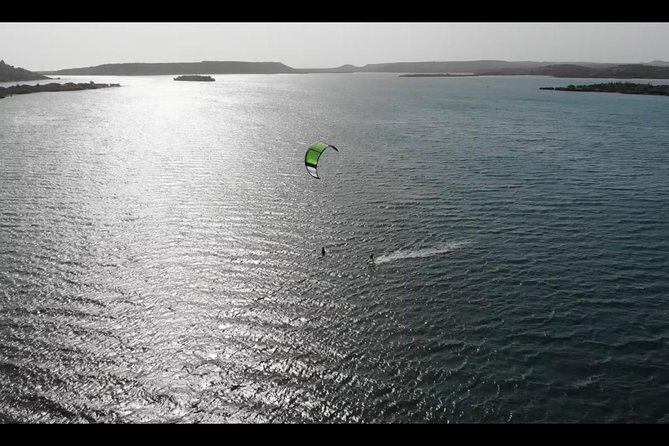
The setting is one of the pleasures of the lesson. St. Joris Bay is described as the best mainland spot for kiteboarding in Curaçao, and the bay gives the activity room to move beyond a dry-land demonstration. You get to watch local kiteboarders before or after your lesson, too. Their tricks may be entertaining, but they are also a useful reminder of what the sport looks like once control becomes natural.
Do not confuse watching advanced riders with being expected to copy them. Your session is about safe handling and basic movement. The local action provides atmosphere and a look at what continued practice can lead to.
Setting up the kite and learning the wind
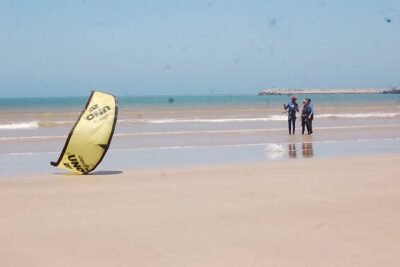
The first stage is preparation. You and the instructor set up the kite, then go through wind and safety information. This may be less glamorous than getting pulled over the water, but it is the part that gives the rest of the lesson structure.
The safety briefing matters because kiteboarding depends on conditions and control. You need to understand how the kite reacts before it develops too much power. The instructor introduces the equipment and explains the relationship between the wind, the kite, and your body position.
This is also where the instructor can judge how quickly to move. The information supplied for the experience does not promise a particular amount of board time, and that is fair. Conditions, comfort, and your ability to steer all affect how far you get in two hours.
Lara has been singled out for making the experience feel happy and encouraging, including during a birthday lesson. One participant also managed to get on the board during the first session, though that kind of progress varies. It is best to treat that as possible rather than guaranteed. You may spend your first visit mostly learning the kite, and that is still useful progress.
Moving into the water at St. Joris Bay
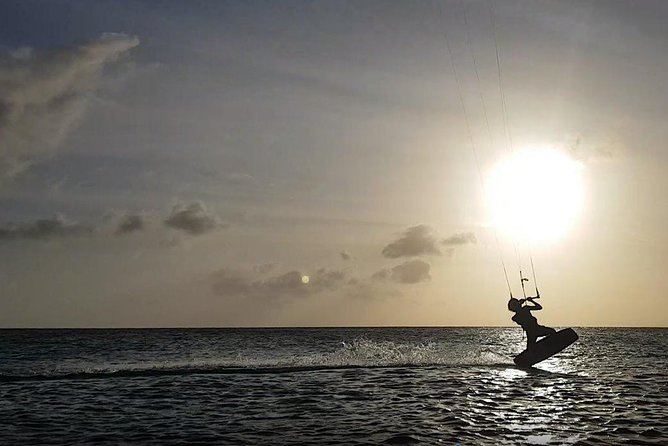
After the shore briefing, you and your instructor enter the water. The bay’s mix of shallow and deeper areas is important because it lets you work on different parts of the sport without changing locations.
In shallow water, you can concentrate on steering and body position with more confidence. You may be able to stand while practicing, which makes it easier to reset after an awkward turn or a loss of control. Deeper sections introduce a different feel, since you cannot rely on the bottom in the same way. The contrast helps show why kiteboarding technique matters.
You will use an intercom radio while working with the instructor. This is a practical inclusion, not a fancy extra. Wind, water, and distance can make spoken instructions hard to catch, so the radio helps keep guidance close to you while you are handling the kite.
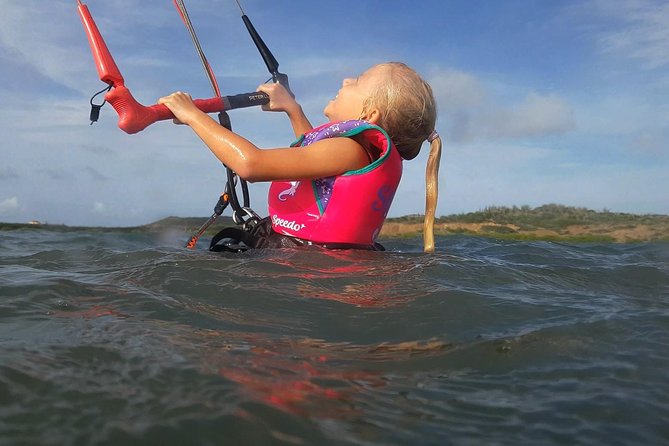
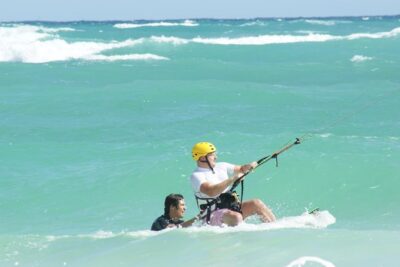
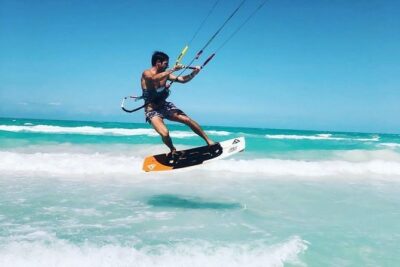
The goal is to learn how to steer the kite and propel yourself using wind power. You are not being pulled by a motor or given a simple ride. Your input controls the kite, and the kite creates the force. That makes the first successful movement especially satisfying, but it also means you should expect some trial and error.
One practical warning: the sport may involve swallowing some salt water while you learn. That is not a reason to avoid the lesson, but it is a reason to bring water for before and after the session, and to expect the first attempts to be untidy.
Same coast, a different way into the water:
- Ibiza: Beach Hopping Cruise w/ Paddleboard, Food, & Drinks
★ 4.5 · 3,224 reviews - Dolphin and Manatee Stand Up Paddleboard Tour in Daytona Beach
★ 5.0 · 2,328 reviews - Magnetic Island Discovery Tour with Snorkeling & Paddle Boarding
★ 5.0 · 1,372 reviews - Tenerife: Surfing Lesson for All Levels, Photos included
★ 4.9 · 1,314 reviews
What the included equipment means for you
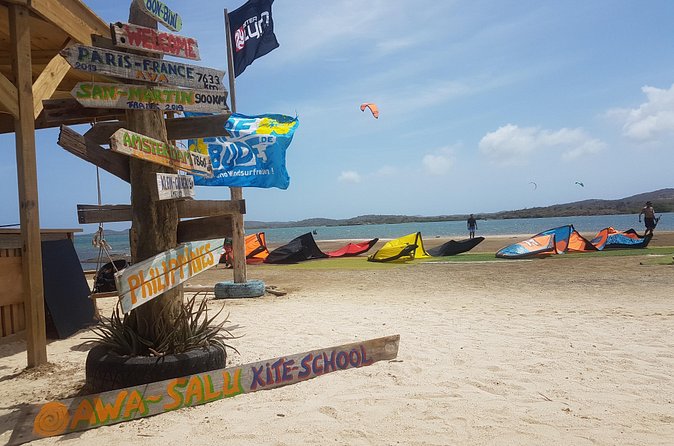
The price is $195 per person. That is a significant amount for two hours, but the value depends on what you would otherwise need to arrange separately. You are not simply paying for access to the bay. The experience includes the year’s kite gear, water shoes, rash guards, sunscreen, and an intercom radio, along with instruction and use of the school’s setup.
The equipment matters most if you are new to the sport. Buying or renting the wrong kite, bar, or protective clothing would add cost and confusion. Here, the school supplies the core kit and prepares it for the lesson.
Water shoes are especially practical around a water-based activity. Rash guards offer an extra layer while you work in the sun and water, and the radio helps the instructor keep in touch with you. Sunscreen is included, though the instructions also tell you to bring sunscreen. I would pack your own familiar sunscreen anyway, since a short lesson still puts you outside under Curaçao’s strong sun.
Bring:
- Swimwear
- Water
- Sunscreen
Leave valuables at home. The activity is built around movement in the water, and there is little reason to bring anything that you would worry about getting wet or losing.
Who should book this Curaçao activity
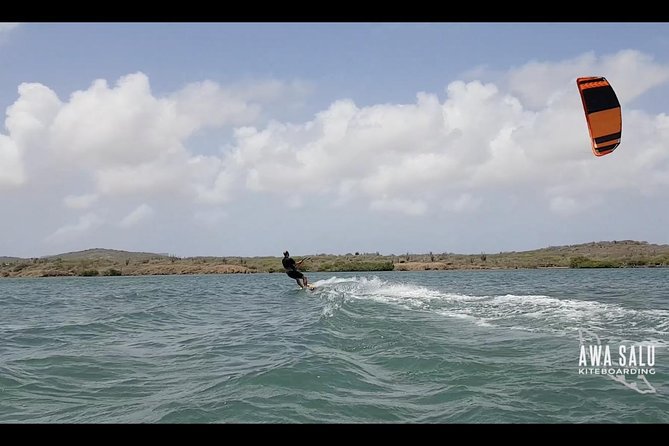
This lesson suits an active first-timer who wants to understand kiteboarding before committing to a longer course. It also works for someone who has watched the sport and wants a direct introduction rather than a beachside explanation.
You need a moderate level of physical fitness. Handling the kite, walking in water, staying balanced, and reacting to wind all take effort. The experience is not recommended for anyone who cannot swim. That restriction should be taken seriously, even though parts of the bay are shallow.
A private session can be a good choice for a couple, family group, or friends who want to learn together. It may also suit a solo booker if the activity is available for that arrangement, though the key benefit is that only your group participates.
This is less suitable if you want a guaranteed board-riding session or a full certification course. The description makes clear that the introduction centers on controlling the kite. More advanced courses can cover walking, launching, and landing the kite on land, but those are not the main promise of this two-hour taste.
The role of the instructor
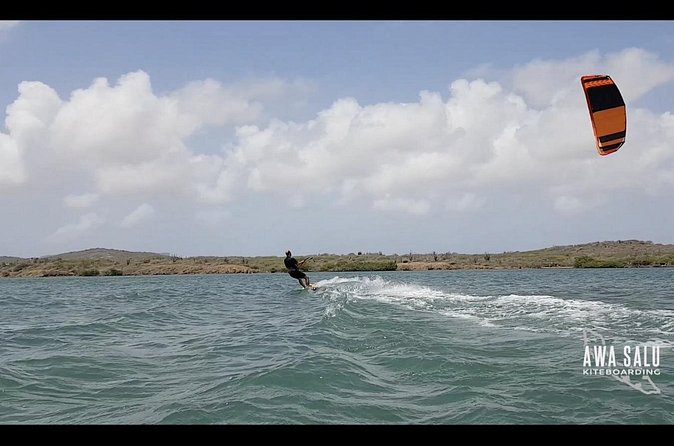
The instructor makes a major difference in an activity where the equipment responds quickly. Good teaching here means breaking the process into manageable steps, keeping safety in view, and giving clear corrections while you are in the water.
Lara is the named coach associated with the most detailed personal account of the experience. Her approach was praised for making a birthday lesson feel special and for helping a quick learner progress to the board. The useful point is not that everyone will stand up on the first day. It is that the lesson can feel personal and encouraging rather than stiff or overly technical.
Your own pace may be slower. Kiteboarding asks you to coordinate the kite, the wind, your body, and possibly a board, all at once. If you are still making mistakes after the first hour, that does not mean the lesson has failed. You are learning the control system that makes later progress possible.
The overall record is strong: the experience is rated five out of five from 36 reviews and is recommended by 100 percent of participants. That is a positive signal, especially for an activity where the instructor’s manner and safety habits matter so much. Still, weather and individual ability can shape your session, so the rating should guide your expectations rather than guarantee a particular result.
Weather, timing, and cancellation
Kiteboarding depends on suitable weather and wind. If poor weather cancels the activity, you are offered another date or a full refund. The activity also requires a minimum number of participants, and a cancellation for that reason brings the same choice of a new date, another experience, or a full refund.
You can cancel for a full refund up to 24 hours before the start time. Cancellations or changes made less than 24 hours before the start are not accepted for a refund. The cut-off follows local Curaçao time, so check the clock carefully if you are arranging plans from another time zone.
Because the activity is only about two hours, it is easy to fit into a travel schedule. I would still avoid putting it immediately before an important airport transfer or fixed reservation. Weather can affect the start, and water activities tend to leave you wanting a little time afterward to dry off and reset.
Is $195 a fair price?
At $195 per person, this is not a casual beach rental. It makes the most sense if you specifically want instruction and a safe introduction to kiteboarding, rather than simply trying a water sport for a few minutes.
The price includes the equipment that a beginner would otherwise have to rent or source, plus water shoes, rash guards, sunscreen, radio communication, and use of an instructor’s time. The private setup also has value for people who dislike large classes or want the lesson adjusted to their group.
The limitation is the short duration. Two hours can pass quickly once setup, briefing, equipment checks, and water practice are counted. If your goal is to ride confidently on your own, plan for additional instruction. If your goal is to find out how kiteboarding feels and learn the basic role of the kite, the session offers a focused starting point.
Should you book A Little Taste of Kiteboarding?
Book it if you can swim, have moderate fitness, and want a real introduction to kite control at St. Joris Bay. The private format, included gear, radio instruction, and mix of shallow and deeper water make it more useful than a simple demonstration.
Go in with realistic expectations. You may get on the board during your first visit, as one quick learner did with Lara, but the dependable outcome is learning how to handle the kite and understanding the safety basics. If that sounds worthwhile, $195 is a reasonable price for a well-equipped first lesson.
Skip it if you cannot swim, dislike active water sports, or want a complete kiteboarding course in one sitting. For everyone else, this is a lively and practical way to test whether wind-powered riding belongs in your Curaçao plans.
FAQ
Where does the kiteboarding lesson start?
The activity starts at Awa Salu Kiteboarding Curaçao, at The Spot on the road to St. Joris Bay in Willemstad, Curaçao.
How long does the experience last?
The introduction course lasts approximately two hours.
Is transportation from my accommodation included?
Return transport from your accommodation is available. The stated start and end point is the kite school at St. Joris Bay.
What equipment is provided?
The experience includes the year’s kite gear, an intercom radio, water shoes, rash guards, and sunscreen.
What should I bring?
Bring swimwear, water, and sunscreen. Leave valuables at home.
Can I book if I cannot swim?
No. The activity is not recommended for people who cannot swim, and participants should have a moderate level of physical fitness.
Just added around the world
- Surfing Lesson in Santa Barbara (2 Hours)★ 5.0 · 10 reviews
- Private Windsurf Experience in Puerto Rico★ 5.0 · 7 reviews
- San Juan Surfing Lessons: Ride the Waves in Puerto Rico★ 5.0 · 30 reviews
- Sunrise SUP tour & breakfast – Private stand up paddle boarding experience★ 5.0 · 20 reviews
- Surf the Basque Country Day trip – Private experience★ 5.0 · 5 reviews
- Private Surf Lesson in Morro Bay★ 5.0 · 42 reviews
- San Juan | Paddleboard | Kayak | Snorkeling | Guided Tours★ 4.5 · 4 reviews
- 120 Min Surf Lesson / Great for All Levels★ 5.0 · 8 reviews
Kitesurfing Lessons, compared.
Semi-private kitesurfing lessons in Tarifa (adapted to every level)
Read our review →
Group Kitesurfing lesson with a Local in Essaouira Morocco
Read our review →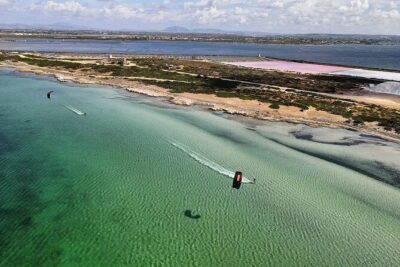
Browse the lists this tour appears in