
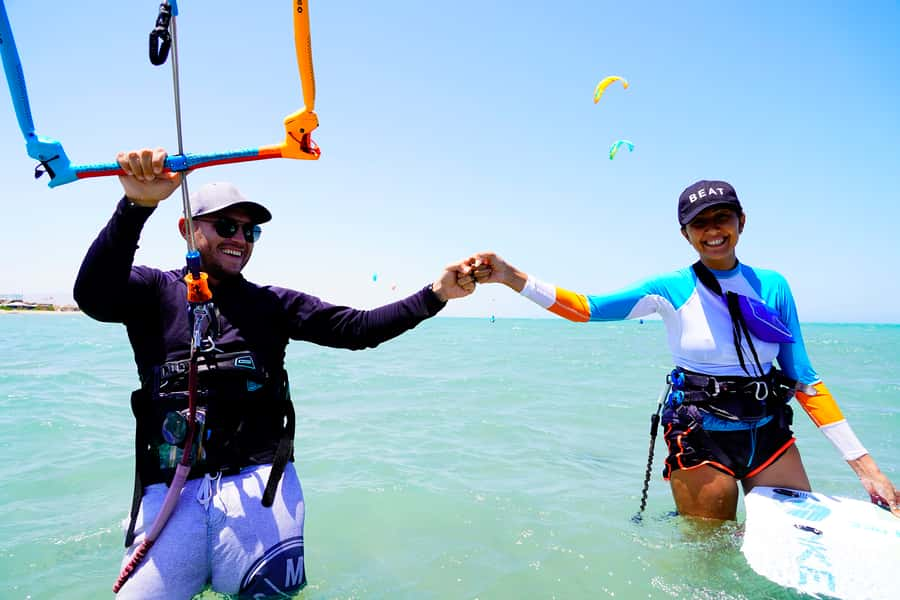
Review · KITESURFING LESSONS
El Gouna: 6-Hour Basic Kitesurfing Course
El Gouna’s Red Sea setting gives this beginner kitesurfing course a clear purpose: you spend less time watching and more time learning to handle a kite on the water. The six hours are split over two days, which gives you a little breathing room between lessons instead of cramming everything into one long session. I like the small groups of no more than four people and the fact that full equipment, insurance, and centre use are included.
I also like the mix of classroom basics and hands-on practice. You learn wind theory, kite control, body dragging, and safety before trying to use a board. The main drawback is the price, $347 per person, especially since food, drinks, and transfers are extra. Your progress also depends on the wind and on how quickly you pick up the controls.
Key points to know before booking
- Six hours over two days: The course is spread across two days, giving you time to absorb the basics.
- Small groups of four or fewer: You should have more direct instructor attention than in a large class.
- Full beginner equipment included: Gear rental and equipment rental insurance are part of the price.
- First water-start attempt may be possible: Your instructor decides how far you progress based on your control and safety skills.
- Centre facilities remain available after class: Use the beach, bar and restaurant, beach volleyball area, and table tennis facilities.
- El Gouna or Hurghada transfers cost extra: You will need to arrange a taxi if you do not already have transport.
Starting with wind theory in El Gouna
A good beginner course starts before the kite goes into the air. At the kitesurfing centre, you sign in and receive a personal introduction to the facilities. Then you attend an introductory session covering wind theory and basic information for working onshore.
That preparation matters. Kitesurfing is not simply a matter of holding a bar and hoping the wind does the work. You need to understand where the wind is coming from, how the kite responds, and how to react when something feels wrong. For a first-timer, this early lesson helps turn a strange collection of lines, fabric, and equipment into something you can use with care.
The instruction is available in Arabic and English. The group limit is four participants, a useful number for a sport that requires close supervision. You are not lost in a crowd, but you are still learning alongside other beginners. That can make the day more social and may help you feel less self-conscious during the first awkward attempts.
The schedule is described as six hours split over two days. Check the available starting times when booking, since the exact lesson hours are not fixed in the information provided. The two-day format is helpful if you want a calmer introduction, though it means you need to keep both days open.
More Kitesurfing Lessons in the world:
- Private Kitesurf Lesson in Lo Stagnone Sicily
★ 5.0 · 101 reviews - KiteSurfing or Surfing Experience in Essaouira
★ 5.0 · 91 reviews - Kitesurf – Advanced course with individual lessons
★ 5.0 · 88 reviews
Getting fitted with the equipment
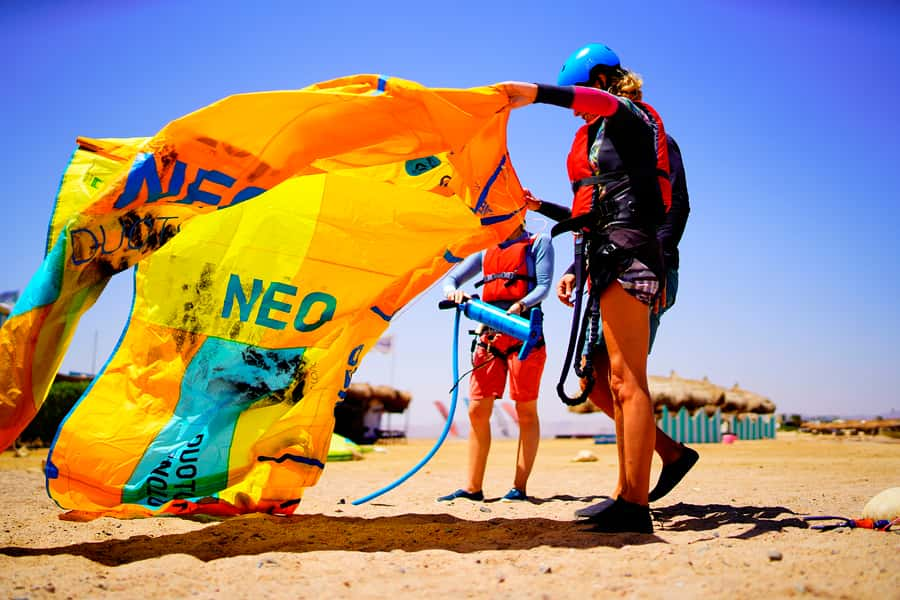
After the introduction, you go to the equipment room and get fitted with the necessary gear. Full equipment rental is included, so you do not need to arrive with your own kite, board, or related course equipment.
That is a major part of the value for a first lesson. Buying or transporting kitesurfing equipment would make a short holiday course impractical. Here, you can try the sport without making a large equipment purchase before you know if it suits you.
The centre provides top-quality equipment for the lessons, and equipment rental insurance is included. Still, insurance does not mean the gear is treated casually. The operator covers repairs, but you remain responsible for lost equipment and would have to pay for it. Listen closely when the instructor explains how to carry, launch, pack, and store everything.
You should bring sunglasses, swimwear, a towel, and sunscreen. Sunglasses help with glare and spray, while sunscreen is especially important during a long day beside reflective water. Food and drinks are not included, so plan to buy them at the centre’s bar and restaurant or bring whatever is permitted there.
Your first kite control session on the beach
Once you have the equipment, you follow your instructor to the beach. This is where the pieces from the introductory session begin to make sense.
You learn how to launch and control the kite, two basic skills that set the tone for everything that follows. Kite control takes attention. You must watch the wind, respond to the kite, and follow instructions while staying aware of your position and the people around you.
The course also covers safety skills. This is one of the most useful parts of a beginner lesson, even if your main goal is simply to stand on a board. A safe kitesurfer needs to know how to react when the kite pulls unexpectedly, how to manage the equipment, and how to stop a problem from becoming a larger one.
The instructors speak Arabic and English, so confirm your preferred language when you arrive. No individual instructor names are provided, but the small group format should allow questions and corrections during practice. For a new sport, that direct feedback is more useful than a quick demonstration followed by a long wait.
Moving into the water and learning body dragging
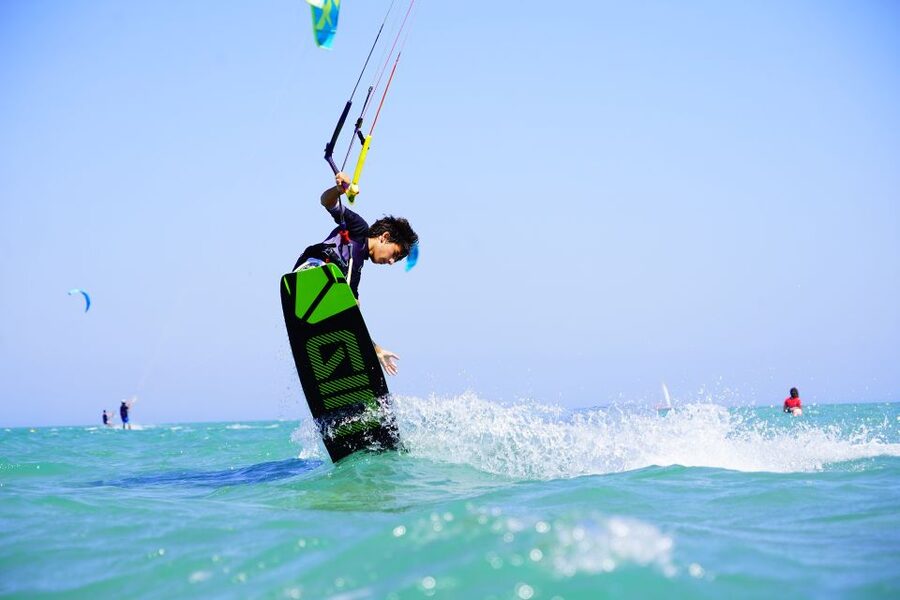
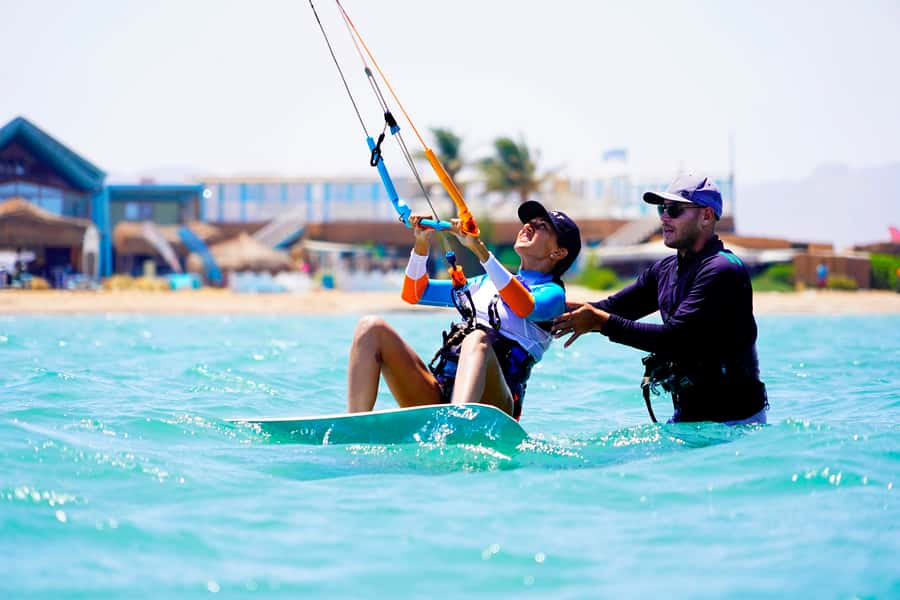
The course takes you onto the water with your instructor for your first experience piloting a kite. You practice body dragging, which means moving through the water while being pulled by the kite without using the board.
This may sound like a small step, but it teaches you how the kite creates movement and how your body responds to its pull. It also helps you get comfortable in the water before you add the extra problem of standing on a board.
The water sessions are likely to be the most memorable part of the course, but they are also where patience matters. You may not progress in a straight line. A lesson can include successful kite control, a few messy attempts, and a return to basic safety work. That is normal for a sport with several moving parts.
Your instructor decides how far you progress based on your personal control and understanding. Some people may reach first water-start attempts with the board. Others may spend more of the six hours building reliable kite skills. The course should not be judged only by whether you stand up on the board. A safe and controlled kite is the foundation for later sessions.
Same coast, a different way into the water:
- Ibiza: Beach Hopping Cruise w/ Paddleboard, Food, & Drinks
★ 4.5 · 3,224 reviews - Dolphin and Manatee Stand Up Paddleboard Tour in Daytona Beach
★ 5.0 · 2,328 reviews - Magnetic Island Discovery Tour with Snorkeling & Paddle Boarding
★ 5.0 · 1,372 reviews - Tenerife: Surfing Lesson for All Levels, Photos included
★ 4.9 · 1,314 reviews
The possible first water start
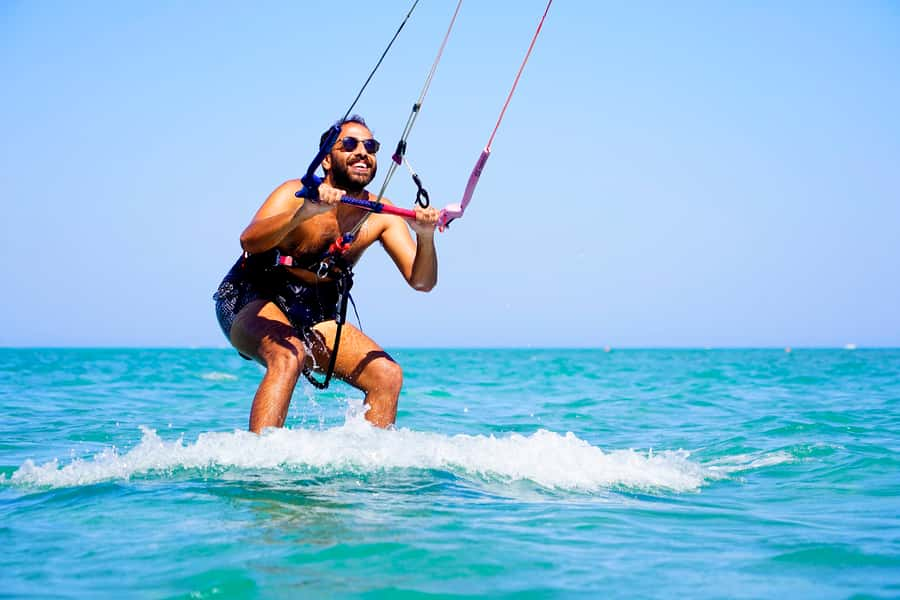
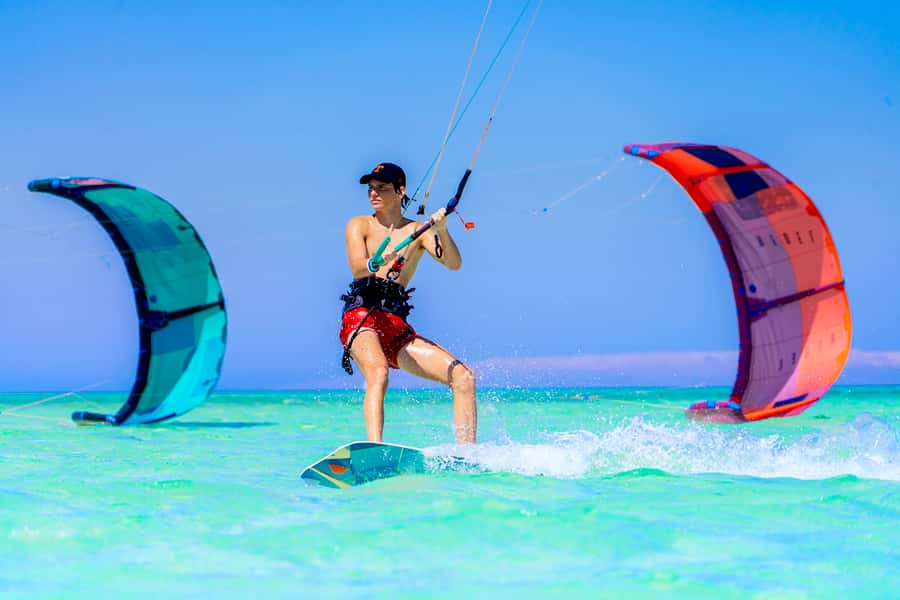
A water start is the point where kitesurfing begins to look like kitesurfing. You use the kite to generate enough pull to rise onto the board and begin moving across the water.
The wording here matters: you may get the chance to attempt a water start, depending on your progress. It is not guaranteed. That is a sensible approach because rushing a beginner onto the board can undermine the safety work that comes first.
If you are hoping to stand up during this course, arrive ready to listen rather than determined to force a result. Your ability to control the kite, follow instructions, and manage the equipment will affect the decision. Wind conditions also matter, although the supplied information does not promise a particular wind strength or weather pattern.
The course is a starting point toward certification, not a full qualification by itself. You begin the process of learning the skills needed to become a certified kitesurfer, but six hours will not turn every beginner into an independent rider. Think of this as a structured first stage.
Making use of the centre after the lesson
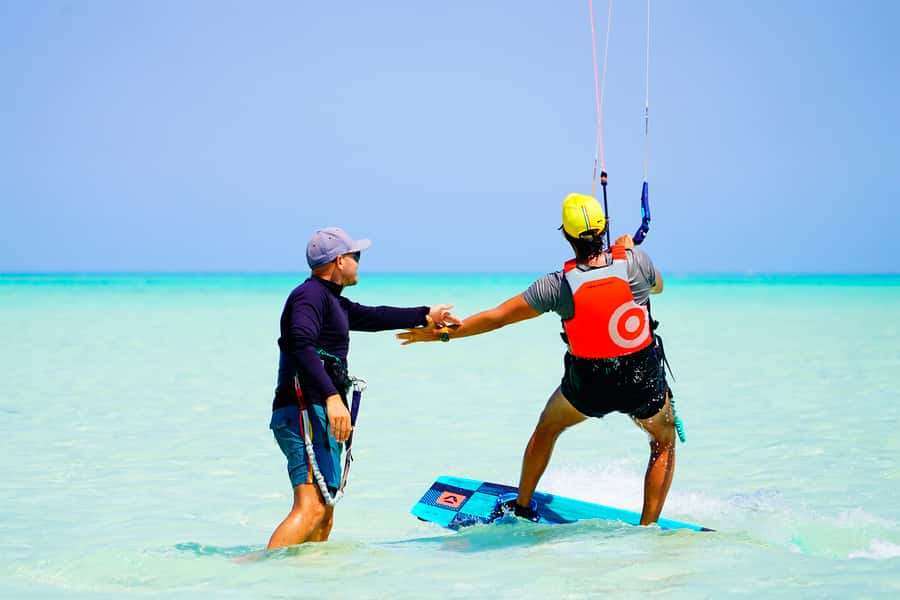
After the lesson, you learn how to pack and store the equipment. This practical step is easy to overlook, but it teaches you to care for the gear and finish the session properly.
Then you can use the centre’s facilities for the rest of the day. You may relax on the beach, buy something at the bar and restaurant, play beach volleyball, or use the table tennis area. You can also spend time with other kitesurfers at the centre.
This extra access helps explain some of the $347 price. You are not paying only for time in the water. You also get the equipment, insurance, instruction, and use of the centre’s facilities for the day. That said, the price remains high for a short introductory activity, especially once you add meals and transport.
The social side may suit you if you like a relaxed sports-centre atmosphere. If you want a private, quiet lesson with a dedicated instructor, the group setup may feel less personal, even with only four participants. The information does not state that private instruction is available.
Understanding the $347 cost
At $347 per person, this is a serious holiday purchase. The strongest value comes from what is bundled into the course: six hours of beginner instruction, full equipment rental, equipment rental insurance, and full-day use of the centre.
You also avoid the cost and inconvenience of bringing specialist equipment. For a first attempt, that matters. You can test the sport with professional gear before deciding if you want more lessons or your own equipment.
The two-day structure adds practical value if you prefer to learn in stages. You can work on the basics, take a break, and return for more practice. It is less appealing if your schedule is tight or if you want one compact activity on a single day.
Food, drinks, and transfers are not included. Optional taxi transfers to or from El Gouna or Hurghada are available, and the operator will contact you before the lesson to confirm pickup time. Since the activity is in the Red Sea Governorate, check the taxi cost before you commit to the total budget.
The main currency is the Egyptian pound, also called LE, though euros are accepted. That is useful for snacks or drinks at the centre, but clarify the price before paying, especially if you use euros.
Who should book this course
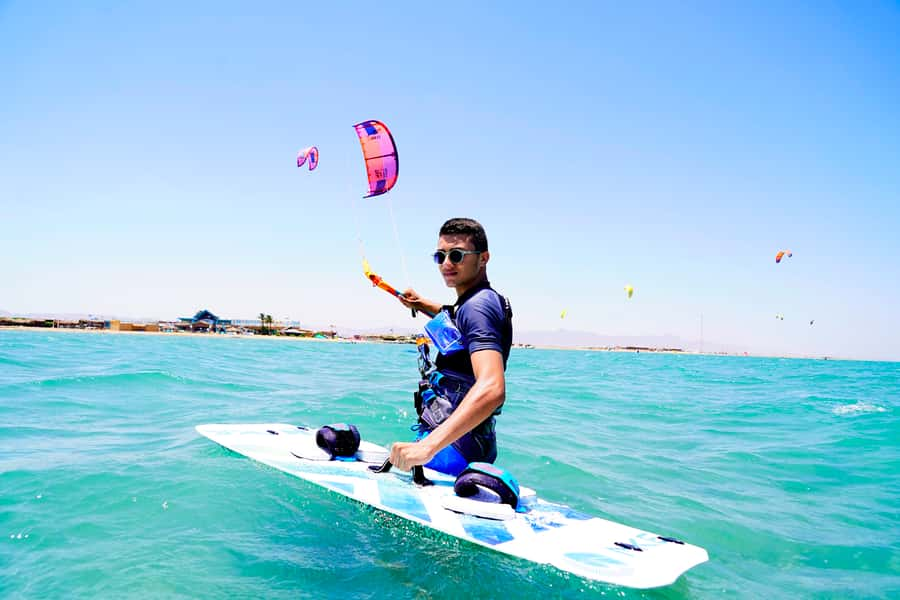
This course suits adults and young people aged 12 and older who want a proper introduction rather than a quick photo opportunity. It is a good match if you enjoy active holidays, can give the activity two days, and want instruction before trying to ride alone.
It also suits you if you are curious about kitesurfing but do not own equipment. The included rental removes one major barrier. The small group should help you get more attention than you would receive in a large class.
You should think twice if you have back problems or are pregnant, since the activity is not suitable for you. Children under 12 are also excluded.
This is not the right choice if you need a guaranteed water start. Your progress depends on your own development, and the course may focus on kite handling and safety rather than board riding. It is also not ideal if you want an all-inclusive day, since meals, drinks, and transport are extra.
Practical advice for a smoother lesson
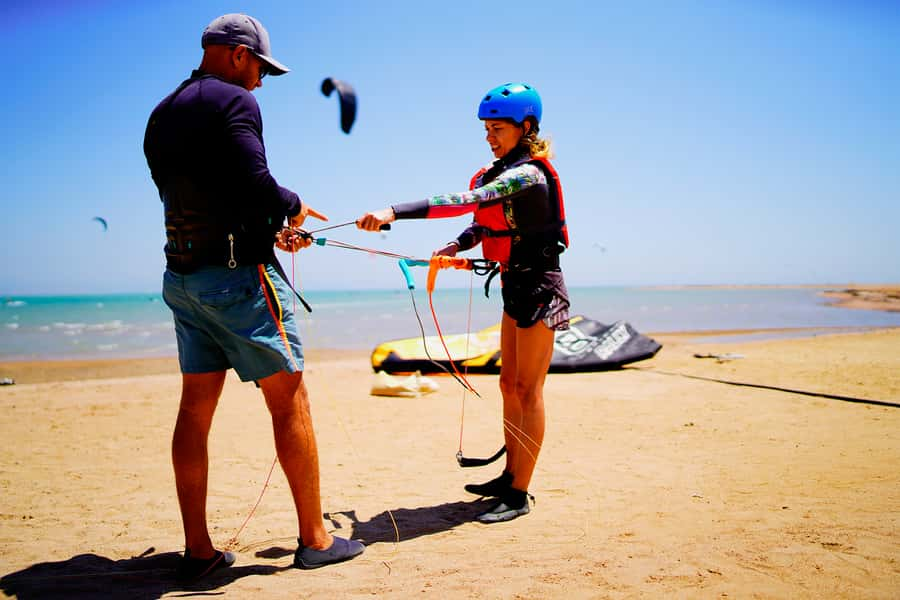
Wear swimwear that stays comfortable during active movement. Bring a towel, sunglasses, and plenty of sunscreen. The supplied information does not state if changing facilities are available, so ask the centre about changing arrangements if that affects your plans.
Keep your schedule flexible around the two lesson days. Starting times vary, and you should check availability before booking. Arrive ready for both instruction and physical practice, rather than treating the session as a passive beach activity.
Ask questions during the wind theory and safety briefing. The more clearly you understand the kite’s response, the more useful your time on the water will be. Follow the instructor’s decision about when to use the board, even if you are eager to try it.
Take care with the equipment. Repairs are covered by the operator, but lost equipment is your financial responsibility. Learn how to pack and store the gear correctly, then check that everything has been returned before leaving.
Free cancellation is available up to 24 hours in advance for a full refund. You can also reserve now and pay later, which helps if your Red Sea schedule is still changing. The local operator may issue a voucher or refund at its discretion in some situations.
Should you book the El Gouna course?
Book it if you want a structured first step into kitesurfing, value a small group, and can afford the $347 price before adding meals and a taxi. The combination of instruction, equipment, insurance, and centre access makes the package practical for a complete beginner.
Skip it if you want a guaranteed board ride, need a one-day activity, or prefer a cheaper introduction. The best reason to choose this course is not the promise of instant independence. It is the chance to learn kite control and safety in a supervised setting, with a possible water start if your skills are ready.
FAQ
How long is the kitesurfing course?
The course includes six hours of beginner kitesurfing instruction split over two days.
Where does the course take place?
The activity takes place at a kitesurfing centre in El Gouna, in Egypt’s Red Sea Governorate.
What languages do the instructors speak?
Instruction is available in Arabic and English.
How many people are in each group?
The course uses small groups limited to four participants.
Is equipment included?
Yes. Full equipment rental is included in the course price.
Is equipment rental insurance included?
Yes. Equipment rental insurance is included.
Can I try a water start?
You may get the chance to attempt a first water start with the board, depending on your personal progress.
Are food and drinks included?
No. Food and drinks are not included, though the centre has a bar and restaurant.
Are transfers included?
No. Transfers are not included. Optional taxi transfers to or from El Gouna or Hurghada are available.
Who cannot take this course?
The course is not suitable for children under 12, pregnant women, or people with back problems.
Just added around the world
- Surfing Lesson in Santa Barbara (2 Hours)★ 5.0 · 10 reviews
- Private Windsurf Experience in Puerto Rico★ 5.0 · 7 reviews
- San Juan Surfing Lessons: Ride the Waves in Puerto Rico★ 5.0 · 30 reviews
- Sunrise SUP tour & breakfast – Private stand up paddle boarding experience★ 5.0 · 20 reviews
- Surf the Basque Country Day trip – Private experience★ 5.0 · 5 reviews
- Private Surf Lesson in Morro Bay★ 5.0 · 42 reviews
- San Juan | Paddleboard | Kayak | Snorkeling | Guided Tours★ 4.5 · 4 reviews
- 120 Min Surf Lesson / Great for All Levels★ 5.0 · 8 reviews
Kitesurfing Lessons, compared.
Semi-private kitesurfing lessons in Tarifa (adapted to every level)
Read our review →
Group Kitesurfing lesson with a Local in Essaouira Morocco
Read our review →
Browse the lists this tour appears in