
Review · MOROCCO
Exclusive Beginners’ Kitesurfing Adventure in Dakhla
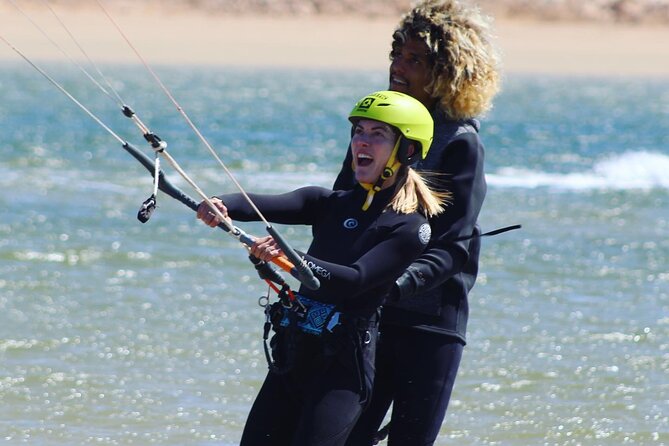
Dakhla is a fine place to learn kitesurfing because the lesson begins with the parts beginners often skip: wind, safety, and kite control. Instructors Lahcen and Rachid build the skills in small steps, from holding the bar on land to relaunching a kite in the water and pulling yourself downwind.
I like the four-person maximum, since you get more attention than in a large beach class. I also like the two-kites-for-four-students setup, which gives you time with the equipment while keeping the class social. The main point to check is the duration: the booking is listed as about three hours, while the full group course may run four or five days, and water lessons may need separate confirmation.
Key points
- Small groups: No more than four people, with one instructor and two kites shared between pairs.
- Safety comes first: You learn wind conditions, the wind window, equipment setup, and safety systems before entering the water.
- A clear skill path: Lessons move from two-handed kite control to one-handed walking, water relaunches, and body dragging.
- Patient instruction: Lahcen and Rachid are praised for careful corrections, calm communication, and building confidence.
- Dakhla setting: The lagoon, desert, and surrounding kite spots add variety beyond a basic beach lesson.
- Flexible booking terms: Pickup is offered, mobile tickets are accepted, and cancellation is free up to 24 hours before the start time.
Why Dakhla Works for a First Kite Lesson
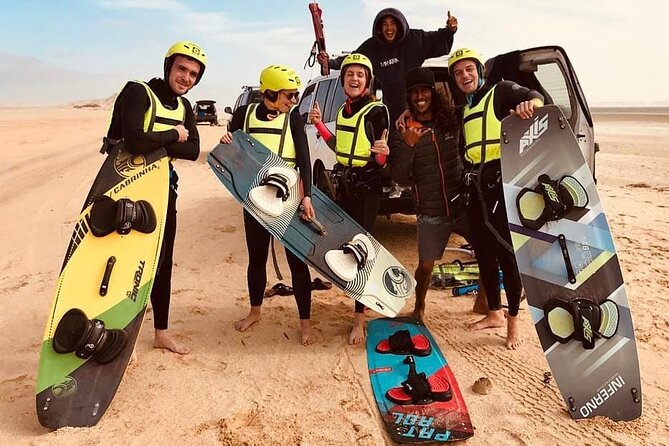
Kitesurfing looks simple from shore. A person holds a bar, a kite pulls, and the board glides. In practice, the kite responds to small movements, wind direction changes the power, and poor timing can turn a calm lesson into a tiring one.
That is why this course starts with the wind itself. You learn to read strength, direction, and quality, rather than treating every gust as the same. This is useful well beyond the first lesson. A beginner who understands the wind has a much better chance of making safe choices later.
Dakhla also gives the course a strong setting. The lagoon is the main attraction, while the desert and other nearby spots add a sense of place. The city itself is not the reason to book this activity, but the water and desert surroundings can make a short lesson feel like part of a larger trip.
The setting does not remove the hard work. Your first session may involve more concentration than motion. That is normal. You are learning to control a moving kite while watching the wind, listening to the instructor, and staying aware of safety procedures.
More Kitesurfing Lessons in Morocco
- Kitesurfing Lessons in Essaouira Beach
★ 5.0 · 206 reviews - Group Kitesurfing lesson with a Local in Essaouira Morocco
★ 5.0 · 175 reviews - KiteSurfing or Surfing Experience in Essaouira
★ 5.0 · 91 reviews
What Happens Before You Touch the Water
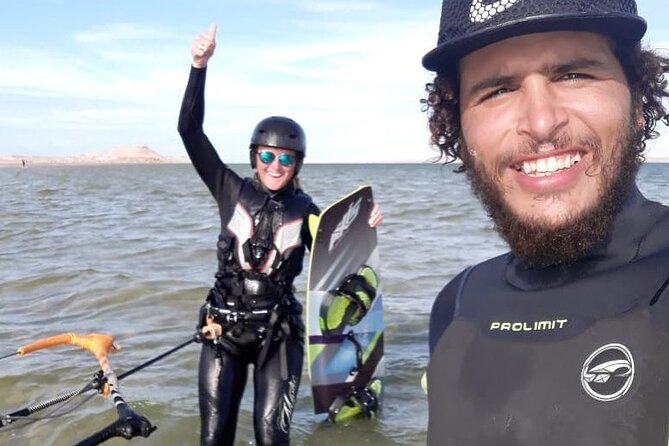
The first stage is equipment and safety. You are introduced to the kite and learn how to set it up for use. That matters because setting up correctly is part of kitesurfing, not a chore handled by someone else.
You also learn the wind window, the area in which the kite flies. This idea explains where the kite has little power, where it begins to pull, and where it can create much stronger force. Once you understand that zone, the bar starts to make more sense.
Safety tools are covered early. You learn when and how to use them instead of trying to remember them during a stressful moment. I appreciate this order. It may feel less exciting than getting dragged across the water, but it gives you a working plan if the kite behaves badly.
The lesson then moves into basic kite control. At first, you use both hands on the bar and learn to fly and land the kite safely. The instructor works on keeping the kite stable, not simply steering it around. That steady control is the base for everything that follows.
You then practice with one hand. This can feel awkward, since you have less control and need to keep your body position calm. The purpose is practical: you cannot manage the kite and move around the beach efficiently if both hands must stay fixed on the bar.
Walking to the Water With One Hand
Walking the kite is one of the more useful early skills. You learn to move toward the water while controlling the kite with one hand. It sounds basic, but it combines several tasks at once: balance, kite position, awareness of the wind, and attention to other people nearby.
This is also where the small group helps. With no more than four people and one instructor, the teacher can correct your kite position before a small mistake becomes a large one. Two kites are in the air, with each kite shared by two students, so you should expect turns rather than constant solo practice.
That setup has a clear advantage and a small trade-off. Sharing equipment keeps the group affordable and gives you a chance to watch another beginner work through the same steps. The drawback is that your active time with the kite is not continuous. If you want private, uninterrupted practice, a one-to-one lesson may suit you better, though this particular format is designed for a small group.
The instructors’ teaching style is another strong point. Lahcen is repeatedly described as patient, methodical, and careful with corrections. Rachid is also praised for a calm and professional approach. Those qualities matter more than a flashy lesson when you are trying to control a kite for the first time.
Entering the Water: Relaunching the Kite
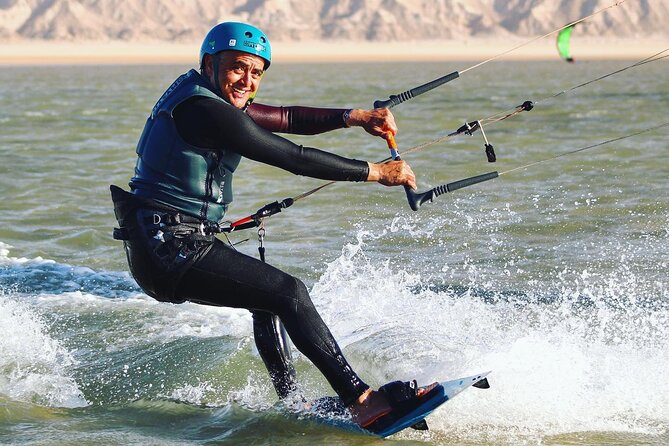
The water section begins with relaunching the kite. If the kite falls into the water, you learn how to bring it back into the air. This is one of the first moments when the lesson becomes more than a land exercise.
A fallen kite is not automatically an emergency, but it does require a clear response. You need to understand the wind window and use the bar in the right way. The instructor can help you link the theory from the beach to an actual situation in the water.
This stage may be the most valuable part of the course for building confidence. The kite will not always stay perfectly positioned, and you need to know that you can recover from a mistake. Learning to relaunch gives you a practical answer to a problem that is likely to occur as you progress.
You should pay close attention here rather than rushing toward the board. The supplied course details focus first on kite relaunching and body dragging, not on promising instant board riding. That is an honest progression. You are learning control and recovery before adding another piece of equipment.
One important booking point deserves attention. The experience is listed as approximately three hours, but the group course description explains a four-to-five-day program with three or four hours of practice each day. It also suggests that the water portion may need separate booking in some arrangements. Before you pay, ask exactly what your chosen session includes, how many days it covers, and if water time is part of the price.
Same coast, a different way into the water:
- Essaouira: Surf Lessons
★ 4.9 · 412 reviews - Agadir: Taghazout Beach Surf Lesson with Lunch and Transfer
★ 4.8 · 298 reviews - Surf Lesson with local surfer in Essaouira Morocco
★ 5.0 · 166 reviews - Agadir: Beginner Surf Lesson – Equipment Included
★ 4.9 · 155 reviews
Body Dragging Downwind
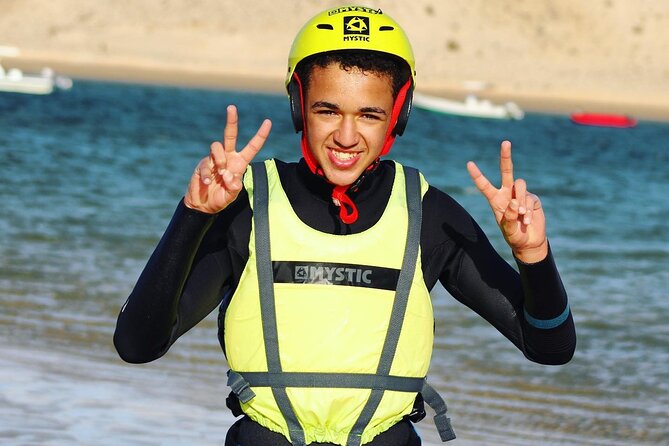
After relaunching, you learn body dragging downwind. Here, the kite pulls you through the water while you use your flying skills to generate enough power to move.
This exercise teaches you how the kite creates force. You are not yet relying on a board to carry you, so you can focus on the kite, the wind window, and your body position. It is a useful bridge between basic flying and later board work.
Body dragging can also expose the difference between understanding an instruction and applying it. A kite may seem easy to control on land, then feel much more powerful once you are in the water. The instructor’s role is to help you find the right amount of power and keep the movement controlled.
Do not judge the course only by how far you travel. Early progress may mean keeping the kite stable, relaunching it without panic, or moving a short distance in the right direction. Those small wins make later lessons safer and more productive.
The Small Group Format and Instructor Attention
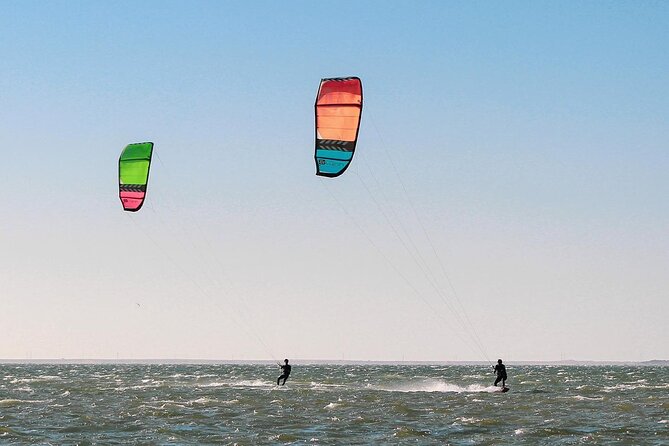
The maximum group size is four people. One instructor works with the group, and two kites are shared by pairs. For a beginner, this offers a good middle ground between a private lesson and a crowded class.
I like the chance to watch someone else attempt a skill. You can often spot the mistake more easily when it is happening to another person, then avoid repeating it yourself. The group can also work well if you arrive with friends or family.
Solo visitors can ask to be placed in a group if space is available. That means you do not necessarily need to arrange a full party in advance, though group placement is not something to assume without confirmation.
The strongest praise attached to the instructors concerns patience, communication, and safety. Lahcen has taught both children and adults, and his careful, step-by-step method is useful for mixed ability levels. If you are nervous about the kite’s power, this kind of teaching may be more important than a long list of advanced tricks.
The trade-off is pace. A group lesson may not move at the same speed as a private lesson. You will share equipment and may spend part of the session watching, listening, or waiting for your turn. For many beginners, that is a fair price for a lower-pressure class and a chance to learn with other people.
Price, Timing, and What You Should Confirm
The listed price is $141.27 per person. The value depends heavily on what the booking includes. For a single three-hour introduction with instruction, equipment, and water practice, it may appeal to someone who wants a focused first taste. For a full four-to-five-day course, it represents a very different package and should be checked carefully.
The duration information is not perfectly consistent. The tour summary gives an approximate three-hour duration, while the course outline describes daily sessions of three or four hours over four or five days. Four hours is specifically suggested on days with good wind.
Wind matters here. A poor-weather day can limit what you safely practice, even if the scheduled session goes ahead. The experience may be rescheduled or fully refunded if bad weather causes cancellation, which protects you from paying for a session that cannot run properly.
Opening hours are listed daily from 9:00 AM to 7:00 PM. Pickup is offered, and you receive a mobile ticket. Confirmation is provided at booking, so keep an eye on the final meeting details and ask the provider to clarify the exact session length before arrival.
Cancellation is free if you cancel at least 24 hours before the local start time. Changes or cancellations inside that 24-hour window are not accepted for a refund.
Who Will Get the Most From This Course
This course suits a first-time kiteboarder who wants a structured introduction rather than a quick thrill. You will benefit most if you are willing to spend time on wind theory, safety, and kite handling before expecting to ride a board.
It also fits families and friends. The small group format lets you share the day while still receiving direct instruction. The course has been used with both children and adults, though the supplied information does not give a minimum age, so ask before booking for a child.
If you already control a kite confidently and want advanced riding, this is probably not the right session by itself. The stated skills focus on fundamentals, relaunching, and body dragging. You may need a separate advanced lesson or rental arrangement.
The course can also suit a solo visitor, provided a group place is available. You will not need to bring three companions just to reserve the activity, but confirm the group arrangement before setting your schedule around it.
Is This Dakhla Kitesurfing Course Worth Booking?
Book it if you want a careful introduction with a small group, patient instructors, and a clear focus on safety. Lahcen and Rachid appear particularly suited to beginners who need calm explanations and repeated corrections, rather than a rushed lesson.
Before booking, get one point in writing: does the $141.27 price cover the listed three-hour session only, or does it apply to the four-to-five-day course? Also confirm that water practice, including relaunching and body dragging, is included. That clarification will decide the value.
If the package matches your goals, this is a sensible way to start kitesurfing in Dakhla. You will not simply be handed a kite and told to hope for the best. You will learn how the wind works, how to control the equipment, and what to do when the kite falls.
FAQ
How long is the kitesurfing experience?
The booking is listed as approximately three hours. The full group course description also refers to four or five days of lessons, with three or four hours of practice each day, so you should confirm the exact package before booking.
How many people can join the group course?
The group course has a maximum of four participants.
How many kites are used during the group lesson?
Two kites are used in the group, with each kite shared by two students.
What will I learn on land?
You will study wind strength, direction, and quality, learn about the equipment and setup, understand the wind window, review safety tools, and practice flying and landing the kite.
What will I learn in the water?
The water lesson includes kite relaunching and body dragging downwind, using the kite to create enough power to move through the water.
Are pickup and mobile tickets available?
Yes. Pickup is offered, and the experience provides a mobile ticket.
Can I cancel for a full refund?
Yes, if you cancel at least 24 hours before the experience start time. Cancellations or changes made less than 24 hours before the start are not refunded.
What happens if bad weather cancels the experience?
If poor weather causes cancellation, you will be offered another date or a full refund.
More Beginner Surf Lessons in Morocco
- Beginners friendly surf in nice spots
★ 4.8 · 129 reviews - Taghazout: Beginner Surf Course with Free Session & Lunch
★ 4.9 · 7 reviews - Agadir: Beginner Surf Lesson & Experience in Morocco
★ 4.6 · 5 reviews - Legian Beach, Bali: Beginner or Intermediate Surf Lessons
★ 4.9 · 1,019 reviews
Just added around Morocco
- Private Surf Experience in Rabat★ 5.0 · 14 reviews
- Premium Surf Trip to Essaouira from Marrakesh★ 5.0 · 18 reviews
- Surf lesson in Tamraght with experienced, local surf instructor★ 5.0 · 10 reviews
- Surf day trip in uncrowded spots★ 5.0 · 5 reviews
- Surfing lessons in Essaouira★ 4.5 · 2 reviews
- Surf Rental★ 5.0 · 31 reviews
- Surfing Kitesurfing Fishing Foil in Essaouira Morocco polylingual★ 5.0 · 7 reviews
- Essaouira Surf Lesson: Energize Your Ride★ 5.0 · 11 reviews
Morocco Surf Trips, compared.
Taghazout Beach Surf Lesson with Lunch and Transfer
Read our review →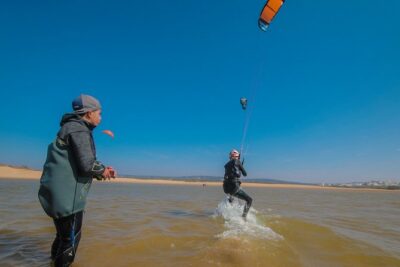
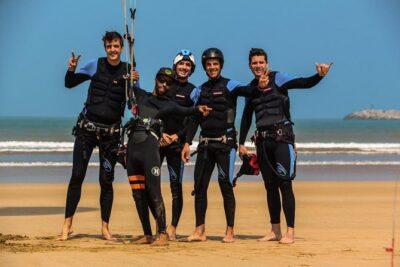
Group Kitesurfing lesson with a Local in Essaouira Morocco
Read our review →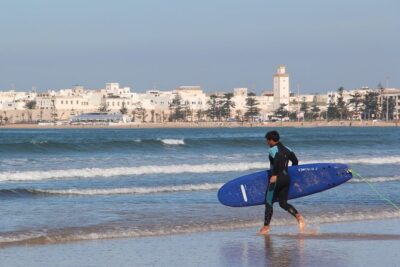
Surf Lesson with local surfer in Essaouira Morocco
Read our review →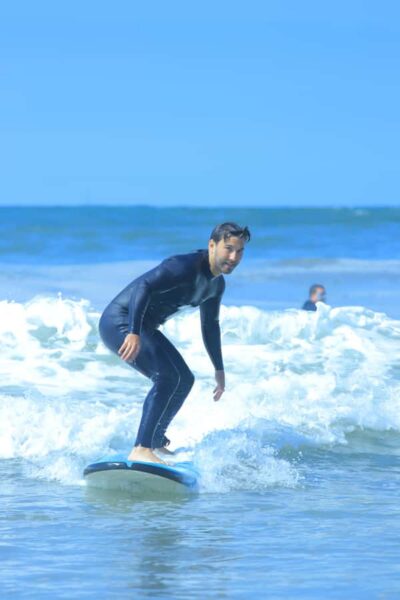

Browse the lists this tour appears in