
Review · FUERTEVENTURA
Fuerteventura : Stand Up Paddle
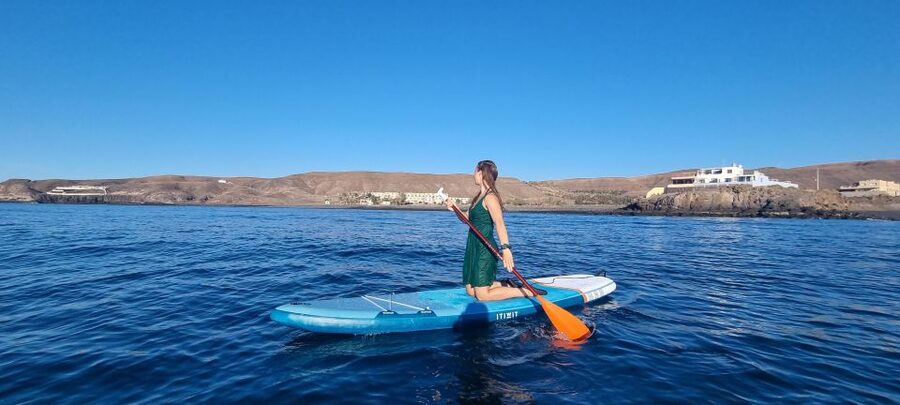
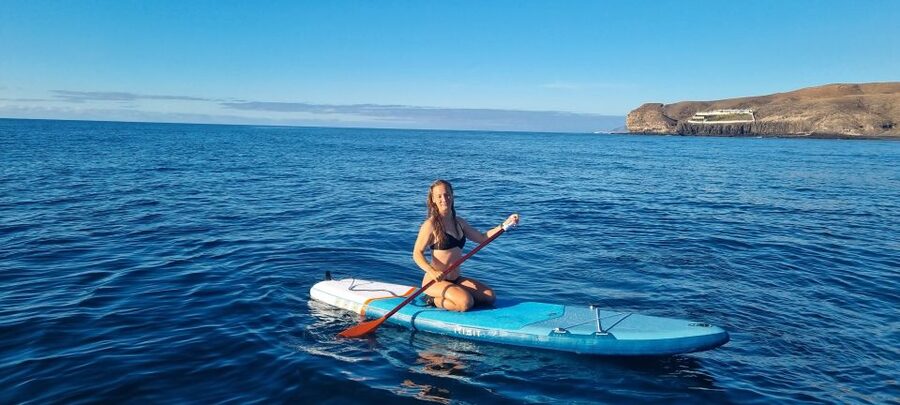
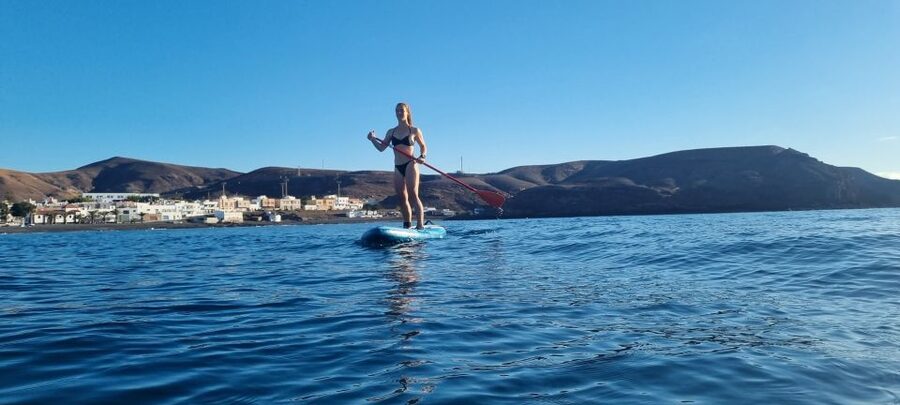
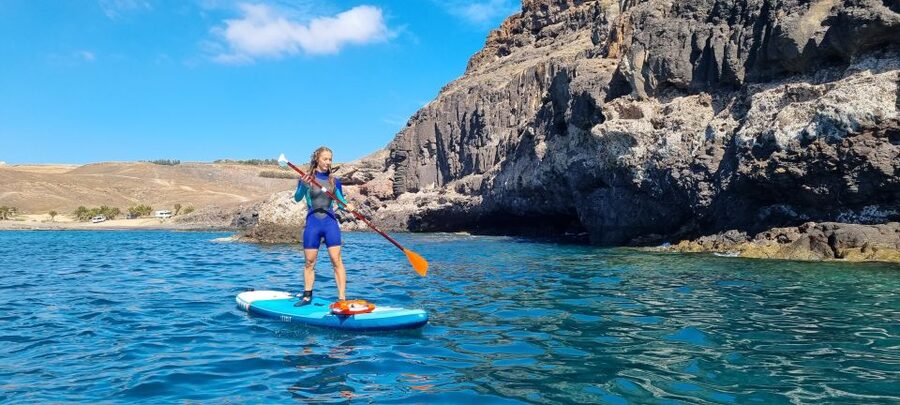
The best part of this Fuerteventura outing is its gentle introduction to stand-up paddleboarding. You spend the first hour learning how to kneel, sit, and stand safely, then use the second hour to practise on the coast near La Lajita, with wild beaches and rocky cliffs around you. It is a calm way to try a new sport without committing to a full day.
I like the tiny two-person group, which gives the instructor room to watch your technique. I also like the practical setup: pickup from several southern resorts, plus a wetsuit and water shoes, so you need to bring only swimwear, a towel, and sunscreen.
The main thing to check is your expectation of the second hour. The plan allows time to paddle independently, but one participant found the guide stayed close and that the full two hours in the water did not happen. Wind can also make standing harder than it looks.
Key points at a glance
- One hour of instruction: Learn basic balance, paddle technique, and safety before practising alone.
- La Lajita setting: Paddle beside Fuerteventura’s wild beaches and rocky coastal cliffs.
- Only two participants: This is a much more personal lesson than a large beach group.
- Beginner-friendly positions: You can paddle standing, kneeling, or sitting.
- Guides with a helpful style: Victor and Laura have been praised for clear instruction and close attention.
- Southern resort pickup: Transport is available from Tarajalejo, Morro Jable, Jandia, Costa Calma, and Esquinzo.
Starting at La Lajita beach
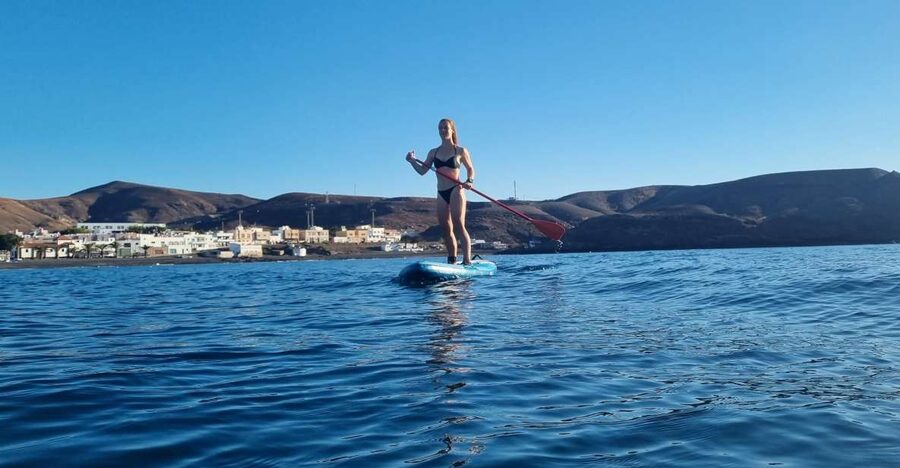
This two-hour activity takes place at La Lajita beach, on Fuerteventura’s southern coast. The meeting point is the provider’s office, and hotel pickup is available from Tarajalejo, Morro Jable, Jandia, Costa Calma, and Esquinzo.
That transport matters more than it may seem. If you are staying in one of these resort areas, you do not need to arrange a taxi or find an unfamiliar beach access point. After the session, you can return to the same group of resort areas, though the exact pickup and drop-off timing should be confirmed when you book.
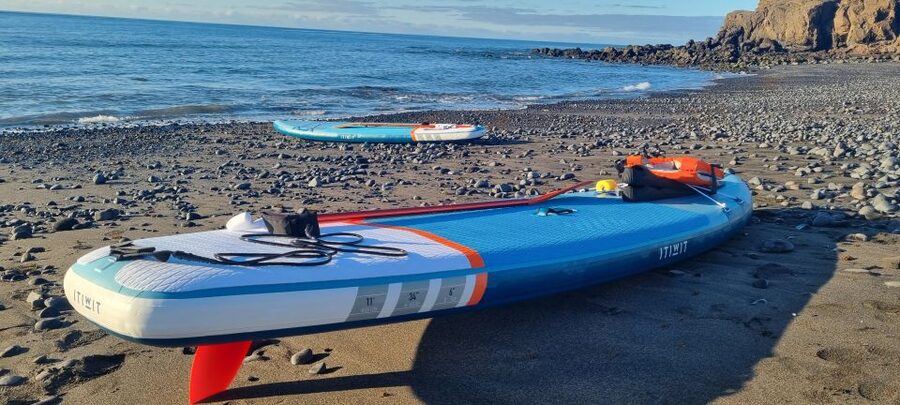
At the beach, you receive the equipment and get ready for the water. A wetsuit is included, along with water shoes. You should bring swimwear, a towel, and sunscreen. Photos are not included, so bring your own waterproof camera only if you can use it safely without distracting from the lesson.
La Lajita gives the outing a more natural setting than a practice pool. The coast here includes open beaches and rocky cliffs, so your surroundings change as you paddle. This is not simply a balance exercise on a board. You get a taste of Fuerteventura’s shore from the water.
More Stand-Up Paddleboarding in Fuerteventura
- Caleta de Fuste: 1- Hour Stand Up Paddle Experience
★ 4.1 · 54 reviews - Fuerteventura: Explore Costa Calma Bay on a SUP Board!
★ 4.8 · 52 reviews - Fuerteventura: 1.5-Hour SUP Course – Caleta de Fuste
★ 5.0 · 29 reviews
The first hour: learning to control the board
The opening hour is the most important part of the experience. The instructor explains how to move on the board, how to hold and use the paddle, and how to stay safe in the water. For a first attempt, this instruction can make the difference between an enjoyable outing and an hour spent repeatedly losing balance.
You do not need to stand right away. The activity lets you paddle sitting or kneeling, which gives you a stable way to get comfortable with the board. You can then try standing when you feel ready. That is useful because many beginners assume stand-up paddleboarding means standing for two straight hours. It does not.
I would treat the first hour as a set of small steps. Start by learning how the board reacts when you shift your weight. Then practise moving the paddle from side to side. Once you are steady, try standing for short periods. Falling into the water is part of the lesson, not a disaster, and the warm-weather setting makes it easier to laugh and try again.
The instruction has received especially strong praise for clarity and encouragement. Victor was singled out for a clear introduction, while Laura was described as positive and friendly. Another session included the instructor staying nearby in a kayak, offering tips and watching technique. That support is valuable when you are trying to correct your stance while also keeping the board straight.
The group size helps here. With a maximum of two participants, the instructor has a reasonable chance of seeing what you are doing and giving useful advice. That is a better arrangement for a nervous beginner than a crowded class where the guide must divide attention among many boards.
The second hour: practising at your own pace
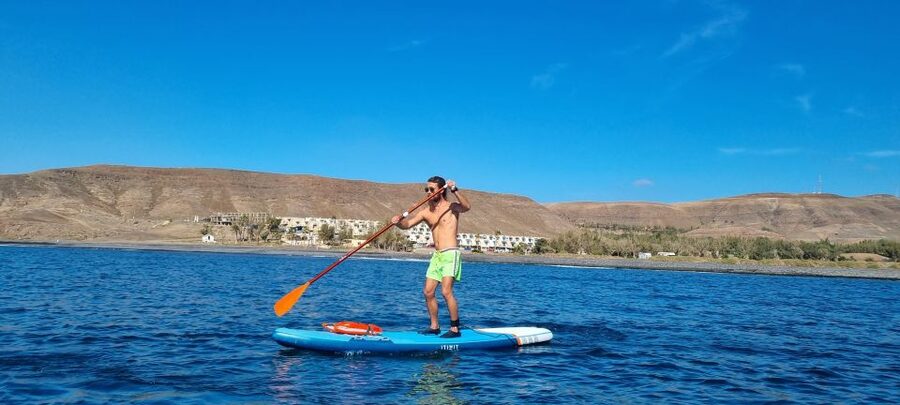
After the lesson, you get time to practise. The planned format is one hour with the guide followed by one hour by yourself. This second part gives you room to repeat the basic movements without having every attempt turned into a formal exercise.
If standing feels uncomfortable, stay seated or kneeling. You can still paddle, enjoy the coast, and build the skills needed to use a board on your own later. One participant in their fifties found the sitting and kneeling positions manageable and considered the session a useful introduction to paddling.
The phrase by yourself needs a little context. It does not mean you are abandoned in open water. The instructor remains part of the activity, and one account describes the guide staying directly behind the participant. For some people, that is reassuring. For others, it can make the independent practice feel less independent.
I would ask about this before setting off if you want plenty of personal space during the second hour. The guide’s nearby presence is also sensible if the wind rises or you are still learning how to steer. In one session, stronger wind made the paddle work more demanding, and the participant was glad to have help getting back.
This is an important distinction from surfing. Stand-up paddleboarding is generally easier to begin because you can sit or kneel and move at a slower pace. You are learning balance and steering rather than trying to catch a wave. The activity will still require effort, especially if the wind picks up, but you do not need advanced fitness or previous board experience based on the information provided.
The coast from the water
The setting is one of the main reasons to book this instead of practising on a small inland lake. From the board, you can look back toward Fuerteventura’s wild beaches and rocky cliffs. The coast becomes part of the lesson, giving you something to focus on when your legs need a rest from standing.
The water also changes how you see the island. From a beach path, you see the shore from one angle. From a paddleboard, you are close to the surface, with the coastline spreading out beside you. The description does not promise wildlife sightings or a particular route, so I would book this for the coastal view and the physical experience, not for a guaranteed nature encounter.
The shore can also make the conditions more noticeable. Wind direction affects how easily you move and how hard it is to keep the board straight. A calm session may feel relaxed, while a breezier one can turn the return journey into the hardest part. The guide’s safety briefing and nearby support are therefore not minor extras. They are central to the quality of the outing.
You should also remember that two hours on the water is a real physical activity. Even if you spend much of the time sitting or kneeling, you will use your arms and core. Sunscreen matters, and a towel is essential after the session. The wetsuit and water shoes make the experience more comfortable, but they do not remove the need to prepare for sun and exertion.
More Stand-Up Paddleboarding in Spain
- SUP taster course in the picturesque bay of Morro Jable
★ 5.0 · 7 reviews - 1,5-Hour Beginners Stand Up Paddle Course in Caleta de Fuste
★ 4.5 · 6 reviews - SUP taster course in the picturesque bay of Morro Jable
★ 4.5 · 4 reviews - Ibiza: Beach Hopping Cruise w/ Paddleboard, Food, & Drinks
★ 4.5 · 3,224 reviews
What the small group changes
A two-person limit is one of the strongest features here. It makes the experience feel closer to a private introduction than a mass-market beach activity. You can ask questions, repeat a movement, or take a short pause without holding up a large group.
It also suits couples, friends, or two family members who want to learn together. If one person is confident and the other is nervous, the less confident participant can work at a slower pace. The guide can also adjust the amount of attention given to each person.
There is a tradeoff. A small group does not automatically mean the entire two hours will be tightly supervised every minute. The format includes independent practice, and the guide may remain nearby rather than actively instructing throughout that period. If you want continuous coaching, make that clear at the start.
The guide’s style matters. Victor’s instruction has been praised for being precise, while Laura has been described as cheerful and attentive. Accounts also describe the guides checking on participants after falls. That is exactly the kind of practical encouragement that helps a first session feel manageable.
What $100 includes, and what it does not
At $100 per person, this is not the cheapest way to spend two hours at the beach. It becomes easier to justify if you value the combination of transport, equipment, instruction, and a very small group.
You are not only paying to use a board. The price includes hotel pickup and drop-off from the listed resort areas, a wetsuit, water shoes, and one hour of instruction. For a visitor who would otherwise need to arrange equipment and learn alone, those parts add real value.
The two-person limit is especially important when comparing prices. A larger class may cost less, but you may receive less individual attention. Here, the first hour is designed to give you a base of skills that you can use elsewhere, including on a lake or another calm body of water.
The price is less attractive if your main goal is uninterrupted guided touring or professional photographs. Photos are not included, and the second hour is intended for independent practice rather than a fully narrated coastal excursion. You are paying for an introduction to the sport, not a sightseeing cruise.
Who will enjoy this most
I would recommend this to adults and older children who want a first try at stand-up paddleboarding without a demanding full-day commitment. The minimum age is 10, and pregnant women should not take part.
It is a good fit if you like active sightseeing but do not want a difficult adventure. You can sit or kneel, take time to find your balance, and try standing when you are ready. The two-hour length is long enough to learn the basics but short enough to fit around a beach day or other plans.
It also suits people who want a useful skill rather than a one-off thrill. After the lesson, you should have a basic understanding of how to position yourself, paddle, and handle the board. The experience does not promise advanced training, but it can give you the confidence to practise again elsewhere.
I would be more cautious if you dislike getting wet, have trouble with balance, or want a quiet sightseeing trip with no physical effort. Falling into the water is normal, and wind may make the board harder to control. The activity is beginner-friendly, not completely effortless.
Useful booking details for a smooth morning or afternoon
The activity lasts two hours, with starting times depending on availability. Pickup and drop-off are available in Tarajalejo, Morro Jable, Jandia, Costa Calma, and Esquinzo, while the water session takes place at La Lajita beach.
Guiding is available in English, German, Spanish, and Polish. That range is useful during a safety lesson, since clear instructions matter when you are learning balance and steering.
The booking terms are flexible. You can cancel up to 24 hours before the activity for a full refund, and you can reserve now while paying later. These terms are useful if your beach plans depend on weather or if you want to wait before fixing the activity into your schedule.
I would still check the day’s conditions and confirm the meeting details. The stated meeting point is the provider’s office, while the water activity takes place at La Lajita beach. Knowing how those two points relate to your pickup time will prevent a rushed start.
Should you book the La Lajita paddleboarding session?
Book it if you want a friendly first lesson, a small group, and a chance to see Fuerteventura’s southern coast from the water. The clear instruction, included equipment, and support from guides such as Victor and Laura make it a sensible choice for beginners.
Go in expecting practice, not a polished sightseeing tour. The independent hour may feel less independent if the guide stays close, and the full two hours in the water may vary in practice. Wind can also make the final part more work than expected.
For most first-timers, I think the value is sound. You get transport, equipment, safety guidance, and a low-pressure way to try the sport. If you want to learn the basics and enjoy a short coastal outing, this is worth considering. If you want photographs, advanced coaching, or a guaranteed two-hour guided route, choose with more care.
FAQ
Where does the stand-up paddleboarding activity take place?
The water session takes place at La Lajita beach in Fuerteventura.
Where is the meeting point?
The meeting point is at the provider’s office.
Is hotel pickup included?
Yes. Pickup and drop-off are available from Tarajalejo, Morro Jable, Jandia, Costa Calma, and Esquinzo.
How long does the activity last?
The activity lasts two hours. The planned format includes one hour with an instructor and one hour of independent practice.
Do I need previous paddleboarding experience?
No. The activity is designed for beginners, and the instructor provides training and safety guidance. You can paddle sitting, kneeling, or standing.
What equipment is included?
A wetsuit and water shoes are included.
What should I bring?
Bring swimwear, a towel, and sunscreen.
Can children take part?
Children under 10 cannot take part. Pregnant women are also not suitable for this activity.
Just added around Fuerteventura
- 4 Hours Surf Class in Corralejo, Fuerteventura★ 4.5 · 14 reviews
- Kitesurf School in Corralejo Book Your Classes★ 5.0 · 37 reviews
- SUP taster course in the picturesque bay of Morro Jable★ 4.5 · 4 reviews
- Learn to windsurf in the beautiful bay of Costa Calma★ 5.0 · 6 reviews
- Learn to surf the most beautiful sandy beaches of Fuerteventura★ 5.0 · 2 reviews
- Kids and Family Guided Surf Course at Fuerteventura Beaches★ 5.0 · 7 reviews
- Learn to surf on the endless beaches in southern Fuerteventura★ 5.0 · 31 reviews
- Come surf with me! Surf In Fuerteventura by Sealover★ 5.0 · 31 reviews
Fuerteventura Surf Trips, compared.
Lezioni di Surf per Beginner e Intermedi (6 persone a istruttore)
Read our review →
Fuerteventura South: Learn to surf on stunning beaches!
Read our review →
Browse the lists this tour appears in