
Review · GRAN CANARIA
Gran Canaria: Meloneras Beach Surf Lesson
Meloneras Beach is a good place to learn the basics without signing up for an all-day commitment. You’ll spend time on the sand learning how to stand, then get guided practice in the water with a professional instructor. I especially like the small two-hour format and the fact that the teacher looks for the best beginner-friendly waves rather than blindly staying at one beach.
I also like that the class includes your surfboard, wetsuit, safety briefing, and sand practice, so you do not need to arrange gear separately. The main consideration is the price: at $58 per person, it is fair for an equipment-based lesson, but less attractive if you only want a quick photo or a short tryout. You will also need to bring water, sunscreen, a hat, a towel, and beachwear.
Key points to know
- The meeting point is by the Maspalomas lighthouse: This gives you a clear landmark near the Meloneras area.
- The lesson is adjusted to your ability: Beginners can learn the basics, while stronger surfers can work on technique.
- You practice standing on the sand first: That short rehearsal makes the first water session less confusing.
- The class includes a full hour of water practice before a short break: You get real time on the board, not just a beach demonstration.
- The instructor can change beaches for better waves: If conditions at the usual spot are poor, the class may move to another location.
- Children under eight cannot join: The activity is aimed at older children and adults.
Starting beside the Maspalomas lighthouse
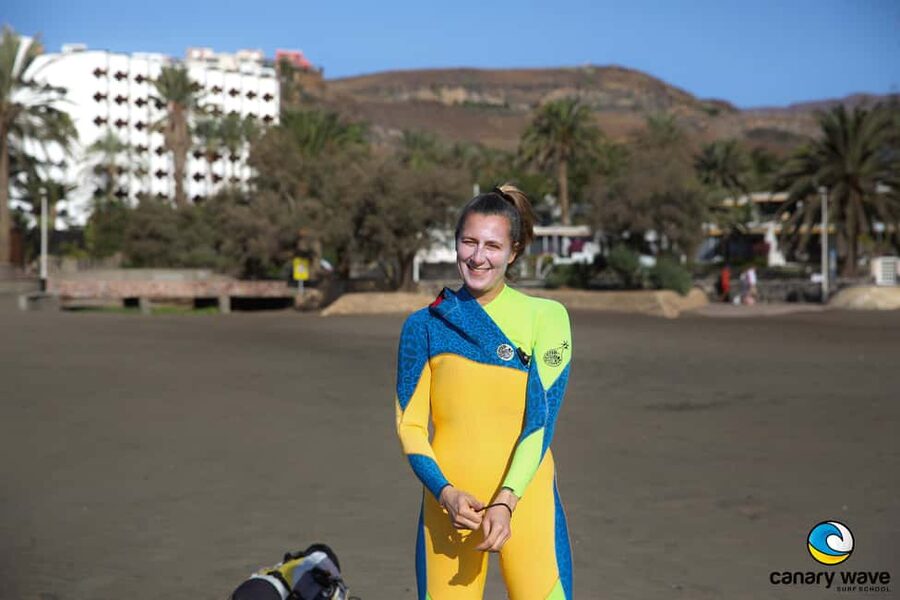
Your meeting point is just in front of the Maspalomas lighthouse, a useful landmark on the coast between Maspalomas and Meloneras. Look for the instructor and the surf equipment there, then get fitted with a wetsuit and board before heading toward the beach.
The meeting point matters because Meloneras is a popular resort area, and a precise landmark is easier to find than a vague beach address. Still, leave enough time to locate the lighthouse and meet the instructor without rushing. The activity lasts two hours, and that clock includes preparation and the lesson itself.
The setting is practical rather than fancy. You are not being taken to a private club with a long introduction. You meet the team, collect the required equipment, and get moving toward the water. That suits me. For a first surfing lesson, the best use of time is usually a clear explanation followed by practice.
The school is Canary Wave Surf School. Instruction is available in Italian, English, Spanish, and German, which is helpful for a mixed international group. The instructors are described as friendly, clear, and attentive, with time set aside for individual feedback instead of giving the whole group one broad speech.
More Surf Lessons in Gran Canaria
- Gran Canaria Maspalomas: Surf lessons all levels
★ 5.0 · 197 reviews - Small-Group Surf Lessons in Gran Canaria
★ 5.0 · 138 reviews - Playa del Inglés surf lessons
★ 4.8 · 121 reviews
The first lesson happens on the sand
Before you paddle out, the instructor explains the basic theory and beach safety. You learn what to do, how to position yourself, and how to get from lying on the board to standing. The sand session is not filler. It lets you repeat the movement without also dealing with a moving board, breaking wave, and salt water in your eyes.
For a first-timer, standing up is the part that looks simple until you try it. A clear rehearsal can help you remember where your hands go and how to bring your feet underneath you. The instructor can watch your position closely on the beach and correct mistakes before they become a habit in the water.
The safety briefing is another useful part of the lesson. Surfing is enjoyable, but the ocean is not a swimming pool. The class covers basic safety before you begin, and the instructor can explain the practical rules in one of four languages.
You should arrive ready to be active. Bring beachwear and a towel. The lesson provides the wetsuit and board, but it does not provide a snack, water, hat, or sunscreen. Pack those items yourself, especially water and sun protection. You are likely to spend much of the session outdoors, with little reason to expect a refreshment stop.
An hour of guided practice in the water
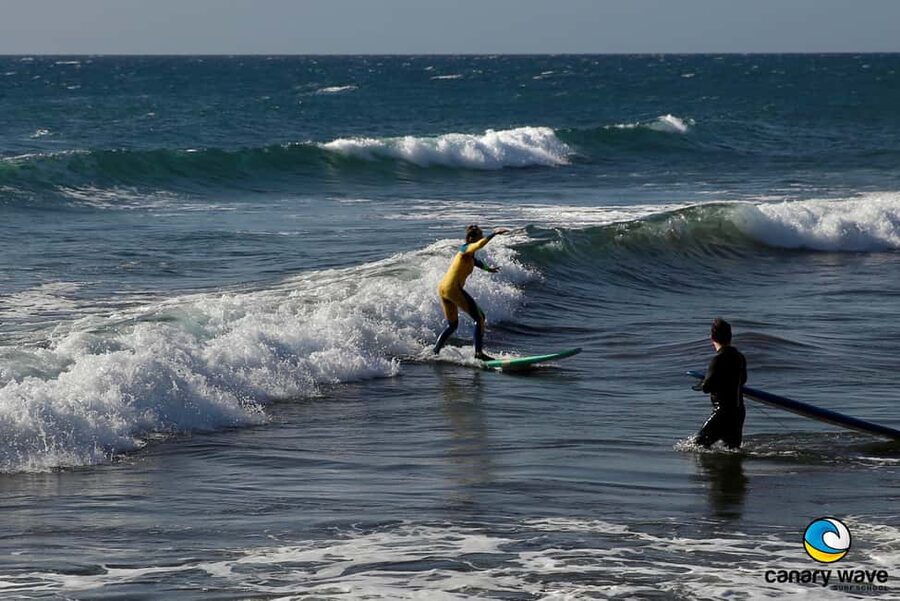
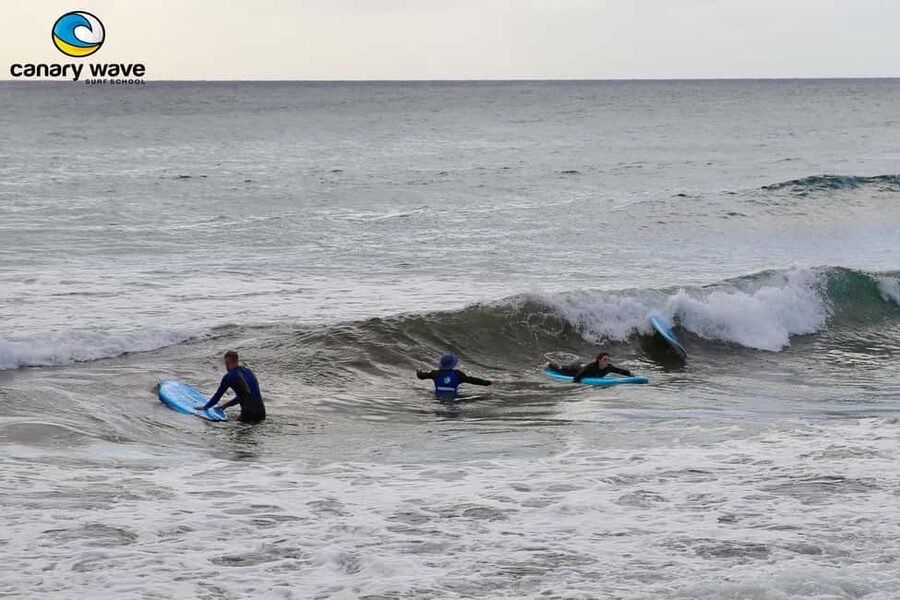
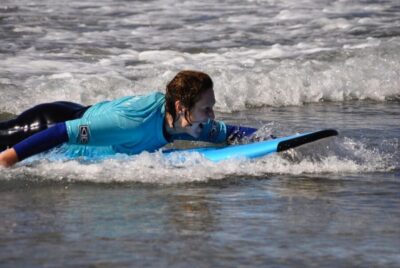
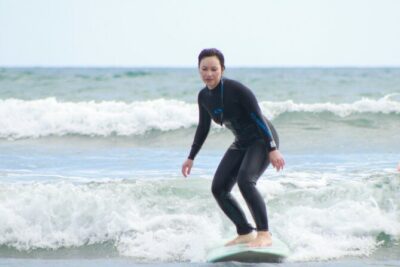
After the beach instruction, you spend about an hour in the water practicing your new movement. This is the part that gives the lesson its value. A quick land demonstration can show you the mechanics, but you need repeated attempts to understand how the board responds and how to time your effort.
The instructor stays involved rather than sending you off with a board and a vague good luck. You receive help with the basics and individual pointers as the session develops. That matters in a group lesson, where one person may be standing quickly while another is still trying to get into the correct position.
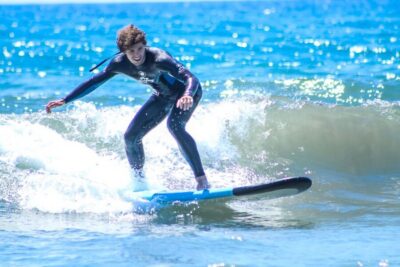
You should set sensible expectations. Two hours will not turn you into an expert surfer. It can, however, give you a useful first feel for the board, the water, and the basic standing technique. One first-time participant felt able to say they had learned a great deal after the full session, which fits the design of the class: clear instruction, repeated practice, and feedback aimed at each person.
The water time is split by a short rest break. That is a small but welcome detail. Surfing uses more effort than the relaxed beach setting suggests, and a pause gives you time to catch your breath, drink your own water, and listen to corrections before returning to the waves.
The second water session gives you another chance to apply what you just learned. If you stood up once in the first part, you can try to repeat it. If you struggled, the instructor has a chance to adjust the advice rather than simply moving on.
Wave choice can change the whole lesson
The usual beach is not guaranteed to have suitable waves on the day. If conditions are poor, the instructor may take the class to another beach in search of better waves. This is one of the strongest practical features of the activity.
For a beginner, the biggest difference between a good lesson and a frustrating one is often the water conditions. A beach with no usable waves offers little practice, while waves that are too strong can make the first session intimidating. Looking for a better location shows that the school is treating the lesson as an actual coaching session, not just a fixed beach appointment.
The exact alternate location is not specified, so you should not plan your day around a particular second beach. The change may also affect your surroundings and the time spent getting there. On the other hand, the flexibility is useful when the normal spot is not working. The information provided for the activity says the class can move in search of the best waves, and transport to another beach has been included when conditions require it.
One practical tip: keep your schedule somewhat open after the meeting time. The activity is listed as two hours, but a change of beach can make the day feel less rigid. If you have a tightly timed meal, excursion, or airport transfer immediately afterward, leave a buffer.
More Surf Lessons in Spain
- Gran Canaria: Maspalomas Surf Lessons
★ 4.6 · 113 reviews - Premium Surf Course in Gran Canaria
★ 5.0 · 89 reviews - Gran Canaria Surf Lessons: Playa del Inglés & Maspalomas
★ 4.8 · 76 reviews - Las Palmas: Learn to Surf with a Special Price for Two Group
★ 4.8 · 30 reviews
Coaching for beginners and improving surfers
The lesson is not limited to people who have never touched a surfboard. The class is tailored to the group’s skill level and age, so a beginner and someone who has tried surfing before should receive different kinds of help.
If you are new, expect the focus to remain on safety, board control, getting into position, and standing. The sand practice gives you a simple sequence to follow, and the instructor can help you make sense of the first attempts in the water.
If you already have some experience, you can use the session to work on technique. The available information does not promise a specific advanced program, so I would not book it expecting specialist coaching for competition-level surfing. But the adjustable format should suit someone who wants to improve basic form or regain confidence after time away.
Age is part of the planning, too. Children under eight are not accepted. For older children, the lesson is shaped around the age and ability of the group, but an adult should consider how comfortable the child is with the sea and physical activity before booking.
The positive comments about the teaching are consistent in one important way: the instruction is described as relaxed but professional, clear, and practical. That combination is useful. A stern class can make a first attempt feel like a test, while a lesson that is too casual may leave you unsure what to do. Here, the goal appears to be calm correction and plenty of attempts.
What the $58 price covers
At $58 per person, this is not the cheapest way to spend two hours at the beach, but you are paying for more than access to the water. The price includes the surfboard, wetsuit, lesson, safety briefing, sand practice, and guided water practice.
Buying or renting equipment separately would add cost and effort, especially if you are visiting Gran Canaria for only a few days. The included wetsuit also saves you from guessing what type of gear you need. For a first lesson, that package makes the price reasonable.
The value depends on your goal. If you want to try surfing properly and receive hands-on instruction, the cost is sensible. If you already surf confidently and only need a board, a lesson may offer less value, since the package is built around coaching.
The alternate-beach option also helps protect the value of your booking. You are not simply paying for time at one stretch of sand. When the waves are not suitable, the instructor can look elsewhere. That flexibility cannot guarantee perfect conditions, but it gives the school a better chance of delivering a useful lesson.
Do not forget the extra items. Snacks, water, a hat, and sunscreen are not included. Those costs are small, but they matter if you arrive without them. Bring a towel and beachwear as well.
A short session with useful booking flexibility
The activity offers free cancellation up to 24 hours before the start time for a full refund. You can also reserve now and pay later, which helps if you are arranging several activities before your Gran Canaria plans are fixed.
One especially practical detail is the option to reschedule in a last-minute illness situation. A couple who became sick on the day of their appointment was allowed to change the booking. That does not replace the stated cancellation rule, so you should still check the conditions attached to your reservation, but it suggests the school can be reasonable when an unexpected problem occurs.
Alcohol and drugs are not allowed. That is straightforward, and it is important for any activity involving boards, waves, and safety instructions. Arrive fit to participate and ready to listen.
Starting times vary, so you need to check availability for your preferred date. The session length is two hours, not a full-day surf camp. That makes it easy to fit into a holiday schedule and leaves room for lunch, sightseeing, or a relaxed afternoon at the coast.
Who will get the most from this class
I would choose this lesson for a first-time surfer who wants real instruction rather than a quick introduction on the sand. It also suits couples, friends, and families with children aged eight or older, provided everyone is comfortable with an active beach session.
The class is especially useful if you want:
- Equipment provided in one booking
- A safety briefing before entering the water
- A teacher who can give personal feedback
- A chance to use another beach if the waves are poor
- A short activity that fits into a wider Gran Canaria itinerary
I would think twice if you dislike getting wet, want a private class, or need a guaranteed lesson at one exact beach. The group size is not specified, and the usual beach may change. Those are not problems for most beginners, but they are worth knowing before you pay.
You should also be comfortable with the fact that surfing success is not guaranteed. Even with good coaching, your first attempts may involve falling off, missing waves, or simply learning how the board feels. The experience is about making progress, not receiving a guaranteed stand-up moment.
Should you book the Meloneras surf lesson?
Yes, if you want an approachable first surf lesson with equipment included and an instructor who adapts the class to the group. The strongest reasons to book are the practical sand rehearsal, the hour of guided water time, and the willingness to move beaches when conditions are poor.
At $58, the class is a fair choice for beginners who value coaching and gear. Bring your own water, sunscreen, hat, towel, and beachwear, and allow some flexibility in case the class moves from its usual beach.
I would skip it only if you are looking for a private or advanced session, or if your schedule cannot handle a possible change of location. For everyone else, this is a tidy two-hour way to try surfing around Meloneras without committing to a full day or buying equipment.
FAQ
Where does the surf lesson meet?
The meeting point is just in front of the Maspalomas lighthouse.
How long does the activity last?
The surf lesson lasts two hours.
What equipment is included?
The price includes a surfboard and wetsuit rental.
Is a safety briefing included?
Yes. The class begins with theory and safety instructions before you practice on the sand and enter the water.
Do I practice standing before going into the sea?
Yes. You practice the standing movement on the sand before heading into the water.
What happens if there are no suitable waves at the usual beach?
The instructor may move the class to another location in search of better waves for the day.
Which languages are available?
Instruction is available in Italian, English, Spanish, and German.
Are children allowed to join?
Children under eight are not suitable for this activity. Classes are adjusted to the age and skill level of the group.
What should I bring?
Bring a towel and beachwear. You should also bring your own water, snack, hat, and sunscreen because those items are not included.
Just added around Gran Canaria
- Pack 2 People Surf Course in Playa del Inglés and Maspalomas★ 5.0 · 2 reviews
- Stand Up Paddle and Snorkeling Tour of Gran Canaria with Transfers south area★ 5.0 · 13 reviews
- Paddle Surf SUP at Anfi Beach★ 4.0 · 12 reviews
- Surf lessons in Las Canteras Beach★ 4.8 · 19 reviews
- San Agustín Surf lessons★ 4.5 · 10 reviews
- Paddle Board TEAM Experience in Gran Canaria, BIG SUP.★ 5.0 · 2 reviews
- Las Palmas: Learn to Surf with a Special Price for Two Group★ 4.8 · 30 reviews
- Las Palmas de Gran Canaria: Group surf lessons on La Laja beach★ 4.9 · 27 reviews
Gran Canaria Surf Trips, compared.
Playa del Inglés Maspalomas: High Quality Surf Classes
Read our review →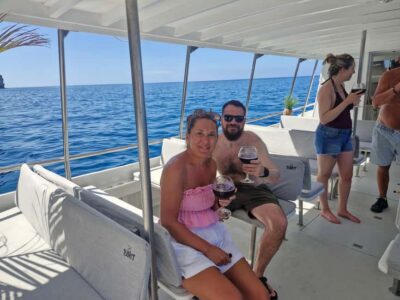
Puerto Rico, Gran Canaria: boat trip, drinks, food, paddle surfing, snorkeling
Read our review →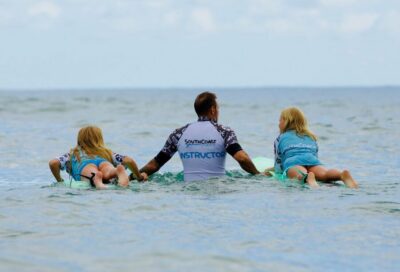
Gran Canaria Maspalomas: Surf lessons all levels
Read our review →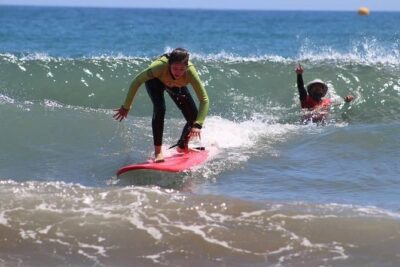
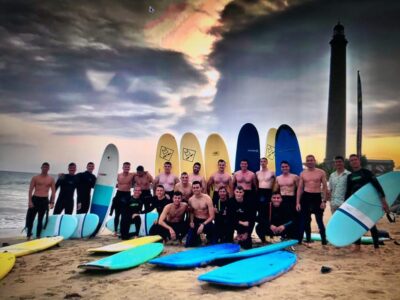
Gran Canaria Surf Lessons: Playa del Inglés & Maspalomas
Read our review →Browse the lists this tour appears in