
Review · GRAN CANARIA
Gran Canaria Playa del Ingles: Surf lessons all levels
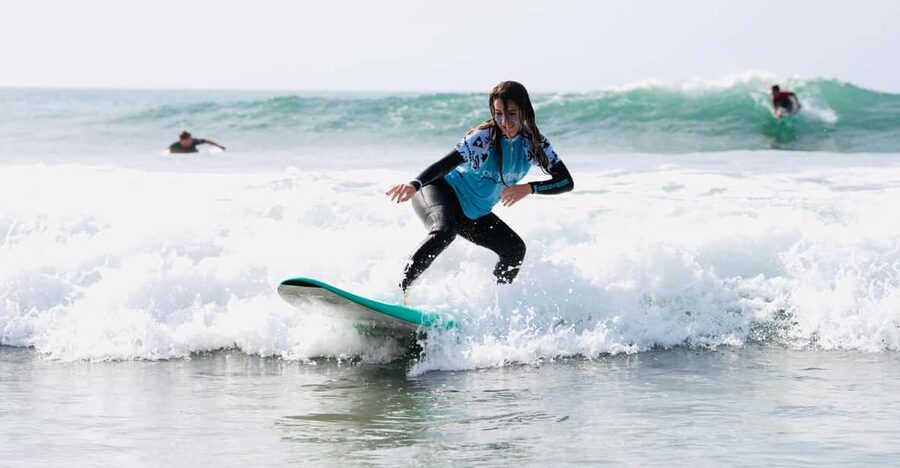
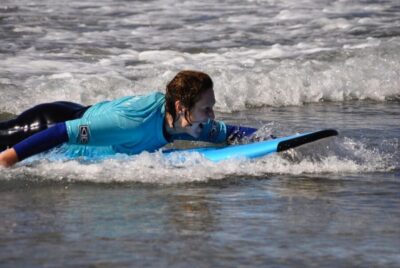
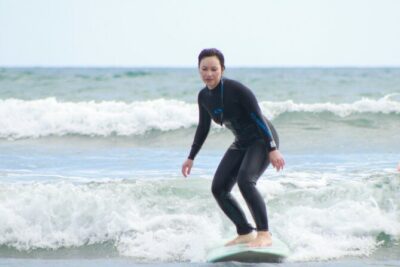
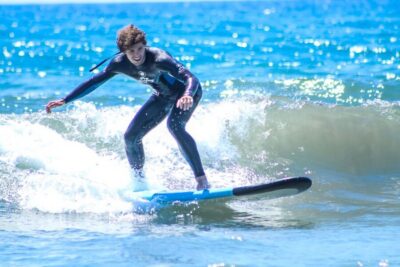
Gran Canaria’s south coast gives beginners a friendly way into surfing, with a sandy learning beach where you can often stand while still catching useful waves. The lesson starts with basic technique on the beach, then moves into two hours of practice in the sea, with instructors helping you work toward your first successful rides.
I like the small groups of up to eight and the fact that the instructor stays involved in the water rather than leaving you to figure things out alone. I also like that equipment, insurance, and a three-hour lesson are included for $59. The main catch is the meeting point: despite the Playa del Ingles title, the class takes place in the Maspalomas or Meloneras area near the lighthouse, and you must arrange your own transportation.
Key points to know before booking
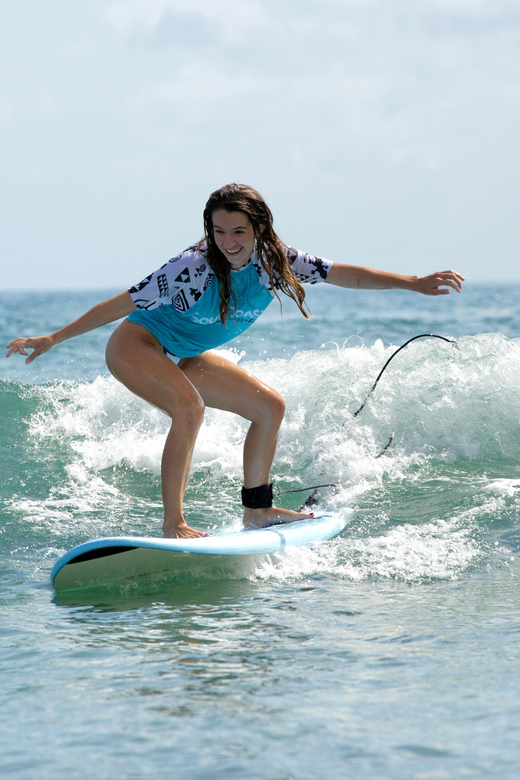
- A beginner-friendly beach: The learning area is described as shallow enough to stand, while still offering waves suitable for practice.
- Two hours in the sea: The lesson includes beach theory followed by a substantial water session, not just a short introduction.
- Small groups: Class size is limited to eight, allowing more direct help from the instructor.
- Daniel is singled out by name: His clear explanations, motivation, and time in the water have earned especially strong praise.
- Everything important is supplied: You get a surfboard, wetsuit, mineral water, fruit, and accident and liability insurance.
- Check the location carefully: Meet by the South Coast Surf School flags at the beach bar near the Red Cross office, close to the Maspalomas lighthouse area.
A gentle first step onto a surfboard
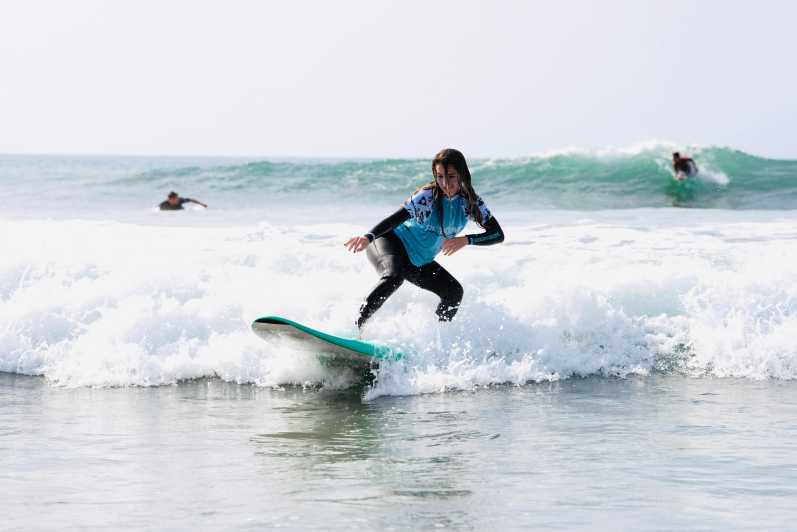
Surf lessons can be hit or miss for beginners. A crowded class may leave you waiting on the beach, while a short session may give you little time to find your balance. This experience deals with both problems reasonably well: the group limit is eight, and the water practice lasts about two hours.
The teaching begins on the beach with the basic principles of surfing. That matters more than it may sound. You need to understand how to handle the board, position your body, catch a wave, and stand safely before the sea starts making decisions for you. A clear explanation on dry land saves time once you are wet and moving.
The class is designed for more than first-timers. The school also works with surfers who already know the basics and want to improve. The practical difference is that beginners receive a foundation in balance and wave handling, while more experienced participants can use the instructor’s guidance to refine their technique.
You should keep your expectations sensible. This is a lesson, not a guarantee that you will surf standing up by the end. Still, the setting appears well suited to early progress. The beach is described as flat enough for you to stand at any time, while the waves remain large enough to practice on. That combination reduces some of the fear that comes with being pushed into deeper water too soon.
More Surf Lessons in Gran Canaria
- Gran Canaria Maspalomas: Surf lessons all levels
★ 5.0 · 197 reviews - Small-Group Surf Lessons in Gran Canaria
★ 5.0 · 138 reviews - Playa del Inglés surf lessons
★ 4.8 · 121 reviews
What the three-hour lesson looks like
The activity lasts three hours, but the available information gives the clearest detail about two parts: a theoretical session on the beach and a two-hour practice session in the water.
The beach portion is where you get your bearings. You learn the basic movements and principles before taking the board into the surf. For a first lesson, this is valuable because a few minutes of instruction can help you avoid wasting wave after wave in the wrong position.
After the theory, you head into the sea for the main part of the experience. Two hours gives you time to repeat the same movement, adjust your balance, and try again after a fall. Surfing relies on repetition, so the length of this practice period is one of the strongest features of the class.
The instructor’s role is important here. A recent class was praised for having the teacher in the water with the small group and giving each participant time. That arrangement lets you receive advice while the problem is still fresh. If your board turns sideways, your timing is off, or you stand too early, you can work on the issue rather than simply waiting for the lesson to finish.
The remaining time covers the practical parts of the session, such as getting ready and moving between the beach explanation and the water. The exact schedule may vary with conditions and the group, so do not treat the full three hours as three continuous hours of surfing.
Why the shallow learning beach matters
Surfing looks simple from shore. In practice, the first challenge is managing the board, the water, your balance, and your nerves at the same time. A beach where you can stand gives you one less problem to solve.
That does not mean the session is effortless. You still need to paddle, time the wave, climb onto the board, and try to stand. But being able to put your feet down can make a major difference during the early attempts. It also means you can reset after a failed try without feeling completely out of control.
The waves are described as large enough to provide useful practice. That is an important middle ground. Tiny waves may be easy to face but offer little push, while stronger surf can overwhelm a beginner. Conditions always change, so the actual experience will depend on the sea that day, but the stated learning area is a sensible match for new surfers.
For someone nervous about the ocean, I would value this setup more than a dramatic location or a long list of extras. The goal of a first lesson is not to conquer difficult surf. It is to learn enough control that you can enjoy the next attempt.
Small groups and the instructor’s role
The maximum group size is eight. That is not a private lesson, but it is small enough to give the instructor a realistic chance to watch each person.
This matters most in the water. Surfing instruction is visual. An instructor may need to see how you lie on the board, when you begin paddling, how you place your hands, and how you shift your weight. A large group can make that difficult. With eight or fewer people, the feedback should be more focused than in a mass-market class.
Daniel is the instructor specifically praised for clear explanations and strong motivation. His long experience in the ocean, along with the school’s stated total of more than 30 years of instructor experience, adds useful depth to the lesson. You can expect instruction in English, German, or Spanish.
The teaching style appears encouraging rather than overly formal. One highly positive assessment described the instructor as giving each participant plenty of time and helping the group make progress faster than expected. That is exactly what you want from a first lesson: simple directions, steady encouragement, and corrections that you can use immediately.
At the same time, group lessons cannot offer the same level of individual attention as a one-to-one session. If you already surf confidently and want detailed technical coaching, ask about the level of instruction available when you book. The class accepts advanced participants, but the supplied details focus most strongly on beginner and low to intermediate teaching.
More Surf Lessons in Spain
- Gran Canaria: Maspalomas Surf Lessons
★ 4.6 · 113 reviews - Premium Surf Course in Gran Canaria
★ 5.0 · 89 reviews - Gran Canaria Surf Lessons: Playa del Inglés & Maspalomas
★ 4.8 · 76 reviews - Las Palmas: Learn to Surf with a Special Price for Two Group
★ 4.8 · 30 reviews
Equipment, water, and insurance included
The $59 price includes the main items you need for the lesson:
- Surfboard
- Wetsuit
- Mineral water
- Fruit
- Accident and liability insurance
Including the board and wetsuit makes the price easier to assess. You do not need to arrange a rental separately, and you can arrive without carrying bulky surf gear across Gran Canaria.
The insurance is another practical inclusion. Accident and liability cover does not remove every risk from an ocean activity, but it is reassuring to know that it forms part of the booking rather than being left for you to arrange on your own.
Water and fruit are also listed as included. One class participant found that these refreshments were not provided and noted that there was no break. I would treat them as a stated inclusion, but I would not plan the day around a guaranteed snack stop. Bring your own water and a small snack if you need regular refreshments, especially since the activity involves physical work in the sun.
There is no hotel pickup and no transportation included. That keeps the price down, but it puts the responsibility on you to reach the beach meeting point. Check the route before booking, particularly if you are staying in central Playa del Ingles.
Finding the correct meeting point
The most important logistical detail is the location. The experience is marketed under Playa del Ingles, but the actual class is in the Maspalomas or Meloneras area near the lighthouse.
Meet at the South Coast Surf School flags by the beach bar, directly close to the Red Cross office. This is a useful landmark, but allow enough time to find it. You do not want to arrive at the wrong part of the coast with a surf lesson starting soon.
The location mismatch is not a minor detail if you are planning to walk from your accommodation or rely on a particular bus route. The booking information specifically excludes hotel pickup and transportation, so you need to handle that part yourself.
I would save the meeting point details on your phone and confirm the exact starting time after checking availability. The activity offers different starting times, and the sea conditions may influence which slot works best.
Is $59 good value for three hours?
At $59 per person, this is a fair price for a three-hour beginner lesson if you would otherwise need to rent a board and wetsuit separately. The value improves because the class includes insurance and a small group rather than an open-ended crowd.
The two-hour water session is the biggest part of the value. Some introductory activities spend much of the booking on explanations and equipment handling. Here, you receive a proper beach briefing followed by enough time for repeated attempts.
The price is less attractive if you are expecting transportation from your hotel, a private instructor, or a full meal and long refreshment break. None of those are included. It is best viewed as a focused surf lesson, not a complete beach day package.
For a first-time surfer, I think the cost makes sense if you are staying near the southern coast and can reach the meeting point easily. If transport to the beach adds a significant extra cost, include that in your calculation before booking.
Who will enjoy this most?
This class suits adults and families looking for a first taste of surfing, provided they are comfortable taking part in an ocean activity. The shallow beach and ability to stand in the water are useful for beginners who feel uncertain about deeper water.
It also works for low to intermediate surfers who want structured practice and help with their technique. The school welcomes all levels, although the most detailed feedback available concerns beginners.
I would choose this experience if you value instruction over sightseeing. You will spend the session learning movements and catching waves, not touring the coast or visiting several attractions.
It may not suit you if you want a private lesson, hotel pickup, or a guaranteed break with food and drinks. It is also not the right choice if you are only looking for a quick photo opportunity. Three hours is a real physical session, and you should be ready to work.
Practical tips for a better session
Wear comfortable beach clothing for the journey to the meeting point and arrive ready to change into the supplied wetsuit. The school provides the board and wetsuit, so you do not need to bring those.
Bring your own water even though mineral water is listed as included. That is a sensible precaution given the note about refreshments not always being available. Fruit is also listed, but I would carry a small snack if you know you need food after exercise.
Check the meeting location carefully before leaving. Use the beach bar, South Coast Surf School flags, Red Cross office, and lighthouse area as reference points rather than relying only on the words Playa del Ingles.
Keep your schedule flexible after the lesson. Surfing can be tiring, and you may prefer a quiet afternoon rather than a tightly packed sightseeing plan.
Cancellation is free up to 24 hours before the activity for a full refund. You can also reserve now and pay later, which helps if your plans are still taking shape.
Should you book this Gran Canaria surf lesson?
I would book it if you want a properly structured first surf lesson, can reach the Maspalomas or Meloneras meeting point, and like the idea of spending two hours practicing in the water. The small group, included equipment, multilingual instruction, and supportive teaching approach give it a strong practical case.
The best reason to choose it is the balance between safety and real practice. You start with theory on the beach, then repeat the basics in shallow water with an instructor nearby. That is a much better introduction than simply renting a board and guessing what to do.
Before paying, check the exact meeting point and make your own plan for transportation. Also bring water and a snack in case the refreshments are not available. If you accept those small limitations, this is a sensible, good-value way to try surfing on Gran Canaria’s south coast.
FAQ
Where does the surf lesson take place?
The lesson takes place on the south coast of Gran Canaria, in the Maspalomas or Meloneras area near the lighthouse. Despite the Playa del Ingles title, it is not in central Playa del Ingles.
Where is the meeting point?
Meet at the South Coast Surf School flags by the beach bar, directly near the Red Cross office.
How long does the activity last?
The activity lasts three hours. It includes a theoretical beach session and a two-hour practice session in the sea.
Is the lesson suitable for beginners?
Yes. Beginners learn basic surfing principles and techniques before practicing in the water. The learning beach is described as shallow enough for you to stand while still having useful waves.
Are experienced surfers allowed to join?
Yes. The school offers instruction for all levels, including surfers who want to improve their existing skills.
What equipment is included?
A surfboard and wetsuit are included. Mineral water, fruit, and accident and liability insurance are also listed as included.
Is transportation from my hotel included?
No. Hotel pickup and transportation are not included, so you must arrange your own way to the meeting point.
Which languages are available?
Instruction is available in English, German, and Spanish.
Can I cancel for a refund?
Yes. You can cancel up to 24 hours in advance for a full refund. You can also reserve now and pay later.
Just added around Gran Canaria
- Pack 2 People Surf Course in Playa del Inglés and Maspalomas★ 5.0 · 2 reviews
- Stand Up Paddle and Snorkeling Tour of Gran Canaria with Transfers south area★ 5.0 · 13 reviews
- Paddle Surf SUP at Anfi Beach★ 4.0 · 12 reviews
- Surf lessons in Las Canteras Beach★ 4.8 · 19 reviews
- San Agustín Surf lessons★ 4.5 · 10 reviews
- Paddle Board TEAM Experience in Gran Canaria, BIG SUP.★ 5.0 · 2 reviews
- Las Palmas: Learn to Surf with a Special Price for Two Group★ 4.8 · 30 reviews
- Las Palmas de Gran Canaria: Group surf lessons on La Laja beach★ 4.9 · 27 reviews
Gran Canaria Surf Trips, compared.
Playa del Inglés Maspalomas: High Quality Surf Classes
Read our review →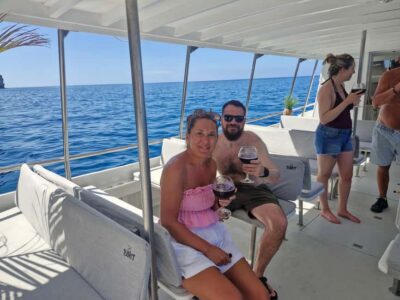
Puerto Rico, Gran Canaria: boat trip, drinks, food, paddle surfing, snorkeling
Read our review →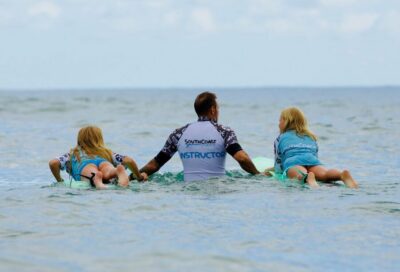
Gran Canaria Maspalomas: Surf lessons all levels
Read our review →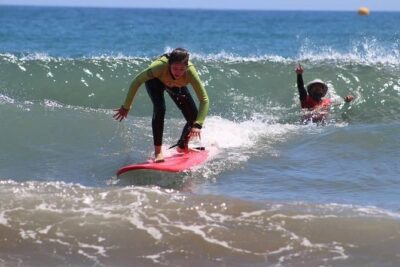
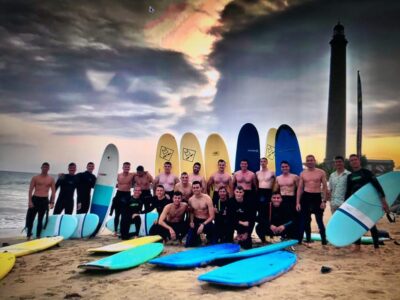
Gran Canaria Surf Lessons: Playa del Inglés & Maspalomas
Read our review →Browse the lists this tour appears in