
Review · DOMINICAN REPUBLIC
Kiteboarding Lessons in Punta Cana
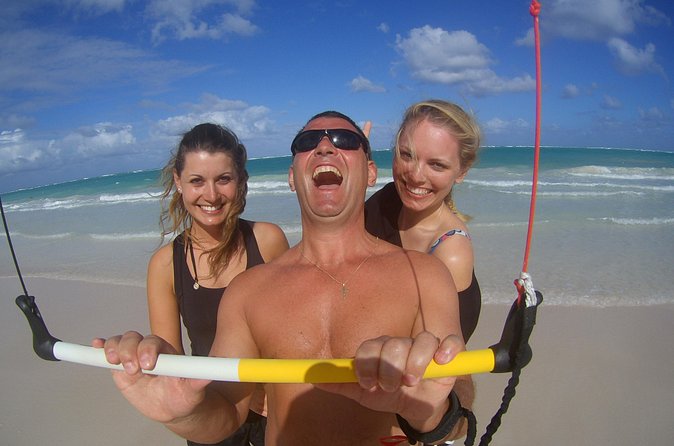
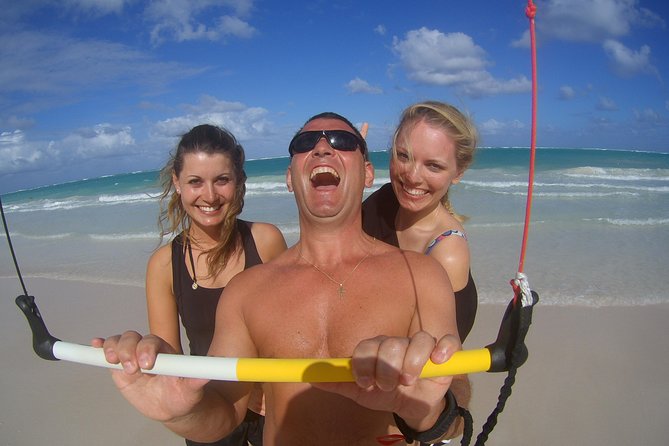
Punta Cana’s steady trade winds make this a fine place to try kiteboarding, and this course takes you from wind theory to your first controlled rides. Small groups of four mean you get more direct help than at a large beach school. The daily three-hour format also gives you enough time to listen, practice, reset, and try again.
I like the clear step-by-step teaching and the option to choose one, two, or three days. I also like the practical touches reported by past students, including radio instruction, newer equipment in several kite sizes, and access to shallow water near Pearl Beach Club. The main catch is simple: kiteboarding depends on wind, so a bad-weather day can change your plans, and one short lesson may not be enough to ride confidently.
Key points before you book
- Three-hour lessons each day: Choose a one, two, or three-day course based on your time and skill level.
- Built for first-timers: You start with wind theory, safety, equipment, and a trainer kite before handling a full-sized kite.
- Four-person maximum: The small group allows more correction and practice time.
- Progressive water skills: Learn water relaunches, downwind and upwind body dragging, board recovery, and waterstarts.
- Strong instructor presence: Humberto is frequently associated with the school, with Marino, Felix, Nelson, and Cuco also named in past instruction.
- Wind can alter the plan: The activity operates in all weather conditions, but poor weather may lead to a new date or a refund.
Why Punta Cana works for a first kiteboarding lesson
Kiteboarding looks wild from the beach. A rider holds a large kite, catches the wind, and skims over the water at surprising speed. Yet the first lesson is less about heroic jumps and more about control, safety, and learning to read the wind.
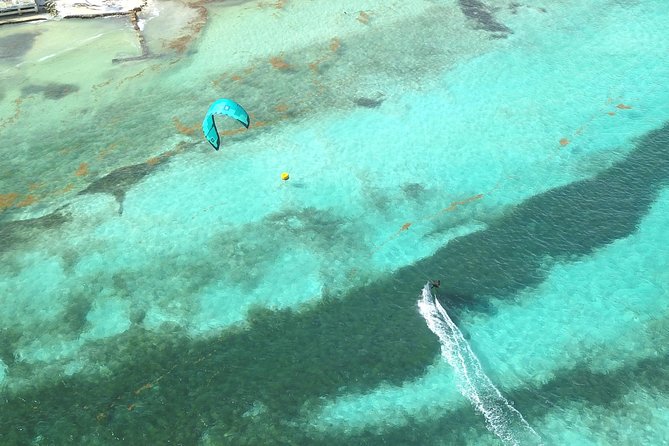
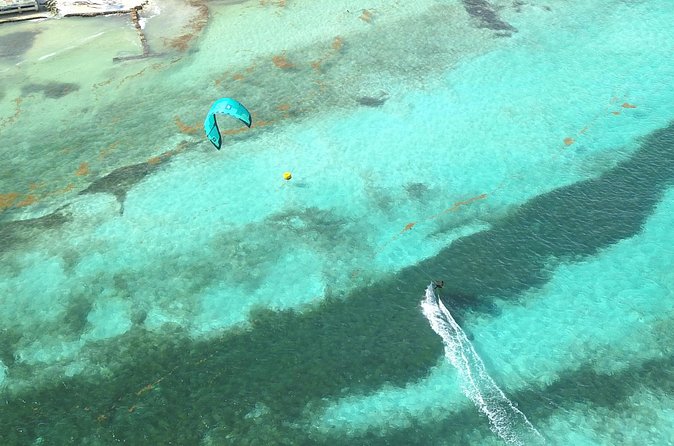
Punta Cana is a useful setting because lessons take place at a known kiteboarding destination rather than in a random patch of surf. Past sessions have used spots around Bávaro and Uvero Alto, including a shallow-water area near Pearl Beach Club. That kind of water can help you focus on the kite and board without immediately dealing with deep water or heavy waves.
You should still keep your expectations in check. The word kiteboarding covers several stages of learning. After one three-hour session, you may understand the equipment and control a trainer kite. With two or three days, you have a better chance to practice in the water and attempt a first waterstart. Nobody can promise that you will leave riding independently, because wind strength, comfort in the water, and your previous board-sport experience all matter.
The school welcomes complete beginners, and the lessons are also intended for people who already know the basics. That makes the course useful for a first attempt, a refresher, or a short return to the sport during a beach holiday.
More Kitesurfing Lessons in the Dominican Republic:
- Private Kitesurfing Lessons @ Playa Salinas
★ 5.0 · 18 reviews - Semi-private kitesurfing lessons in Tarifa (adapted to every level)
★ 5.0 · 214 reviews - Kitesurfing Lessons in Essaouira Beach
★ 5.0 · 206 reviews
Meeting Humberto and getting ready on the beach
You make your own way to the Kitesurf Academy in Punta Cana unless hotel pickup is selected as part of your booking. The meeting point is listed in La Altagracia Province. Confirm the exact pickup or meeting details before setting out, since the description gives the province rather than a detailed street address.
The session begins with getting suited up and receiving a safety briefing. Helmet use is included. This is not a throwaway formality: kiteboarding equipment can generate real force, and learning how to release power is just as important as learning how to steer.
Humberto is the instructor most closely associated with the course. Past instruction has also included Marino, Felix, Nelson, and Cuco. The teaching style described by participants is patient and methodical, which matters here. A good instructor must explain what the kite is doing, show you the movement, and correct you before a small mistake becomes a hard crash.
Some lessons have used a two-way BBTalkin radio system. If that setup is available for your session, it lets the instructor give quick instructions while you are on the water instead of waiting for you to return to shore. Ask about current radio and recording options before you count on them, since equipment and staff can change.
Lesson one: wind theory and the trainer kite
The first class starts on land. You learn basic wind theory, including the wind window, the area where the kite can move in relation to you. This may sound technical, but it gives you a mental map for understanding why the kite pulls gently in one position and powerfully in another.
You then get familiar with the kiteboarding equipment. The lesson is not simply a matter of handing you a kite and telling you to run. You learn how the bar, lines, kite, and safety systems work together.
The trainer kite is a smart first tool. It is smaller and easier to manage than a full-sized kite, so you can practice steering without dealing with the full force of the wind. You work on piloting the kite and steering with one hand. That one-handed control becomes useful later when you need the other hand for the board.
This stage can feel less dramatic than riding across the bay, but it is where you learn the habits that keep the sport manageable. If you are nervous, use this time to ask questions. A rushed first session usually wastes more time than a careful one.
Lesson two: taking the full-sized kite into the water
The second lesson moves toward the part most people picture when they think of kiteboarding. You work with a full-sized kite and begin controlling it in the water.
One key skill is the water relaunch. Kites can fall onto the water, and you need to know how to bring one back into the air without panic. You also practice downwind body dragging, using the pull of the kite to move through the water without the board.
Body dragging is an important bridge between kite handling and board riding. It teaches you how the kite pulls your body, how to steer while moving, and how to stay calm when you are not standing on the board. You may also get your first short burst of speed across the water.
This is where the three-hour class becomes valuable. You need time to repeat a movement, make an error, hear the correction, and try again. A quick introductory demonstration can be exciting, but it cannot replace practice.
Water conditions may be a big help. Past sessions have taken place in knee-deep, flat water near Pearl Beach Club, a setting that can be friendlier for learning than rough surf. That location is not guaranteed for every class, so ask where the school plans to teach on your dates.
Same coast, a different way into the water:
- Macao Beach Private Surf Lessons
★ 5.0 · 139 reviews - Group Surf Lessons Punta Cana – Fun, Easy & Beginner-Friendly
★ 4.5 · 121 reviews - Private Surf Lesson Punta Cana – 1-on-1 Coaching for All Levels
★ 5.0 · 27 reviews - Professional surf lessons Dominican Republic, Cabarete, Encuentro
★ 5.0 · 26 reviews
Lesson three: recovering the board and making a waterstart
The third day focuses on more complex skills. You work on upwind body dragging, which helps you recover a board after it has drifted away. This is one of those techniques that may seem minor until you lose your board and need to reach it safely.
You also practice riding in both directions. Kiteboarding is not just a straight run. You need to control the kite, position your body, and change direction while keeping the board under control.
The big goal is the first waterstart. You position the board, place your feet, manage the kite’s power, and let the kite pull you upright. It can happen quickly when the timing is right, but it often takes several attempts. Expect some splashing and a few awkward starts. That is normal learning, not failure.
A third day is the best option if you want a real chance to connect the separate skills. The first day teaches kite control. The second adds water movement. The third gives you time to bring the board into the sequence. If your schedule allows only one day, treat it as an introduction rather than a promise of independent riding.
What the small group changes
The maximum group size is four people. That is a meaningful limit in a sport where you spend plenty of time waiting for your turn, resetting equipment, or listening to a correction.
A small class can give you more direct contact with the instructor and more chances to ask questions. It also allows the teacher to adjust the pace. A first-timer may need more help with the bar and safety system, while an experienced rider may want work on board control or upwind technique.
It is not the same as a private lesson. Four people can still have different wind and skill needs, and your personal practice time will depend on the group. If you want a private session, ask whether one is available and how it changes the price.
The small group is especially useful for families or friends who want to learn together. Past instruction has included parents with children and groups of siblings. Keep in mind that everyone still needs a moderate level of physical fitness. You will be handling equipment, moving through water, and repeating physical movements for several hours.
Equipment, communication, and extra touches
The listed inclusions are a professional guide and helmet use. Food and drinks are not included, so plan those separately. Hotel transport is also not included unless you choose an option that provides it.
Past sessions have used a range of kite sizes and newer equipment. That matters because kite size should match wind conditions and the rider’s needs. Still, equipment changes over time, so confirm what is currently supplied rather than assuming every item mentioned in an earlier session remains standard.
Some instruction has included radio communication, allowing the guide to give corrections from a distance. There have also been sessions with drone filming, which can be fun if you want a record of your progress. Neither feature is listed as a standard inclusion, so ask before booking if either one matters to you.
The course is about learning, not simply renting equipment. That distinction is important. A beginner should not expect to arrive, take a kite, and figure it out alone. You get safety guidance, structured practice, and instruction matched to your level.
Is $215.39 a good value?
The listed price is $215.39 per person, but the experience is offered in one, two, and three-day formats. Confirm which duration and inclusions apply to the price you see before paying.
If that amount covers the three-day course, it is a strong value for nine hours of instruction, use of teaching equipment, and a small group. If it applies to a shorter option, the value depends on how much individual teaching and equipment use you receive. Ask directly so you are comparing the right number of lesson hours.
Kiteboarding lessons can cost more than a typical half-day beach activity, but you are paying for specialist instruction and a sport that requires careful safety training. The value is highest if you plan to keep practicing after Punta Cana. The first course can give you a foundation, but you will need regular practice to become comfortable and consistent.
Food, drinks, and some hotel transfers may add to your total. Build those costs into your plan. The school may be able to arrange transportation in some cases, but select it only if it is clearly included in your booking.
Weather, timing, and cancellation rules
The activity operates in all weather conditions, so dress for a day outside and expect sun, wind, and water. Good kiteboarding still requires suitable wind, and poor weather can interrupt the course.
If the experience is canceled because of poor weather, you can be offered another date or a full refund. That is useful protection for a wind-dependent activity, especially if you are booking early in your holiday and still have some flexibility.
You can cancel for a full refund up to 24 hours before the start time. Cancellations and changes made less than 24 hours before the experience are not accepted for a refund. The cutoff follows local time.
I would avoid placing the course on the final morning of your trip. A weather change or transport problem could leave no room to move the lesson. Put it earlier in your stay if you can.
Who should choose one, two, or three days?
Choose one day if you want to test the sport without giving it a large part of your holiday. You will learn the basics, handle a trainer kite, and begin working toward water control. It is a sensible choice for the curious beginner who is unsure about committing.
Choose two days if you want more time with the full-sized kite and water skills. You can build on the first session instead of starting from zero each morning.
Choose three days if learning is the main goal. The course structure gives you time to progress from theory to trainer kite, then to water relaunches, body dragging, board recovery, and waterstarts. Progress will vary, but the third day gives the process room to develop.
Experienced riders may prefer a shorter or more focused lesson. You can ask for help with technique, control, or specific maneuvers rather than repeating beginner material. The school has worked with people needing refresher instruction, and the small group should help the guide adjust the session.
Should you book Kiteboarding Lessons in Punta Cana?
Book this course if you want a serious introduction to kiteboarding, not just a quick beach thrill. The strongest reasons are the staged teaching, four-person limit, daily three-hour format, and access to instructors such as Humberto, Marino, and Felix.
I would choose three days for a first attempt if your budget and schedule allow. Pick one day if you mainly want to see if the sport suits you. Before booking, confirm the exact meeting point, the duration tied to the $215.39 price, current equipment, and whether hotel pickup or radio instruction is available.
Skip it if you need a guaranteed, weatherproof activity or if you want a completely relaxed beach day. Kiteboarding takes effort and patience. For the right person, though, it offers a much more active connection with Punta Cana than sitting under a palm tree all afternoon.
FAQ
Where does the kiteboarding course take place?
The course takes place at the Punta Cana Kitesurf Academy in La Altagracia Province, Dominican Republic.
How long is each lesson?
Each daily class lasts about three hours.
Can a complete beginner join?
Yes. No previous kiteboarding experience is necessary.
How many days can I book?
You can choose a one-day, two-day, or three-day course.
How many people can join the group?
The activity has a maximum of four participants.
Is a helmet included?
Yes. Helmet use is included with the professional guide.
Are food and drinks included?
No. Food and drinks are not included.
Is hotel pickup included?
Hotel pickup and drop-off are not included unless you select an option that provides them.
What happens if poor weather cancels the experience?
You can be offered a different date or a full refund if the experience is canceled because of poor weather.
Just added around the Dominican Republic
- Full-Day Surf Camp in Punta Cana –Lessons, Beach Time & Adventure★ 5.0 · 12 reviews
- ATV or Boogie boarding on the beach in Punta Cana★ 5.0 · 16 reviews
- 2-Hour Surf lesson at Encuentro Beach★ 5.0 · 3 reviews
- Polaris At Night, Waterfall Pool + Surf & Turf Dinner★ 4.5 · 5 reviews
- Sosua Stand Up Paddle Boarding★ 5.0 · 5 reviews
- Surfing lesson at beautiful beach Playa Encuentro★ 5.0 · 24 reviews
- Kayak or Paddleboard Rentals Sosua , Cosita Rica, Neptuno Beach★ 5.0 · 17 reviews
- Professional surf lessons Dominican Republic, Cabarete, Encuentro★ 5.0 · 26 reviews
Dominican Republic Surf Trips, compared.
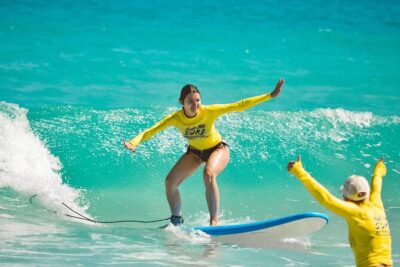
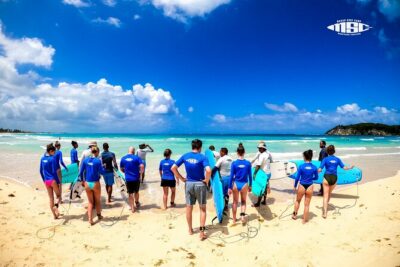
Group Surf Lessons Punta Cana – Fun, Easy & Beginner-Friendly
Read our review →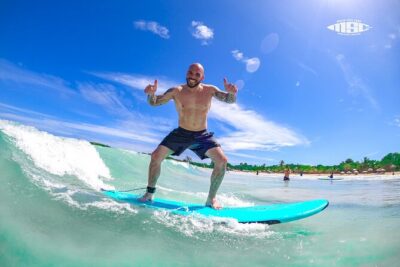
Private Surf Lesson Punta Cana – 1-on-1 Coaching for All Levels
Read our review →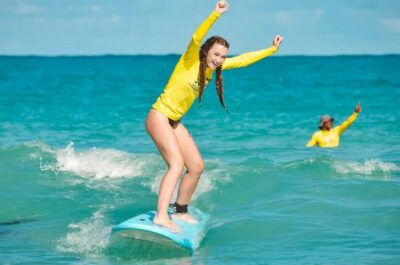
Punta Cana: One-on-One Surf Lesson on Macao Beach
Read our review →
Professional surf lessons Dominican Republic, Cabarete, Encuentro
Read our review →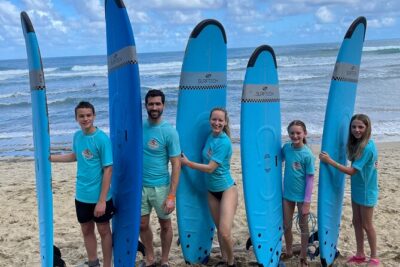
Surfing lesson at beautiful beach Playa Encuentro
Read our review →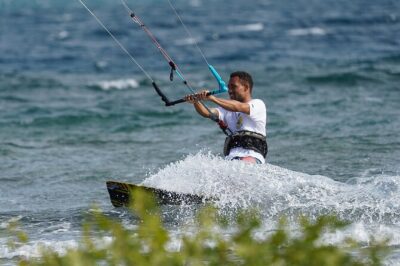
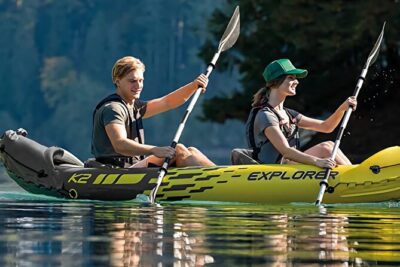
Kayak or Paddleboard Rentals Sosua , Cosita Rica, Neptuno Beach
Read our review →Browse the lists this tour appears in