
Review · AUSTRALIA
Learn to Surf at Noosa on the Sunshine Coast
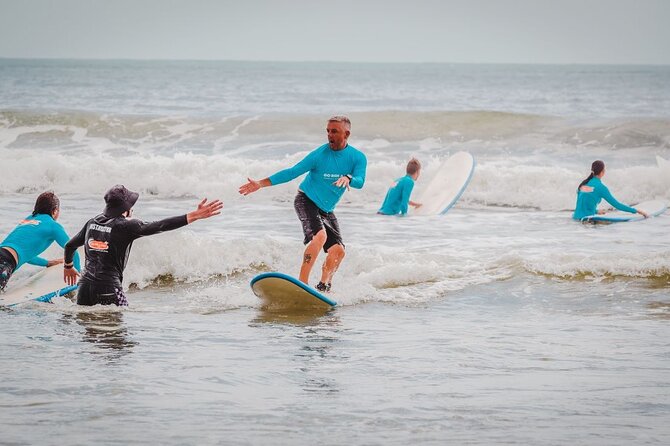
Catching your first wave at Noosa Main Beach is the heart of this two-hour lesson. You begin with a safety talk and dry-land practice, then move into waist-deep water on a soft beginner board while your instructor helps you find the right waves and stand up. All equipment is supplied, so you can arrive ready to learn.
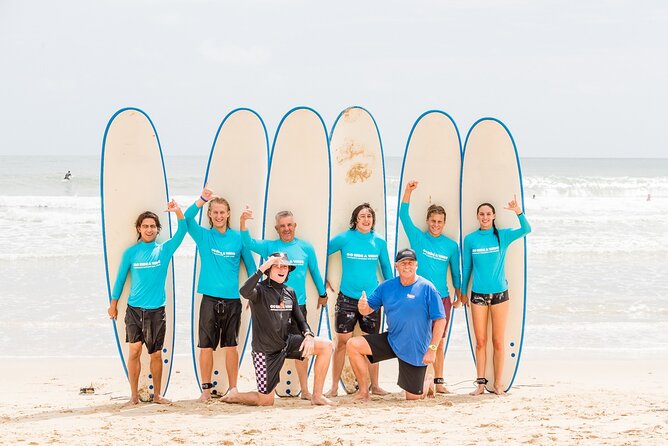
I like the choice of morning or afternoon sessions, which makes this easy to fit around a day in Noosa. I also like the clear beginner-friendly setup: a rash shirt or winter wetsuit, a soft board, a small-group format, and instructors who help you get moving rather than leaving you to guess.
The main thing to consider is group size. The advertised maximum is seven people, but a busy holiday session may combine several groups in the same area. Most classes feel friendly and well supported, but ask about the day’s numbers if personal coaching matters greatly to you.
Key points to know before you book
- Your first waves come in waist-deep water: The lesson starts gently, with the instructor helping you catch manageable waves close to shore.
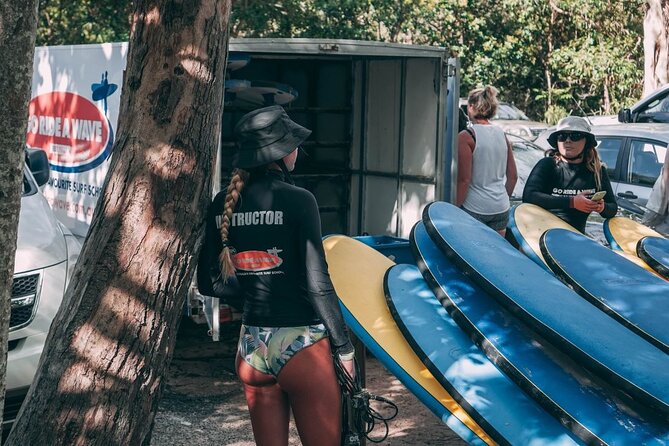
- Meet at Beach Access No 11: Find the Go Ride A Wave trailer in the car park on Claude Batten Drive, and arrive 15 minutes early.
- Equipment is included: You receive a soft beginner board and a long-sleeved rash or sun shirt, with a wetsuit provided in winter.
- Morning and afternoon times are available: You can choose the session that fits your Noosa plans.
- The lesson suits children and adults: Beginners are welcome, while returning surfers can use the class to polish basic skills.
- Group size can affect the lesson: The stated maximum is seven, but holiday demand has produced larger combined groups on some days.
Why Noosa is a fine place to learn
Noosa gives a first surf lesson an unusually pleasant setting. You are not being taught in a featureless training pool or beside a crowded city pier. You are on a sandy beach with the coastal scenery of Noosa Heads around you, and the lesson keeps you close enough to shore that the basics feel manageable.
That setting matters when you are learning something as awkward as surfing. At first, you are trying to remember where to place your hands, how to keep your weight low, and when to move your feet. A good beach and a friendly instructor do not make the sport easy, but they make the first attempts less intimidating.
The class is designed for all skill levels, though its strongest use is as a first or early lesson. You can learn the basic stance, practice catching a wave, and get a feel for the board without buying equipment or committing to a longer course.
You should also keep expectations sensible. Surfing is harder than it looks. Some people may stand several times in one session, while others mainly learn how to paddle, balance, and time a wave. That is still worthwhile progress for two hours in the ocean.
More Surf Lessons in Australia
- Bondi Beach: 2-Hour Surf Lesson Experience for Any Level
★ 4.9 · 935 reviews - Byron Bay: 2-Hour Small Group Surf Lesson
★ 4.8 · 657 reviews - Surfing Lessons on Sydney’s Bondi Beach
★ 5.0 · 267 reviews
Meeting the team at Claude Batten Drive
Your starting point is the Go Ride A Wave trailer in the car park at Beach Access No 11 on Claude Batten Drive, Noosa Heads. Plan to arrive 15 minutes before the lesson begins. That extra time is useful because the team needs to fit you with clothing and choose the right board.
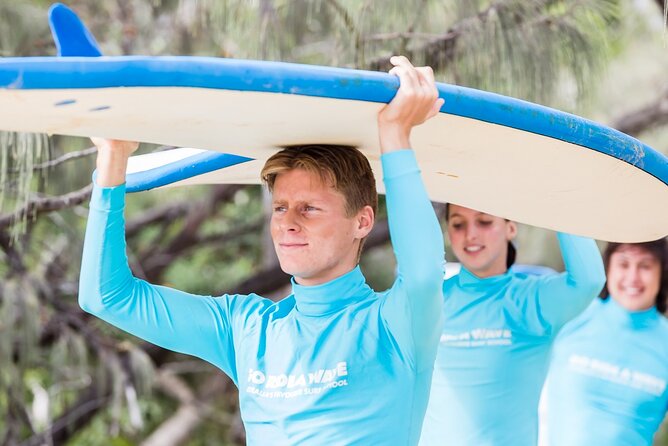
You receive a long-sleeved rash or sun shirt. During winter, the clothing changes to a wetsuit, which is a welcome detail on a cool or rainy day. The boards are soft beginner models, a sensible choice for new surfers because they are intended for early practice and are less intimidating than a hard performance board.
Directions to the meeting point could be clearer, so do not leave the search until the last minute. The activity is near public transportation, but you still need to identify Beach Access No 11 and the trailer before your scheduled start.
Once the group is ready, you walk from the car park to the beach with your equipment. The end point is the same as the starting point, so you do not need to arrange a second pickup location.
The beach briefing before you touch the water
The lesson begins on the sand with a safety talk and basic instruction. This part is short, but it does important work. You learn how the class will operate, what to do in the water, and how to handle the first movements on the board.
The instructor then introduces the mechanics of standing up. You will work on the sequence before trying it in the surf, which helps you avoid wasting your first waves on confusion. The teaching style varies by instructor, but the strongest feedback has come from coaches who explain the movements in plain, simple steps.
Scott and Georgia have been praised for making their instruction clear and giving each participant time. Marit is known for following up with individuals and offering small corrections. Hannah has been singled out for patience with complete beginners, while Sisi has helped students catch waves and get upright.
The human element matters here. Surf instruction is not just a matter of handing you a board and pointing toward the water. You need someone to notice when your feet are too far apart, when you are looking down, or when you are trying to stand too early. The better instructors keep those corrections brief and useful.
Catching the first waves in waist-deep water
After the dry-land briefing, you enter the water and try your first few waves in waist-deep conditions. This is a smart progression for beginners. You are close enough to stand, but you still get the feel of the board moving beneath you.
At this stage, the instructor helps you position the board and catch a suitable wave. You may not stand immediately. The first attempts often end with a wobbly ride, a quick tumble, or a board that glides away while you remain behind. That is normal.
The lesson then returns to the beach for more detailed instruction about standing up. This second explanation is useful because you have now felt what the board does in the water. Instructions that seemed abstract on the sand make more sense after a few attempts.
After the follow-up explanation, you spend the rest of the session in the water. The instructor assists people as they try to stand, offering encouragement and corrections. Many sessions produce several successful rides, and some groups have managed to get everyone upright at least once.
You should not treat standing up as the only measure of success. Learning to catch a wave cleanly, hold your balance for a few seconds, or understand why a previous attempt failed can be just as valuable. The lesson gives you enough time to repeat the process rather than making the whole class one short demonstration.
Same coast, a different way into the water:
- Magnetic Island Discovery Tour with Snorkeling & Paddle Boarding
★ 5.0 · 1,372 reviews - Noosa Heads: 2 Hour Surf Experience on the Sunshine Coast
★ 4.9 · 644 reviews - Byron Stand Up Paddle Nature Tour
★ 5.0 · 384 reviews - Behind The Bay – Explore Like a Local: Waterfalls/paddleboarding
★ 5.0 · 275 reviews
How much personal coaching will you get?
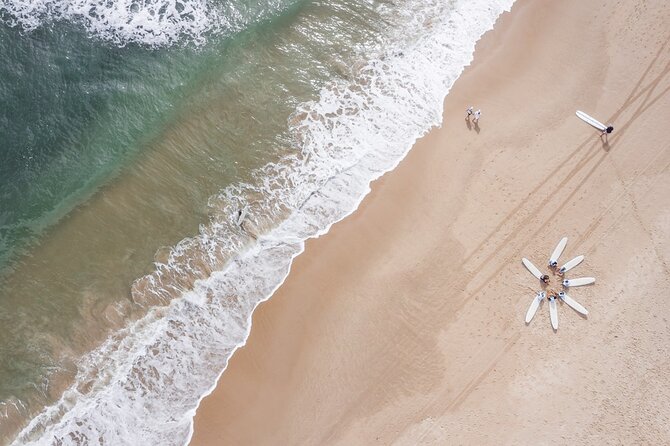
This is where the experience can vary most. The advertised maximum is seven participants, a good number for a beginner lesson if the class is operating as planned. A small group gives the instructor more chances to help you position the board, push you into a wave, or offer a quick correction after a ride.
Several participants have had sessions with two instructors and only a handful of students. That arrangement gives you a better chance of receiving individual help, especially if you are nervous or have never tried surfing before.
Busy school holidays are a different matter. One reported session had 22 surfers and four instructors. The instructor ratio still worked out close to the stated guideline, but the water felt crowded and the coaching less personal. Another class felt confusing because students with different experience levels were sharing attention.
If you want the best odds of close coaching, ask about the expected group size before booking. You can also choose a quieter time if that option is available. The stated limit of seven is reassuring, but actual operations during peak periods may include several groups in the same beach area.
There is also an important point about teaching style. Most feedback praises patient instructors who make sure beginners receive help, but one unhappy participant felt that attention was not shared evenly and objected to physical contact during instruction. If you prefer verbal guidance and clear consent before any hands-on correction, say so at the beginning.
What the instructors do well
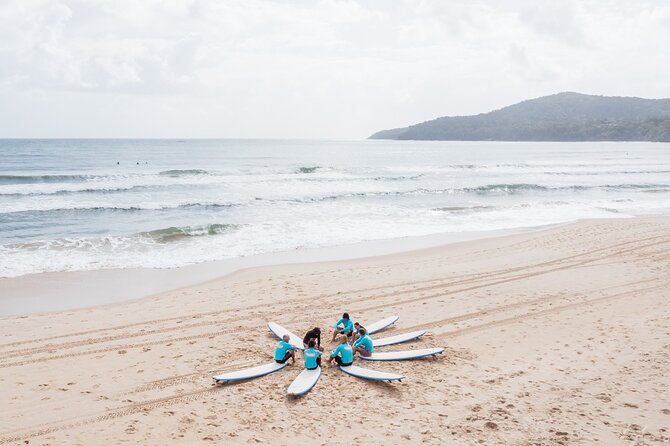
The strongest part of this experience is the coaching. Names that appear repeatedly in the feedback include Sisi, Marit, Scott, Rose, Cece, Hannah, Valentine, Eugenio, Reezy, Georgia, and Rees. Instructors change from session to session, but the pattern is clear: students value patience, humor, and simple explanations.
Rose and Cece have helped people enjoy consecutive lessons, which says something about the appeal of returning quickly while the basic movements are still fresh. Marit is praised for following up with each person rather than focusing only on the strongest surfers.
Scott has been particularly effective with families. One family had children aged 12 and 14 who enjoyed the class and wanted to return. That makes this a useful option for parents who want an activity that adults and older children can share without needing prior skill.
The best instructors do not simply demonstrate surfing and then disappear into the water. They help you catch a wave, let you try, then offer a small adjustment. That cycle of attempt, correction, and another attempt is exactly what a beginner needs.
Still, this is a group lesson, not a private coaching session. If you want constant feedback on every ride, a private class or a smaller booking may suit you better.
Equipment, clothing, and what you need to bring
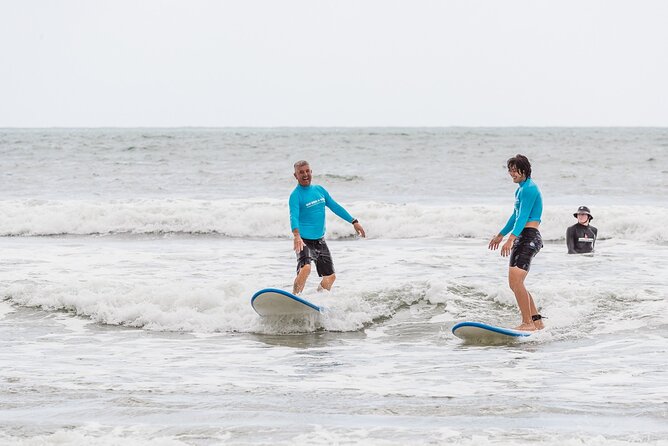
The price of $60.25 per person includes a professional instructor and all necessary surf equipment. You receive the board and either a long-sleeved rash or sun shirt, or a winter wetsuit.
That makes the price reasonable for a first try. You do not need to rent a board separately or buy specialist clothing before deciding if surfing is for you. The included soft board also removes one of the usual hurdles for beginners.
Food and drinks are not included. Bring your own refreshments if you need them before or after the lesson. The supplied information does not list other personal items, so it is sensible to arrive prepared for a beach activity and to allow time to change as needed.
Because the lesson lasts about two hours, you get more than a quick introduction. The class has time for a safety briefing, beach instruction, early water practice, a second explanation, and more time in the waves. That length is especially useful for beginners because the first half-hour can disappear quickly while you learn the basic movements.
Morning or afternoon: choosing your session
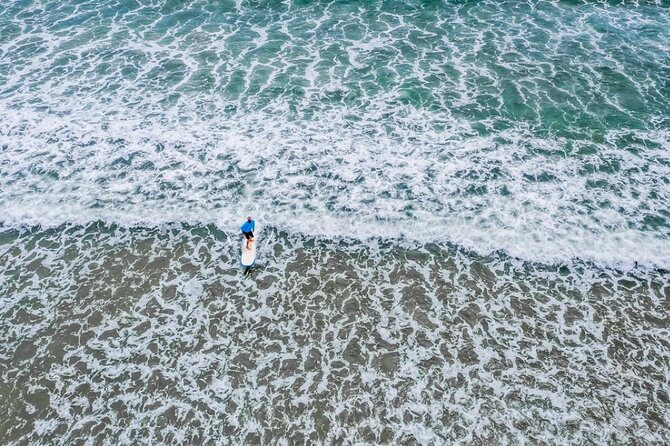
The choice of morning or afternoon class is simple but useful. You can place the lesson around other Noosa plans instead of losing a full day to a fixed departure time.
A morning session lets you finish early and use the rest of the day for sightseeing or relaxing. An afternoon class may suit you if you want a slower start or are fitting surfing around other plans. The available information does not promise a specific wave condition for either time, so choose based on your schedule rather than assuming one period will always be better.
The lesson requires good weather. If poor conditions cause a cancellation, you are offered another date or a full refund. That policy protects you from losing the booking when the ocean is not suitable, but it also means you should keep some flexibility in your plans.
You can cancel for a full refund up to 24 hours before the start time. Changes or cancellations inside that window are not accepted for a refund, and the cut-off uses local time.
Is $60.25 good value?
At $60.25, this is a fair price for a two-hour beginner lesson with equipment and an instructor included. The value is strongest if you have never surfed before and would otherwise need to rent a board, find suitable conditions, and work out the basics alone.
The lesson also saves you from buying clothing for a single attempt. A rash shirt is included, and a winter wetsuit is supplied when needed. That matters on the Sunshine Coast, where weather can change your comfort even when the surf itself remains usable.
Value depends on the group size. With seven or fewer people, the price buys a good mix of instruction and water time. In a very large holiday group, you may spend more time waiting for a turn or receiving brief corrections. The experience can still be fun, but it becomes less attractive if your main goal is rapid technical improvement.
I would see this as a strong introduction rather than a complete surfing course. Book it to discover if you enjoy the sport, learn basic safety and technique, and hopefully catch a few waves. If you already surf confidently, the class may feel too basic unless you want a relaxed session with an instructor.
Who should book this Noosa surf lesson?
This experience suits first-time surfers, families with older children, couples, and friends looking for an active beach outing. It also works for adults who have tried surfing before but need a refresher or want help becoming more consistent.
The class is especially useful if you value encouragement over a hard-driving lesson. Several instructors focus on helping people try for themselves after showing them what to do. That approach lets you build confidence without being left completely alone.
You should think twice if you dislike group activities, want private coaching, or need a guaranteed low student count. The advertised maximum is seven, but busy periods can be more crowded than expected.
It is also worth remembering that conditions affect the day. One class took place in rain, yet the supplied wetsuits kept participants comfortable. Another session had rougher water, though students still managed to get on the board. The ocean does not follow a lesson plan, so your experience may include more falling and waiting than you imagine.
My verdict on learning to surf at Noosa
I would book this as a first taste of surfing in Noosa, especially if you are visiting with children or friends and want an activity with a clear start and finish. The supplied gear, two-hour format, sandy setting, and helpful instructors make the experience easy to try.
Book with realistic expectations. You may stand several times, but you may also spend much of the lesson learning balance and timing. If personal attention is your top concern, confirm the expected group size and avoid the busiest holiday periods if possible.
The lesson earns its strong reputation through patient coaching and a genuine sense of achievement when you finally ride a wave. It is not perfect for every group, but for $60.25, it offers a practical and enjoyable way to find out if surfing belongs in your Noosa plans.
FAQ
Where does the surf lesson meet?
Meet at the Go Ride A Wave trailer in the car park at Beach Access No 11 on Claude Batten Drive, Noosa Heads, Queensland 4567.
How early should I arrive?
Arrive 15 minutes before the lesson begins so the team can provide your clothing, select your board, and prepare the group.
How long does the surf lesson last?
The activity lasts approximately two hours.
Is equipment included?
Yes. The price includes a professional instructor, a soft beginner surfboard, and a long-sleeved rash or sun shirt. A wetsuit is provided in winter.
Is the lesson suitable for complete beginners?
Yes. The class is designed for all skill levels, including people who have never surfed before. It begins with safety and beach instruction before moving into waist-deep water.
How many people can join the lesson?
The stated maximum is seven participants. During busy holiday periods, several groups may operate in the same area, and one reported session had 22 surfers with four instructors.
What happens if bad weather cancels the lesson?
If poor weather causes the activity to be canceled, you can choose another date or receive a full refund. You can also cancel for a full refund up to 24 hours before the local start time.
Just added around Australia
- Rainbow Beach: Surf Lesson Safari & Beach 4WD Double Island Point★ 5.0 · 12 reviews
- Stand Up Paddle Board Hire★ 4.5 · 9 reviews
- Stand Up Paddle Boarding – 2 Person Lesson – 1 Hour★ 5.0 · 12 reviews
- Noosa: Epic Stand Up Paddle Wildlife & Beach 4X4 Adventure★ 5.0 · 13 reviews
- Noosa Stand Up Paddle Group Lesson★ 5.0 · 19 reviews
- Golden Beach 1-Hour Stand-Up Paddleboard Hire on the Sunshine Coast★ 5.0 · 41 reviews
- Epic Surf Safari Beach 4WD Day Tour -Noosa to Double Island Point★ 5.0 · 34 reviews
- Private Surf Coaching Session in New South Wales★ 5.0 · 3 reviews
Australia Surf Trips, compared.
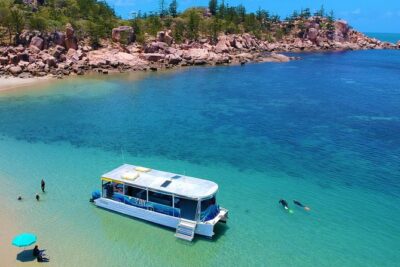
Magnetic Island Discovery Tour with Snorkeling & Paddle Boarding
Read our review →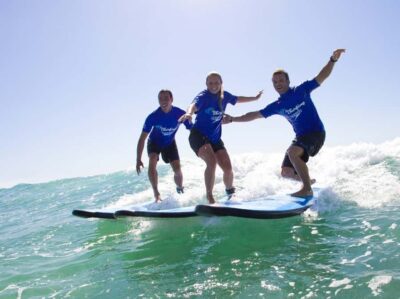
Bondi Beach: 2-Hour Surf Lesson Experience for Any Level
Read our review →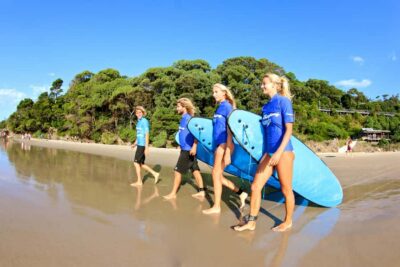
Noosa Heads: 2 Hour Surf Experience on the Sunshine Coast
Read our review →

Behind The Bay – Explore Like a Local: Waterfalls/paddleboarding
Read our review →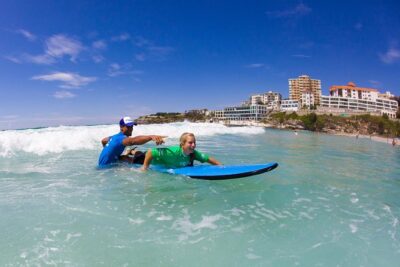
Browse the lists this tour appears in