
Review · LISBON
Lisbon: Surf Experience at Costa da Caparica
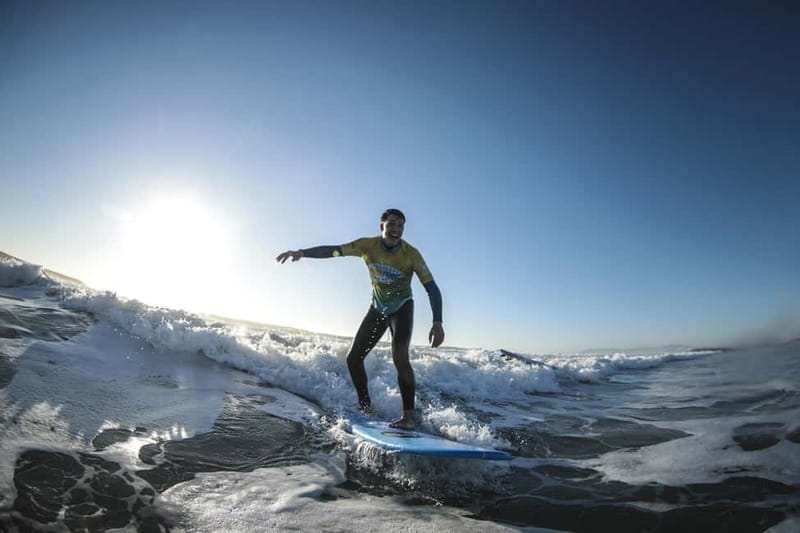
Costa da Caparica gives you a proper Atlantic surf lesson without sending you far from Lisbon. The session moves from beach instruction to shallow-water practice, so you learn the pop-up, paddling, balance, and safety basics before trying to catch a wave. For many first-timers, getting upright even once is the big win.
I like the small-group feel reported by several participants, with groups of about five or six allowing instructors to give useful corrections. I also like that the $35 price includes the board, wetsuit, insurance, and a Portuguese Surf Federation-qualified instructor. The main consideration is simple: surfing is physical, and wave conditions can make the lesson harder than it looks from the sand.
Key points at a glance
- Beginner-friendly progression: Warm up on the beach, practice the pop-up, then try waves in a shallow area.
- Full basic equipment included: You receive a surfboard, wetsuit, and insurance. Bring your own towel.
- Several teaching languages: Lessons are available in English, Portuguese, French, and Spanish.
- Personal coaching matters: Instructors including Ari, Pedro, Lewis, Lucas, and Catarina are praised for clear explanations and individual feedback.
- Convenient coastal setting: The meeting point is Portugal Surf School in Costa da Caparica, a beach town in Lisbon District.
- Flexible booking: You can cancel up to 24 hours ahead for a full refund and reserve without paying immediately.
Why Costa da Caparica is a good place to try surfing
Costa da Caparica is a sensible choice if you want to add an active morning or afternoon to a Lisbon stay. You meet at Portugal Surf School in the coastal town of Costa da Caparica, then spend the full two-hour session at the beach.
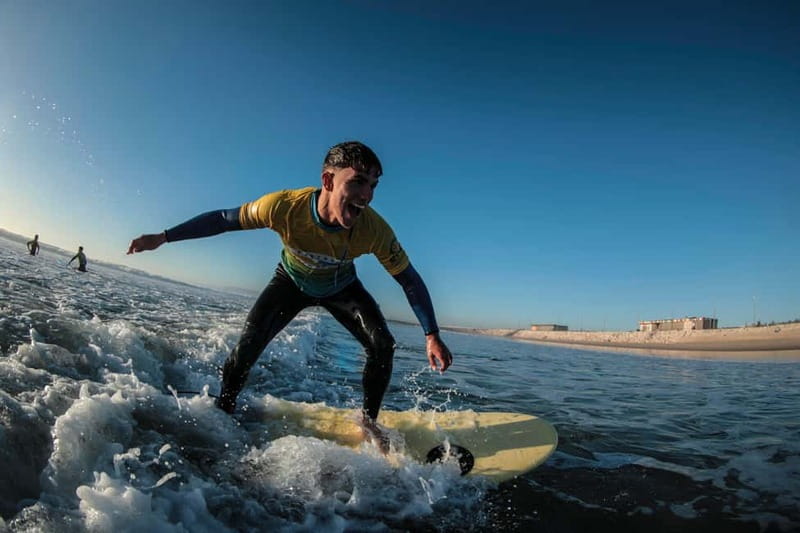
The setting matters because this is not a dry-land lesson in a city gym. You learn with sand under your feet, salt water around you, and real waves coming toward the shore. That makes the experience more exciting, but it also means conditions are part of the lesson. A calm day may make your first attempts feel manageable. Bigger waves can turn the same session into a serious workout.
You should think of this as an introduction to surfing, not a guarantee that you will become a capable surfer in two hours. The aim is to understand the basic movements, feel how a board responds, and perhaps catch a few small waves with help. Some beginners report standing within minutes, while others need more time. Both outcomes are normal.
A few more sessions around Lisbon worth a look
- Lisbon Surf Experience
★ 4.9 · 876 reviews - The Surf Instructor in Costa da Caparica
★ 5.0 · 403 reviews - Lisbon: 1.5-Hour Surf Lesson
★ 4.8 · 275 reviews
Meeting the school and getting ready
Your starting point is Portugal Surf School. The school provides the surfboard and wetsuit, so you do not need to arrive with specialist gear. Bring a towel, which is the one item specifically requested for the activity.
The change from ordinary beach visitor to beginner surfer happens quickly. You receive your equipment, meet your instructor, and prepare for the beach lesson. The staff and instructors work in several languages: English, Portuguese, French, and Spanish. That is useful when a lesson depends on short, clear commands and quick corrections.
The teaching team includes instructors named Ari, Pedro, Lewis, Lucas, and Catarina in the feedback supplied for this experience. Ari is repeatedly singled out for a positive attitude and patient coaching. Pedro is described as attentive to people who are completely new to surfing. Lewis receives praise for careful instruction, while Catarina is noted for patience. You may not have a choice of instructor, but the school has a team with a clear record of beginner-focused teaching.
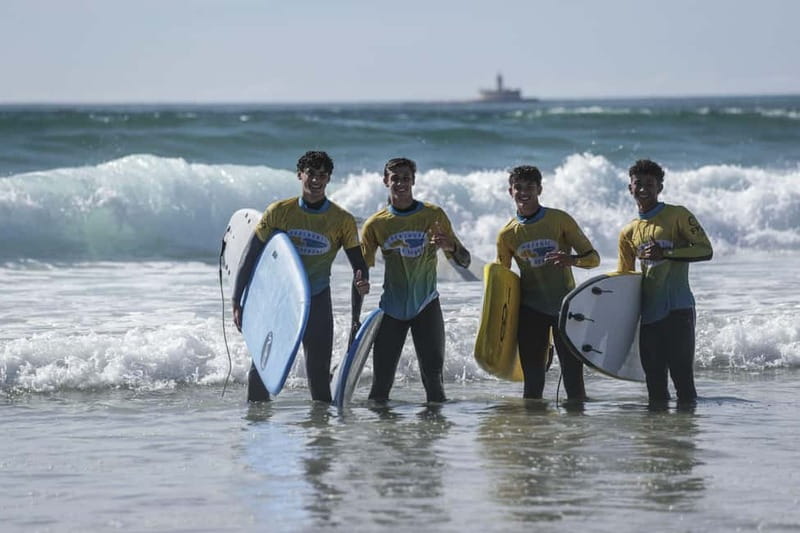
A small group makes a real difference here. One participant describes a group of five, while another had six people with Pedro. That is small enough for the instructor to see what you are doing and offer corrections, although group size can vary. If you are comparing this lesson with a large beach class, the chance for personal feedback is an important part of the value.
The beach warm-up and first surf lesson
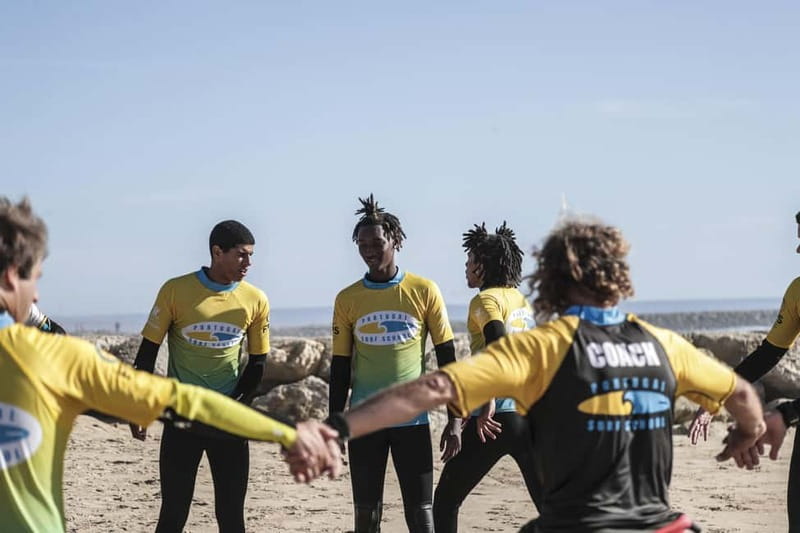
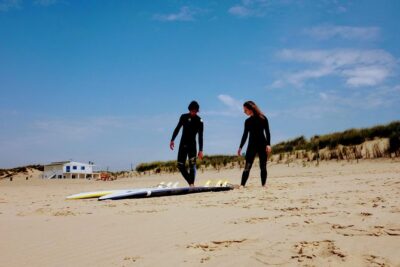
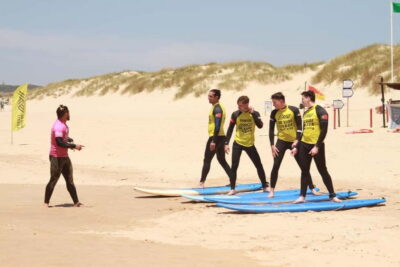
The session begins on the beach with a warm-up. This is more than a quick stretch before the fun part. Surfing uses your shoulders, arms, stomach, legs, and balance, so the warm-up prepares you for paddling and repeated attempts to get on your feet.
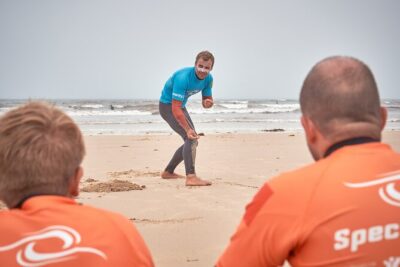
Your instructor then explains the main parts of the sport. You learn how to lie on the board, paddle, push up, place your feet, and keep your balance. The pop-up is the key movement: you move from lying on the board to a stable standing position in one quick action.
You also learn safety rules before entering the water. That is valuable for first-timers, since a surfboard is large and the ocean does not pause while you think. The lesson is designed to give you enough basic information to move with more control and confidence.
Pay attention during this beach section. It may feel tempting to hurry into the water, but the dry practice is where you can sort out foot placement and body position without a wave pushing you around. If you struggle later, your instructor can refer back to the movements you practiced on the sand.
Taking the board into shallow water
After the beach practice, you take your board into the water with the instructor nearby. The lesson uses a safe, shallow area for beginner attempts. You practice paddling toward a wave, feel the board begin to move, and try to pop up at the right moment.
This is where the activity becomes both rewarding and humbling. The steps sound easy on paper, but timing, balance, and wave speed must all line up. Your instructor can help position the board, give you a push or cue, and explain what went wrong after an attempt.
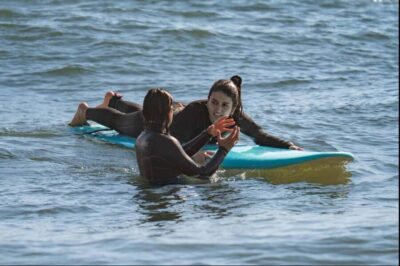
The strongest feature of this lesson is the hands-on support. You are not simply given a board and told to figure it out. The instructor stays involved and offers corrections as you practice. Several people describe receiving feedback after nearly every wave, which is exactly what a beginner needs.
Do not measure success only by the number of waves you ride. A good first lesson may mean learning to lie correctly on the board, paddling with better rhythm, or standing for a second before falling. If you do catch a wave, the feeling is likely to be memorable. Beginners have managed to stand up during their first session, while others have needed repeated tries.
You should also expect to fall. That is part of surfing, not evidence that you are failing. The instructors place the focus on safety, practice, and encouragement, so you can try again rather than treating one wipeout as the end of the lesson.
Same coast, a different way into the water:
- Lisbon Surf Guide – Surf class & Pick Up
★ 5.0 · 210 reviews - Lisbon Surf Experience
★ 5.0 · 152 reviews - Lisbon: The Surf Instructor – surf lessons with transfer
★ 5.0 · 120 reviews - Surf Lesson in Lisbon – The surf experience
★ 5.0 · 97 reviews
What the two hours feel like
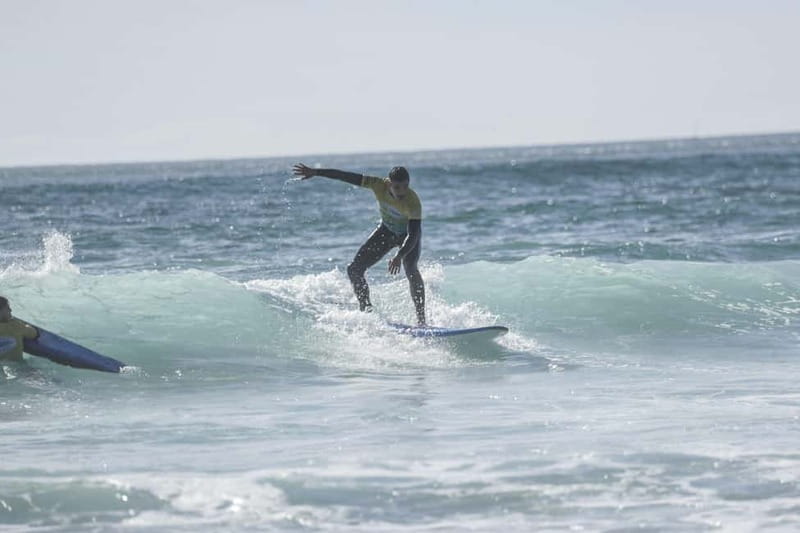
Two hours is a useful length for a first lesson. It gives you enough time to learn the basics, enter the water, and make several attempts without committing to a full day of surfing. It also keeps the activity manageable if you are fitting it between sightseeing plans.
The session is active from start to finish. Paddling takes effort, and getting back on the board after each attempt can be tiring. You may feel the work in your shoulders and legs, especially if the waves are strong. Plan a little quiet time afterward if you want to sit on the beach and recover.
The supplied comments include a session with big waves that was still considered enjoyable, as well as a lesson moved to an earlier time based on the tide and wave conditions. This shows why you should keep your schedule somewhat flexible around the surf class. The exact start time depends on availability, and the school may adjust timing to suit conditions.
That flexibility is helpful, but it also means you should not treat this as a fixed, clockwork attraction. Surfing depends on the sea. Check your booking time and any messages from the school before setting out.
Instructors who make the difference
A beginner surf lesson lives or dies by the quality of the instructor. The equipment gets you onto the beach, but clear coaching helps you understand what to do when the wave arrives.
Ari receives especially warm praise for creating a relaxed mood while still giving useful instruction. That combination matters. You need enough encouragement to keep trying, but you also need honest advice about foot position, balance, and timing.
Pedro is described as attentive to beginners, with a habit of noticing who needs extra help. Lewis is praised for experience and close attention. Lucas is credited with helping a first-timer catch several waves, and Catarina is described as patient and kind. These details point to a teaching style that is supportive rather than rushed.
The staff at the school also receive praise for being friendly and helpful before and after the lesson. That may sound minor, but it makes a difference when you are unfamiliar with the equipment and unsure about what happens next.
The best approach is to tell the instructor plainly that you are new, even if you have watched surfing videos or practiced the movement at home. You will get more useful advice when the instructor knows your actual level.
Equipment, changing, and practical comfort
The $35 cost includes a surfboard, wetsuit, qualified instructor, and insurance. That makes the price good value for a first attempt, since you do not need to rent the essential equipment separately or arrange your own safety coverage for the lesson.
The wetsuit is important in Atlantic water. It keeps you warmer and gives you the freedom to focus on the board rather than the temperature. Equipment is described as being in good condition, though you should remember that surfboards and wetsuits are working gear, not luxury items.
A towel is not included, so pack one. A participant also noted facilities for changing into the wetsuit and rinsing off afterward. That is a useful comfort, especially if you plan to spend more time at the beach or continue sightseeing after the class.
Photos are not included. If you want pictures of your first ride, ask the school whether an additional photo option is available, but do not assume it comes with the booking.
Hotel pickup and drop-off are not included either. You need to make your own way to Portugal Surf School in Costa da Caparica. Keep that in mind when comparing the $35 price with a lesson that includes transport from central Lisbon.
Is $35 good value?
For a two-hour beginner lesson, $35 is a fair price. You receive the board, wetsuit, insurance, and instruction, which covers the main costs that could otherwise add up. The value improves if you are new to surfing and would not know how to choose equipment or judge the waves safely.
The price is less attractive if you already surf confidently. The lesson is built around beginners, and the beach explanation and safety briefing take time. A stronger surfer may prefer equipment rental or a more advanced coaching session, though the teaching can be adjusted for people with some experience.
The small-group reports also support the price. Individual feedback after attempts gives you something a self-guided rental cannot. If you only want to stand on a board for a few minutes, renting may seem cheaper, but you would lose the safety guidance and technique corrections.
You can reserve now and pay later, and cancellation is free up to 24 hours before the activity for a full refund. Those terms are useful if your Lisbon plans depend on weather, tides, or other fixed bookings.
Who should book this Costa da Caparica lesson?
This experience suits adults and older children who want an active introduction to surfing and do not mind getting wet, falling, and trying again. The listed minimum age is four, while people over 95 are not accepted. The supplied details do not specify swimming requirements, fitness standards, or a maximum group size, so ask the school if those points matter to you.
It is a good fit for solo visitors because the lesson creates an easy social setting. You work with the instructor and other beginners, then have time to relax and chat on the beach afterward.
It also suits couples and friends who want something more memorable than another city walk. You can share the laughs when someone catches a wave and the groans when the board shoots away without them.
I would not choose it if you need a guaranteed calm activity, dislike physical exertion, or have only a very tight schedule. The sea controls part of the experience, and the lesson can be tiring. It is also not ideal if you expect polished action photos or hotel transport, since neither is included.
Should you book it?
Book this Costa da Caparica surf experience if you want a friendly, low-commitment first try with equipment and safety guidance included. The strongest reasons are the shallow-water format, qualified instructors, several teaching languages, and the amount of personal coaching described by people who worked with Ari, Pedro, Lewis, Lucas, and Catarina.
At $35, it offers solid value for a two-hour introduction. Bring a towel, allow time to reach the meeting point, and keep your expectations realistic. You may stand on your first wave, or you may spend the session mastering the pop-up. Either way, you will come away knowing if surfing deserves another day on your Lisbon trip.
FAQ
Where does the surf lesson meet?
You meet at Portugal Surf School in Costa da Caparica, in Lisbon District, Portugal.
How long does the activity last?
The surf experience lasts two hours.
How much does the experience cost?
The listed price is $35 per person.
Is the lesson suitable for complete beginners?
Yes. The session teaches basic surfing skills, including paddling, the pop-up, balance, and safety rules before you practice in the water.
What equipment is included?
The price includes a surfboard, wetsuit, surf instructor, and insurance.
What should I bring?
Bring a towel. A towel is not included with the activity.
Which languages are available?
Instruction is available in English, Portuguese, French, and Spanish.
Is hotel pickup included?
No. Hotel pickup and drop-off are not included. You must meet the school at Portugal Surf School in Costa da Caparica.
Are photos included?
No. Photos are not included in the activity price.
Can I cancel for a refund?
Yes. You can cancel up to 24 hours in advance for a full refund. You can also reserve now and pay later.
Just added around Lisbon
- Surf Lesson in Lisbon★ 5.0 · 2 reviews
- Priv Half Day Surf_full gear round & round trip transport_Lisbon★ 5.0 · 23 reviews
- Water Sports – Banana Boat – Wakeboard★ 5.0 · 3 reviews
- Costa da Caparica Surf and Yoga from Lisbon★ 5.0 · 8 reviews
- Surf & Friends – Costa da Caparica★ 5.0 · 4 reviews
- Surf Lesson in Costa da Caparica★ 4.5 · 8 reviews
- 2 Hours Surf Rentals in Costa da Caparica★ 5.0 · 2 reviews
- Surf & Family★ 5.0 · 2 reviews
Lisbon Surf Trips, compared.

The Surf Instructor – surf lessons with transfer
Read our review →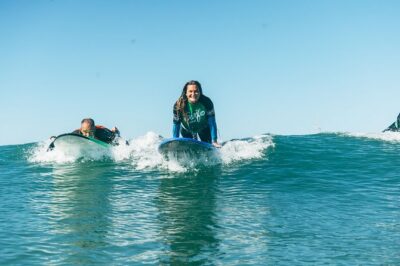
Browse the lists this tour appears in