Review · OAHU
Oahu: Waikiki 2-Hour Beginner Group Surf Lesson
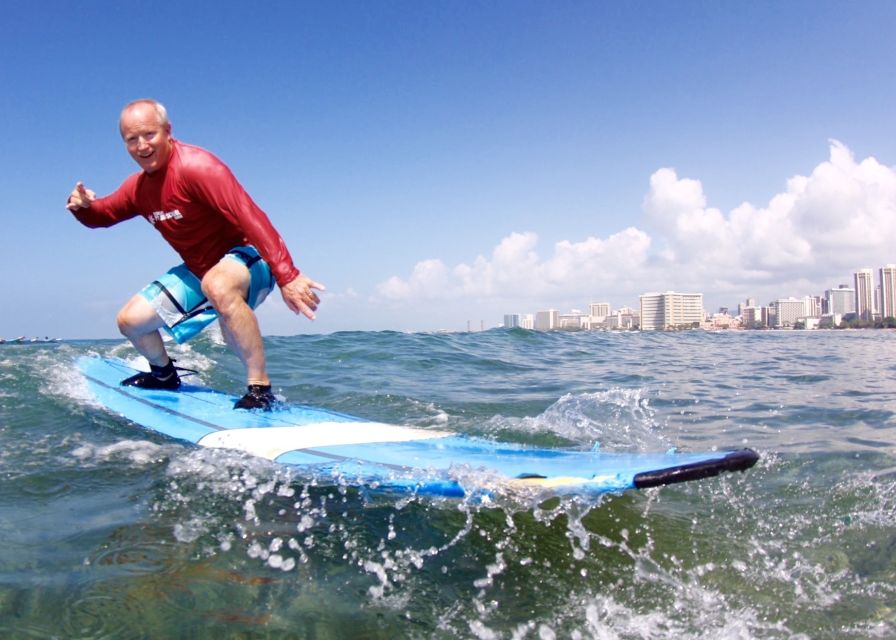
Waikiki is one of the world’s best places to learn to surf, and this lesson gets you away from the thickest crowds to a beginner-friendly break about a mile outside the main Waikiki surf zone. You spend only about 20 minutes on land before moving into the water, where the real lesson begins.
I like the small group limit of six people, which gives the instructor room to offer personal coaching. I also like that your $103 includes the board, leash, rashguard, and reef booties. The main consideration is that surfing takes effort: even a gentle beginner session means paddling, pushing through waves, and getting back on the board again and again.
Key points to know before you book
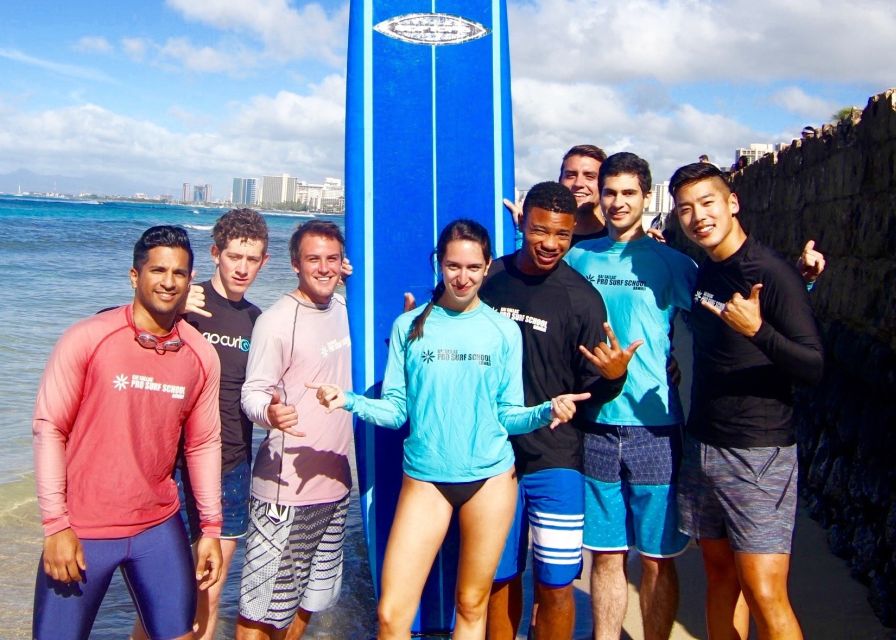
- Current professional surfers teach the class: Instructors such as Turner, Kai, Noah, and Noa have earned praise for patient, upbeat coaching.
- The group is capped at six people: That is small enough for individual tips without paying for a private lesson.
- You get in the water quickly: The land lesson lasts about 20 minutes, leaving most of the two-hour session for practice.
- The focus is on standing and catching waves: You learn stance, wave handling, safety, and surf etiquette before trying the open water.
- Gear is included: A surfboard, leash, rashguard, and reef booties are supplied, but you need to bring a swimsuit and towel.
- Age and swimming rules matter: Children must be at least 11 for the group class, while younger children and weak swimmers need a private lesson.
Why this Waikiki surf lesson works for first-timers
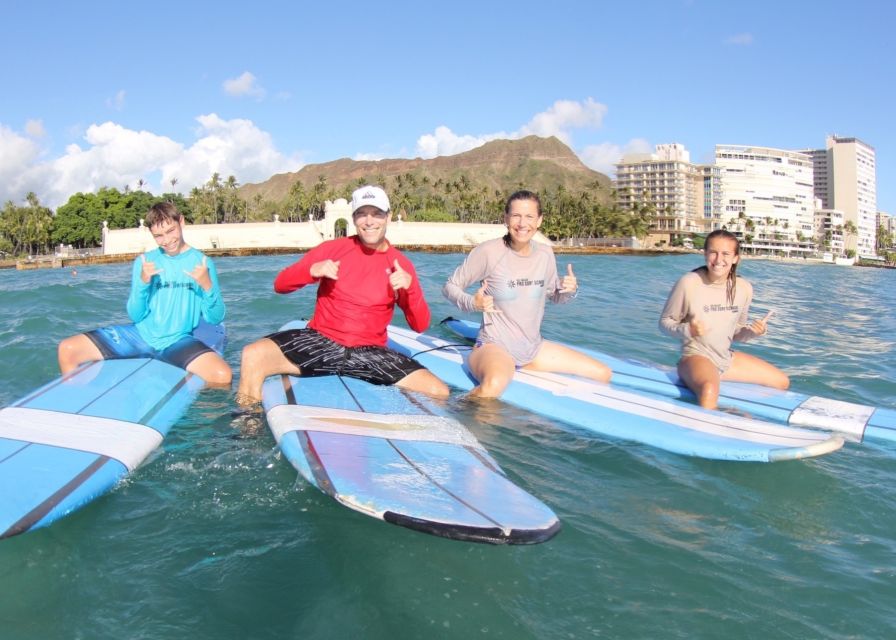
The best part of a first surf lesson is not learning every technical detail. It is getting a feel for the board, understanding the timing of a wave, and standing up even once. This class is built around that early success.
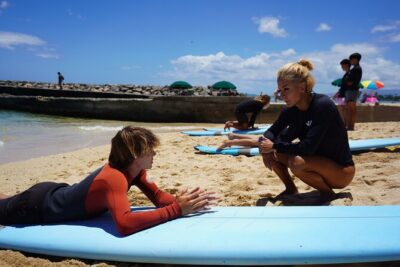
You begin with a short briefing on land. The instructor explains the different equipment, basic safety, surf etiquette, and the correct stance. You also learn how to maneuver over breaking waves, an important skill that saves energy once you leave the beach.
Then you choose equipment suited to your ability. The class is designed for people with little or no surf experience, so the teaching starts with the basics rather than assuming you already know how to paddle or position yourself.
The lesson runs for two hours, with roughly 20 minutes on land and the rest in the water. That ratio matters. A long classroom talk would be dull on a beach holiday, but no instruction at all would leave a beginner confused and unsafe. Here, you get enough explanation to understand what you are doing, then plenty of time to practice.
More Beginner Surf Lessons in Oahu
- Oahu: Beginner-Friendly Waikiki Beach Surfing Lesson
★ 4.9 · 425 reviews - North Shore Beginner Surf Lesson, Hawaii
★ 4.5 · 114 reviews - Surf lessons for beginners in Waikiki
★ 4.0 · 40 reviews
A small group with real coaching time
The class accepts no more than six participants. That is a useful middle ground. A private lesson gives you the most direct help, but it costs more. A large beach class can leave you waiting while the instructor works with someone else. Six people is still social, but it should allow the instructor to watch each person’s stance and timing.
The strongest pattern from the instructor feedback is personal encouragement. Turner is repeatedly praised for taking time with beginners, helping people catch several waves, and keeping the mood relaxed. Kai is noted for patient explanations and for making nervous first-timers feel comfortable. Noah and Noa also receive credit for clear instruction, encouragement, and helping beginners get onto waves.
You should not expect every class to produce the same number of successful rides. Surfing depends on timing, fitness, confidence, and the conditions on that day. Still, the coaching style appears aimed at giving you repeated chances rather than presenting one formal demonstration and sending you off alone.
A group can also make the lesson more fun. You get to watch other beginners try the same steps, which can make your own mistakes feel less serious. At the same time, people with very different fitness levels may progress at different speeds. If you want every minute tailored to you, a private lesson may be the better choice.
The 20-minute beach briefing
The opening land lesson covers the parts beginners most need to know before entering the water. You learn how the board and leash work, how to position your body, and how to move from lying on the board into a standing position.
The instructor also explains proper surf stance. This is not just about looking balanced. Your stance affects how you turn, how you absorb movement, and how likely you are to remain on the board once the wave begins pushing you forward.
Safety is part of the introduction. The instructors are CPR and lifeguard certified, and the lesson includes techniques for handling yourself in the water. You are also shown how to move over crashing waves instead of fighting each one blindly.
Surf etiquette is another useful part of the talk. Even a beginner needs to understand where to wait, how to avoid another surfer, and why taking turns matters. These rules make the lesson safer and help you behave properly if you continue surfing after your visit.
The briefing is short, so pay attention. You will not have much time to memorize every detail once you are wet and trying to balance. Focus on the instructor’s safety advice, the standing sequence, and the instructions for getting over waves.
From board selection to your first wave
After the land portion, you get the equipment that fits your skill level. The package includes a surfboard and leash, plus a rashguard and reef booties. You supply your own swimsuit and towel.
The equipment list is practical rather than luxurious. The rashguard helps protect you from rubbing against the board, while reef booties provide foot protection in the water. A leash keeps the board connected to you, but you still need to follow the instructor’s instructions about spacing and board control.
The first water practice focuses on the basic movement from lying down to standing. Expect to repeat it. You may get up quickly, or you may need several attempts before your feet land in the right position.
This is where coaching makes a big difference. A good instructor can spot whether your problem is timing, hand placement, foot position, or hesitation. The most useful feedback will probably be brief and specific, such as moving a foot, keeping your chest up, or committing to the motion.
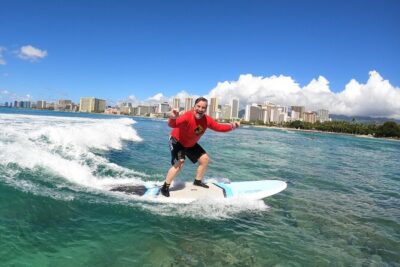
Once you are ready, the instructor helps you line up for manageable waves. The goal is not to send you into the biggest surf. It is to give you a realistic chance to feel the board accelerate and then rise into a standing position.
Many people in these sessions report standing within minutes or riding several waves during the class. Treat that as a possible outcome, not a promise. Your own result may be a few short rides, a longer ride, or simply a better understanding of what to practice next.
More Beginner Surf Lessons in the USA
- Oahu: Waikiki Beginner Private Surf Lesson- Female Guide
★ 4.9 · 40 reviews - Group Surf Lesson: Two Hours Of Beginners Instruction
★ 5.0 · 32 reviews - Beginner Surf Lesson in North Shore, Oahu
★ 5.0 · 26 reviews - Beginner Surf Lesson at North Shore Haleiwa, Oahu
★ 5.0 · 19 reviews
What the water portion feels like
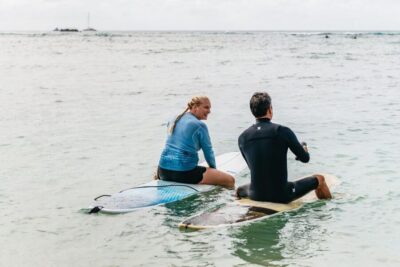
The water time is active. You will paddle, wait, adjust your position, and try again after falling. Even when the waves are suitable for beginners, surfing is physical work.
One participant described the session as sporty and intense, which is useful context for anyone expecting a passive beach activity. Another had trouble with seasickness and managed only one strong ride, despite receiving patient help from the instructor. If you are sensitive to motion, keep that possibility in mind.
The lesson’s location, about a mile outside the most crowded part of Waikiki, is meant to offer a more manageable setting. The exact conditions can vary, and no beginner surf school can control the sea. Some days may feel easier than others.
You should also understand that the instructor may need to help you paddle into position or get back out after a ride. That support is part of the coaching, but it does not remove the physical demands. Wear a swimsuit that stays secure, bring a towel, and be ready to spend most of the session in the water.
The instructors make or break the experience
Surf instruction depends heavily on the person in the water with you. This school uses current professional surfers, and the most praised instructors share a similar approach: they explain the basics clearly, stay patient, and keep encouraging beginners after a fall.
Turner has been especially well received for coaching both group and private lessons. He is described as confident, friendly, and good at giving each person attention. Kai is praised for being calm and nonjudgmental with complete beginners. Noah and Noa are also noted for helping people catch waves while keeping the class relaxed.
That matters if you arrive nervous. A first lesson can feel awkward, especially when you are surrounded by people who seem more comfortable than you. An instructor who treats mistakes as part of the process can help you keep trying instead of giving up after the first wipeout.
The phrase current professional surfers also sets a reasonable expectation for the level of surfing knowledge available. It does not mean your instructor will turn you into an expert in two hours. It does mean you are learning from people who understand the sport and can show you practical techniques rather than only reciting a standard script.
Is $103 a fair price?
At $103 per person, this is not the cheapest way to spend two hours on Waikiki Beach. The price makes more sense when you count what is included: professional instruction, a small group of no more than six, a board and leash, a rashguard, reef booties, and safety guidance.
The real value is the time in the water. You are not paying just to borrow a board and figure things out alone. You get a structured introduction, help choosing equipment, instruction on etiquette and wave handling, and active coaching while you practice.
A private lesson would be more suitable for a child under 11, a weak swimmer, or someone who wants a fully personal pace. The group format is the better value for most adult beginners and children aged 11 or older who are comfortable in the water.
If you are unsure about your interest in surfing, this class gives you a fair test without committing to a longer course. If you already surf regularly, it may feel too basic for the price. The lesson is aimed at first-timers and people who want a supportive introduction, not advanced training.
Who should book this class
I would choose this for a first surf attempt, a couple looking for an active Waikiki outing, or a family with children old enough for the group rules. It also suits the person who has always wanted to surf but has been put off by the idea of crowded, intimidating water.
The class is especially useful if you value encouragement. Several instructors are praised for helping nervous people stand up and ride more than one wave. That kind of coaching can turn a frustrating first attempt into a memorable part of your Hawaii visit.
You should think twice if you are pregnant or have a mobility impairment, since the activity is not suitable for those conditions. Children under 11 and weak swimmers must take a private one-on-one lesson for safety, so do not book the group class for them.
The language of instruction is English. Lessons run twice daily, and you can check available starting times when booking. You can cancel up to 24 hours before the activity for a full refund, and the reserve-now, pay-later option lets you hold a place without paying immediately.
Practical tips for a smoother lesson
Bring a towel and wear your swimsuit under whatever you arrive in. The operator provides a rashguard, but the swimsuit itself is not included.
Listen closely during the first 20 minutes. The standing sequence and safety instructions will be much easier to follow in the water if you have already paid attention on shore.
Do not judge the lesson by your first attempt. Falling is normal, and your useful breakthrough may come after several tries. Keep your movements simple and follow the instructor’s corrections rather than trying to copy an advanced surfer.
If you are prone to seasickness, be honest with the instructor before heading out. One participant found motion sickness a serious challenge, even though the guide remained helpful. That does not mean you should automatically skip the class, but you should plan realistically.
Finally, allow time after the lesson to dry off and change. A two-hour water activity can leave you tired, especially if you are pushing through waves and paddling between attempts.
Should you book the Waikiki beginner surf lesson?
Book it if you want a real first taste of surfing, not just a beach demonstration. The small group, professional instructors, included equipment, and long water session give you a solid chance to catch a wave and stand up.
I would be particularly comfortable recommending it to adults and children 11 or older who can swim and who want active, patient coaching. The main limits are the physical effort, the possibility of seasickness, and the fact that success depends partly on your balance and the day’s conditions.
For $103, you are paying for instruction and repeated chances, not a guaranteed perfect ride. If that sounds fair, this is a strong Waikiki choice for beginners and one of the more memorable ways to spend two hours near Honolulu.
FAQ
How long is the surf lesson?
The lesson lasts two hours. About 20 minutes are spent on land, with the remaining time used for water practice and riding waves.
How many people are in each group?
The group is limited to six participants.
Is the lesson suitable for complete beginners?
Yes. The class teaches basic equipment use, safety, surf etiquette, wave handling, and proper standing technique for people with little or no previous experience.
What equipment is included?
A surfboard, leash, rashguard, and reef booties are included.
What should I bring?
Bring a swimsuit and towel. A swimsuit and towel are not provided.
Can children join the group lesson?
Children must be at least 11 years old to join the group class. Children under 11 must take a private one-on-one lesson.
Can weak swimmers join the group lesson?
Weak swimmers are required to take a private one-on-one lesson for safety reasons.
Is the activity refundable if I cancel?
You can cancel up to 24 hours in advance for a full refund. You can also reserve your place and pay later.
More Group Surf Lessons in the USA
- Group Surf Lesson with Videos and Photos
★ 5.0 · 69 reviews - Private Group Surf Lesson
★ 5.0 · 47 reviews - Group Surf Lesson in Honolulu
★ 5.0 · 45 reviews - Private & Semi-Private Surf Lessons in Waikiki
★ 5.0 · 41 reviews
More Group Surf Lessons in Oahu
- Waikiki Private Group Surf Lesson
★ 5.0 · 298 reviews - Group Surf Lesson in the Heart of Waikiki
★ 5.0 · 107 reviews - 1.5-Hour Semi Private Surfing Lesson in Honolulu
★ 5.0 · 76 reviews - Oahu Semi Private Surfing Lesson
★ 5.0 · 73 reviews
Just added around Oahu
- Surf Honolulu: Ala Moana Stand-up Paddleboard Lesson★ 5.0 · 3 reviews
- Surf Activity on the Wai Kai Wave in Ewa Beach★ 5.0 · 8 reviews
- Semi-Private Surfing Lesson in Waikiki, Oahu★ 5.0 · 26 reviews
- Waikiki 2 Hours Private Guided Surf Lesson★ 3.5 · 8 reviews
- Bodyboarding 1-to-1 Private Lesson with Waikiki Courtesy Shuttle★ 5.0 · 5 reviews
- Surf Lessons on the North Shore Great for Families and all Ages★ 5.0 · 27 reviews
- Family Stand Up Paddle Lesson with Waikiki Courtesy Shuttle★ 5.0 · 3 reviews
- Stand Up Paddle Open Group Lesson with Waikiki Courtesy Shuttle★ 4.5 · 6 reviews
Oahu Surf Trips, compared.
Oahu North Shore Experience: Activities, Waterfall & Free Time
Read our review →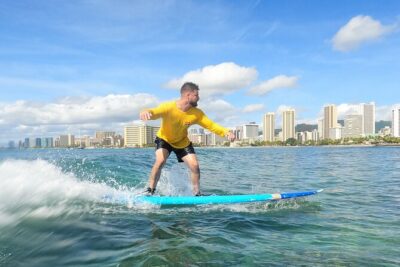
Beginner-Friendly Waikiki Beach Surfing Lesson
Read our review →

Family, Private & Group Surfing Lessons, Waikiki Courtesy Shuttle
Read our review →