
Review · JAPAN
Peaceful SUP Experience on Hiroshima’s Serene Rivers
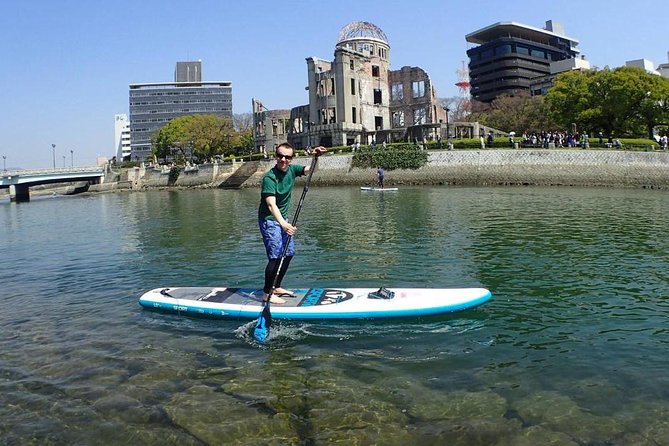
Hiroshima’s rivers offer a striking way to see the city. From a stand-up paddleboard, you move along the Honkawa River toward Peace Memorial Park and the Atomic Bomb Dome, with the city’s water routes tying modern Hiroshima to its difficult past.
I especially like the small group limit of 10 and the gentle introduction for first-time SUP users. The land-based lesson, paddle stretches, and warm-up give you a proper start, while the English guide adds meaning to what you see. The main catch is timing: the tide controls the departure, so your start may shift from 8:30 a.m. to sometime as late as 4 p.m.
The experience is also weather-dependent, and falling into the river is possible. You should be comfortable around water, wear clothes that can get wet, and accept that this is an active outing rather than a quiet sightseeing cruise.
Key points to know before booking
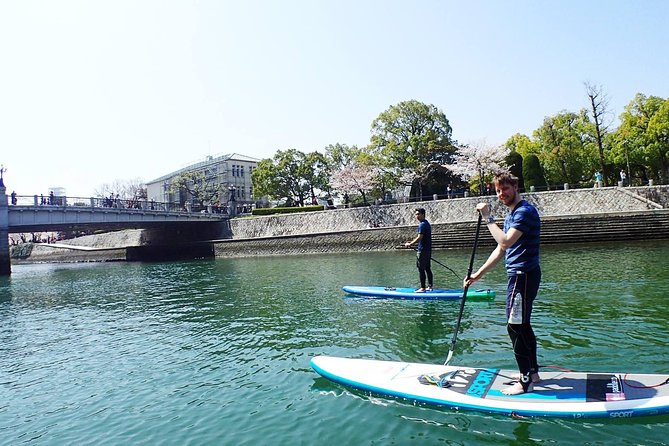
- Paddle toward Hiroshima’s Peace Memorial Park: The route follows the Honkawa River for about 3 km round trip.
- Learn on land first: You receive SUP instruction, paddle stretches, and warm-up exercises before entering the water.
- Small group setting: A maximum of 10 people allows the guide to keep an eye on technique and safety.
- Tide-based departure: The actual start time is set around high tide and may change after you book.
- English or Japanese guidance: The guide leads the river portion and walks with you at Peace Memorial Park.
- Plan to get wet: Wetsuits are supplied in cold weather, and changing rooms and showers are available.
Why Hiroshima’s rivers add meaning to this outing
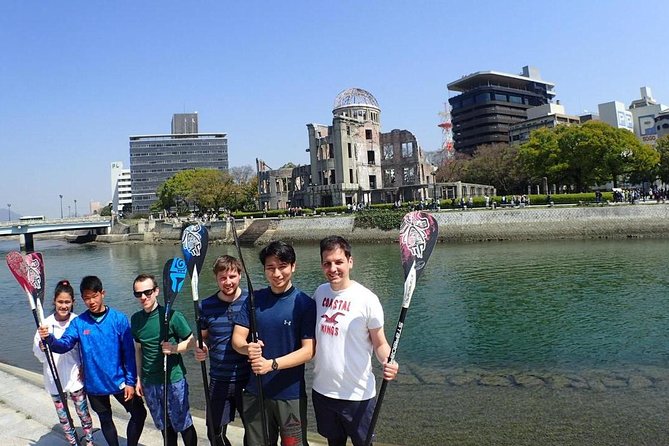
Hiroshima is often visited through its museums, memorials, and city streets. This SUP experience gives you another angle: the rivers that run through the center of town.
Six rivers shape Hiroshima’s geography. They helped the city grow, and their upper reaches once carried materials connected with charcoal iron production. River transport also linked Hiroshima with places farther away, including Osaka.
The rivers changed meaning after August 6, 1945. Many people died in or near the water after the atomic bombing, creating a painful distance between Hiroshima’s residents and these waterways. Today, paddling the river offers a quiet look at a city that has rebuilt its relationship with the water.
That history is not presented as a long classroom lecture. It comes through the guide, the route, and the setting. You can look at the modern city from the river while thinking about how much the same waterways have witnessed. For me, that connection gives the activity more weight than a standard recreational paddle.
Still, you should know what this is. It is not a formal memorial tour, and the exact amount of historical explanation may depend on the guide and the flow of the day. The central activity is SUP, with history woven into it.
More Stand-Up Paddleboarding in Japan
- Okinawa Iriomote Mangrove SUP or Canoe Tour
★ 5.0 · 214 reviews - Okinawa Ishigaki Mangrove SUP or Canoe Tour
★ 5.0 · 147 reviews - Okinawa Iriomote SUP or Canoe and Sightseeing in Yubujima Island
★ 5.0 · 124 reviews
Starting at Magic Island in Kusunokicho
You meet at Magic Island SUP and SURF shop at 1-chōme-15-4 Kusunokichō, in Hiroshima’s Nishi Ward. The meeting point is near public transportation, and luggage storage is available, which helps if you are carrying more than you want on the river.
Allow time to change and prepare before the lesson. Toilets with Western-style facilities are available, but there is no free Wi-Fi, so download anything you need before arriving.
The booking time is shown as 8:30 a.m., but treat that as provisional. Because the river tide affects the outing, the operator sets the final time after checking the season and water level. You should receive the detailed timing before final confirmation.
This is an important practical point. Do not schedule a tight museum visit, train connection, or restaurant reservation immediately afterward. The activity lasts about three and a half hours, but the end time can shift according to conditions and safety decisions.
The first 30 minutes: instruction before the river
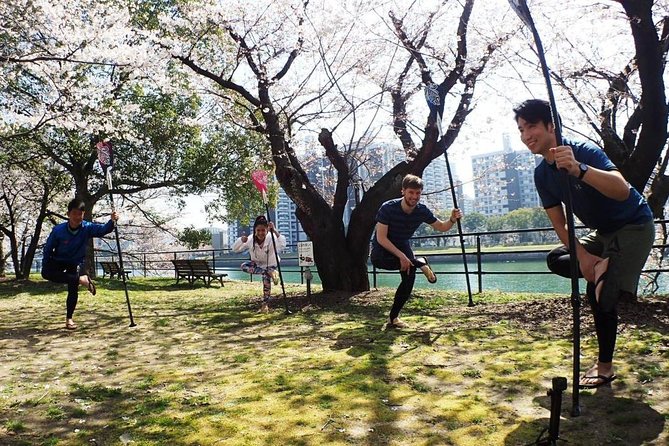
The first part takes place on land. The guide explains how to use the board and paddle, then leads stretches and warm-up exercises near the large gangi by the camphor tree.
A gangi is a broad riverside stairway used for getting down to the water. Here, it becomes the launch point. That detail makes the beginning feel tied to Hiroshima’s riverfront rather than to a generic water-sports facility.
If you have never tried SUP, this preparation matters. Standing on a board while managing a paddle can feel awkward at first, and the guide has a chance to correct basic habits before you enter the river. You should listen carefully to instructions about balance, steering, stopping, and what to do if you fall.
The activity is recommended for people with swimming experience. That does not mean you need advanced water-sports skills, but you should be honest about your comfort in the water. The river is a natural setting, and the guide may change or stop parts of the route after checking conditions.
The minimum age is 10. Participants must also weigh under 110 kilograms. No alcohol is allowed on the day of the activity.
One hour on the Honkawa River
After the land lesson, you use the gangi to reach the river, float the boards, and set off along the Honkawa River. The first river section lasts about one hour.
The route covers a round trip of roughly 3 km, so this is not an endurance race. The pace is designed around seeing the city and managing the river safely. You will need to paddle, but there should also be moments to pause and take in the view.
From the water, Hiroshima’s streets and riverside greenery appear from a different height. One piece of direct feedback about the experience described the city as beautiful and green from the river, and that matches the appeal here. You are not simply moving between sightseeing stops. You are watching Hiroshima from the waterline, where bridges, banks, and buildings form a different picture.
The river also gives the guide a natural way to explain the city’s identity as a water-based place. That point can be easy to miss when you spend your day moving between major sights on foot. On a board, the rivers are no longer background scenery. They are the route.
The activity proceeds in light rain, but the organizer may cancel if weather conditions make the outing unsafe. For an advance cancellation, notice is sent by email by 3 p.m. the day before, with a full refund when the organizer cancels. Conditions can also lead to changes during the paddle.
Same coast, a different way into the water:
- Iriomote Island 1-Day Snorkeling & Mangrove SUP or Canoe
★ 5.0 · 119 reviews - Okinawa Ishigaki Kabira Bay SUP or Canoe Tour
★ 5.0 · 118 reviews - Okinawa Iriomote Mangrove SUP or Canoe and Splash Canyoning Tour
★ 5.0 · 98 reviews - Okinawa Ishigaki Kabira Bay SUP or Canoe and Blue Cave Snorkeling
★ 5.0 · 94 reviews
Reaching Peace Memorial Park by water
At about the two-hour mark, you land at Peace Memorial Park. This is more than a break from paddling. It gives you time to shift from recreation to reflection.
An English guide leads you through the park, or the tour can be conducted in Japanese. The provided details do not specify a fixed list of monuments or a set walking script, so the depth of the explanation may vary. Still, arriving from the river gives the park a different context than approaching from the city streets.
The route heads toward the UNESCO World Heritage site of the Atomic Bomb Dome. Depending on river conditions and the guide’s safety decisions, views from the water may be the most memorable part of this section. You should not expect the same visit as a full memorial museum tour. This experience gives you an outdoor view and a short guided visit rather than a complete treatment of Hiroshima’s history.
That distinction helps you choose well. If your main goal is to spend several hours inside the Peace Memorial Museum, book that separately. If you want to connect the memorial area with Hiroshima’s rivers and see the city from a less usual position, this SUP route adds something worthwhile.
The 90-minute return paddle
After the park visit, you return to the river for the longest segment, about one and a half hours. This is where the physical side of the activity matters most.
The outward trip may feel fresh because you are learning the route and taking in the city. On the return, your arms and legs may be more aware of the work. You do not need to race, but you should be ready for sustained paddling and possible wind or current changes.
The guide can interrupt or alter the plan based on a safety assessment. That flexibility is a good thing on a tidal river, even if it means the route or end time is not perfectly fixed. Follow instructions promptly, especially around launching, landing, and changes in direction.
The group limit of 10 is useful here. It is small enough for the guide to monitor participants more closely than on a large group outing. If you are new to SUP, that extra attention can make the return journey feel more manageable.
Once you arrive back at the camphor-tree gangi, you clean the equipment, change, and return to Magic Island. Showers and changing rooms are available. The tour ends at the same place where it begins, which makes the logistics simpler.
What the $104.91 price includes
At $104.91 per person, this is not the cheapest way to see Hiroshima. You are paying for about three and a half hours of activity, a SUP board, instruction, guide service, and wetsuit rental in cold weather.
The value depends on what you want from your sightseeing. A conventional city tour may cover more major monuments in less time, while a simple rental may cost less if all you want is time on the water. This outing combines equipment, instruction, a guide, a river route, and a short visit to Peace Memorial Park.
That package makes the price easier to justify for a first-time paddler. You do not need to arrange a board or figure out the river route yourself. You also receive English or Japanese support and a guide who can explain the connection between the river and Hiroshima’s history.
Group discounts may be available, which could improve the price for families or friends booking together. Ask about the discount when making your reservation, since the exact terms are not provided here.
Drinks are not included. Bring your own water in a secure container, and protect your phone in a waterproof case. You may be able to store luggage, but anything taken onto the board should be protected from splashes.
Clothing, fitness, and safety
Wear comfortable clothes that can get wet. In summer, suitable choices include a rash guard, board shorts, or leggings, along with a hat, sunglasses, and sandals.
Wetsuits are available at no extra charge during cold weather. Even in warmer conditions, expect to get splashed. Falling into the river is possible, so dress for the water rather than for a dry city walk.
Swimming experience is recommended. The tour does not list a special fitness requirement, but you should be able to paddle for the planned periods and manage a three-and-a-half-hour outdoor activity.
Before entering the river, you sign a consent form covering precautions. The operator warns of injury risks in a natural setting, so personal insurance is worth considering. Keep your smartphone waterproof, and tell the guide before departure if you do not want promotional photographs taken.
The guide has the final say on safety. That may mean changing the route, stopping a section, or ending earlier. You may not get every planned viewpoint, but that is preferable to forcing a river activity in poor conditions.
Who should book this Hiroshima SUP experience
I would recommend this outing to you if you meet several of these conditions:
- You want an active way to see Hiroshima rather than another walking tour.
- You have swimming experience and are comfortable getting wet.
- You are curious about the city’s rivers and their role in Hiroshima’s past.
- You are new to SUP and would benefit from instruction.
- You can keep your schedule flexible because the tide sets the start time.
- You value a small group and English or Japanese guidance.
Families with children over 10 may find it suitable, provided everyone meets the weight and water-comfort requirements. Friends can also benefit from group discounts, although the exact savings should be confirmed before booking.
I would hesitate to recommend it if you dislike water sports, need a guaranteed departure time, or want a fully detailed memorial tour. It is also a poor fit if you have no swimming experience or cannot accept the possibility of cancellation or an altered route because of weather.
Should you book it?
Book this Hiroshima SUP experience if you want the city’s rivers to become part of your visit. The combination of calm paddling, a small group, river history, and a guided stop at Peace Memorial Park gives you a perspective that a standard city route cannot provide.
The strongest reasons to choose it are the carefully timed tidal departure, the patient instruction for beginners, and the chance to approach Hiroshima’s memorial district from the Honkawa River. The main compromises are the strict non-refundable booking rule, shifting start time, physical effort, and exposure to weather.
For a first SUP experience with a meaningful Hiroshima setting, I think the $104.91 price can be fair. Just leave room in your schedule, bring water and waterproof protection, and book only if you are ready to paddle, get wet, and let the river set the pace.
FAQ
Where does the SUP experience begin and end?
It begins and ends at Magic Island SUP and SURF shop, 1-chōme-15-4 Kusunokichō, Nishi Ward, Hiroshima. Luggage storage is available at the meeting point.
How long does the experience last?
The activity takes approximately 3 hours and 30 minutes. The end time can vary because of tides, weather, and safety decisions.
What time does the tour start?
The listed meeting time is 8:30 a.m., but the actual time may change between 8:30 a.m. and 4 p.m. The operator sets the final time according to the tide and season.
Is the activity available in English?
Yes. The guide service is available in English or Japanese.
What is included in the price?
Instruction, SUP board rental, guide service, and wetsuit rental during cold weather are included. Drinks are not included.
Is swimming experience required?
Swimming experience is recommended. You should also be prepared for the possibility of falling into the river.
What should I wear?
Wear comfortable, water-friendly clothing, such as a rash guard, board shorts, or leggings in summer. Bring a hat, sunglasses, and sandals. Wetsuits are available during cold weather.
What happens if the weather is bad?
The activity may be canceled because of weather. For an advance cancellation, the operator plans to email you by 3 p.m. the day before, and a full refund is issued when the organizer cancels. The tour can proceed in light rain.
Just added around Japan
- Miyako Two Activities in Half Day SUP and Sea Turtle Snorkeling★ 5.0 · 9 reviews
- Okinawa Miyakojima 1 day SUP x Pumpkin Cave Exploration x Canoeing★ 5.0 · 7 reviews
- [Miyako Island/Full Day] Sea Turtle Snorkeling & SUP or Canoe★ 5.0 · 11 reviews
- [Miyako Island / Evening] Choice of Sunset SUP or Canoe Tour★ 5.0 · 19 reviews
- SUP downriver tour at Niyodo river★ 5.0 · 11 reviews
- Mangrove SUP in Okinawa★ 5.0 · 2 reviews
- Kagoshima Volcano Sunrise SUP Activity Inc. Breakfast & Transport★ 5.0 · 3 reviews
- Okinawa Ishigaki Sunrise SUP or Canoe Tour★ 5.0 · 39 reviews
Japan Surf Trips, compared.
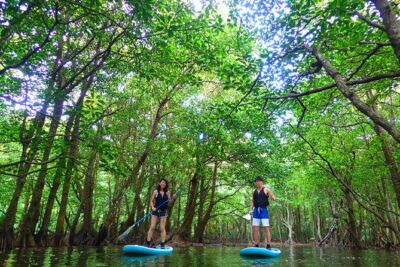
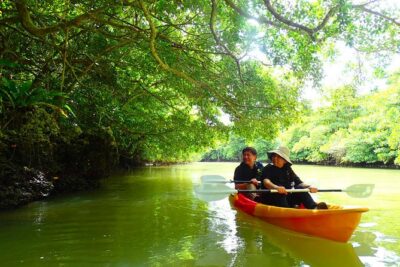
Okinawa Iriomote SUP or Canoe and Sightseeing in Yubujima Island
Read our review →
Iriomote Island 1-Day Snorkeling & Mangrove SUP or Canoe
Read our review →
Okinawa Iriomote Mangrove SUP or Canoe and Splash Canyoning Tour
Read our review →
Okinawa Ishigaki Kabira Bay SUP or Canoe and Blue Cave Snorkeling
Read our review →
[Ishigaki]Mangrove SUP/Canoe + Blue Cave Snorkeling
Read our review →Browse the lists this tour appears in