
Review · USA
Private Surf Lesson in North Myrtle Beach
The most appealing part of this North Myrtle Beach lesson is its simple goal: get you standing on a surfboard during your first session. You begin on the sand with water safety, surfing rules, stretching, paddling, and the stand-up move, then take those skills into the ocean with an instructor close by.
I like the private format, since your instructor can adjust the lesson for your age, swimming ability, and confidence. I also like the patient, hands-on teaching style reported by families who worked with Brandon, John, and Logan. The main drawback is time: 90 minutes goes quickly, especially when several people share the private booking, and the lesson depends on good weather and suitable waves.
Key points to know before you book
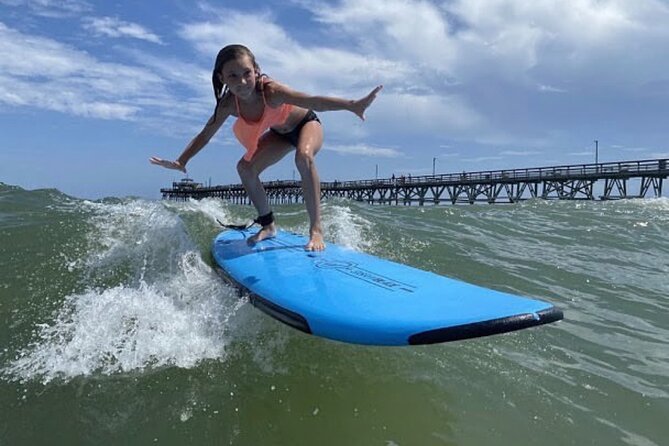
- Your first lesson starts on the beach: You practice paddling and standing before entering the water.
- Private instruction keeps the focus on you: Your group participates alone, with an instructor offering step-by-step help.
- Kids and adults can learn together: Ages in the supplied experiences ranged from young children to a 48-year-old parent.
- Boards, leashes, and cold-weather wetsuits are included: You do not need to arrange basic surf gear separately.
- Timing can affect the quality of the lesson: Instructors may suggest a different time when wave conditions are likely to be better.
- The meeting point is 3901 S Ocean Blvd: Transportation is not included, and the activity ends where it begins.
Starting at 3901 S Ocean Boulevard
Your lesson begins at 3901 S Ocean Blvd in North Myrtle Beach, South Carolina. The activity is offered in English, and your confirmation arrives when you book. You will need to make your own way there, since private transportation is not included.
The meeting point matters because this is not a hotel pickup experience. Plan your route before lesson time, and allow enough time to arrive ready for the beach. The activity ends back at the same location, so the arrangement is easy once you have reached the start point.
This is a private activity, not a large surf class. That gives your instructor a better chance to watch each person closely, correct mistakes quickly, and change the pace when needed. If you are booking for a family, remember that private does not mean each person gets a full solo lesson. Your group shares the instructor’s attention, so a very large group may get less individual water time.
More Private Surf Lessons in the USA
- Private Hanalei Sandy Bottom Surf Lesson on Kauai
★ 5.0 · 339 reviews - Waikiki Private Group Surf Lesson
★ 5.0 · 298 reviews - Private Stand Up Paddle Boarding Tour in Turtle Town, Maui
★ 5.0 · 293 reviews
The first 15 minutes: safety, rules, and stretching
The lesson opens with water safety and surfing etiquette. This is more than a formality. A first-time surfer needs to understand how to behave around other people in the water, how to handle the board, and how to approach the session with sensible limits.
You also stretch before the physical work begins. Surfing uses your shoulders, arms, core, and legs, so this short warm-up helps prepare you for paddling and repeated attempts to stand. I appreciate that the lesson starts with these basics rather than rushing straight into the waves.
The safety talk should be especially useful for children and adults who are comfortable in the water but have never handled a surfboard. The activity requires a moderate level of physical fitness, so you should be ready for paddling, getting on and off the board, and trying the stand-up motion several times.
Service animals are allowed, and the meeting point is near public transportation. Those details may help with planning, though you still need to arrange your own transport to the beach.
Practicing on the sand before entering the ocean
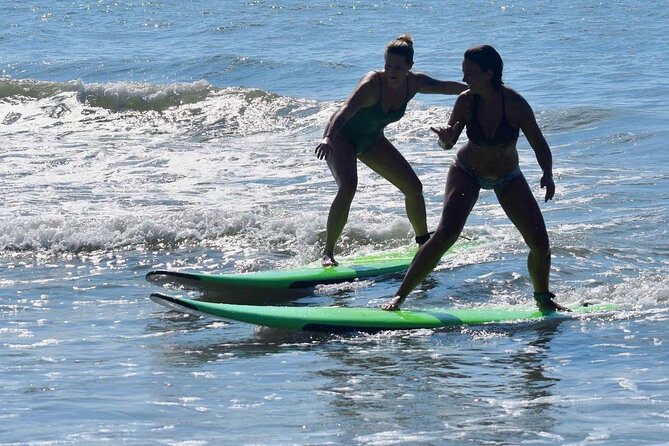
Next comes the most important dry-land practice. The instructor demonstrates how to paddle and how to move from lying on the board to standing. You then repeat the movement on the beach, where you can think through the steps without also dealing with moving water.
This part has real value. Many beginners lose balance because they try to stand too early, place their feet poorly, or move in a rushed way. Practicing first lets your instructor make corrections before you are in the water. It also gives children a chance to understand what the board should feel like.
The teaching style is built around short directions and repeated attempts. Brandon is noted for assessing each child’s ability and working at the right level, while John is described as giving useful tips in real time. Logan has also worked with first-time children who were standing on waves during their first lesson.
Those details point to an important strength: the instructor is not simply handing you a board and sending you toward the surf. You get a clear sequence to follow, then help with the parts that give you trouble.
Taking the board into the water
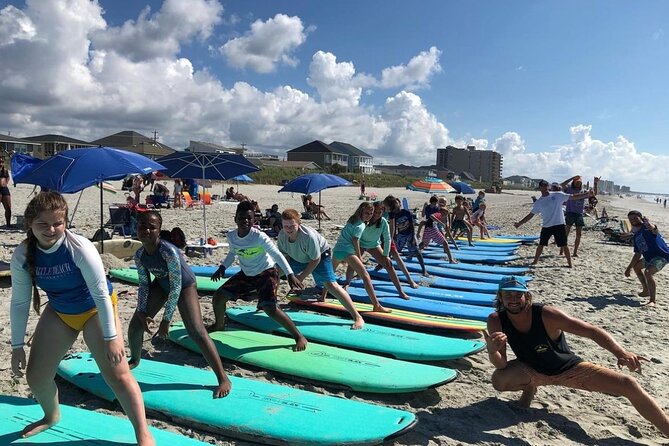
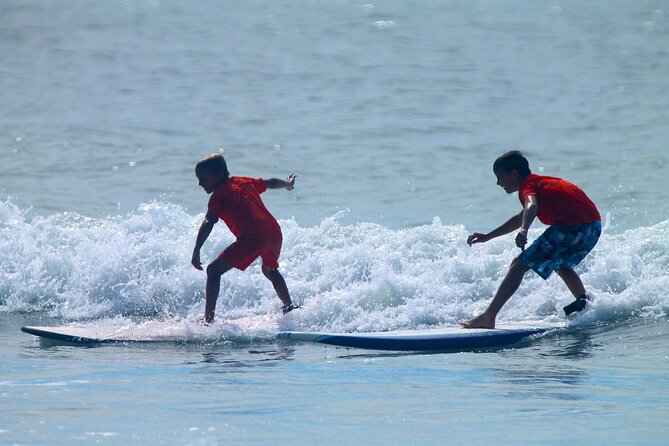
Once you have practiced on the beach, the lesson moves into the ocean. Your instructor works closely with you, offering a helping hand and step-by-step directions as you paddle and try to catch a wave.
The first success may come quickly, but the session is still physical. You will likely need to make several attempts, and the quality of the waves can affect how easy it feels. The instructors may adjust their advice as conditions change, which is one reason a private lesson can be more useful than a fixed group class.
The stated aim is for you to ride waves during your first lesson. That is an ambitious promise, but the supplied experiences show a consistent pattern of children and adults catching multiple waves or standing up on their first wave. You should still treat the result as a goal rather than a guarantee of a perfect ride. Surfing depends on weather, waves, balance, and how comfortable you feel in the water.
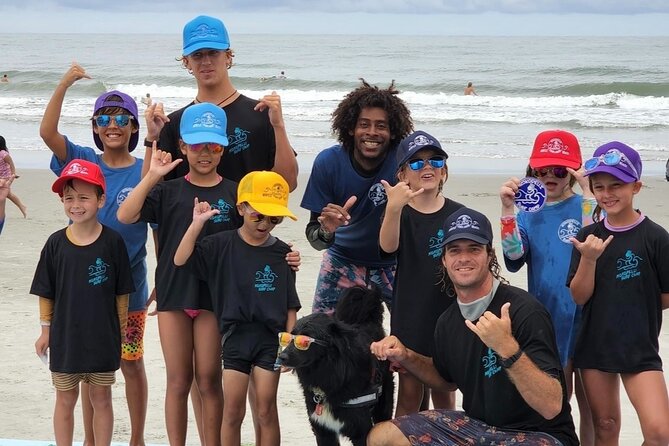
For children, the instructor’s close attention is particularly helpful. One family booked for four girls ages 8 to 13 with different swimming and surfing abilities. Brandon adapted the lesson for each child, rather than expecting the whole group to move at one speed. That is exactly the sort of flexibility you want in a first lesson.
More Surf Lessons in the USA
- Maui: Two Hour Beginner Group Surf Lesson in Kihei
★ 5.0 · 950 reviews - Open Group Surfing Lesson in Waikiki, Hawaii
★ 4.5 · 582 reviews - Outrageous Surf ScHool Lesson on Lahaina Side
★ 4.5 · 547 reviews - Los Angeles: Surfing Lesson in Venice Beach
★ 4.8 · 442 reviews
What the private format is worth at $80
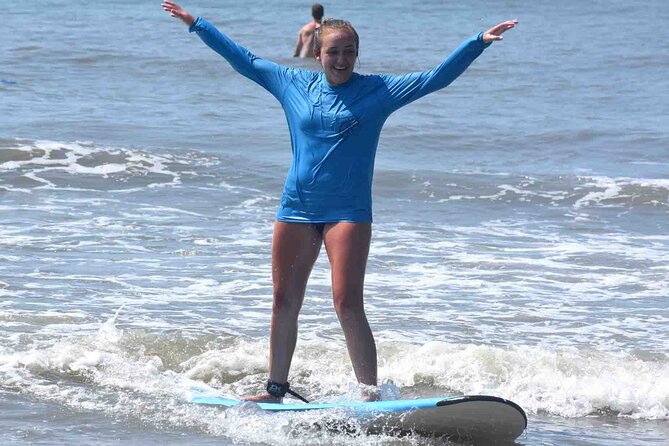
The price is $80 per person for about 90 minutes. That is not the cheapest way to try surfing, but the value improves if you want personal help rather than a broad introduction in a busy class.
Your price includes the surfboard and leash. A wetsuit is also included when the day is cold, which removes two common equipment questions from your planning. You are paying mainly for instruction, close supervision, and use of the basic gear.
The private format is most useful when the people in your group have different needs. A cautious eight-year-old, a confident teenager, and a first-time parent may all need different instructions. An instructor can spend more time with the person who needs help without losing the whole lesson to a fixed class pace.
The value is less clear if you already surf well or only want to rent a board. In that case, the lesson may offer more instruction than you need. But for a first attempt, especially with children, the price covers the parts that are hardest to arrange alone: choosing the right board, understanding safety, timing a wave, and getting help at the moment you need it.
Kokopelli also offered favorable gear and board-rental rates to one family returning for another day. That can make the lesson a useful first step if you plan to continue surfing during a North Myrtle Beach vacation, though those later rental prices are not included in this activity’s $80 fee.
Teaching children, teens, and adults
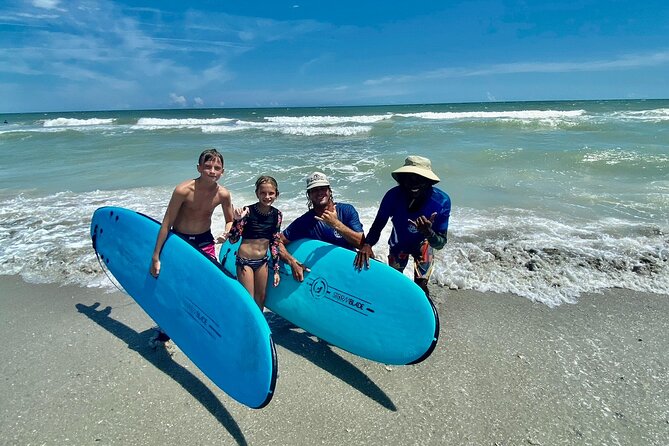
This lesson fits families particularly well. Children between 8 and 13 have taken part, as have teenagers and adults. A parent and 12-year-old daughter each received a private lesson and both enjoyed enough early success to want another day.
The instructors appear to focus on confidence as much as technique. John kept children engaged in conversation, including a discussion about their favorite place, Hawaii. Small touches like that can help a young beginner relax while waiting for the next wave.
Teenagers may appreciate the quick move from practice to action. Three young people ages 13, 15, and 17 were given boards suited to them and received enough instruction to catch their first waves. The instructors also suggested a different time of day to improve the wave conditions, a practical adjustment that parents may not know to request.
Adults should not assume the lesson is only for children. A 48-year-old parent caught waves and enjoyed the process, including the inevitable wipeouts. You need moderate physical fitness, but you do not need to be young or already athletic to give it a try.
If your group includes people with very different abilities, tell the operator when booking. The private setup gives the instructor room to adapt, but the total lesson time remains about 90 minutes.
Instructors Brandon, John, and Logan
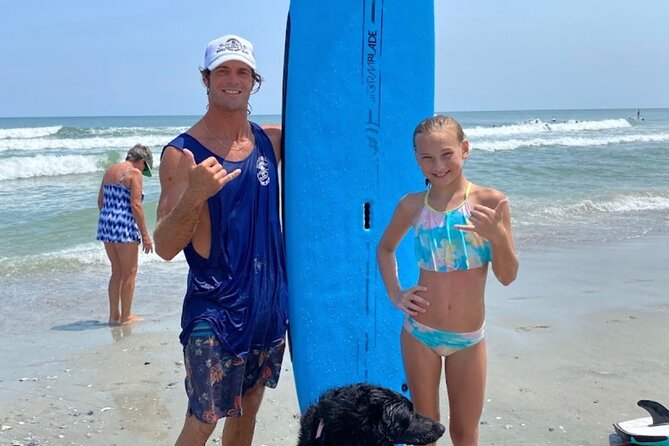
The experience depends heavily on the instructor you get. Brandon is associated with careful assessment of children’s abilities and a patient approach when a group includes several skill levels.
John has worked with both families and mixed-age pairs. His teaching includes real-time corrections, useful tips while you are attempting to catch waves, and an easy way of connecting with children. He has also taught adults who wanted a fun first experience rather than a serious athletic challenge.
Logan has taught children who had never surfed before and helped them stand on many of their waves. That suggests a calm, clear method for beginners who need confidence in the first few minutes.
You cannot choose an instructor based on the information provided, so the best approach is to arrive ready to listen and communicate. Tell the instructor about your group’s swimming comfort, previous surf experience, and any worries. Those details help shape the lesson from the start.
Weather, wave timing, and the main limitation
Surfing is tied to the weather. If poor conditions force a cancellation, you can choose another date or receive a full refund. You can also cancel for a full refund up to 24 hours before the start time, but cancellations or changes made within 24 hours are not accepted and are not refunded.
The weather rule protects the quality and safety of the activity, but it creates a planning issue. If you have a tight vacation schedule, a cancellation may be hard to replace. Build in some flexibility if surfing is one of the main activities on your trip.
Time of day can also matter. The instructors may recommend shifting your booking to a period with better waves. That is a useful sign of practical teaching, since the best lesson time is not always the most convenient time on your vacation calendar.
The biggest limitation is the short duration. Ninety minutes includes safety, stretching, beach instruction, water time, and repeated attempts. You should expect an active introduction, not a full surf course. If you want more time, ask about booking another lesson or arranging later board rental directly with the operator.
What to bring and how to prepare
The board and leash are included, and a wetsuit is provided if the day is cold. The supplied information does not list other personal items, so you should plan your beach clothing and any basics you normally need for a water activity.
Arrive ready to move. You will stretch, paddle, climb onto the board, stand, fall, and try again. A moderate level of fitness is required, and the lesson will be easier if you are prepared for repeated effort rather than a quiet demonstration.
For children, set the right expectation. The aim is to ride waves, but falling is part of learning. A child who understands that a wipeout is normal may enjoy the session more than one who expects to stand immediately.
You should also listen closely during the sand practice. The better you understand the paddle and stand-up sequence before entering the water, the more useful your limited ocean time will be.
Who should book this North Myrtle Beach lesson
I would choose this experience for a first-time surfer who wants close instruction and a real chance to stand during the first session. It is a strong fit for families, parents and children booking together, teenagers, and adults who want to try surfing without joining a large class.
It is also a good choice when your group has mixed abilities. The private structure lets the instructor adjust directions and attention, as Brandon did with four children who had different comfort levels.
I would think twice if you want a long lesson, already surf confidently, or have no flexibility around weather. The 90-minute format is enough for an introduction, but not enough for extended practice. The $80 cost is easiest to justify when you value personal coaching and included equipment.
Should you book the Kokopelli private lesson?
Yes, if your goal is a friendly and focused first taste of surfing in North Myrtle Beach. The strongest reasons are the private instruction, clear beach practice, included board and leash, cold-weather wetsuit option, and an approach that works for children and adults.
Book with realistic expectations. You may catch several waves, as many beginners have, but conditions and balance still matter. Choose a day when your schedule can handle a weather change, arrive prepared for physical activity, and tell your instructor what your group needs.
For families, I would favor this over a large introductory class. For experienced surfers, I would spend the money on rental time instead. At $80 per person, the lesson earns its value through attention, safety, and the chance to turn a first attempt into a genuine ride.
FAQ
Where does the private surf lesson begin?
The lesson begins at 3901 S Ocean Blvd, North Myrtle Beach, SC 29582, USA.
Where does the activity end?
The activity ends back at the same meeting point.
How long does the lesson last?
The lesson lasts approximately 1 hour and 30 minutes.
How much does the experience cost?
The listed price is $80 per person.
Is this a private activity?
Yes. Only your group participates in the private lesson.
What equipment is included?
A surfboard and leash are included. A wetsuit is included if the lesson takes place on a cold day.
Is the lesson available in English?
Yes. The experience is offered in English.
Do I need to arrange transportation?
Yes. Private transportation is not included. The meeting point is near public transportation.
What happens if the weather is poor?
If poor weather causes the experience to be canceled, you can choose another date or receive a full refund. You may also cancel at least 24 hours before the start time for a full refund. Changes or cancellations made less than 24 hours before the start time are not accepted or refunded.
Just added around the USA
- Surfing Lesson in Santa Barbara (2 Hours)★ 5.0 · 10 reviews
- Private Surf Lesson in Morro Bay★ 5.0 · 42 reviews
- Private Surf Lessons At Stinson Beach In Marin★ 5.0 · 2 reviews
- Beginner Surfing in San Francisco at Pacifica Beach★ 5.0 · 45 reviews
- Learn to Paddle Board on the San Francisco Bay!★ 5.0 · 4 reviews
- Private Surf Lesson★ 5.0 · 13 reviews
- Beginner Surf Lessons At Stinson Beach★ 5.0 · 5 reviews
- San Francisco Bay Kayak Or Paddle Board Tour★ 4.5 · 4 reviews
USA Surf Trips, compared.
Dolphin and Manatee Stand Up Paddleboard Tour in Daytona Beach
Read our review →
Oahu North Shore Experience: Activities, Waterfall & Free Time
Read our review →
Dolphin, Manatee and SeaTurtle SUP Adventure Tour of St Augustine
Read our review →
Guided Island EcoTour: CLEAR/Standard Kayak, SUP – Bonita Springs
Read our review →
UTV Dune Cruise and Surf at Coral Pink Sand Dunes
Read our review →
Browse the lists this tour appears in