

Review · BYRON BAY
Small-Group Surfing Lessons in Byron Bay
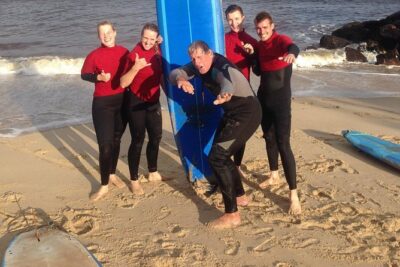
Byron Bay is a fine place to make your first attempt at surfing, and this lesson gets you into the water without asking you to buy a board or guess which beach is suitable. You’ll warm up on the sand, practise the standing technique, then work with an instructor in the waves. Main Beach’s calmer surf gives beginners a fair chance to learn.
I like the way the price includes the practical kit: surfboard, wetsuit, rash vest, and sunscreen. I also like the maximum six students per instructor, which leaves room for useful feedback instead of a quick group demonstration followed by confusion. The main thing to check is group size at your chosen time, since the total booking can reach 10 people, and the small-group promise applies per instructor.
The lesson is especially appealing if you want a proper introduction rather than a quick photo with a board. Instructors including Mitch, Jade, Johnny, and Blake have been praised for patient coaching and specific advice. Surf conditions can still be rough on some days, so your comfort may depend on the weather and the waves.
Key points before you book
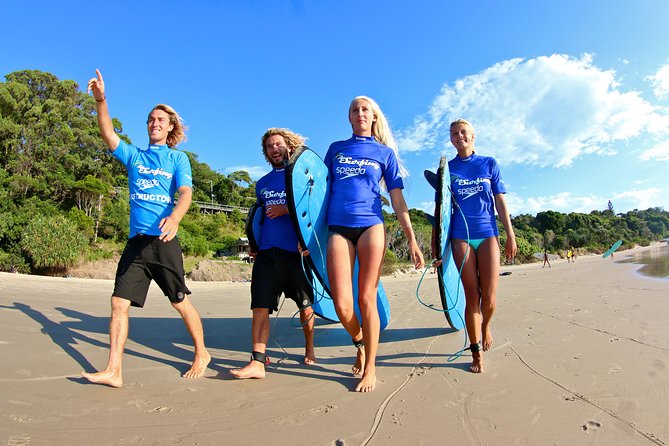
- Two hours in and beside the water: You practise on the beach before attempting waves.
- Beginner-friendly Main Beach setting: The lesson takes place in an area described as having calmer surf.
- Useful equipment included: Your board, wetsuit, rash vest, and sunscreen are supplied.
- Six students per instructor: The maximum ratio allows for individual correction and help catching waves.
- Strong overall record: The experience is rated 4.9 from 132 reviews, with 98 percent recommending it.
- Flexible weather policy: Poor weather can lead to a new date or a full refund.
Why Byron Bay is a good place to learn
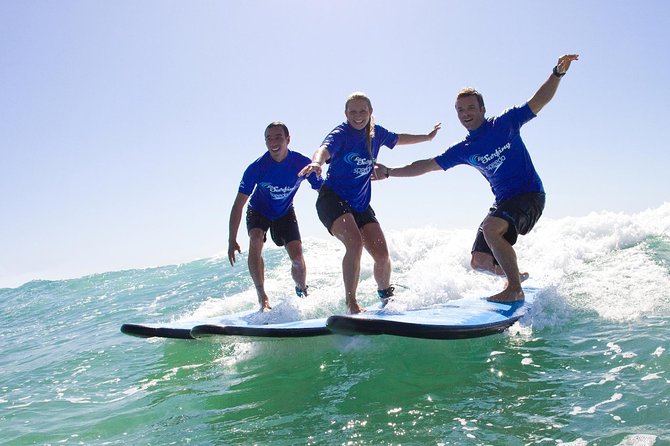
Surfing looks simple from the sand. Lie on the board, paddle, stand up, and ride. The first attempt usually proves that timing, balance, body position, and wave choice all matter at once. A lesson takes away much of the guesswork.
Byron Bay adds a pleasant setting to the learning process. You are not spending two hours in a classroom before seeing the ocean. The lesson uses the beach itself as the teaching space, with the sand for warm-up and practice, then the water for the real test.
The area of Main Beach used for the session is described as having calm surf suitable for beginners. That does not mean perfectly flat water. One participant found the waves rough on the day, but still received enough guidance to feel comfortable. You should expect natural conditions, not a controlled pool.
That point matters. A beginner lesson should give you a safe way to meet the ocean, but no instructor can make every wave gentle. If the weather turns poor or conditions are not suitable, the experience can be moved to another date or refunded.
More Surf Lessons in Australia
- Byron Bay: 2-Hour Small Group Surf Lesson
★ 4.8 · 657 reviews - Half Day Surf Lesson
★ 4.5 · 234 reviews - Group Surfing Lessons Kool Katz 1 day
★ 4.5 · 207 reviews
What happens before you touch the water
You check in at 5/11 Fletcher Street, Byron Bay, 20 minutes before the lesson begins. Build that extra time into your plans. You need to change into swimmers, put on the wetsuit and rash vest, apply sunscreen, and meet the teaching team before the session starts.
The early arrival is practical rather than wasted time. Surf lessons work better when you are ready to go as soon as the group reaches the beach. You will also need to sign a waiver, so arriving late could cut into the actual instruction.
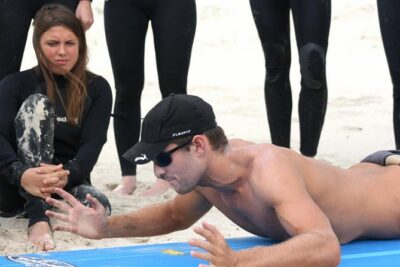
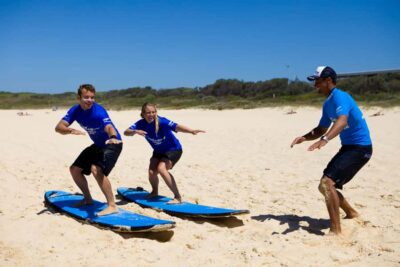
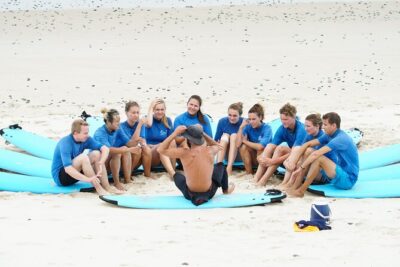
After introductions, the group warms up. The instructors then explain the basics and let you practise the standing movement on the beach. This dry-land section is one of the most useful parts for a complete beginner because you can focus on foot placement and balance without a wave moving beneath you.
Johnny, one instructor praised for his teaching, was described as covering theory and giving students a chance to practise standing on the board on land before going into the water. That sequence makes sense. You can learn the motion slowly, then try to repeat it when the ocean adds speed and movement.
The beach lesson: learning the motion first
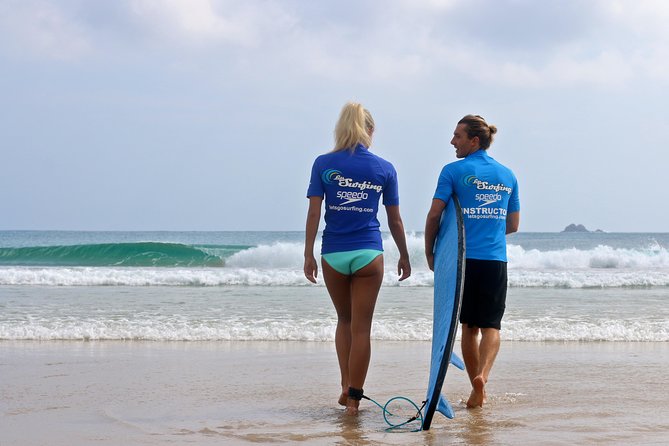
The beach session is not just a quick safety talk. It gives you a chance to understand how the board should be positioned and how your body needs to move as a wave approaches.
Expect the instructor to guide you through the basic technique, then watch you practise. The value of a small group appears here. If you are placing a foot too far forward, lifting your chest too early, or trying to stand before the board has enough speed, an instructor can point out the problem.
Jade has been praised for giving specific feedback and paying close attention. That is exactly the sort of coaching you need at this stage. General encouragement feels good, but a clear correction gives you something you can use on the next attempt.
You should not judge the session only by how many times you stand up. Surfing has a steep first-day learning curve. Catching a wave while lying on the board, keeping the board straight, and remembering the correct movement are all useful progress.
Still, some people do stand during their first lesson. One participant managed it and described the result as a highlight. That is possible, but it is better to see it as a bonus rather than a promise.
The water session at Main Beach
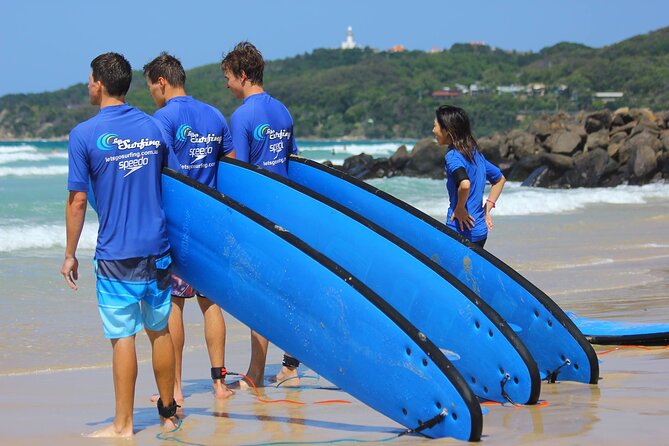
Once you have practised on the sand, you head into the water with your board. The instructor helps you apply the technique to real waves and gives you chances to try again.
This is where the six-to-one ratio matters most. In the water, you need help choosing a wave, positioning the board, and knowing when to paddle. You may also need an instructor to assist you into a wave, as Mitch did for one participant who praised his technique coaching and support.
The session is not described as a private lesson for every booking. The maximum group size is 10, with no more than six students for each instructor. If the booking has enough people to require two instructors, that can still give you a favourable ratio. One booking that raised concerns about group size was later clarified by the provider, which confirmed that two instructors had been present.
I would ask about the expected group arrangement if having the smallest possible class is important to you. The published ratio is strong, but a small group does not always mean only two or three people in total.
The water portion can feel exciting and tiring. You are learning a new movement while paddling and balancing, so do not expect constant success. The instructor’s job is to help you read the conditions and keep working on the basics.
The best outcome may be a first successful ride. A more realistic measure is whether you finish with a clearer idea of how to practise next time.
More Surf Lessons in Byron Bay
- From Byron Bay: Learn to Surf Half-Day Tour
★ 4.8 · 187 reviews - Half Day Guided Surf Lesson in Byron Bay
★ 5.0 · 160 reviews - Private Surf Lessons Kool Katz 1 Day
★ 4.5 · 70 reviews - Byron Bay: Group Surf Lesson with Instructor
★ 4.8 · 50 reviews
Three Byron Bay stages, one connected lesson
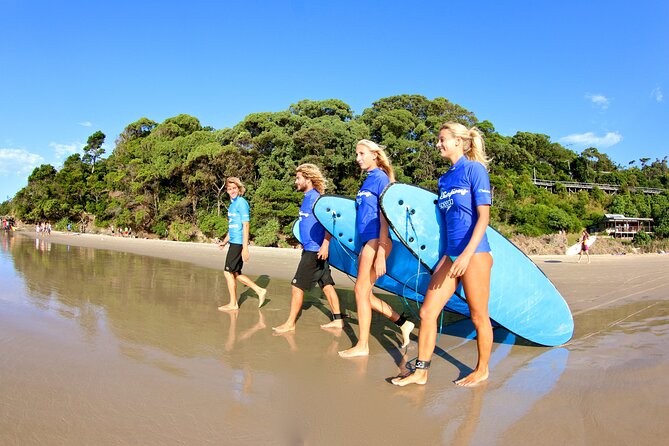
The itinerary lists three stops under Byron Bay rather than naming three separate attractions. It is more useful to understand them as three parts of one surf session.
The first stage is the meeting and preparation point at Fletcher Street. This is where you check in, change, collect your equipment, apply sunscreen, and meet the instructors. It is a practical starting point rather than a sightseeing stop.
The second stage is the beach instruction. Here you warm up, learn the basic surf position, and practise standing on the board on dry land. This section gives you the foundation for the water work and is particularly useful if you have never handled a surfboard.
The third stage is the water lesson at Byron Bay’s Main Beach area. You practise catching waves with help from the instructor, then return to the meeting point when the two-hour activity ends.
This format keeps the session focused. You are not being moved between several attractions, and you are not losing time to transport during the lesson. The trade-off is that the activity is about learning to surf, not about receiving a broad Byron Bay tour.
Equipment included, and what you still need
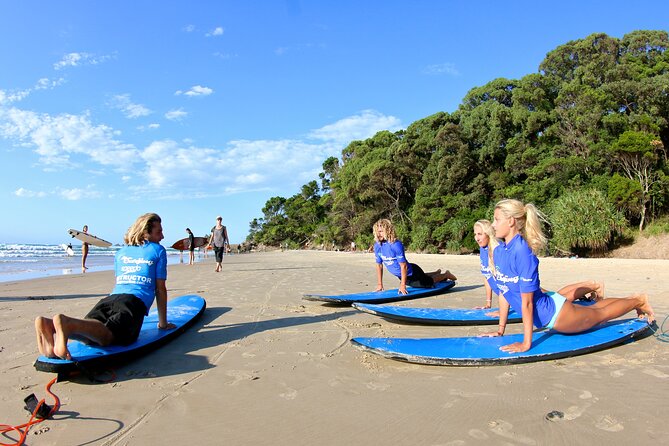
The price includes a surfboard, wetsuit, rash vest, and sunscreen. That makes the $63.83 cost easier to assess because you are not adding basic rental charges on top.
The equipment also removes one common first-timer problem: choosing the right board. Your instructor can provide the board used for the lesson and show you how to handle it. The wetsuit and rash vest are useful for comfort and protection while you are learning in the water.
You still need to wear or bring swimmers. Snacks are not included, and hotel pickup and drop-off are also not part of the booking. The meeting point is near public transportation, so you should plan your own way there and back.
A mobile ticket is provided, which is handy for a phone-based booking. Keep the confirmation available when you check in.
Is $63.83 fair for two hours?
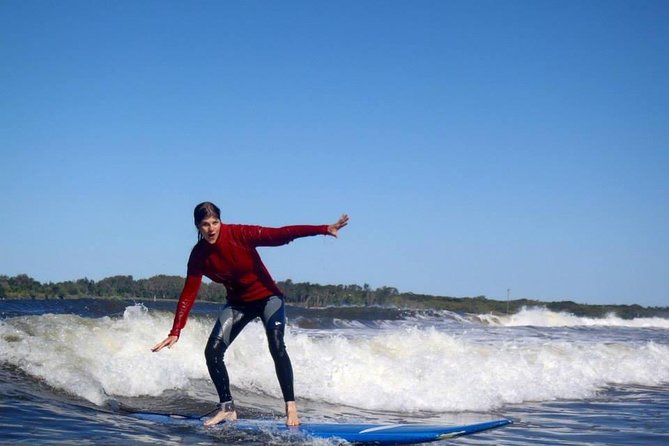
For a first lesson, I consider $63.83 a reasonable price because it combines instruction and equipment. You receive a professional instructor, board, wetsuit, rash vest, and sunscreen, rather than paying separately for a lesson and a standard rental.
The value improves if you are travelling with limited luggage or are unsure whether surfing will become a regular hobby. You can try the sport without buying gear or arranging a separate beach rental.
The cost is less compelling if you already own suitable equipment and only want time on a board. In that case, you may be paying mainly for coaching, which is still useful but not essential for an experienced surfer.
The small-group structure also affects the value. Six students per instructor is a better learning setup than a large class where you spend most of the time waiting. If your session has two instructors for a larger booking, the ratio remains within the stated limit.
The instructors make the difference

The strongest praise is directed at the teaching. Mitch was singled out for explaining technique and helping students into waves. Johnny was appreciated for covering theory and practising the standing motion before entering the water.
Jade received particularly specific praise for paying close attention and offering useful individual feedback. Blake was described as a very good instructor during a private lesson for a parent and child. Ava was thanked for making the session fun, while another instructor was praised for being informative, kind, and patient with a daughter.
Those details give you a better sense of the teaching style than a simple professional instructor label. You can expect encouragement, technique advice, and help with wave timing. The experience appears to work well for families and first-timers who may need extra reassurance.
Instructor assignments can change, so you should not book solely to meet one named teacher. The names are useful examples of the type of coaching reported, not a guarantee that a particular person will lead your session.
What can go wrong?
Surfing depends on the ocean. A day with small waves can make the first lesson easier, while rougher conditions can make the basics harder to remember. One session took place in rough surf, but the instructor gave enough guidance to help students feel comfortable.
Your own fitness and balance also matter. Two hours is enough for a solid introduction, but it can feel demanding because you are paddling, getting up repeatedly, and working against moving water.
The main practical concern is group-size expectation. The activity is advertised with a maximum six-to-one student-to-instructor ratio, while the overall activity can hold up to 10 people. A person looking specifically for a tiny class should confirm how many instructors and students are expected at the chosen time.
The weather cancellation rule is a useful safeguard. If poor weather forces cancellation, you can receive a different date or a full refund. The same applies if the minimum number of participants is not reached. For your own cancellation, you need to cancel at least 24 hours before the local start time for a full refund. Changes or cancellations inside that window are not accepted for a refund.
Who will enjoy this lesson most?
I would recommend it to a complete beginner, a family member trying surfing for the first time, or someone who has taken a lesson before and wants to rebuild confidence. The included gear and short two-hour format make it easy to fit into a Byron Bay stay.
It also suits people who want an active way to see the coast rather than another land-based tour. You get time on the beach, but the main attraction is learning a skill you can practise again.
It may not suit an experienced surfer looking for challenging waves or advanced coaching. The focus is beginner instruction in a calmer part of Main Beach, not high-level performance.
It is also not a full sightseeing tour. You will finish back at the meeting point, but the session does not include hotel transport, snacks, or a guided tour of other Byron Bay sights.
Should you book the Byron Bay surf lesson?
Yes, if you want a well-priced first taste of surfing with equipment included and a genuine chance to receive individual advice. The strongest reasons to book are the two-hour format, the beginner-friendly Main Beach setting, and the maximum six students per instructor.
Before booking, think about the conditions and the group arrangement. If you need a private lesson, do not assume a standard booking includes one. If you are happy learning alongside a few other beginners, the ratio should give you enough support.
I would choose this lesson for a first attempt, especially if you like the idea of leaving Byron Bay with more than photographs. You may stand on your first wave, as some participants have, but the real value is finishing with the basic technique, practical feedback, and enough confidence to keep surfing.
FAQ
Where does the surf lesson begin?
The meeting point is 5/11 Fletcher Street, Byron Bay, NSW 2481, Australia. The activity ends back at the same meeting point.
How long does the surfing lesson last?
The lesson lasts approximately two hours.
What equipment is included?
The booking includes use of a surfboard, wetsuit, rash vest, and sunscreen. Hotel pickup, drop-off, and snacks are not included.
How many students are in each instructor’s group?
The maximum ratio is six students per instructor. The overall activity can have up to 10 participants, and more than one instructor may be used.
Do I need previous surfing experience?
No. The lesson is designed for complete beginners and for people who want to refresh their surfing skills. The session includes a beach warm-up and practice before you enter the water.
What happens if the weather is poor?
If poor weather causes the activity to be canceled, you can choose another date or receive a full refund. You can also cancel at least 24 hours before the start time for a full refund.
Just added around Byron Bay
- Private Stand Up Paddle Boarding Tours Byron Bay★ 4.5 · 19 reviews
- Surfing Lessons at Byron Bay Surf School★ 5.0 · 3 reviews
- Surf, Stay and Yoga in Byron Bay 2 day 2 night★ 5.0 · 10 reviews
- Master the White Wash 2-Day Surf School in Byron Bay★ 4.5 · 2 reviews
- Half Day Learn to Surf Tour From Byron★ 5.0 · 31 reviews
- Private Surf Lesson★ 5.0 · 17 reviews
- Experience The Thrill Half Day Surf School in Byron Bay★ 5.0 · 37 reviews
- 2-Day Progressive Surf Lessons★ 4.5 · 30 reviews
Byron Bay Surf Trips, compared.


Behind The Bay – Explore Like a Local: Waterfalls/paddleboarding
Read our review →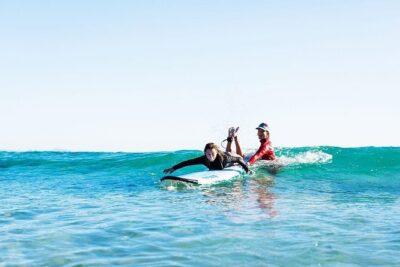
Browse the lists this tour appears in