
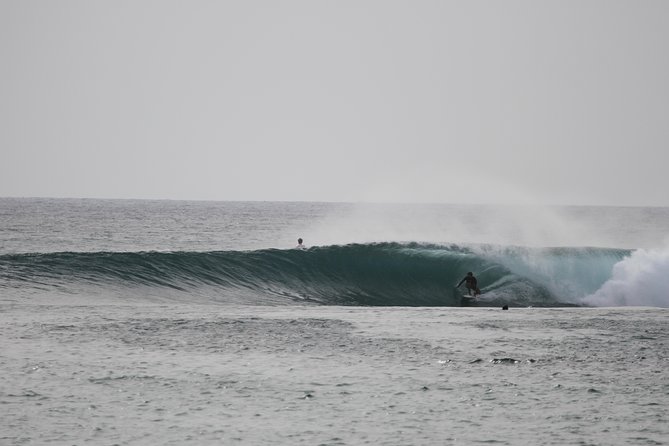
Review · BIARRITZ
Surf lessons beginners in the Basque Country
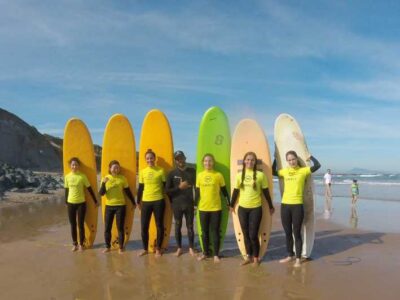
The best thing about this lesson is its small-group format. With no more than six people, Etienne can watch your position, correct mistakes quickly, and keep you moving instead of leaving you stranded in the whitewater. You begin with the beach, the currents, and the hazards, then work through body surfing, balance, and standing on the board.
I like the sensible safety-first approach, and I like that the lesson teaches real basics rather than simply handing you a board. The main drawback is that tide conditions control the schedule, and the two-hour booking includes changing, beach access, instruction, and getting back to the meeting point, so actual board time may be closer to an hour and a half.
- Small classes of five or six: Etienne can stay close to each beginner and give individual corrections.
- A tide-aware lesson: Beginner sessions are planned around low tide for safer, easier conditions.
- A full beginner progression: You cover currents, body surfing, balance, standing technique, and water safety.
- Boards and wetsuits included: You do not need to arrange the main surf equipment yourself.
- Meeting point at Plage du Centre: The class begins and ends at the beach in Bidart, near Biarritz.
- English instruction available: The activity is offered in English, though language arrangements should be confirmed carefully when booking.
Starting at Plage du Centre in Bidart
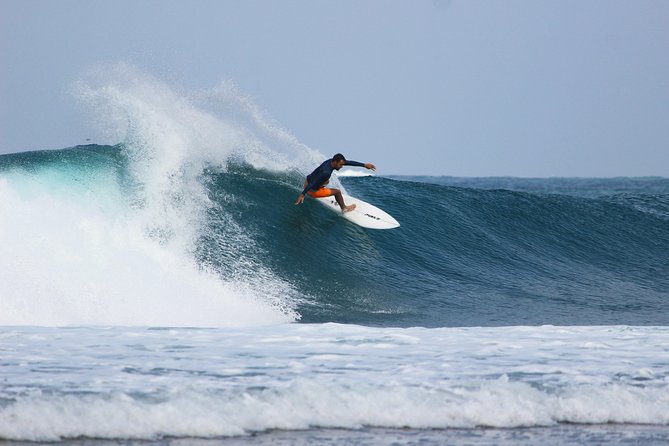
Although this activity is often described as a Biarritz surf lesson, the meeting point is Plage du Centre in Bidart, at 64210 Bidart, France. That distinction matters when you plan your day. Check your transport route to Bidart rather than simply searching for a beach in central Biarritz.
The activity begins and ends at the same meeting point. That keeps the outing simple. You arrive, meet the instructor, change into the supplied wetsuit, collect your board, and return to the same place at the end.
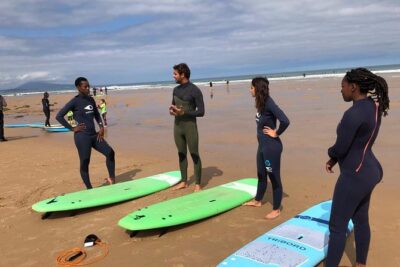
The beach setting also makes the lesson practical. You are not being sent straight into the water with a board and a few hurried instructions. Etienne first uses the beach to explain where you can safely enter, what hazards to watch for, and how the surf area works.
I appreciate that approach for a first lesson. The Atlantic can look inviting while still carrying strong currents and shifting water. Knowing where to go, where not to go, and how to read the first part of a wave is more useful than a quick pep talk.
Why a group of six changes the lesson
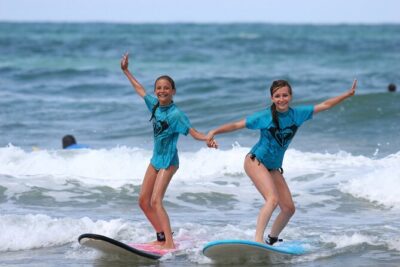
The class is capped at six people. That is one of the clearest reasons to consider this session instead of a large beach-school class.
Beginners need frequent corrections. Your feet may be too close together, your chest may be too low, or you may try to stand before the board has gathered enough speed. In a large class, you can spend a long time waiting for help. Here, Etienne’s stated aim is to remain close to the students and move each person forward faster.
That does not guarantee that you will stand on your first attempt. Surfing still depends on the waves, your balance, your timing, and your fitness. But a small class gives you more chances to receive useful advice while the mistake is fresh.
One earlier participant managed to stand and enjoy the waves by the end of the two-hour session, and another described the instruction as clear and helpful. Those results are encouraging, but you should treat them as possible outcomes, not promises. The lesson is designed to give you the right first steps, not to turn you into an independent surfer in one morning.
The group size is also useful if you feel nervous. You still have company, but you are not lost in a crowd. Etienne can watch what you are doing and explain the next adjustment without making the session feel like a mass workout.
More Surf Lessons in France
- Biarritz: 1.5-Hour Group Surf Lesson
★ 4.9 · 46 reviews - Biarritz: Surf lessons on the Côte des Basques beach
★ 4.9 · 45 reviews - Surf school Soonline Moliets
★ 4.5 · 27 reviews
The first stage: place, hazards, and currents
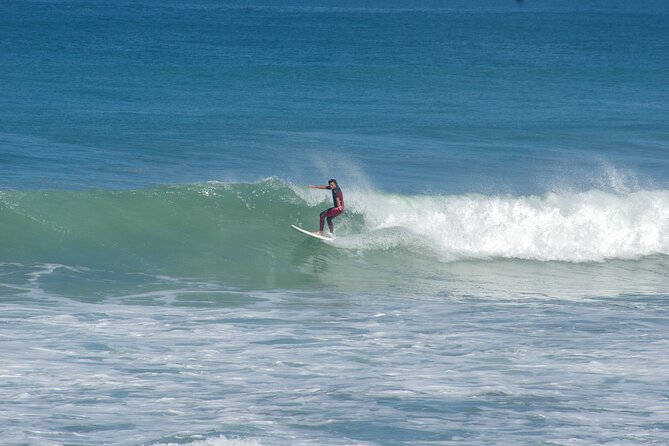
The first part is about reading the beach. You learn which areas are suitable for beginners and how to avoid hazards before you touch the board.
The lesson also covers currents and how waves work. This may sound like classroom material, but it is central to safe surfing. You need to understand why water moves, how waves break, and why a particular area may be better for learning than another.
This part gives the lesson a useful order. Instead of asking you to copy a standing motion without context, Etienne explains the conditions first. You get a basic picture of the water before you are expected to make decisions in it.
You should pay close attention here, even if you are eager to start surfing. The safety information is not filler. It helps you recognize when conditions are changing and gives you a better idea of where to position yourself.
Body surfing before the board
Before using the board, you warm up with body surfing. This gives you a first feel for the waves without adding the size and movement of a surfboard.
For a beginner, that is a clever progression. You can notice the push of the water, learn how a wave carries you, and get used to the conditions with less equipment to manage. It also makes the first board exercise less mysterious.
This stage will not appeal to anyone who wants instant board time, but I see its value. Surfing is not only about standing. It begins with understanding how the water moves beneath and around you.
You also get a physical warm-up. Expect to use your arms, core, legs, and balance. A moderate level of fitness is recommended, and you should not expect a relaxed beach stroll. Even a short session in the Atlantic can be tiring, especially when you are repeatedly getting up, falling, and returning to position.
From beach practice to water balance
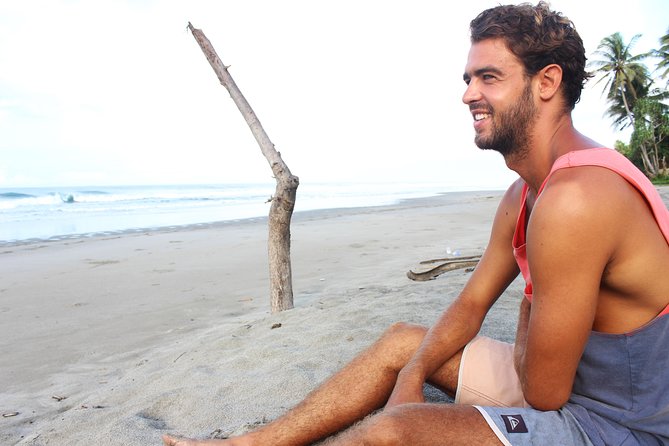
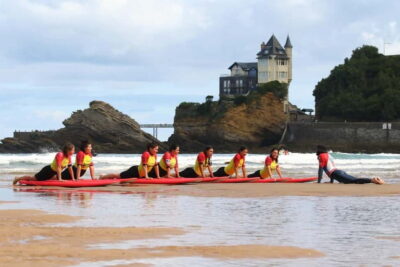
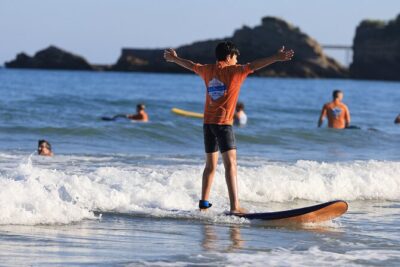
The lesson then moves through several basic techniques. You work on an elongated balance position in the water, practice the straightening motion on the sand, and learn how to move toward standing.
This order is important. You first learn the body position, then rehearse the movement on solid ground, and only after that try to connect the pieces in the water. The sand practice lets Etienne correct your feet and posture before the board is moving beneath you.
Many first-time surfers rush the stand-up motion. They try to push up too quickly, place their feet unevenly, or look down at the board. A beach demonstration gives you a chance to understand the sequence without the distraction of a breaking wave.
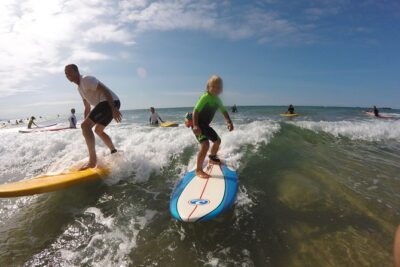
The phrase standing gliding describes the final aim of the session. You are not simply practicing a pose on the sand. You are working toward standing while the board carries you through the water.
That final step is where the lesson becomes especially satisfying. Even a brief, straight ride can show you how balance, wave timing, and body position fit together. You may spend much of the session falling, but the few seconds when everything works can make the effort worthwhile.
More Beginner Surf Lessons in France:
- Legian Beach, Bali: Beginner or Intermediate Surf Lessons
★ 4.9 · 1,019 reviews - Maui: Two Hour Beginner Group Surf Lesson in Kihei
★ 5.0 · 950 reviews - Uluwatu: Beginner & Intermediate Surf Lesson with Equipment
★ 4.9 · 832 reviews - Kuta/Bali: Private Beginner & Intermediate Surf Lessons
★ 4.9 · 563 reviews
How much water time should you expect?
The advertised duration is approximately two hours, but that is the full activity period. It includes changing, walking down to the beach, beach instruction, water practice, and changing again.
One detailed account described roughly 15 minutes for changing and reaching the beach, about 15 minutes of theory on the sand, around an hour and 15 minutes of surfing, and time afterward to return and change. The provider explained that the full booking lasted two hours, while the active surf portion was about an hour and a half.
That is a fair way to understand the schedule. Do not read two hours as 120 uninterrupted minutes on the board. You need the explanation and safety work, especially as a beginner, and changing into a wetsuit is part of the practical timing.
The exact water time can also depend on how quickly the group gets organized and how the conditions behave. If you want a private two-hour water session, this is not the right product. If you want a structured first lesson that includes essential instruction, the timing makes more sense.
Tide changes are important, not optional
The schedule may change because of the tide. Beginner classes are intended to take place at low tide for safety and easier learning, so the starting time may be moved when the original hour does not fit the conditions.
This can be inconvenient. One booking was changed from the morning to the afternoon, and a further proposed change came shortly before the activity. The situation was made more difficult by a departure schedule, so a flexible plan is important.
I recommend leaving room in your day around this lesson. Do not book it immediately before a train, flight, or fixed reservation if a tide-related time change would cause trouble. The sea is not operating on the same timetable as an online booking calendar.
The tide issue is also a reason to confirm the final time before setting out. The provider cannot simply keep the same hour for every date across many months, because the tide changes from day to day.
That flexibility is a trade-off. You give up some certainty in exchange for a session arranged around safer beginner conditions. For a first surf lesson, I consider that a sensible priority, but only if your own schedule can absorb it.
Equipment is included, but bring the right attitude
Boards and wetsuits are included. That removes two major costs and means you can try surfing without buying or renting the basic gear separately.
The wetsuit matters in the Atlantic. It helps you stay comfortable during repeated attempts and keeps the focus on learning rather than simply getting out of cold water. You should still expect a physical session, even with suitable equipment.
Lunch and soft drinks are not included. That is easy to handle, but plan accordingly. You are meeting at the beach, not joining a day-long outing with meals.
Wear or bring whatever you need to manage changing before and after the lesson, though the supplied information does not specify changing-room arrangements. It is wise to keep your schedule simple around the class rather than assuming you will be ready to race off to another activity the moment it ends.
Language matters when you book
English is offered. The provider also accepts bookings in other languages, but you should confirm that the requested language is genuinely available before relying on it.
One pair booked in Spanish and ultimately took the lesson in English because the instructor’s Spanish was limited. The instructor explained that English was chosen to make technical communication easier. That may work perfectly for you if you speak English comfortably, but it can be a real issue if you booked specifically for Spanish instruction.
Ask about the teaching language if it is important to you. Surf instruction depends on short, clear directions, particularly when you are in moving water. A mismatch may not ruin the lesson, but it can make the learning process harder.
The English format appears to be a practical option, especially for international visitors who want direct instruction. Just make sure the language shown during booking matches what you can expect on the beach.
What the price represents at $65.53
At $65.53 per person, the cost includes the board, wetsuit, instructor, and a small-group class lasting about two hours. You are paying for instruction as well as equipment, and the limited group size gives the price more value than a large class with little individual attention.
The strongest part of the value is the teaching structure. You are not simply renting a board and trying to copy other people. You receive safety instruction, tide-aware planning, sand practice, and guided water work.
The price is less attractive if your main goal is a long block of independent water time. The lesson includes changing and theory, and your actual surf time may be around 75 to 90 minutes. That is normal for an introductory class, but it is worth knowing before you compare it with equipment rental.
I would see this as a good price for a first try, particularly if you value close supervision. It is also a practical choice if you do not own a wetsuit or board and want to test surfing before committing to more lessons.
Who will get the most from this lesson?
This activity suits a first-time surfer or someone who has tried surfing before but still needs help with the basic stand-up movement. The instruction begins at the ground level, so you do not need prior experience.
It is also suited to anyone who wants safety explained clearly. The session covers currents, water rules, wave behavior, and suitable areas before the more active exercises begin.
You should have a moderate level of fitness. Expect repeated movement in the water, pushing up from the board, balancing, and walking with equipment. If you are uncomfortable with a physically active class, the session may feel demanding.
The lesson may be less suitable if your schedule is rigid or if you need instruction in a language other than English. Tide changes and language arrangements both require a little planning.
Booking, cancellation, and weather planning
You receive confirmation at the time of booking, and the meeting point is near public transportation. Free cancellation is available if you cancel at least 24 hours before the start time.
Changes or cancellations made within 24 hours are not accepted for a refund under the stated policy. The cut-off uses local time, so check the clock in France when planning.
The activity requires suitable weather. If poor weather causes cancellation, you are offered another date or a full refund. This policy is useful, but it does not protect you from every scheduling problem, so keep your own plans flexible.
Should you book the Bidart beginner surf lesson?
Book it if you want a careful first introduction with a small class, supplied equipment, and an instructor who spends time on water safety and technique. The group limit of six is the main reason I would choose this lesson over a cheaper, crowded class.
Approach it with realistic expectations. Two hours includes changing and instruction, and your actual board time may be shorter. The tide can move your appointment, and English may be the practical teaching language even if another language appears during booking.
If those conditions work for you, this is a sensible way to get your first taste of surfing near Biarritz. You may not leave ready to surf alone, but you should leave understanding the basic movements, the safety concerns, and what to practice next.
FAQ
Where does the surf lesson begin?
The lesson begins at Plage du Centre, 64210 Bidart, France. The activity also ends back at the same meeting point.
How long does the activity last?
The activity lasts approximately two hours in total. This includes changing, walking to the beach, beach instruction, water practice, and changing afterward.
How much time is spent actually surfing?
The active surf portion may be around an hour and a half, depending on the schedule and conditions. The full two-hour period also includes theory and changing.
Are boards and wetsuits included?
Yes. Boards and wetsuits are included in the activity price.
How many people can join the class?
The class has a maximum of six people. The provider describes the usual small-group format as five or six participants.
Is the lesson available in English?
Yes. The activity is offered in English. If you request another language, confirm the arrangement before booking because language availability may vary.
Can the start time change because of the tide?
Yes. Beginner sessions are arranged around low tide for safety, so the start time may be changed when the tide does not suit the original schedule.
What happens if bad weather cancels the lesson?
You will be offered a different date or a full refund if poor weather causes the activity to be canceled.
Just added around France
- Stand-Up Paddle & Snorkeling with Local Guide near Nice★ 5.0 · 8 reviews
- Surf school Soonline Moliets★ 4.5 · 27 reviews
- 3 Hours of Surf and Electric Bike Exploration in Lacanau★ 5.0 · 8 reviews
- Surf lesson 1h30 South of Messanges★ 5.0 · 5 reviews
- Wakesurfing, wakeboarding or Inflatable Tows in Bay of St Tropez★ 5.0 · 19 reviews
- Cassis: Stand UP paddle in the creeks national park★ 4.5 · 21 reviews
- Lérins Islands sailing discovery, snorkeling and paddle SUP★ 4.5 · 10 reviews
- Discover Surfing on the beaches of Biarritz★ 5.0 · 3 reviews
Biarritz Surf Trips, compared.
Browse the lists this tour appears in