
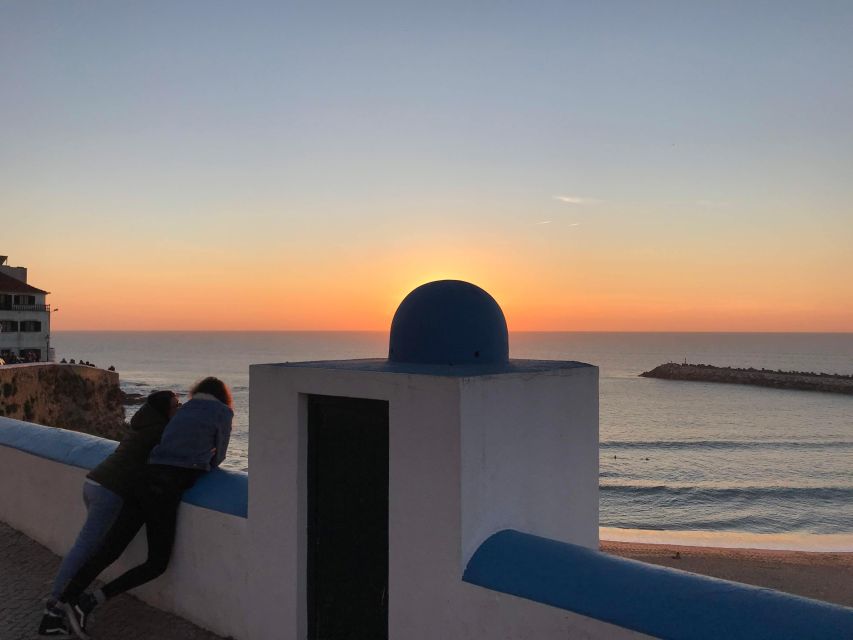
Review · PORTUGAL
Surf Lessons in Ericeira – a World Surfing Reserve
Ericeira is one of Portugal’s best places to learn to surf, and this lesson puts you in the care of Rui, a local surfer with more than 30 years of experience. He teaches adults from complete beginners to experienced surfers, choosing a local break to match your ability and the day’s conditions.
I like the small maximum group of six, which gives Rui time to correct your stance, explain wave timing, and keep an eye on safety. I also like the mix of beach instruction and real water time. You learn the basics quickly, then spend most of the two-hour session trying them out rather than standing around listening.
The main consideration is simple: two hours is enough for a strong first taste, not mastery. Surfing takes repetition, and several lessons will give you a much better chance of building balance, wave sense, and confidence. Ocean conditions also affect the experience, so the lesson may feel more physical or challenging on some days than others.
What makes this Ericeira lesson worth considering
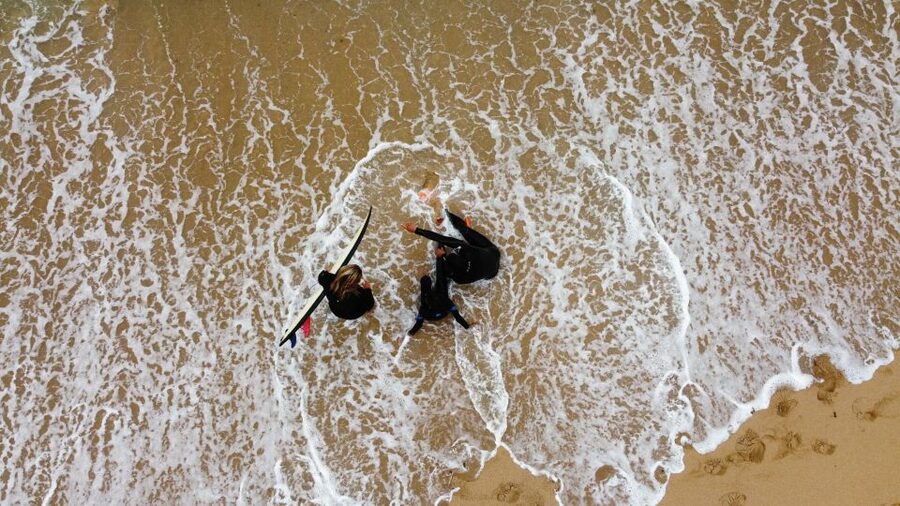
- Rui’s coaching style: Expect clear demonstrations, patient corrections, humor, and encouragement without being pushed beyond your level.
- A maximum of six people: The small group format leaves room for individual feedback and closer attention in the water.
- A true surf setting: You practice in the Ericeira World Surf Reserve, with the local spot selected to suit your skills and conditions.
- Equipment included: A surfboard and wetsuit are provided, with equipment suited to different levels.
- A useful first-session structure: Safety briefing, warm-up, theory, water practice, and a short post-surf discussion are all part of the lesson.
- Options beyond a beginner class: Intermediate, advanced, surf-guide, and bodyboarding sessions are available, with video analysis included when you book at least four lessons.
Meeting Rui at the Ericeira World Surf Reserve
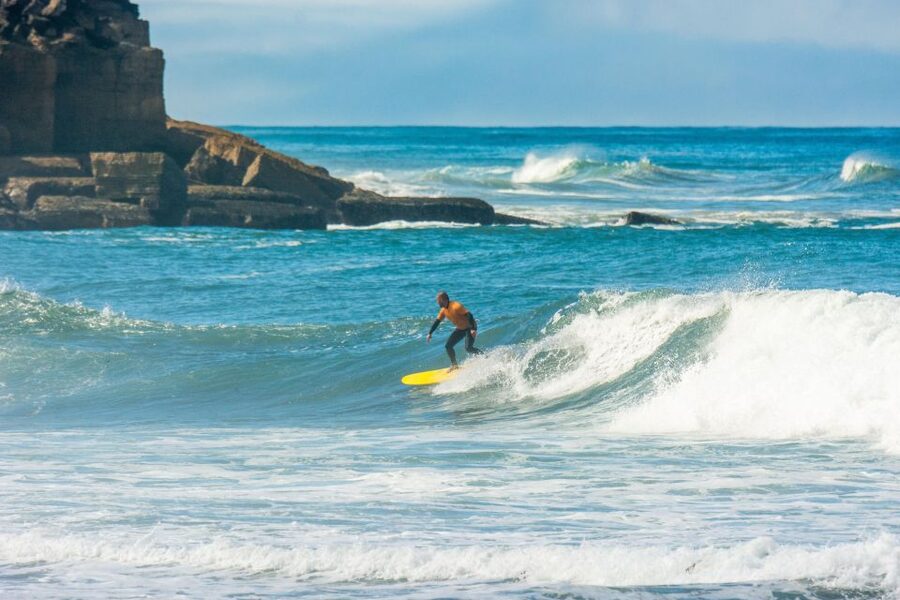
Your meeting point is the parking lot beside the Boardriders surf shop. From there, the session takes place at a local surf spot chosen for your level. That matters in Ericeira, where the coastline offers different kinds of waves and not every beach suits a first-timer.
The World Surf Reserve label is not just a marketing flourish. It points to a coastline with important surf breaks and a strong local surf culture. You are not learning in an artificial wave pool or a generic beach setting. You are learning in the same Atlantic environment that makes Ericeira a major surf destination.
Still, a famous surf coast does not guarantee an easy lesson. Conditions change, and the sea may be cold, powerful, or less forgiving than it looks from shore. Rui’s approach is to match the location and instruction to the group rather than simply send everyone to the same beach.
That flexibility is one of the better features of the experience. Beginners need forgiving whitewater and room to make mistakes. Intermediate surfers need different advice, often involving wave choice, positioning, and control. A single fixed lesson site would not serve both groups equally well.
More Surf Lessons in Portugal
- Matosinhos: Surfing Lesson with Equipment
★ 4.8 · 926 reviews - Albufeira: Surf Lesson
★ 4.7 · 699 reviews - Porto: Small Group Surf Lesson with Transportation
★ 4.9 · 594 reviews
The first 20 minutes: safety, equipment, and warm-up
The lesson begins with an orientation and safety briefing. You can expect an explanation of the basic rules, how to handle the board, and what to watch for before entering the water. This is especially important if you have never surfed before, since even small waves involve moving water, a large board, and other people sharing the break.
You also receive a wetsuit and surfboard. The equipment is included in the price and is described as high quality, with boards and suits suited to different skill levels. You need to bring a towel, sunscreen, water, and flip-flops.
A warm-up follows. It may seem like a small detail, but paddling, pushing up from the board, and repeatedly standing on a moving surface use muscles that many first-time surfers do not expect. A few warm-up exercises help you prepare before the more tiring part of the lesson begins.
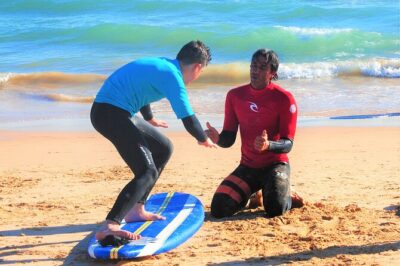
Rui’s teaching method starts with the body mechanics. You learn how to lie on the board, where to place your hands, and how to perform the pop-up. He demonstrates the movement and may show more than one technique, then watches for the small errors that prevent you from getting upright.
That personal correction is valuable. Beginners often know the broad idea of standing on a board but lose balance because their feet land in the wrong place, their chest stays too low, or they look down instead of ahead. Good instruction turns those problems into one or two clear changes you can try immediately.
Beach theory before the first wave
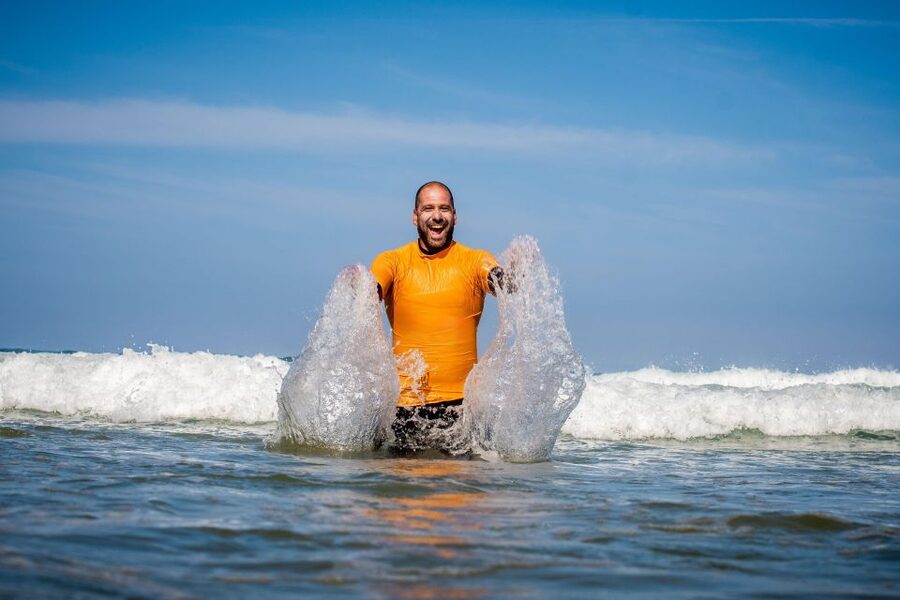
The theory portion is short and practical. You learn basic surf terms, how to read the waves, and what to expect once you move into the water. The goal is not to give you a lecture. It is to help you understand the next instruction when the sea gets noisy and your attention is split between balance and timing.
This is also where Rui’s experience matters most. He has surfed for decades and has taught in different places, so he can connect the basic movement to the conditions in front of you. A beginner does not need a detailed study of every type of break, but knowing which waves to take and when to wait makes the first session safer and less frustrating.
You may also hear about local surf culture. That adds a welcome human element to the lesson. Ericeira is more than a place to rent a board for an hour. Surfing is part of the town’s identity, and Rui’s teaching includes some context about how local surfers read and use the coast.
Do not expect a classroom course in ocean science. This is a practical lesson, and the theory moves quickly so you can get into the water. That balance suits most beginners, especially people who have limited time in Ericeira.
The main event: two hours with plenty of water time
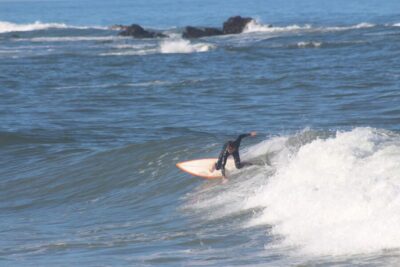
After the briefing and warm-up, the lesson shifts to practice. You work on the pop-up first, then try to catch small waves with Rui’s guidance. He may position you for a suitable wave, tell you when to paddle, and give short instructions as you go.
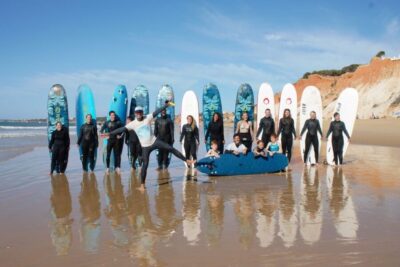
This is where the maximum group size of six makes a difference. Surf lessons can become crowded, with a long wait between attempts and little feedback after each fall. A small group gives you more chances to try, listen, adjust, and try again.
The lesson is not private by default, but the format can feel close to one when numbers are low. If only a few people book the time, Rui can focus closely on each person’s ability. Couples and friends may find this especially useful because they can learn together without being absorbed into a large school group.
Rui’s style appears to combine patience with gentle pressure. He explains the movement, watches what you do, and gives you a specific correction rather than a general command to try harder. That is helpful for adults who feel awkward at first or worry about making mistakes in front of a group.
You should also expect to fall. That is not a sign that the lesson is going badly. The first session is about learning the movement and getting comfortable with the board and the sea. Standing up once is a satisfying milestone, but repeating the process is where the real learning begins.
Some beginners manage to stand several times during the first class. That is a reasonable goal, but conditions, fitness, balance, and previous board-sport experience all play a part. Rui can improve your chances, but no instructor can guarantee a certain number of rides.
Same coast, a different way into the water:
- Lisbon Surf Experience
★ 4.9 · 876 reviews - Albufeira: 2-Hour Falesia Beach Surf Lesson
★ 4.8 · 464 reviews - Albufeira: Learn to Surf in Chill Beach Vibes & Good Times
★ 4.7 · 439 reviews - Surf Experience in Cascais
★ 5.0 · 423 reviews
What intermediate and advanced surfers can expect
This is not only a first-timer activity. The intermediate class is for surfers who already know the basic movements and want to sharpen their technique. At that level, instruction can focus on wave selection, timing, reading the break, and the small body adjustments that improve control.
An advanced division is available on request. Advanced surfers can also ask for a surf-guide option, with an expert-led session focused on exploring local breaks. The information provided does not promise a fixed route or a particular wave, so the exact experience depends on conditions and your ability.
That is the right approach for an Atlantic coastline. A guided surf session should respond to the sea rather than force an advertised sequence of stops. If you are advanced, contact the organizer before booking so your expectations match the session being offered.
Bodyboarding is another option. It can suit someone who wants to experience the waves but is not ready to stand on a surfboard, or a mixed group in which people have different interests. The same general themes apply: safety, suitable equipment, and coaching matched to ability.
Why the small group is more than a comfort feature
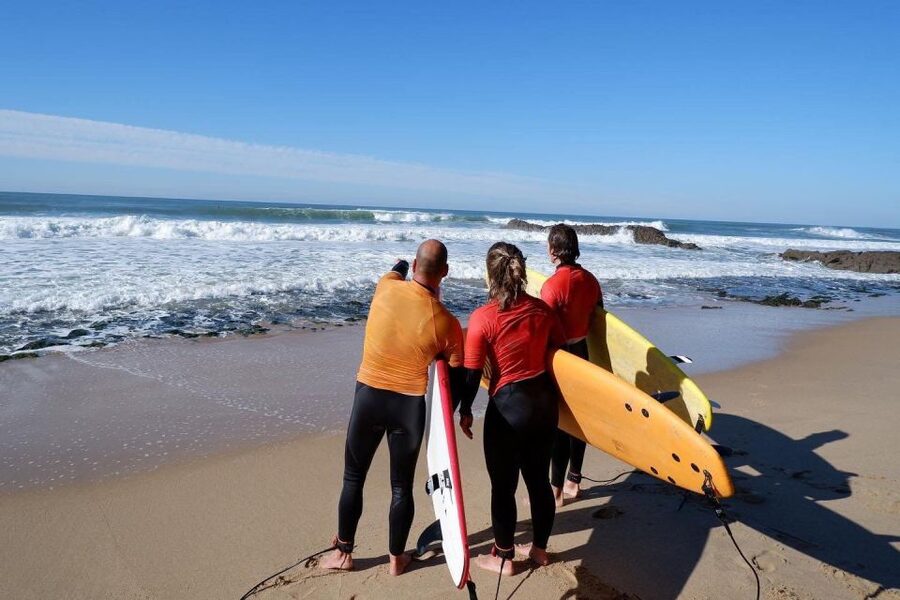
A six-person limit sounds modest, but it changes the pace of the class. Surfing is learned through repetition. You need time to paddle, catch a wave, fall, get back into position, and hear what to change.
With too many people, the instructor can only offer broad advice. A small group allows more detailed feedback, such as correcting foot placement, body position, or the moment you begin to stand. That is particularly useful when two people in the same group have very different balance or fitness levels.
The format also helps with safety. Rui can keep track of the group more easily, and the session is tailored rather than run like a mass class. Several people have found the attention reassuring, especially when learning in the ocean for the first time.
Small groups do not make surfing effortless. You still need to listen, stay aware of other people, and accept that the sea sets the terms. But they give you a better setting for learning than a crowded introductory class.
Photo and video options, plus analysis for repeat bookings
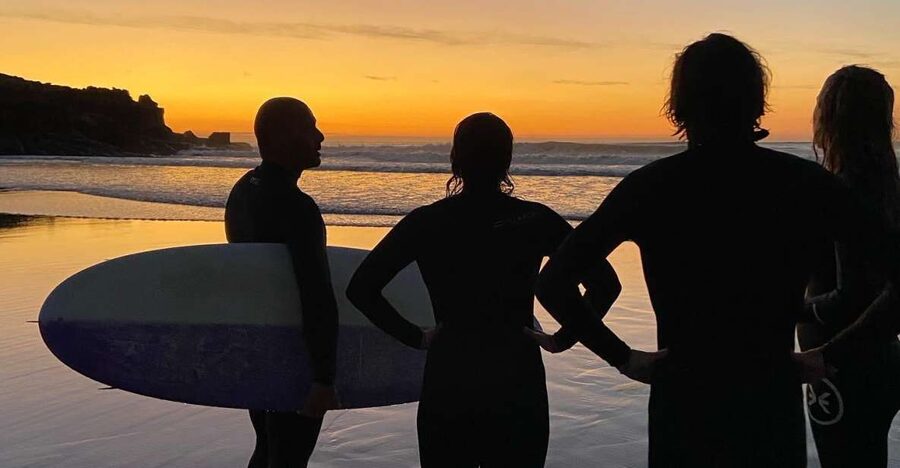
Photos and videos are optional and cost extra. If you want a record of your first successful ride, ask about the service before the lesson so you know what is available and what it costs.
The photos can be more than a souvenir. A picture of your stance may show why you lose balance, where your feet land, or whether you are looking in the right direction. Still, do not book the lesson mainly for pictures. The core value is the coaching and water time.
Video analysis is included for people booking a minimum of four lessons. That makes a multi-day or repeat program more useful than a single class. You can review your movement, see patterns that are hard to notice in the water, and work on specific changes in later sessions.
If you have only one day in Ericeira, the two-hour lesson is a good introduction. If learning to surf is a main goal of your trip, four or more sessions make better sense. The first lesson teaches the basic sequence, while later sessions give you time to improve it.
The price: fair value at $64 per person
At $64 per person, this is not the cheapest possible way to stand on a surfboard. You might find large group classes at lower prices, but the comparison is not only about the number on the booking page.
Here, the price includes two hours of tailored coaching, a qualified instructor, board, wetsuit, safety instruction, warm-up, post-surf discussion, and basic insurance. You are also paying for a small group, local knowledge, and a session shaped around conditions and ability.
That package offers solid value for a first-time visitor who does not own equipment and wants more than a quick rental. It is also useful if you care about feeling safe and receiving actual corrections rather than simply being sent into the water.
The value is weaker if you already surf confidently and only want a board for independent practice. In that case, an advanced surf-guide session may be more suitable, or you may prefer a simple rental arrangement. The strongest match is someone who wants instruction, feedback, and a local coach.
Remember that photos and videos cost extra. Video analysis comes with four-lesson bookings, not a single class. Those details can affect the final price, so decide in advance how much coaching and documentation you want.
Who should book this lesson?
I would recommend it most strongly to adults who are new to surfing, nervous about the ocean, or tired of oversized group activities. Rui’s patient, safety-first approach is a good fit if you want encouragement without being treated like a child.
It also suits couples, friends, and solo visitors. The group limit keeps the lesson personal, and the activity is designed for different levels. English is spoken, and the organizer also speaks Portuguese and Spanish.
You should bring a towel, sunscreen, water, and flip-flops. Smoking and drinks are not allowed in the vehicle. The meeting point is easy to identify, at the parking lot beside the Boardriders surf shop.
The lesson may not suit you if you want a guaranteed private class, a full-day surf program, or a dry-weather activity. You will be outside, in cold Atlantic water, and conditions can make the work tiring. If you are unsure about your fitness or comfort in the sea, ask the organizer before booking.
Cancellation is flexible: you can cancel up to 24 hours before the activity for a full refund. You can also reserve and pay later, which helps if your Portugal plans are still shifting.
Should you book Sea Krew in Ericeira?
Book it if you want a real introduction to surfing with Rui’s three decades of experience, good equipment, safety attention, and a small group. The strongest reason to choose this session is not simply the Ericeira setting. It is the chance to receive clear, personal feedback while you learn in the water.
For a first lesson, $64 is a reasonable price for the equipment and instruction included. If you have the time, I would consider booking several sessions, especially since four lessons bring video analysis into the package. One class can give you the thrill of standing up. A short series gives you a better chance of learning how to do it again.
FAQ
Where does the surf lesson meet?
Meet at the parking lot next to the Boardriders surf shop in Ericeira.
How long does the activity last?
The surf lesson lasts two hours and includes theory and practice.
How much does the lesson cost?
The listed price is $64 per person.
Is equipment provided?
Yes. A surfboard and wetsuit are provided for participants, with equipment suited to different skill levels.
What should I bring?
Bring a towel, sunscreen, water, and flip-flops.
How many people are in the group?
The group has a maximum of six participants.
Is this lesson suitable for complete beginners?
Yes. There is a beginner group for people who have never surfed before.
Are intermediate and advanced sessions available?
Yes. Intermediate and advanced options are available, with the advanced division offered on request. An expert-led surf-guide option is also available for advanced surfers.
What languages does the instructor speak?
Instruction is available in English, Portuguese, and Spanish.
Are photos and videos included?
Photos and videos are optional and cost extra. Video analysis is included for bookings of at least four lessons.
Just added around Portugal
- Surfing Lesson | Porto: Small Group Surf Lesson with Transportation★ 5.0 · 34 reviews
- Guided surf tours from Porto city to the beach★ 4.5 · 10 reviews
- Self-guided tour Bike + Surf★ 5.0 · 6 reviews
- Tour to Gerês in 4×4 full day with option of SUP Tour★ 5.0 · 2 reviews
- Surf Lesson | Surf Lessons★ 5.0 · 39 reviews
- Stand Up Paddle discovering desert beaches of Douro River – Pick Up included★ 5.0 · 11 reviews
- Surf Lessons in Porto with transfer at Porto Surf School★ 5.0 · 42 reviews
- Porto Surf Experience★ 5.0 · 28 reviews
Portugal Surf Trips, compared.
Learn to Surf in Chill Beach Vibes & Good Times
Read our review →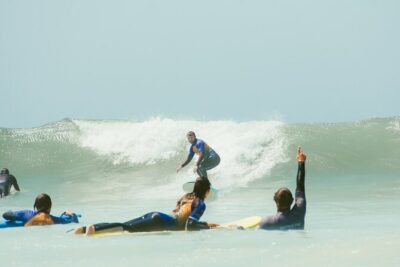

Browse the lists this tour appears in