
Review · NEW ZEALAND
2 Hour Surf Lesson – Te Arai Beach
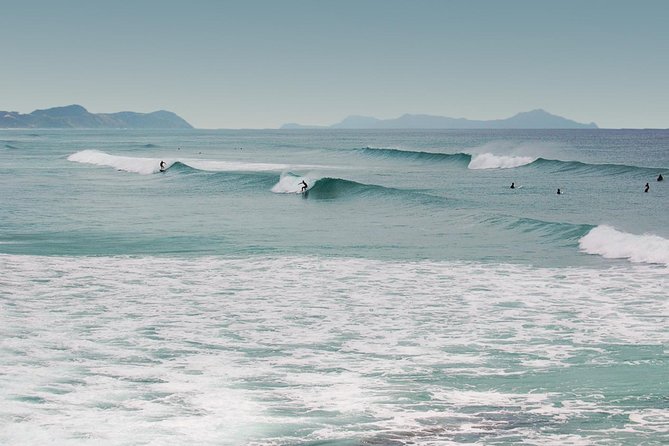
Te Arai Beach is a smart place to learn the basics of surfing without signing up for an all-day commitment. At Aotearoa Surf School, you spend about two hours working on ocean safety, paddling, timing, and the pop-up, then put those skills into practice on the waves.
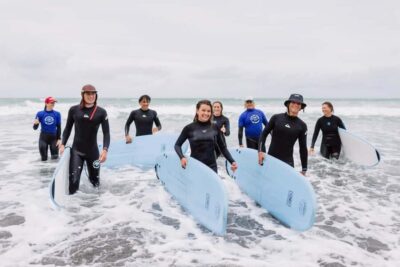
I like two things right away: the small-group format, capped at 12 people, gives you a better chance of getting useful corrections, and the school supplies nearly everything you need, including a wetsuit, rash shirt, board, leash, and sunscreen. The lesson can also be adjusted for beginner, intermediate, or more advanced surfers.
The main consideration is the group size. Twelve people is still manageable, but it is not the same as a private lesson. If you want constant one-to-one coaching, ask about a private option. Also note that the advertised lesson is two hours, while the total activity time is listed as about two hours and 30 minutes.
Key points at a glance
- Te Arai setting: Learn on Auckland’s east coast at a beach known for open views and a proper surf-school setting.
- Skills before thrills: You cover safety, board design, positioning, paddling, wave timing, and getting through the break before chasing rides.
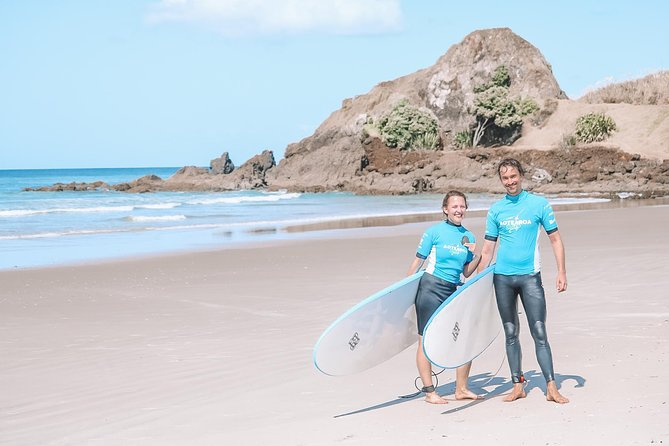
- Equipment included: A surfboard, leash, wetsuit, rash shirt, and sunscreen are provided.
- Small-group coaching: The maximum group size is 12, with lessons adjusted for different ability levels.
- A real first-ride goal: The lesson works toward mastering the pop-up and standing on a moving wave.
- Family flexibility: Instructor Maya has successfully worked with mixed abilities, including a seven-year-old beginner and intermediate surfers.
Why Te Arai Beach works for a first surf lesson
Surfing looks simple from shore. Board, wave, stand up. In practice, the first few minutes can feel like a wrestling match with the ocean. Te Arai Beach gives you a place to learn the parts that make the difference: where to lie on the board, how to paddle, when to turn, and how to get up without losing the board beneath you.
The lesson is built around more than simply pushing you toward a wave. You learn equipment design, positioning, ocean awareness, and the mechanics of getting out through the waves. That order matters. A first-timer who understands the water and the board has a much better chance of enjoying the session instead of spending the whole time guessing.
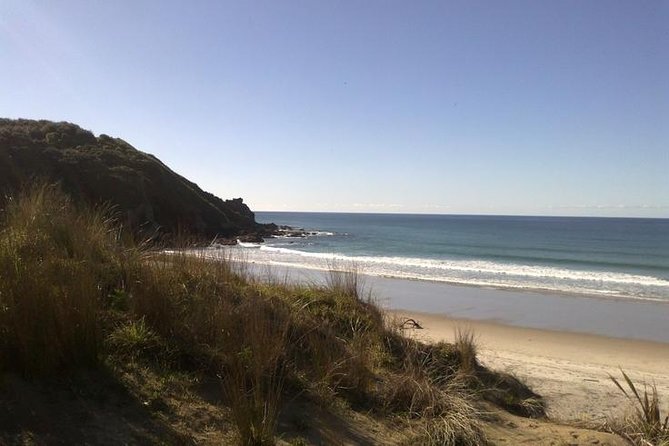
I also like the setting for practical reasons. You get beautiful coastal views while learning, but the beach remains the main attraction. This is not a sightseeing tour with a brief paddle at the end. The focus is firmly on learning to surf.
Te Arai is in North Auckland, and the meeting point is 708 Te Arai Point Road, Te Arai 0975. Pickup is offered, though the supplied details do not specify the pickup area or schedule, so confirm that point when booking if you do not plan to make your own way there.
More Surf Lessons in New Zealand:
- Raglan: Group Surf Lesson
★ 5.0 · 79 reviews - Auckland: Group Surfing Lesson with Muriwai Surf School
★ 4.9 · 34 reviews - Mount Maunganui: Group Beginner Surf Lesson
★ 5.0 · 16 reviews
What the two-hour lesson actually teaches
The session follows a useful progression. You begin with safety and equipment, which may sound basic but is essential. You need to know how the board, leash, wetsuit, and rash shirt work together before entering the water. You also learn how board design affects stability and movement.
Next comes positioning. Where you lie on the board affects how easily you paddle and whether the board catches a wave. Too far forward and the nose may dip. Too far back and the board may drag. These are small adjustments, but an instructor can spot them faster than you can while balancing on a moving board.
Paddling technique is another major part of the lesson. Good paddling is not just about strength. It is about body position, timing, and using the board efficiently. Once you are in the water, the right technique helps you reach a wave and conserve energy for the moment you need to stand.
Ocean awareness ties these skills together. You learn to watch the water, judge wave timing, and understand how to get out through the waves. This is one of the most valuable parts of the experience because it gives you a basic framework you can use later, even at another beach.
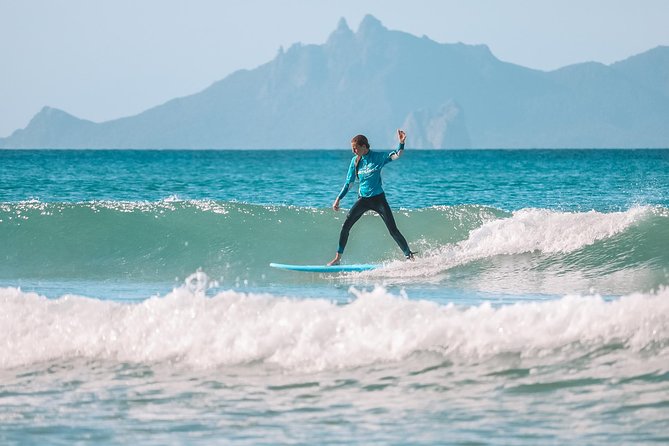
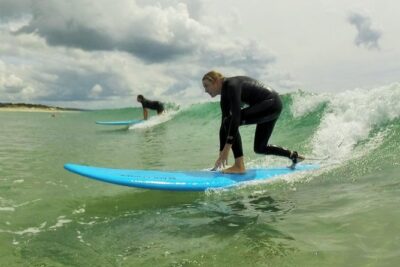
The final goal is the pop-up and the ride. You practice moving from lying on the board to standing in one quick, controlled motion. The lesson then works toward catching waves and riding them. For a beginner, standing up even briefly can be the highlight of the session. For someone with some experience, the instructor can focus on timing, technique, or confidence rather than starting from scratch.
Aotearoa Surf School and the coaching style
Aotearoa Surf School is the sole stop listed for this experience, and that keeps the outing focused. You meet at the school’s Te Arai Point Road location, get set up with the supplied equipment, and spend the lesson at the beach before returning to the meeting point.
The instructor is described as qualified and experienced, with lessons available for beginner, intermediate, and more advanced surfers. That range is useful if you are traveling with people at different levels. A mixed-ability group does not automatically mean everyone receives the same basic talk and gets sent into the water.
Maya is one instructor worth noting. She has handled a group with different abilities, including a seven-year-old who was just learning and an intermediate surfer. Her approach, based on the details available, included spotting individual issues and offering specific corrections. That matters more than a long general lecture. Surfing progress often comes from one small adjustment to foot placement, board position, or timing.
The maximum group size is 12. This is small enough to feel more personal than a large beach class, though you should keep your expectations realistic. In a group of 12, the instructor cannot watch every attempt from every person. If you are nervous, very young, or determined to progress quickly, ask whether a private lesson is available.
The gear included in the $50.92 price
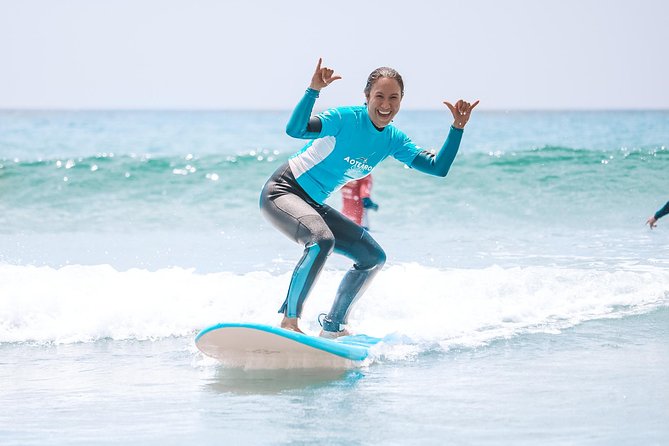
At $50.92 per person, the price covers a good deal of the basic setup. You receive:
- A surfboard
- A leash
- A wetsuit
- A rash shirt
- Sunscreen
- Instruction from a qualified instructor
- The two-hour lesson
- Taxes, fees, and handling charges
That makes the price easier to judge. You are not paying only for beach access and a short demonstration. You are paying for instruction, equipment, and the chance to use gear suited to the lesson without buying or transporting your own.
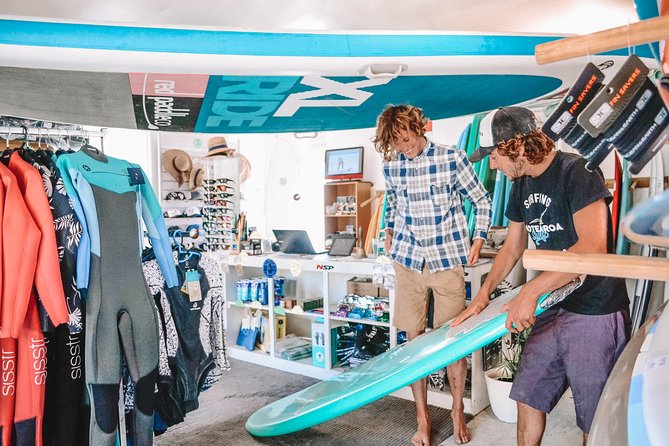
The wetsuit is especially useful because it removes one common barrier to trying surfing. You do not need to arrive with a board or specialist clothing. Sunscreen is supplied too, although you should still treat sun protection seriously during a beach activity.
Souvenir photos are not included, but they can be purchased. That is worth knowing if you want a record of your first ride. It also keeps the basic price focused on the lesson rather than bundling in extras you may not want.
The price is strongest for a first-time surfer or someone traveling without equipment. If you already own a board and normally surf independently, the value depends more on the quality of coaching you need. For a beginner, the included gear and structured instruction make this a practical entry point.
A few more sessions around New Zealand worth a look
- Private 2 Hour Surf Lesson
★ 5.0 · 5 reviews - Greymouth: 2-Hour Beginner Surf Lesson
★ 4.5 · 2 reviews - Canggu: 2-Hour Surf Course
★ 4.8 · 1,053 reviews - Maui: Two Hour Beginner Group Surf Lesson in Kihei
★ 5.0 · 950 reviews
Your arrival, beach setup, and water time
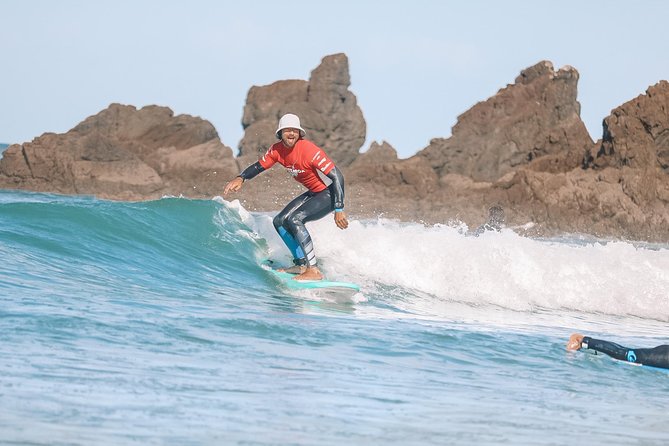
The meeting point is 708 Te Arai Point Road. Confirmation is sent immediately after booking, so you should have the core details in hand right away. The activity ends back at the meeting point, which keeps the plan simple.
The supplied details do not give an exact minute-by-minute schedule. You should expect time for getting equipped and preparing before the main water work begins, since wetsuit fitting, board handling, and safety instruction are part of a responsible surf lesson. The listed total duration is about two hours and 30 minutes, while the lesson itself is described as two hours.
Once the teaching begins, you work through the basics on land and in the water. The exact balance will depend on your group and ability. A first-time surfer needs more time with stance and the pop-up. An intermediate surfer may spend more time on timing, wave selection, or refining technique.
The water portion is the part most people are waiting for, but the early instruction should not be treated as filler. Learning how to get out through the waves and how to position yourself saves energy and reduces confusion later.
What makes the pop-up such a useful milestone
The pop-up is the moment surfing becomes more than paddling around on a board. You start flat on the board, wait for the right moment, then move your feet underneath you and rise into a balanced stance. It sounds straightforward. It is not always straightforward when the board is moving and the wave has already decided the schedule.
This lesson gives the pop-up proper attention. You practice the movement as part of a larger sequence: positioning, paddling, timing, and take-off. That is a better approach than treating standing as a lucky trick.
A particularly useful result is confidence to hire a board later. The aim is not only to get one brief stand-up, but to give you a basic skill set you can repeat elsewhere. You will still need practice, of course. Surfing is not a one-lesson mastery project. But knowing how to lie on the board, paddle, catch a wave, and stand gives you a foundation.
For an intermediate surfer, the same section can be used to correct habits. Small changes to timing or stance may produce a longer ride and better control. The lesson is not limited to people who have never touched a surfboard.
Mixed abilities, children, and who will get the most from it
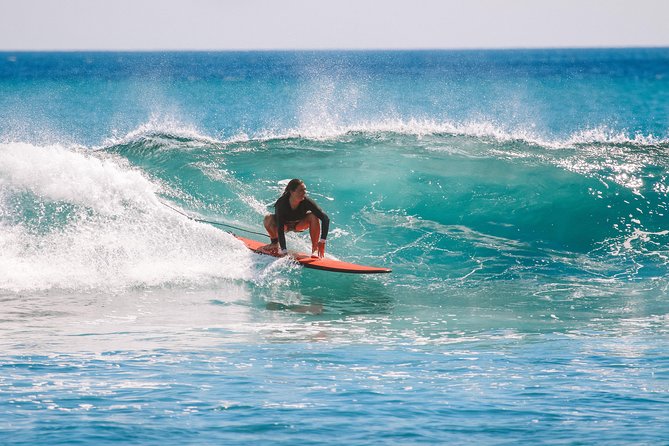
This experience suits a broad range of participants. Most people can take part, and service animals are allowed. The available information does not list a minimum age, so families should confirm age requirements directly before booking.
The experience is a good fit for:
- First-time surfers who want instruction and equipment in one booking
- Visitors who want to learn a skill they can practice later
- Friends or families with different surfing abilities
- Intermediate surfers who want focused help with timing or technique
- People who prefer a small group instead of a large beach class
The example of Maya working with a seven-year-old is encouraging for families, but it should not be taken as a blanket guarantee for every child. Children vary in confidence, strength, and comfort in the water. Confirm the school’s current age guidance and suitability rules before committing.
If you dislike group activities, this may not be your best match. A maximum of 12 is reasonable, but some waiting between attempts is possible. A private lesson would give you more direct attention and may suit a nervous beginner better.
What could limit the experience
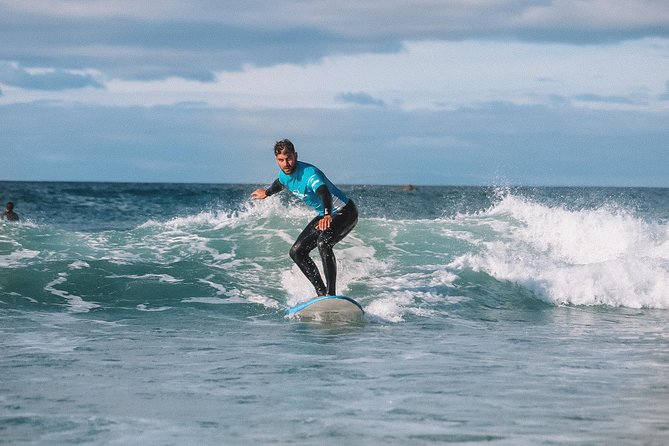
The biggest limitation is that one lesson cannot make you an accomplished surfer. You may stand up, but you may also spend much of the session learning to paddle, falling off, and trying again. That is normal. If you judge the experience only by the number of long rides, you may miss the value of the technique work.
Conditions can also affect how the lesson feels, though no specific weather or surf forecast is supplied. The ocean does not follow a tour schedule, and the instructor’s emphasis on safety and ocean awareness is important for that reason.
The group cap of 12 is another practical point. You receive personal attention in a small-group setting, but not continuous private coaching. The strongest praise connected to the teaching comes from individual corrections and the ability to handle different skill levels, so ask about available lesson formats if that is your priority.
Finally, pickup is offered, but details are not provided here. Do not assume every Auckland hotel or neighborhood is covered. Confirm the pickup point, or plan to meet at Te Arai Point Road.
Booking timing, cancellation, and practical value
The activity is booked, on average, 35 days in advance. That suggests you should not leave it until the last day of an Auckland stay, especially if you have a fixed departure date or limited time in North Auckland. Booking early also gives you a better chance of choosing a suitable date.
You can cancel for a full refund up to 24 hours before the experience start time. Cancellations made less than 24 hours ahead are not refunded, and changes inside that window are not accepted. The cut-off uses local time in New Zealand, so check the time carefully if you are booking from another country.
At $50.92, I see this as a fair introduction to surfing because the cost includes the main equipment and instruction. You are not left to rent a board and guess what to do. The strongest value comes if you are new to the sport, traveling light, or want a safe starting point before hiring a board on your own.
Should you book the Te Arai lesson?
Book it if you want a focused introduction to surfing, need equipment supplied, and like the idea of learning in a small group at an east-coast beach. The lesson covers the right building blocks, from safety and board handling to paddling, timing, and standing up.
I would especially choose it for a first surf attempt, a family with mixed ability levels, or anyone who wants enough instruction to practice later. The experience is also a good match if you value coaching that can adjust to your level, with Maya’s work across beginner and intermediate surfers offering a useful example of that flexibility.
Think twice if you want a private, highly intensive lesson or if you have only a very short window and cannot allow for the listed two-and-a-half-hour activity period. For most beginners, though, the included gear, qualified instruction, and clear focus on practical surf skills make Te Arai a sensible choice.
FAQ
Where does the surf lesson start?
The lesson starts at Aotearoa Surf School, 708 Te Arai Point Road, Te Arai 0975, New Zealand.
Where does the activity end?
The activity ends back at the meeting point.
How long does the experience last?
The surf lesson lasts two hours, and the total activity duration is approximately two hours and 30 minutes.
How much does the lesson cost?
The listed price is $50.92 per person.
Is pickup available?
Pickup is offered. The supplied details do not specify the pickup areas, so confirm the exact arrangements when booking.
What equipment is included?
The school provides a surfboard, leash, wetsuit, and rash shirt. Sunscreen is also included.
What will I learn during the lesson?
You will cover safety, equipment design, positioning, paddling technique, ocean awareness, getting out through the waves, timing, take-off, and the pop-up.
How many people can join the lesson?
The activity has a maximum of 12 participants.
Can I cancel for a full refund?
Yes. You can cancel at least 24 hours before the experience start time for a full refund. Cancellations or changes made less than 24 hours before the start time are not accepted for a refund.
Just added around New Zealand
- Beginner Surf Lesson at Te Arai Beach★ 5.0 · 6 reviews
- Private 2 Hour Surf Lesson★ 5.0 · 5 reviews
- Kinloch: Lake Taupo Catamaran Cruise with Paddleboarding★ 5.0 · 4 reviews
- Raglan: Private Surf lesson 2:1★ 5.0 · 3 reviews
- Raglan: 2 Day Surf Lesson Package★ 4.8 · 6 reviews
- Raglan: Private 1:1 Surf Lesson★ 5.0 · 2 reviews
- Queenstown: White Water Surfing Along the Kawarau River★ 4.6 · 30 reviews
- Raglan: 2 Day Surf Lesson & Rental Package★ 4.6 · 5 reviews
New Zealand Surf Trips, compared.
Day Cruise & Island Tour – Snorkel/Wildlife/Paddleboard/Islands
Read our review →
Auckland: Group Surfing Lesson with Muriwai Surf School
Read our review →
Queenstown: White Water Surfing Along the Kawarau River
Read our review →
Queenstown: Kayaking or SUP Experience on Moke Lake
Read our review →
Browse the lists this tour appears in