
Review · AUSTRALIA
Torquay: 2 Hour Surf Experience on the Great Ocean Road
Torquay is where the Great Ocean Road meets Australia’s surf culture, and this lesson gets you into the water rather than leaving you to admire it from the shore. A qualified Level 1 coach starts with the basics, then works with you in small waves as you learn to catch, balance, and stand.
I like the warm full-length wetsuit and softboard, which take the sting out of cool water and make early falls less intimidating. I also like the patient coaching: instructors such as Tim, Izzy, Joel, Sara, and Matt have been praised for giving beginners steady encouragement while still helping people with some previous experience.
The main drawback is that Torquay Beach can get busy, especially on sunny days, and small rocks in the water may bother some people. You also need to bring your own swimwear and towel, and the lesson is physical work even though the teaching is beginner-friendly.
Key points to know before you book
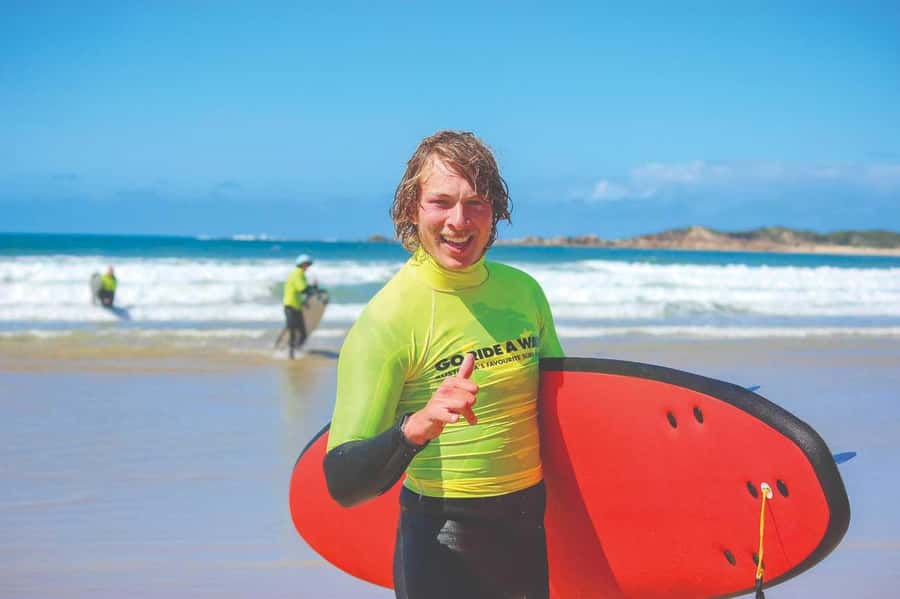
- First lessons happen at famous Torquay Beach: You learn in the heart of Victoria’s surf country, with the beach itself adding plenty of atmosphere.
- A full-length wetsuit is included: This matters in cool Victorian water and means you do not need to arrange your own surfing gear.
- The lesson builds in clear stages: You begin with safety and board control on the sand, practise small waves, then work on standing.
- Coaching suits mixed abilities: First timers can learn the basics while intermediate surfers can receive help with positioning and technique.
- The instructors get personal: Coaches including Tim, Izzy, Joel, Sara, and Matt are singled out for patience, friendliness, and encouragement.
- The price is modest for a complete first lesson: At $59, you receive two hours of instruction, a board, wetsuit, sunscreen, changing facilities, and hot showers.
Torquay Beach gives your first lesson a proper setting
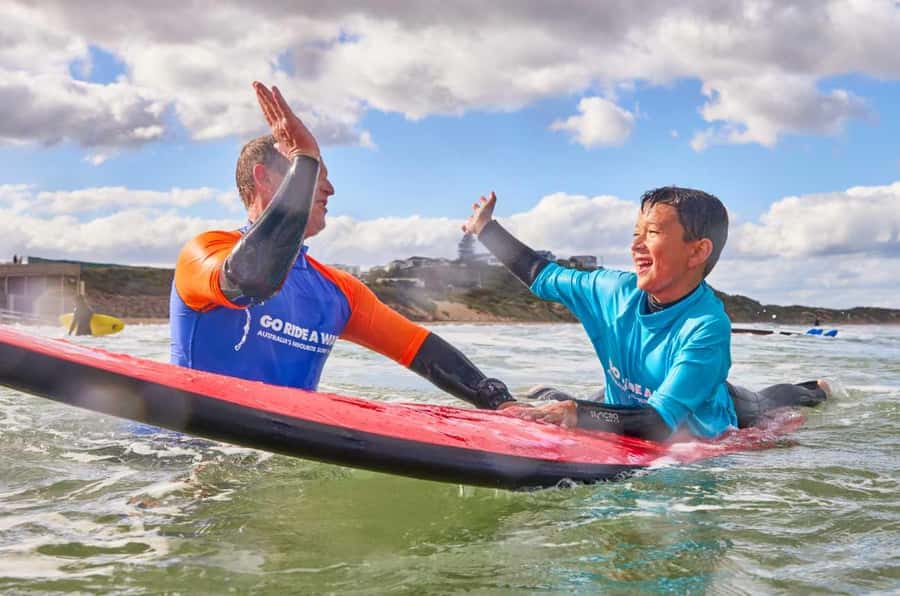
Torquay is not just a convenient beach for a lesson. It is known as Victoria’s surf capital, and that gives the experience a useful sense of place. You are learning a distinctly Australian beach skill in one of the country’s best-known surfing areas, not in an artificial pool or a quiet inland venue.
That setting also comes with a practical trade-off. Torquay attracts people who want to swim, sunbathe, and surf, so the beach may be busy. One session included a complaint about sharing the beach with a crowd, while another noted that the instructors marked boundary lines so the group had room to practise. The lesson remains workable, but do not expect a private stretch of sand on a bright summer day.
Your exact meeting point can vary with the option you book. Check the booking details carefully, then arrive 15 minutes early at the surf shop. That extra time is useful. You need to check in, receive your equipment, and get changed before the group heads to the beach.
A few more sessions around Australia worth a look
- Bondi Beach: 2-Hour Surf Lesson Experience for Any Level
★ 4.9 · 935 reviews - Byron Bay: 2-Hour Small Group Surf Lesson
★ 4.8 · 657 reviews - Noosa Heads: 2 Hour Surf Experience on the Sunshine Coast
★ 4.9 · 644 reviews
Getting suited up with a softboard and wetsuit
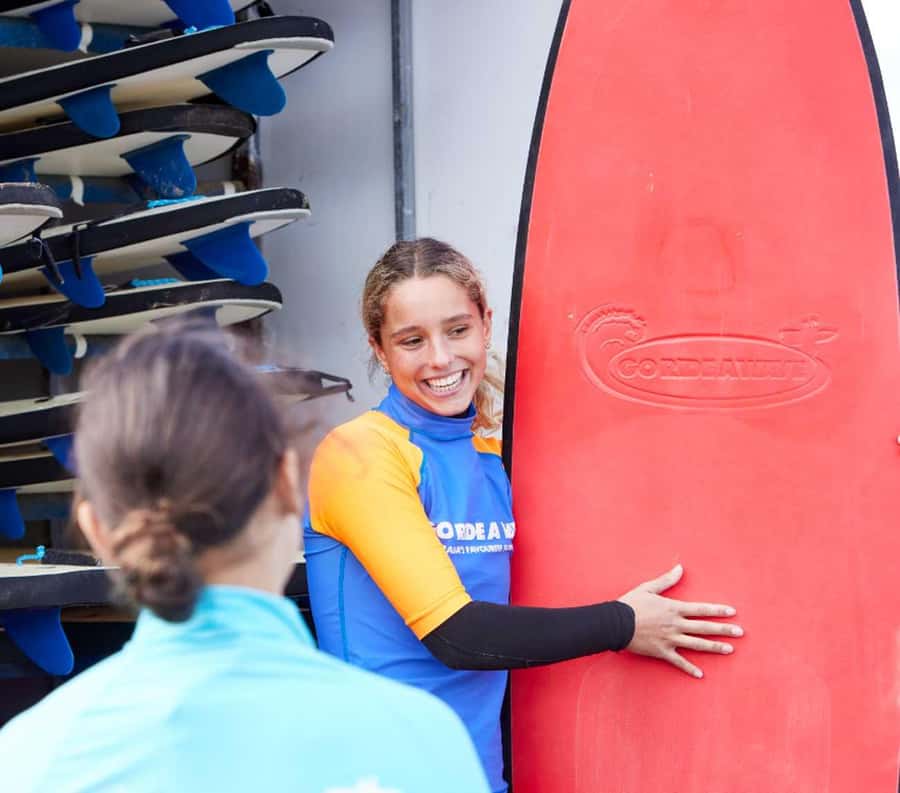
The practical setup is refreshingly simple. Go Ride A Wave provides a full-length wetsuit and a soft surfboard, with the board matched to your height and skill level. You bring swimwear and a towel.
The wetsuit is more than a nice extra. Surf lessons involve repeated time in the water, and Victorian conditions can feel cold even on a sunny day. A full suit helps you stay comfortable and gives you more time to focus on the coach rather than on the temperature.
The softboard is the right tool for beginners. It is forgiving, stable, and less intimidating than a narrow hard board. Early falls are part of learning, so a softboard makes the first session feel more manageable. It also gives a newer surfer a broad platform for practising balance and the pop-up movement.
Sunscreen is included, along with changing rooms and hot showers. The shower is a small but welcome detail after a session spent getting repeatedly wet and sandy. You should still pack a towel, since one is not supplied.
The first 20 minutes: safety before surfing
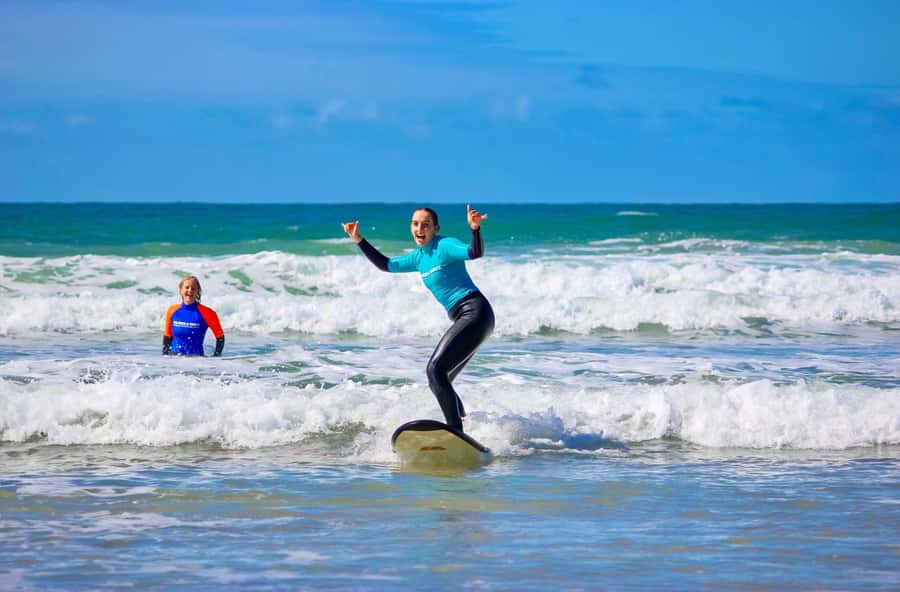
Once the group reaches the sand, the instructor explains how to use the board and how to stay safe. You learn basic positioning, board control, and the main points to watch in the water.
This part may look less exciting than catching a wave, but it is where the lesson earns its value. Surfing is not simply a matter of lying on a board and waiting. You need to know where to place your body, how to control the board, and how to respond when a wave reaches you.
The instructor also gives you a clear starting point for the pop-up, the movement from lying on the board to standing. You practise the sequence on land before trying it in the water. That rehearsal helps because your first attempt in moving water can feel fast and awkward.
The tone appears to be encouraging rather than stern. Coaches have been praised for explaining things clearly and making beginners feel safe. For a first lesson, that matters as much as technical skill. If you are nervous, a calm instructor can make the difference between trying again and giving up after the first fall.
Waist-deep water and your first small waves
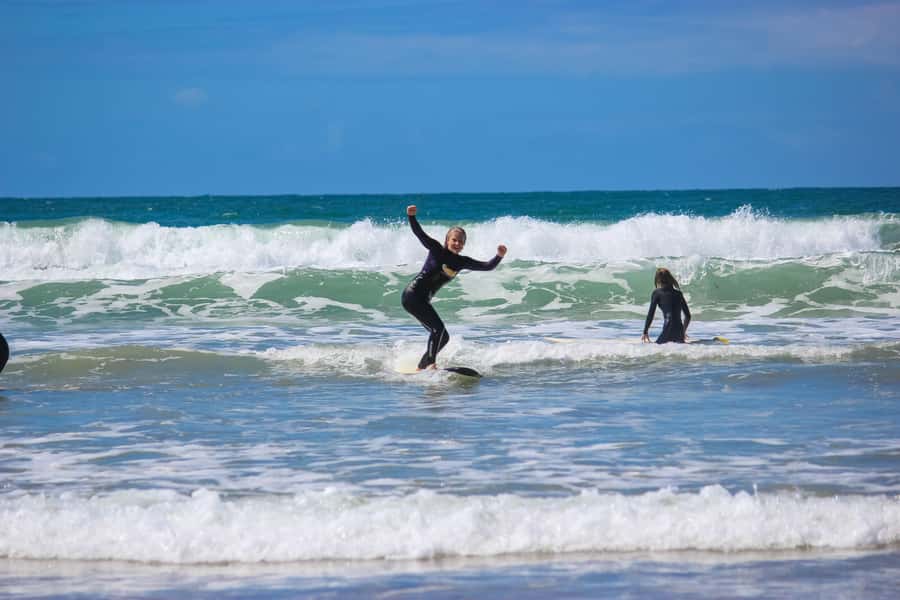
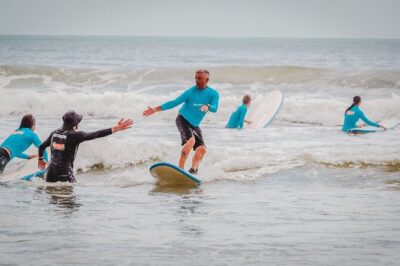
The group then moves into waist-deep water to catch small waves and learn how the board moves. You start by getting a feel for the timing. The goal is not to charge into large surf. It is to recognise a manageable wave, position the board, and let the water carry you forward.
This is a good progression for a beginner because it keeps the early practice focused. You are dealing with one task at a time: staying on the board, keeping it pointed correctly, and feeling the push of the wave. Once that starts to make sense, the coach can add the next step.
You can expect plenty of repetition. You may catch a wave, lose balance, reset, and try again several times. That repetition is not wasted time. It helps you understand how much movement is needed and how quickly you need to act.
The lesson suits non-swimmers only within the limits set by the operator and instructor. One 55-year-old participant who could not swim reported becoming less afraid of the water and learning to feel the rhythm of the waves. That is encouraging, but you should still be honest about your ability and follow all safety instructions closely.
Same coast, a different way into the water:
- Magnetic Island Discovery Tour with Snorkeling & Paddle Boarding
★ 5.0 · 1,372 reviews - Byron Stand Up Paddle Nature Tour
★ 5.0 · 384 reviews - Learn to Surf at Noosa on the Sunshine Coast
★ 5.0 · 277 reviews - Behind The Bay – Explore Like a Local: Waterfalls/paddleboarding
★ 5.0 · 275 reviews
The beach regroup: learning to stand up
After the first water practice, you return to the beach for more detailed instruction on the pop-up. The coach breaks the movement into steps, helping you place your hands, bring your feet under your body, and find a stable stance.
This is the moment when the lesson becomes more than a quick play in the shallows. You start to understand the body mechanics behind surfing. Good positioning and quick, controlled movement matter more than brute strength.
Different people will progress at different speeds. Some participants have stood up during their first lesson, and several sessions have produced that satisfying first ride for most or all of the group. You should treat that as a realistic possibility, not a guarantee. Wave conditions, fitness, balance, and your ability to follow the timing all affect the result.
The teaching style seems well suited to mixed groups. People with no experience receive patient help, while those who have surfed before can work on board control and positioning. One couple included a beginner and someone surfing for a second time, and the coach was able to give attention to both.
The final water session is where the fun builds
The rest of the lesson takes place in the water, with the coach moving among participants and offering individual guidance. You practise what you learned on the sand and work toward riding a wave while standing.
This is the part you will remember. Even a short ride can feel like a major achievement when it is your first. The activity is not designed to turn you into an expert in two hours, but it can give you the basic confidence to keep learning.
The strongest feature here is the encouragement from the coaching team. Tim has been praised for explaining things clearly and keeping a cold-water session enjoyable. Izzy has been noted for patience with beginners. Joel is remembered for making people feel supported, while Sara has been praised for combining fun with clear teaching. Matt, Daniel, Ou, Tano, Stephan, and other coaches have also received warm individual praise.
That range of names matters because the coach you meet will shape your session. The company has a strong record of friendly instruction, but the exact personality and teaching style will depend on the guide working that day.
What the $59 price really covers
At $59 per person, this is a fair introduction to surfing. You are not paying only for beach access. The price includes a full-length wetsuit, softboard, two hours of instruction, sunscreen, changing rooms, and hot showers.
Buying or hiring those items separately would add cost and hassle, especially if you are visiting Torquay for only a day. The lesson also gives you a structured start, which is valuable when you do not know how to judge a wave or position a board.
The main limit is duration. Two hours is enough to learn the basic sequence and get several attempts, but it is not enough to develop strong surfing skills. If you enjoy the lesson and want more progress, the provider also offers a 1.5-hour private lesson and a progressive course of three two-hour lessons.
The available booking options show an overall duration range of 90 minutes to six hours, so check the specific time and format before paying. The advertised beginner lesson itself is two hours, but the total booking window can vary by option.
Who will get the most from this lesson
This experience is best for first timers who want a guided introduction rather than a casual board rental. You will have equipment, safety instruction, and a coach nearby, which removes much of the uncertainty that comes with trying to learn alone.
It also works well for couples, families with eligible children, and mixed-ability groups. A parent and child can take part together, though the age rules need attention. Children under 8 are not suitable for the activity. Children under 9 must have a parent who is not participating in the lesson accompany them and enter the water to assist, with a wetsuit provided for the child.
The lesson can also suit an intermediate surfer who wants a refresher. The softboard and beginner structure may feel basic if you already surf regularly, but the coach can still help with positioning, timing, and board control. If you want detailed one-to-one feedback, the private lesson is likely the better choice.
You should be ready for physical effort. You will be paddling, standing, falling, walking through water, and repeating the same movements. No special fitness level is stated, but the activity is not passive sightseeing.
The drawbacks to keep in mind
The cool water is part of the Torquay experience, but it can make two hours feel long. A good wetsuit helps, and hot showers are available afterward, yet you should still expect to feel tired.
Crowds are another consideration. Torquay Beach is popular, and you may share the water and sand with other people. The instructors may mark a boundary for the group, but this is not a secluded lesson.
Small rocks in the water can also be annoying. They are not presented as a major safety problem, but they may make walking and balancing less comfortable. Wear the supplied equipment as directed and listen carefully during the safety briefing.
Finally, the activity depends on the beach and ocean conditions. The information provided does not promise a certain wave size or weather. Check the forecast before booking if sunshine matters to you, and keep your plans flexible.
Booking details that matter
English is the teaching language, and private groups are available. You can cancel up to 24 hours before the start time for a full refund, and the reserve-now, pay-later option lets you hold a place without paying immediately.
Meeting points may vary according to the option booked, so do not rely on a general map pin alone. Bring swimwear and a towel, arrive 15 minutes early, and allow time to change before the group goes to the beach.
The activity has a rating of 4.8 from 113 ratings, with repeated praise for friendly instruction, clear explanations, safety, and the chance to catch a first wave. I would give the coaching reputation real weight here, since a beginner lesson depends heavily on patience and attention rather than equipment alone.
Should you book the Torquay surf lesson?
Book it if you want a well-supported first attempt at surfing on a famous Australian beach. The $59 price is sensible because it covers the board, wetsuit, coaching, sunscreen, changing rooms, and hot showers. The strongest reason to choose it is the teaching: coaches such as Tim, Izzy, Joel, Sara, and Matt have been praised for helping nervous beginners make progress.
Think twice if you dislike cold water, crowded beaches, or physical repetition. You should also choose the private lesson or three-session course if your main goal is steady skill development rather than a memorable introduction.
For most first timers visiting the Great Ocean Road, this is a practical way to try surfing without buying gear or guessing what to do. Catching one small wave and standing for a few seconds may be all you need to decide if you want to keep going.
FAQ
How long is the surf lesson?
The advertised beginner lesson lasts two hours. Booking options may show total durations from 90 minutes to six hours, so check the specific option and starting time when you reserve.
What equipment is included?
A full-length wetsuit and soft surfboard are included. The board is matched to your height and skill level.
What should I bring?
Bring swimwear and a towel. Sunscreen, changing rooms, and hot showers are provided.
How early should I arrive?
Arrive at the surf shop 15 minutes before the lesson begins. You need time to check in, receive your wetsuit and board, and change.
Is the lesson suitable for complete beginners?
Yes. The lesson is designed for first timers, with instruction covering safety, positioning, board control, small waves, and the pop-up technique. It can also suit experienced intermediates who want help with technique.
Can children take part?
Children under 8 are not suitable for the activity. Children under 9 must be accompanied by a parent who is not participating in the lesson and can enter the water to assist. A wetsuit is provided for the child.
Can I cancel or pay later?
You can cancel up to 24 hours before the activity for a full refund. The reserve-now, pay-later option allows you to book without paying immediately.
Just added around Australia
- Rainbow Beach: Surf Lesson Safari & Beach 4WD Double Island Point★ 5.0 · 12 reviews
- Stand Up Paddle Board Hire★ 4.5 · 9 reviews
- Stand Up Paddle Boarding – 2 Person Lesson – 1 Hour★ 5.0 · 12 reviews
- Noosa: Epic Stand Up Paddle Wildlife & Beach 4X4 Adventure★ 5.0 · 13 reviews
- Noosa Stand Up Paddle Group Lesson★ 5.0 · 19 reviews
- Golden Beach 1-Hour Stand-Up Paddleboard Hire on the Sunshine Coast★ 5.0 · 41 reviews
- Epic Surf Safari Beach 4WD Day Tour -Noosa to Double Island Point★ 5.0 · 34 reviews
- Private Surf Coaching Session in New South Wales★ 5.0 · 3 reviews
Australia Surf Trips, compared.
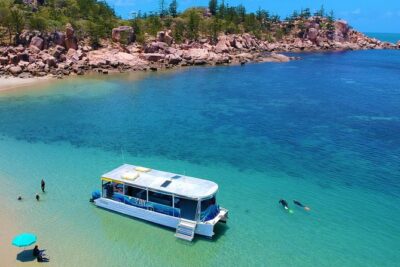
Magnetic Island Discovery Tour with Snorkeling & Paddle Boarding
Read our review →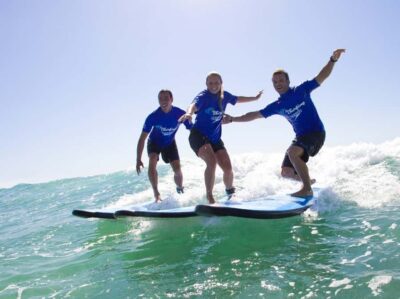
Bondi Beach: 2-Hour Surf Lesson Experience for Any Level
Read our review →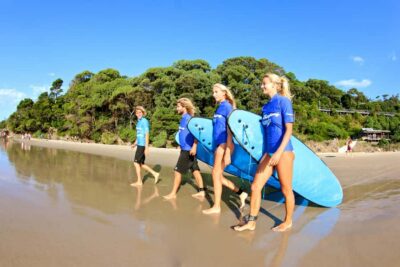
Noosa Heads: 2 Hour Surf Experience on the Sunshine Coast
Read our review →

Behind The Bay – Explore Like a Local: Waterfalls/paddleboarding
Read our review →
Browse the lists this tour appears in