
Review · OAHU
Stand-Up Paddle Yoga
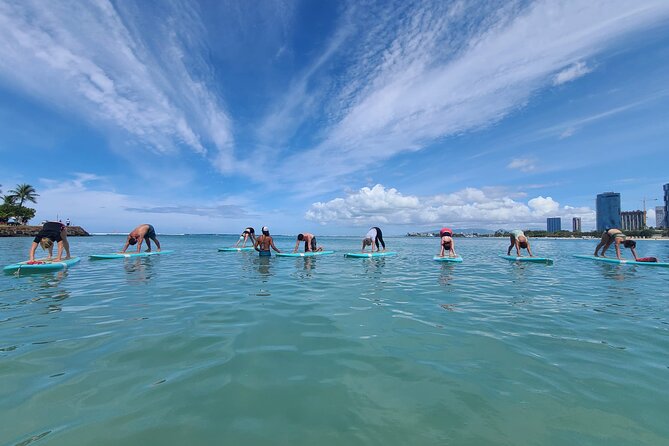
The unusual part of this Oahu class is that your yoga mat floats. You walk from the beach into the water with a stand-up paddleboard and anchor, secure your little floating studio, and practice while Hawaii surrounds you. The 75-minute class moves from breath work to standing poses, then finishes with restorative stretches and Savasana.
I like two things here. First, the instructor adjusts the class to your experience, which matters when even a familiar yoga pose feels different on a moving board. Second, the equipment and instruction are included, and you can choose between two start times. The private format also means your group is not folded into a large public class.
The serious drawback is provider reliability. Two separate booking accounts report that the instructor did not appear, the listed phone number was wrong, and Yoga Kai may no longer operate at the stated location. Confirm the company and meeting point directly before paying, even though the stated cancellation policy offers a full refund when you cancel at least 24 hours ahead.
Key points to know before booking
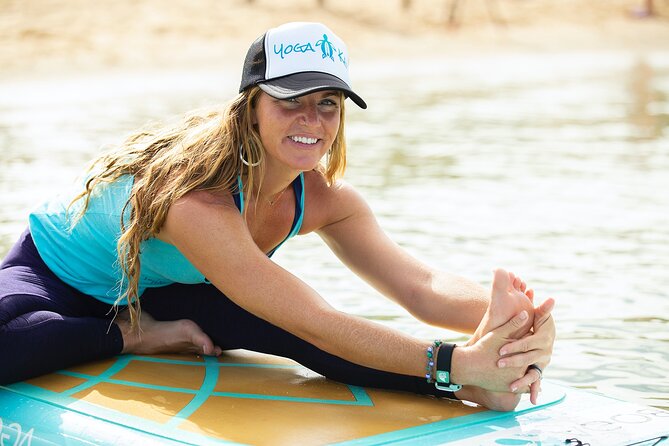
- The class takes place on anchored paddleboards, not on shore, so balance and comfort in shallow water matter.
- The 75-minute flow has a clear shape, beginning slowly, building to standing poses, and ending with restorative yoga and Savasana.
- Your teacher adapts the practice to your ability, useful if you are new to yoga or new to paddleboarding.
- You carry the board and anchor from the beach into the water, so expect a short wade before the class begins.
- This is a private activity for your own group, rather than a large shared class.
- Operational checks are essential, because two serious reports describe a no-show and an outdated contact number.
What the floating yoga studio is really like
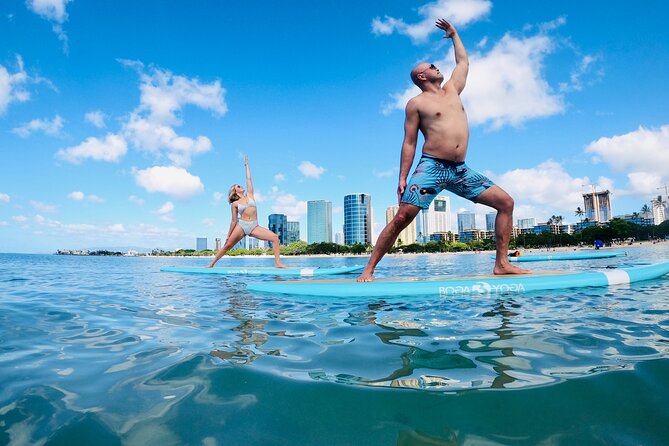
Stand-up paddle yoga sounds simple until you picture the first standing pose. A board shifts beneath your feet, the water moves independently, and your usual sense of balance has to adjust. That is part of the appeal, but it also means this is not quite the same as taking a calm yoga class on a firm floor.
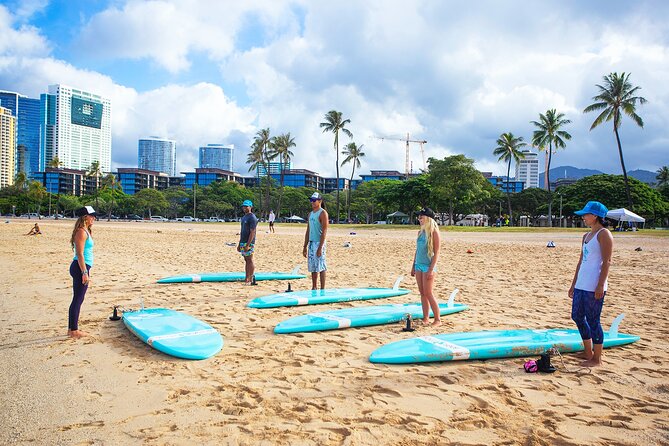
The session begins on the beach with an introduction to the floating setup. You and your group receive the paddleboards and anchors, then walk into the water together. The activity description says you wade to the place where the boards will be anchored, so the class does not begin the instant you arrive at the beach.
That short setup has practical value. You learn how the board and anchor work before trying to hold a pose. You also get a chance to become comfortable with the water around you. If you want a completely dry yoga session, this is the wrong format. If the idea of practicing outdoors, close to the water, appeals to you, the setting is the main reason to consider it.
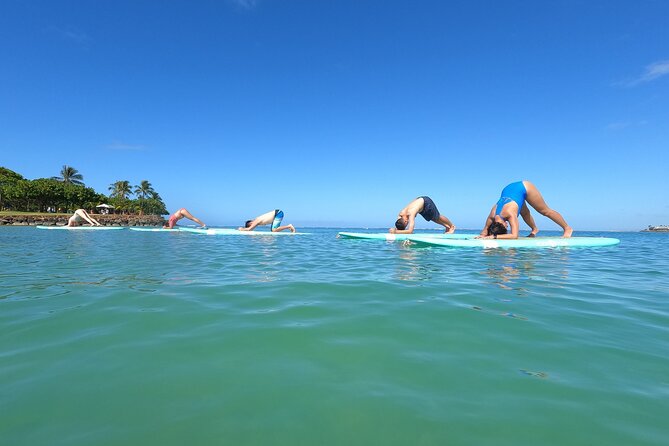
The board acts as both mat and platform. Once anchored, it should give you a fixed area to work within, though it will still respond to your movements and the water. You should expect to make smaller adjustments than you would on land. The class is likely to feel more playful and physical than a standard studio session, even when the poses themselves are familiar.
More Stand-Up Paddleboarding in Oahu
- Haleiwa River Paddle Board Rental with Blue Planet Adventure Co.
★ 5.0 · 215 reviews - Family, Private & Group Standup Paddle Lessons in Waikiki
★ 5.0 · 143 reviews - Lunar Legends Night Stand up Paddle Kayak Water Experience
★ 5.0 · 141 reviews
The 75-minute class, from breath work to Savasana
The opening is deliberately slow. Your instructor guides you toward the breath and gives you time to become accustomed to the floating surface. This is an important choice in the lesson plan. Starting with demanding poses would make the board feel like a test; beginning quietly helps you understand how it moves under your hands and feet.
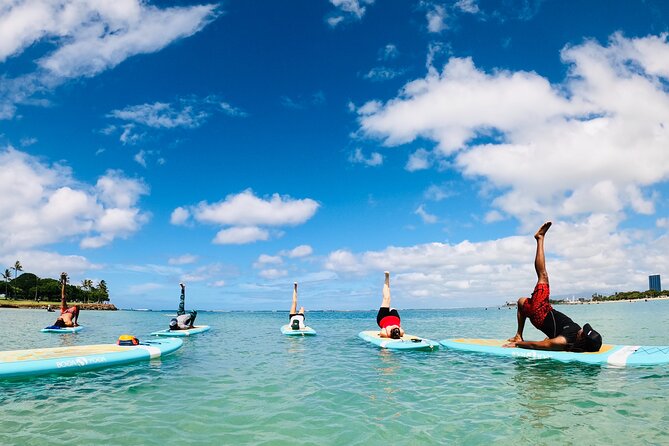
From there, the practice develops into a more active flow. The description specifically includes different versions of standing postures, so you should not expect to spend the full class seated or lying down. The teacher tailors the options to your experience, which can make the class workable for a first-time paddleboard user as well as someone who already practices yoga.
That adjustment is one of the strongest features of the activity. You do not need to arrive with advanced yoga skills. At the same time, you should not assume that the word yoga makes the class easy. Standing on a board adds a balance element, and your comfort level may change with the water and weather.
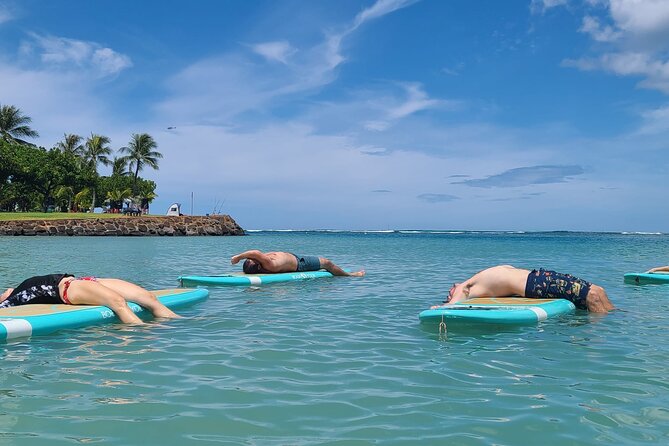
The final portion slows things down again. Restorative postures lead into Savasana, the traditional resting pose at the end of a yoga class. Ending on the board, with the water beneath you and the outdoor setting around you, is the experience’s most distinctive promise. The whole lesson has a sensible rhythm: settle in, work a little harder, then rest.
The advertised duration is approximately one hour and 15 minutes. That includes the beach introduction and movement into the water, so the active yoga portion may be shorter than the full time you spend at the meeting point. Plan your schedule with the complete activity window in mind.
Why the private format matters
This is a private activity, so only your group participates. That can make a major difference in a class where people have different comfort levels. You are not trying to match the pace of a large group, and the instructor can offer variations suited to the people on your boards.
A private class is especially useful if one person in your group is new to yoga while another already knows the basic poses. The teacher can offer easier or more challenging versions without turning the session into a compromise for everyone.
There is also a quieter social benefit. A floating yoga class can feel exposed if you are surrounded by strangers. With only your own group present, you may feel less self-conscious while testing balance and adjusting your position.
The tradeoff is value. A private activity often costs more per person than a shared class, and the price is not provided here. I would compare the total charge with the size of your group. For several people sharing one booking, the private format may be reasonable. For one or two people, the price may be harder to justify unless personal attention is your main goal.
What is supplied, and what you still need to plan
The necessary equipment and instruction are included. That means the paddleboard, anchor, and teaching should be arranged as part of the session. You do not need to bring your own board or know how to set up the floating practice area.
The meeting point is given as an unnamed road in Honolulu, Hawaii, and the activity ends back there. That wording is not especially reassuring for a first-time visitor. Before setting out, make sure you have the exact meeting instructions, not only the broad Honolulu address. A vague map pin can create trouble when you are trying to find a beach access point at a fixed start time.
The activity is near public transportation, which may help if you are not renting a car. Still, the exact transport details are not supplied, so you should verify the nearest stop and allow time to walk from it. Do not assume that the nearest road name places you directly beside the launch point.
The class is offered in English. No guide names are provided, so you cannot choose an instructor by name or assess a particular teacher’s style in advance. The important promise is that the instructor adapts the class to your experience.
More Stand-Up Paddleboarding in the USA
- Paddleboard Yoga Class in Honolulu
★ 5.0 · 120 reviews - Kahana Bay River to Ocean: Kayak and Stand Up Paddle Board Rental
★ 5.0 · 112 reviews - GLOW Stand Up Paddle at Twilight
★ 5.0 · 62 reviews - Stand Up Paddle Nature and Turtle tour-Guaranteed to see turtles
★ 5.0 · 56 reviews
Who will get the most from this Oahu class
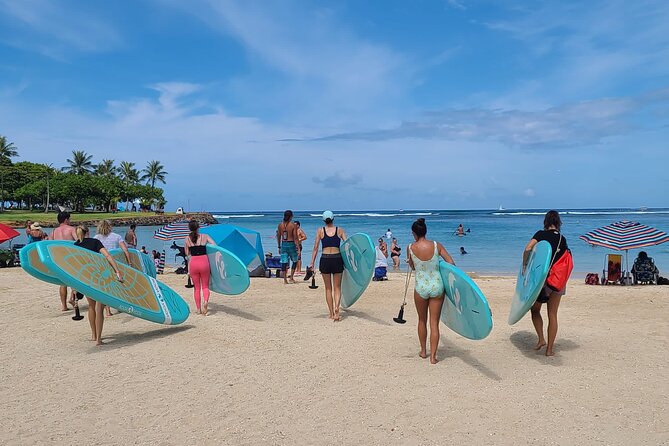
I would consider this for someone who already likes yoga and wants a setting that changes the feel of familiar poses. The water adds a physical challenge without requiring a full paddle excursion, since the board is anchored during the practice.
It may also suit a couple, family, or small group looking for a shared outdoor activity rather than a standard sightseeing stop. The private format lets you enjoy the class at your own group’s pace, and the two available start times may make it easier to fit into a busy Oahu schedule.
You do not need to be an advanced yoga student. The instructor offers different pose variations, and the class begins slowly. Still, you should be comfortable with the idea of wading into the water and standing on a paddleboard. If that sounds stressful rather than fun, a shore-based class will probably be a better choice.
The information says most people can participate, but it does not provide a detailed medical or mobility profile. If you have concerns about balance, water comfort, or any physical limitation, ask the operator before booking. The class includes standing postures on a floating surface, so your own comfort should guide the decision.
Weather and water conditions can change the plan
This activity requires good weather. If poor weather causes a cancellation, the stated options are a different date or a full refund. That is sensible for a water-based yoga class, but it means you should avoid placing it immediately before a flight or another fixed appointment.
Weather also affects the feel of the class even when the session goes ahead. A calm day may make the board easier to manage, while changing conditions could make balance more demanding. The available information does not promise a particular type of water or a guaranteed view, so treat the setting as weather dependent rather than fixed.
The activity also requires a minimum number of participants. If that minimum is not met, you are offered another date or experience, or a full refund. That possibility is worth remembering if your schedule is tight.
For the best practical plan, place this class early enough in your Oahu stay that a weather change still leaves room to reschedule. That advice is especially important if this is one of the main activities you want to do.
The biggest concern: confirm Yoga Kai before you pay
The class is associated with Yoga Kai, but the booking information includes a serious warning sign. One account says the company was no longer operating at the stated location and had reportedly been out of business for a long period. Another says the instructor never arrived, the group waited for an hour, and the listed telephone number was incorrect.
Those are not small complaints about a late start or a disappointing pose sequence. They concern the basic question of whether the booked class will happen. The two accounts also describe difficulty getting help and a dispute over a refund. The overall score is 3 from six ratings, which is a weak signal for an activity that depends on a specific instructor meeting you at a specific beach.
I would not book this without first confirming three points directly:
- The company is currently operating.
- The stated Honolulu meeting point is still correct.
- The phone number and day-of contact method reach a live operator.
Keep that confirmation in writing. If you cannot verify the details, the attractive format does not outweigh the risk of losing a morning and dealing with a refund problem. A booking platform may sell the reservation, but it cannot replace a functioning local operator on the beach.
Cancellation rules and the value question
You can cancel for a full refund up to 24 hours before the local start time. Inside that 24-hour period, the amount paid is not refunded, and changes are not accepted. Poor weather or failure to meet the minimum number of participants are listed exceptions, with a new date or refund offered.
Because no price is provided, I cannot call the class a bargain or an overcharge. I would judge the value by four things: the total cost, the number of people in your private group, the quality of the direct contact, and how much you value an unusual setting.
The included board, anchor, and instruction save you from arranging separate equipment. The private format may also justify a higher cost for a small group that wants personal attention. But those advantages matter only if the class is operating as promised. Reliable confirmation should be treated as part of the value, not an optional extra.
Should you book Stand-Up Paddle Yoga?
The activity itself has a strong idea behind it. You get a short outdoor yoga class, a floating board, a progression from breathing to standing poses to Savasana, and a teacher who is supposed to adjust the practice to your level. For the right group, that is more memorable than another indoor class.
I would book only after confirming Yoga Kai, the exact beach meeting point, and a working contact number. If the operator responds clearly and the price fits your group, the private format and unusual setting could make this a worthwhile Oahu activity.
If the operator cannot be reached, I would skip it. The reports of a no-show, an incorrect phone number, and a possibly closed business create too much practical risk. The concept is appealing, but dependable arrangements matter more than a good concept when you are standing on an Oahu beach waiting for an instructor.
FAQ
How long does the Stand-Up Paddle Yoga activity last?
The experience lasts approximately one hour and 15 minutes, including the beach introduction, movement into the water, yoga practice, and return to the meeting point.
Where does the activity begin and end?
It begins at the stated meeting point on an unnamed road in Honolulu, Hawaii. The activity ends back at that same meeting point.
Is the paddleboard equipment included?
Yes. The necessary equipment and instruction are provided, including the SUP boards and anchors used for the floating class.
Is the class taught in English?
Yes. The activity is offered in English.
Is this a private class?
Yes. Only your own group participates in the activity.
Can a beginner take part?
The teacher tailors the class to your experience, and the practice starts slowly before moving into standing poses. The information also says most people can participate, but you should be comfortable wading into the water and practicing on a floating board.
What happens if the weather is poor?
If poor weather causes the activity to be canceled, you are offered a different date or a full refund. The experience may also be canceled if its minimum number of participants is not reached, with a different date, another experience, or a full refund offered.
Just added around Oahu
- Surf Honolulu: Ala Moana Stand-up Paddleboard Lesson★ 5.0 · 3 reviews
- Semi-Private Surfing Lesson in Waikiki, Oahu★ 5.0 · 26 reviews
- Waikiki 2 Hours Private Guided Surf Lesson★ 3.5 · 8 reviews
- Surf Activity on the Wai Kai Wave in Ewa Beach★ 5.0 · 8 reviews
- Bodyboarding 1-to-1 Private Lesson with Waikiki Courtesy Shuttle★ 5.0 · 5 reviews
- Surf Lessons on the North Shore Great for Families and all Ages★ 5.0 · 27 reviews
- Stand Up Paddle Open Group Lesson with Waikiki Courtesy Shuttle★ 4.5 · 6 reviews
- Family Stand Up Paddle Lesson with Waikiki Courtesy Shuttle★ 5.0 · 3 reviews
Oahu Surf Trips, compared.
Oahu North Shore Experience: Activities, Waterfall & Free Time
Read our review →
Beginner-Friendly Waikiki Beach Surfing Lesson
Read our review →

Family, Private & Group Surfing Lessons, Waikiki Courtesy Shuttle
Read our review →
Haleiwa River Paddle Board Rental with Blue Planet Adventure Co.
Read our review →Browse the lists this tour appears in