Review · OAHU
Family, Private & Group Standup Paddle Lessons in Waikiki
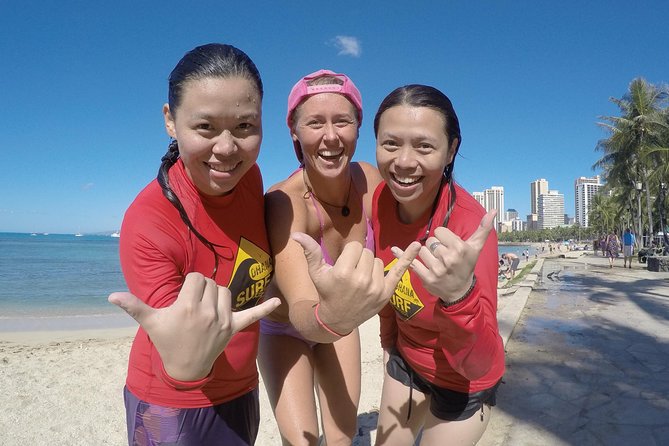
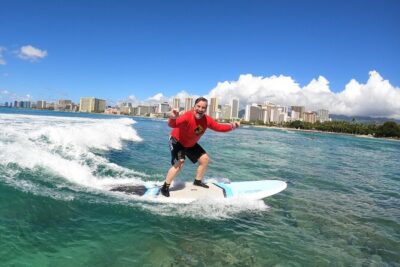
The best part of this Waikiki lesson is how quickly it gets you from hotel pickup to the water. You check in at the Ohana Surf Center, watch a short safety video, gear up, and meet an instructor who adjusts the lesson to your comfort level. Beginners have worked with instructors such as Mark, Kai, Kevin, Tyler, and Romeo, and many first-timers manage to stand up and ride a wave.
I like the two-hour format, which gives you time to learn, make mistakes, and try again without feeling rushed. I also like the practical shuttle service, the included rashguard, reef shoes, board, paddle, and secure place for your belongings. The main consideration is that semi-private does not mean you will have the whole beach to yourself. Several instructors and groups may be working in the same area, and photos and videos cost extra.
Why this Waikiki water lesson is worth considering
- Small teaching groups: Your instructor may work with roughly two people at a time, giving the lesson a more personal feel even when other groups are nearby.
- Pickup from four Waikiki locations: The standard meeting points include the Ilikai Hotel, Romer Waikiki, Don Ho Lane Van Depot, and Hyatt Regency.
- A real two-hour learning window: The longer session matters for beginners who need several attempts before balancing, paddling, and standing become natural.
- All the basic gear is supplied: You receive a rashguard, reef shoes, board, and paddle, with storage available at the surf center.
- Patient instruction for many ages: Families have reported success with children, teenagers, adults in their 50s, and a 65-year-old participant.
- Optional proof of your new skill: Professional photos and videos are available after the lesson for an additional charge.
From the yellow shuttle to the Ohana Surf Center
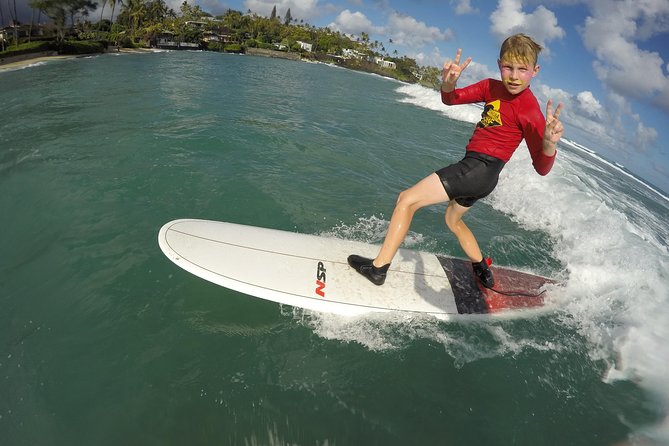
Your day begins with a complimentary pickup from one of the designated Waikiki locations. The company uses a clean, air-conditioned yellow bus or a white shuttle van with the Ohana Surf Project logo.
Pickup is usually 10 to 45 minutes before the lesson. The exact time and location are sent by email, so check your messages before heading out. If those details have not arrived 24 hours before your lesson, contact the surf center directly.
The main meeting point is 2552 Kalākaua Avenue, at the Waikiki Beach Marriott. This location is useful because you do not need to carry a board through Waikiki or arrange a separate taxi to the beach. The shuttle handles the gear transfer and returns you to the same meeting point after the lesson.
The process at the surf center is straightforward. You check in, store your belongings, receive your equipment, and go through a short safety briefing. A video may also help you picture the basic movement before you reach the water.
This is a good setup for a first lesson. You are not trying to learn while also worrying about where to leave your phone, how to carry a large board, or which part of the beach to use.
More Family Surf Lessons in Oahu
- Family, Private & Group Surfing Lessons, Waikiki Courtesy Shuttle
★ 5.0 · 216 reviews - Family, Private & Group Bodyboard Lessons in Waikiki
★ 5.0 · 106 reviews - Family, Private & Group Bodyboard Lessons in Waikiki
★ 5.0 · 104 reviews
What happens during the two-hour lesson
Once you are ready, the shuttle takes you from the surf center to the beach. There, your instructor asks about your experience, swimming ability, and comfort level.
That conversation matters. A first-time surfer who is nervous in the ocean needs different coaching from someone who has already surfed or paddleboarded. The lesson is designed for all levels, but you should be honest about your experience. Clear information lets the instructor choose a safer pace and give you more useful advice.
The exact balance between standup paddle instruction and surfing depends on the lesson setup and ocean conditions. The supplied equipment includes a paddleboard and paddle, while the activity description focuses heavily on learning to surf and catching waves. In practical terms, you should expect instruction in board handling, balance, paddling, safety, and standing up, with time spent riding small waves when conditions permit.
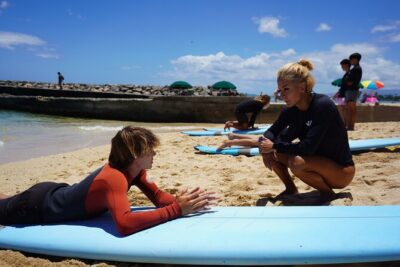
The first part generally focuses on basic technique and safety. Your instructor explains how to handle the board, how to position yourself, and how to move from lying or kneeling into a standing position. Strong, simple instructions are especially valuable here. One instructor, Tyler, was praised for being calm and clear, while Kai was noted for carefully explaining the reason behind each step.
Once you understand the basics, you head out to practice. Instructors can help position you for a wave, offer corrections after each attempt, and encourage you to try again. Some instructors may help pull you back toward the surf when you are tired, which makes the session less physically demanding than attempting everything alone.
Do not expect every attempt to work. Even with friendly coaching, balance takes practice. The benefit of the two-hour length is that one missed wave does not end the lesson. You have enough time to learn from a shaky start, adjust your stance, and try again.
The semi-private format and its limits
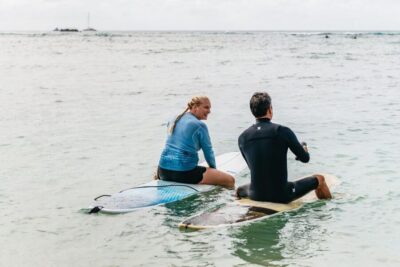
The lesson is described as semi-private, and that usually means a more personal arrangement than a large group class. Several people have had one instructor working with two participants, which creates a useful one-on-one feel. Families of four have also been split among instructors so each pair receives close attention.
Still, you should set your expectations correctly. Semi-private does not mean exclusive access to the beach or a private stretch of ocean. Other instructors and groups may be practicing nearby. One family expected a more private experience and found the area busier than anticipated, though they still found the instructors helpful and encouraging.
The maximum group size is eight people. That is small enough to avoid the feel of a mass class, but the actual amount of attention you receive depends on your group, the instructor assignments, and how many people are in the water at that time.
For couples, friends, and families who want to learn together, this format works well. If you want a completely private instructor and a highly controlled schedule, ask about a private lesson before booking. Participants who cannot swim may be required to take a private lesson, so tell the company in advance.
Why two hours is the better choice
A one-hour lesson can introduce the basics, but two hours gives you a more realistic chance to practice. Several people specifically found the longer session worthwhile, especially because beginners need time to understand the board, paddle out, wait for a suitable wave, and recover between attempts.
The session can be tiring. Paddling, balancing, getting up, and returning to the starting position all require effort. The longer format does not mean two nonstop hours of intense activity. It gives you time for instruction, practice, rest, and feedback.
You should arrive in a bathing suit, bring a towel, and apply sunscreen before the lesson. Sunscreen is easy to forget when you are focused on getting ready, but you will spend time outdoors before and after entering the water.
If you are prone to seasickness, consider taking a remedy you already use after checking with your doctor. The ocean setting is part of the experience, but it can be uncomfortable for anyone sensitive to motion.
More Private Surf Lessons in Oahu
- Waikiki Private Group Surf Lesson
★ 5.0 · 298 reviews - Private Surfing Lessons in Waikiki
★ 5.0 · 176 reviews - Oahu Private Surfing Lesson
★ 5.0 · 113 reviews - Private Surf Lesson at Waikiki Beach
★ 5.0 · 107 reviews
Instructors who make a difference
The strongest part of this experience is the human instruction. The names attached to especially positive experiences include Mark, Marcus, Kai, Kevin, Tyler, Romeo, Miguel, Jayden, Adam, Keola, Damien, Chelsea, Roland, and Andrew, also called Jacob.
You may not receive one of these particular instructors, but the repeated pattern is useful. The best teaching here appears to be patient, upbeat, and direct. Instructors push you to try again without making you feel foolish when you fall. They also give quick corrections after each wave, which helps you make a change while the lesson is still fresh.
Families have had children as young as eight stand up, and teenagers aged 13, 14, and 16 have learned quickly. Adults in their 50s have also managed to get on the board and ride. That does not guarantee success for every person, but it shows that you do not need to arrive as an athlete.
There is one caution. One participant found an instructor somewhat bored and impatient. That appears to be an exception among the supplied experiences, but no lesson provider can guarantee a perfect personality match every time. If you need a slower pace, say so early and explain what makes you uncomfortable.
Written materials are available in Spanish, Japanese, Korean, and Chinese. The company will try to provide an instructor who speaks one of those languages, but that cannot be guaranteed without enough advance notice.
Equipment, safety, and comfort
The price includes the essential equipment: a rashguard, reef shoes, paddleboard, and paddle. These inclusions make the $118.84 per-person price easier to assess, since you do not need to rent the basic gear separately.
A safe place to store your belongings is also provided. You should still bring only what you need. Leave valuables at your accommodation when possible, and keep your phone secured before heading into the water.
Safety instruction comes before the lesson begins. You should advise the staff about medical conditions or injuries, and tell them if anyone in your group cannot swim. Most participants can take part, but the company needs accurate information to decide if a private lesson or another arrangement is needed.
The reviews include several people who were not strong swimmers and still felt comfortable with the coaching. That should not be taken as permission to hide your swimming ability. The ocean can change quickly, and honest communication is one of the simplest ways to make the session safer.
Photos and videos after you get back
After the water portion, you return to the Ohana Surf Center. You can view professional photos and videos from the lesson, and the shop also sells merchandise.
Photos and videos are not included in the booking price. This is worth remembering if you are comparing the total cost with other Waikiki lessons. If you want a visual record of your first successful ride, budget for that separately.
The photo service can be useful for more than a souvenir. Seeing your position on the board may help you understand why one attempt worked and another did not. Still, you should not feel pressured to buy anything. The lesson itself includes instruction and equipment, while the media package is optional.
The surf center then arranges your return to the original drop-off location. The whole setup is designed to keep the day simple, especially for families who do not want to organize transportation and equipment on their own.
Is $118.84 a fair price?
At $118.84 per person, this is not the cheapest way to stand on a board in Waikiki. The price makes more sense when you count the professional instructor, two-hour lesson, rashguard, reef shoes, board, paddle, storage, taxes, and round-trip transportation from designated Waikiki locations.
You are also paying for coaching rather than simply renting equipment. That distinction matters for a first attempt. A rental gives you freedom, but it leaves you to work out balance, safety, board position, and wave timing on your own.
The value is strongest for beginners, families, and visitors who want an organized activity without carrying gear across Waikiki. It is less compelling if you already know how to surf or paddleboard and only need equipment for independent use.
Photos and videos add to the final cost, so decide in advance if you want them. You can enjoy the lesson without purchasing media.
Who should book this Waikiki lesson?
I would recommend this experience to:
- First-time surfers who want patient instruction
- Families with children or teenagers who can follow safety directions
- Couples who want a shared activity with plenty of coaching
- Older adults who are reasonably comfortable with physical activity
- Visitors staying in Waikiki who value hotel-area transportation
- Anyone who wants gear supplied rather than packing or renting it separately
I would think twice if you cannot swim, have a serious injury, or dislike ocean motion. That does not automatically rule you out, but you need to contact the provider first. A private lesson may be required for non-swimmers, and medical concerns should be discussed before arrival.
This is also not the right pick if your main goal is solitude. You may have close instruction within your pair, but other groups and instructors can be active in the same beach area.
Booking details worth knowing
You receive confirmation at booking, and the experience is offered in English. It is near public transportation, and the standard pickup points make it fairly easy to reach even without a rental car.
Special pickup arrangements may be possible for people staying at the Ala Moana Hotel, Hale Koa Hotel, Kahala Hotel and Resort, The Ritz Carlton, or The Ka La’i Waikiki Beach. The company asks for at least 24 hours of notice. The same advance notice applies if a participant or accompanying guest has an injury or disability and needs a pickup closer to the hotel.
You can cancel for a full refund up to 24 hours before the local start time. Cancellations or changes made inside that window are not refunded. Poor weather can also cancel the activity, in which case you are offered another date or a full refund.
Should you book it?
Book this lesson if you want a well-organized first taste of Waikiki surfing or paddleboarding, especially if you value transportation, supplied equipment, and encouraging instruction. The two-hour session gives beginners a fair chance to improve, and the semi-private setup can provide close coaching without the cost of a fully private class.
Before booking, make sure you understand two points: the beach may include several groups, and photos and videos cost extra. If those limits suit you, the combination of patient instruction, practical shuttle service, and a solid amount of water time makes this a sensible choice for a first board lesson in Waikiki.
FAQ
How long does the Waikiki lesson last?
The experience lasts approximately two hours. This includes check-in, safety preparation, transportation to the beach, instruction, water practice, and the return to the surf center.
Where does the experience begin?
The main meeting point is 2552 Kalākaua Avenue, Honolulu, at the Waikiki Beach Marriott and Ohana Surf Center.
Is pickup available from Waikiki hotels?
Yes. Courtesy pickup is available from the Ilikai Hotel, Romer Waikiki at the Ambassador Hotel, Don Ho Lane Van Depot, and Hyatt Regency. Pickup details and times are sent by email.
What equipment is included?
The price includes a rashguard, reef shoes, paddleboard, paddle, and other necessary lesson equipment. A secure place to store belongings is also provided.
Are photos and videos included?
No. Professional photos and videos are available for purchase after the lesson, but they are not included in the booking price.
Can beginners take this lesson?
Yes. All skill levels are welcome, and the instruction is adjusted to your experience and comfort level. The activity focuses on basic skills and learning to ride waves.
Can children participate?
Most participants can take part, and families have successfully brought children and teenagers. Tell the staff the ages and abilities in your group when booking so they can advise you properly.
What should I bring?
Wear a bathing suit, bring a towel, and apply sunscreen before the lesson. If you are prone to seasickness, speak with your doctor about a remedy you already know works for you.
What happens if the weather is poor?
If the experience is canceled because of poor weather, you are offered a different date or a full refund. You can also cancel for a full refund if you do so at least 24 hours before the start time.
More Stand-Up Paddleboarding in Oahu
- Haleiwa River Paddle Board Rental with Blue Planet Adventure Co.
★ 5.0 · 215 reviews - Lunar Legends Night Stand up Paddle Kayak Water Experience
★ 5.0 · 141 reviews - Paddleboard Yoga Class in Honolulu
★ 5.0 · 120 reviews - Kahana Bay River to Ocean: Kayak and Stand Up Paddle Board Rental
★ 5.0 · 112 reviews
More Private Surf Lessons in the USA
- Private 1-on-1 Surf Lesson with Videos and Photos
★ 5.0 · 107 reviews - Private Surfing Lessons on the North Shore of Oahu
★ 5.0 · 87 reviews - Private Surf Lesson in Waikiki
★ 5.0 · 83 reviews - 1.5-Hour Semi Private Surfing Lesson in Honolulu
★ 5.0 · 76 reviews
Just added around Oahu
- Surf Honolulu: Ala Moana Stand-up Paddleboard Lesson★ 5.0 · 3 reviews
- Surf Activity on the Wai Kai Wave in Ewa Beach★ 5.0 · 8 reviews
- Semi-Private Surfing Lesson in Waikiki, Oahu★ 5.0 · 26 reviews
- Waikiki 2 Hours Private Guided Surf Lesson★ 3.5 · 8 reviews
- Bodyboarding 1-to-1 Private Lesson with Waikiki Courtesy Shuttle★ 5.0 · 5 reviews
- Surf Lessons on the North Shore Great for Families and all Ages★ 5.0 · 27 reviews
- Family Stand Up Paddle Lesson with Waikiki Courtesy Shuttle★ 5.0 · 3 reviews
- Stand Up Paddle Open Group Lesson with Waikiki Courtesy Shuttle★ 4.5 · 6 reviews
Oahu Surf Trips, compared.
Oahu North Shore Experience: Activities, Waterfall & Free Time
Read our review →
Beginner-Friendly Waikiki Beach Surfing Lesson
Read our review →

Family, Private & Group Surfing Lessons, Waikiki Courtesy Shuttle
Read our review →