
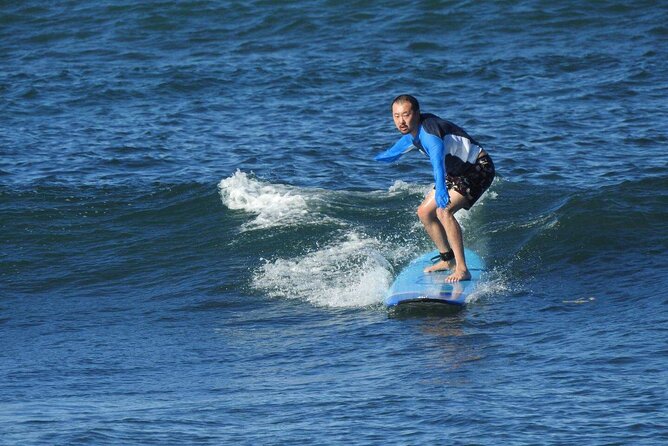
Review · OAHU
Private Surfing Lessons on the North Shore of Oahu
Learning to surf on Oahu’s North Shore gives you more than a quick beach activity. At Puaʻena Point Beach Park, your private instructor can focus on your balance, paddling, pop-up, and wave timing without splitting attention among a large class. Conor has been praised for patient coaching and for guiding first-timers through busy water.
I like the one-on-one format, especially if you learn best by correcting small mistakes right away. I also like that the lesson includes the main gear and starts with dry-land practice, so you are not thrown straight into the water. The main consideration is the ocean itself: surf conditions can change, and one scheduled lesson was canceled when there were no workable waves.
Key points to know
- Private instruction: Only your group takes part, so the lesson can match your experience and goals.
- North Shore setting: Meet at Puaʻena Point Beach Park in Haleiwa for a lesson in one of Oahu’s best-known surfing areas.
- About two hours: The time covers introductions, safety, land practice, water instruction, and repeated attempts at riding waves.
- Gear is supplied: A surfboard, leash, fins, and rash guard are included.
- Beginner-friendly coaching: You practice foot placement, balance, paddling, standing, and wave selection.
- Weather matters: Lessons run in rain unless conditions are too dangerous, but poor conditions can lead to a new date or full refund.
Why Puaʻena Point works for a first surf lesson
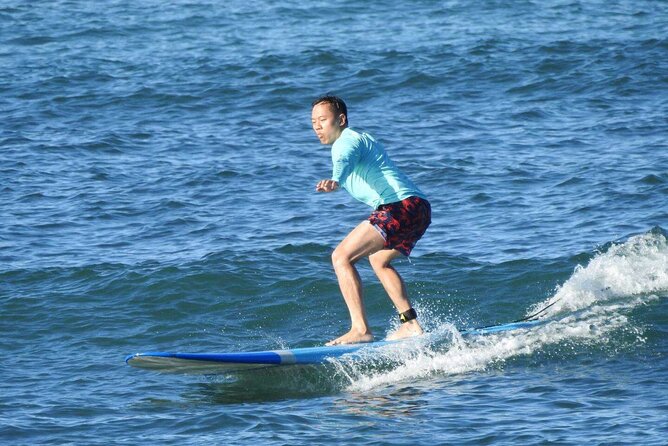
The setting at Puaʻena Point Beach Park is a strong part of this experience. You meet in Haleiwa, on Oahu’s North Shore, then work with an instructor who chooses small, manageable waves when conditions allow.
That matters because your first session is not about chasing the biggest wave. You need time to understand how the board moves, how to paddle with purpose, and when to stand. A private instructor can keep the focus on those basics instead of rushing through a standard class plan.
The North Shore has a powerful reputation, but the lesson is designed around your ability rather than the name of the coast. If you are new to surfing, the goal is to get you comfortable with the water and help you catch small waves. If you already have some experience, the instructor can spend more time on balance, turning, or wave timing.
Keep expectations sensible. A famous surf area does not guarantee perfect waves on your booking day. The experience depends on safe conditions and usable surf, and one scheduled lesson was canceled because there were no waves suitable for teaching.
More Private Surf Lessons in Oahu
- Waikiki Private Group Surf Lesson
★ 5.0 · 298 reviews - Family, Private & Group Surfing Lessons, Waikiki Courtesy Shuttle
★ 5.0 · 216 reviews - Private Surfing Lessons in Waikiki
★ 5.0 · 176 reviews
Your first minutes with Catch’a Wave
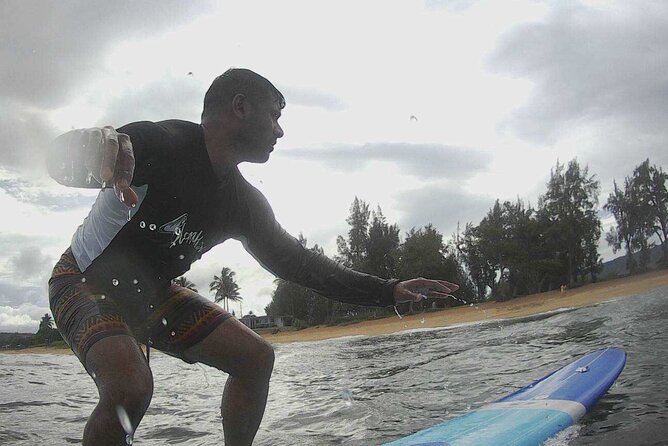
Your instructor greets you at the beach, provides the equipment, and explains how the lesson will work. This early orientation is useful because it gives you time to ask questions before handling the board in the water.
The included equipment covers the essentials: surfboard, leash, fins, and rash guard. You do not need to arrange those items separately for this activity. You will still need to get yourself to Puaʻena Point Beach Park, since transportation to and from attractions is not included.
The private format is especially helpful at this stage. You can tell the instructor if you have never surfed, if you have tried once or twice, or if you want to improve a specific skill. The session is built around your current level and goals, not around keeping pace with a dozen other people.
Children must be accompanied by an adult. The activity calls for a moderate level of physical fitness, which makes sense given the paddling, repeated attempts to stand, and time spent moving through the water.
Safety, surf etiquette, and the pop-up
Before entering the ocean, you receive a safety briefing. You learn about current ocean conditions, basic surf etiquette, and how to choose beginner-friendly waves.
This part may sound simple, but it is one of the most valuable pieces of the lesson. Surfing is not just standing on a board. You need to understand where to position yourself, when another surfer has priority, and which waves are appropriate for your ability.
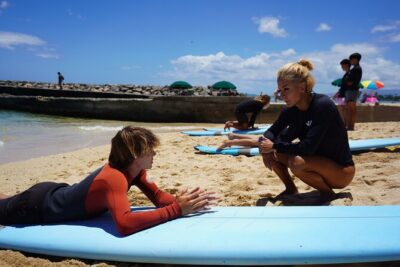
The instructor also leads a short warm-up and dry-land practice. You work on the pop-up, the movement that takes you from lying on the board to standing. Foot placement and balance receive attention here, where you can concentrate without a wave pushing the board beneath you.
I like this structure because it breaks the experience into manageable steps. You first hear the safety rules, then rehearse the body movement, then apply it in the ocean. That progression can make the first water attempt feel less chaotic.
Do not treat the land practice as a formality. A rushed pop-up is one of the easiest ways for a beginner to lose balance. Paying attention to where your feet land and how you lower your center of gravity gives you a better chance of staying upright.
Moving from the beach into the water
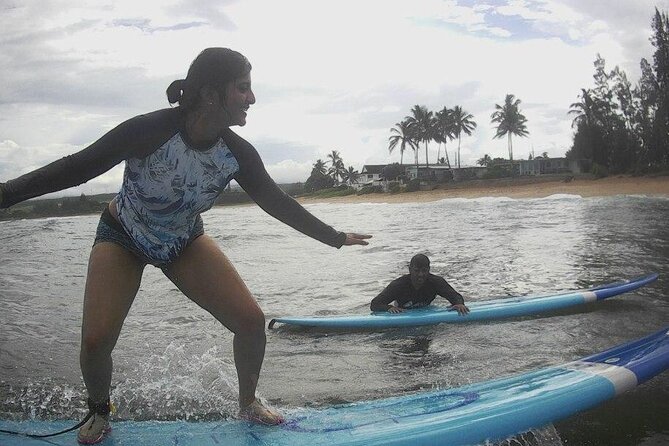
Once you are ready, you and the instructor head into the ocean to work on small waves. The instructor helps with paddling, positioning, and choosing the right moment to try.
This is where private instruction earns its higher price. The instructor can watch your timing closely and give a correction that applies to your next attempt. If you are paddling too early, standing too soon, or placing your feet unevenly, you can work on that right away.
Conor received particular praise for working patiently with first-timers and guiding them around busy waves. That detail is worth noting if you are nervous about sharing water with other surfers. You are not simply handed a board and told to figure it out. The instructor helps you move through the session with attention to safety and practical choices.
Your first successful ride may be short. That is normal. The real value is learning what made it work, then trying to repeat it. The lesson gives you room to make several attempts and build on each one.
The ocean can be tiring, even during a beginner session. Paddling takes effort, and standing up repeatedly uses your legs and core. A moderate fitness level is recommended, so plan on being active rather than simply floating beside the board.
More Private Surf Lessons in the USA
- Family, Private & Group Standup Paddle Lessons in Waikiki
★ 5.0 · 143 reviews - Oahu Private Surfing Lesson
★ 5.0 · 113 reviews - Private 1-on-1 Surf Lesson with Videos and Photos
★ 5.0 · 107 reviews - Private Surf Lesson at Waikiki Beach
★ 5.0 · 107 reviews
Catching your first wave at Puaʻena Point
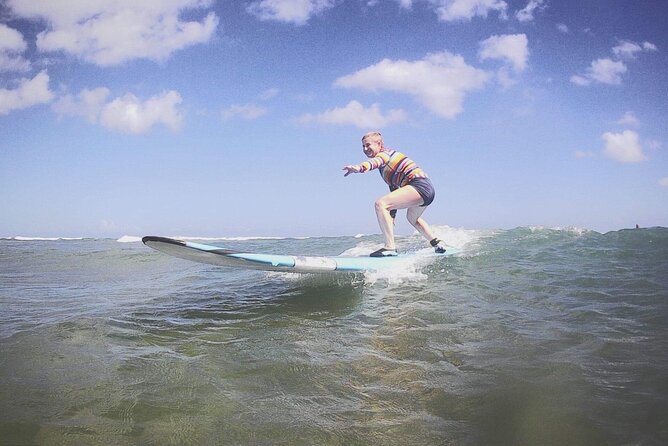
The first wave ride is the clear target of the lesson, but the coaching leading up to it matters just as much. The instructor helps you apply the pop-up as the wave carries the board forward.
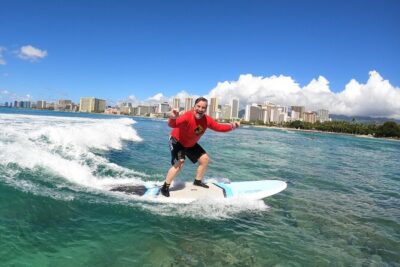
For a beginner, the best moment can arrive quickly. You paddle, feel the board begin to glide, place your feet, and try to stand before the wave passes. When everything lines up, even a brief ride gives you a useful sense of how surfing works.
A private instructor can make that moment more likely by helping with wave selection and timing. You do not have to guess which small wave is worth trying. The instructor can direct your attention toward a better opportunity and help you understand why it is suitable.
The experience is also suitable for someone who wants more than one successful ride. As your confidence improves, the lesson shifts toward staying balanced longer, controlling the board, and beginning to turn.
That progression makes the session feel less like a single photo opportunity and more like an introduction to a skill. You may leave with only basic ability, but you should understand the next things to practice.
Building control after the first ride
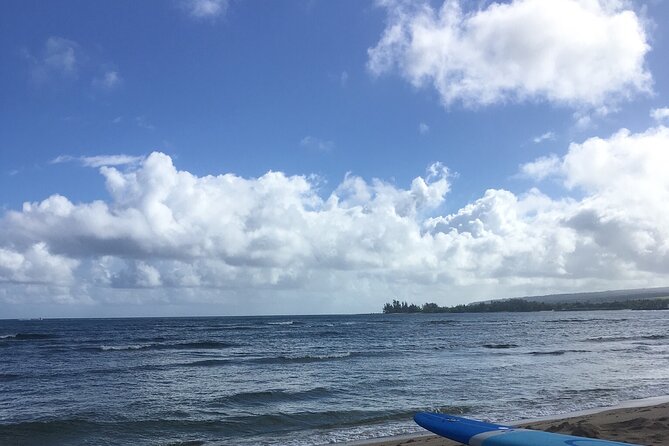
After you catch a few waves, the instructor works with you on balance, turning, and timing. These skills are harder than simply standing, so personal feedback becomes even more useful.
Balance is not only about keeping your feet still. You need to adjust as the board moves and remain relaxed enough to respond. Turning requires control of your weight and body position. Timing means knowing when to paddle and when to commit to standing.
The lesson does not promise advanced surfing in two hours, and it should not. What it can do is give you a sound starting point and help you avoid some common beginner errors.
You should also expect the instructor to keep the session fun. The stated focus is on learning and building a stronger connection with the ocean, rather than treating every attempt as a test. That attitude suits a first lesson, when a few falls are part of the process.
If you have surfed before, tell the instructor what you already know. The lesson can then spend less time on the most basic steps and more time on turning, timing, or riding with greater control.
What the $150 price really buys you
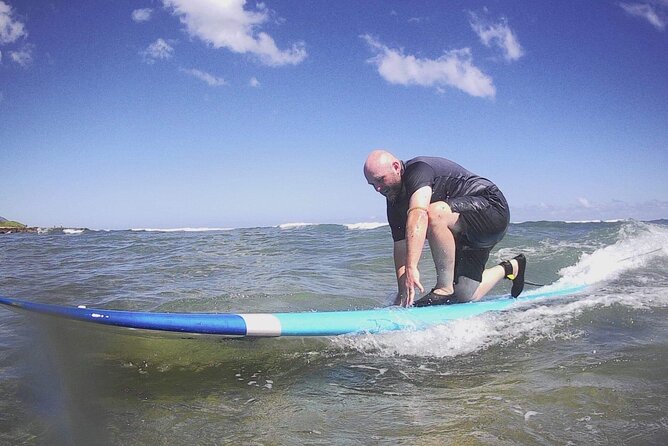
The cost is $150 per person for about two hours. That is not the cheapest way to get near the water, but the price makes more sense when you consider what is included and how much individual attention you receive.
Your fee includes a professional surf instructor, surfboard, leash, fins, and rash guard. You are also paying for a private activity, meaning only your own group participates. For a couple, family, or small group that wants direct coaching, the value is stronger than a large shared class with limited time beside the instructor.
The price is less appealing if you mainly want to rent a board and practice independently. It is also worth noting that transportation and souvenir photos cost extra or are not included. You need to reach the meeting point on your own.
For a first-time surfer, I think the private format can justify the price. You get help choosing waves, repeated corrections, and instruction matched to your ability. For someone already comfortable in the water, the value depends on your goals. If you want to refine technique, private coaching may be useful. If you only want casual water time, a lesson may be more than you need.
Conditions can change the whole plan
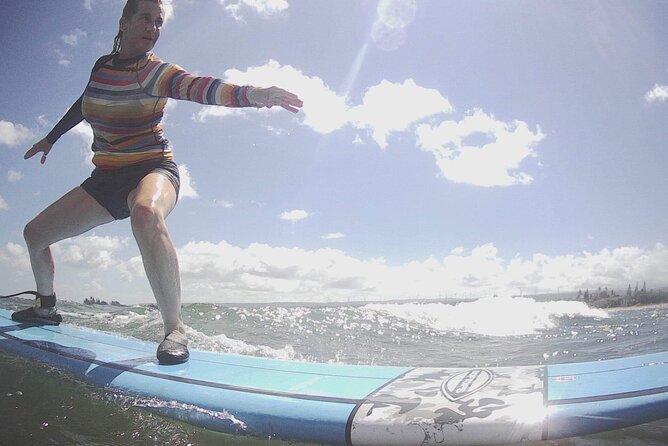
Surfing is controlled by the ocean, not by a fixed schedule. Lessons operate in rain unless conditions become too dangerous, so a light wet-weather day does not automatically cancel the activity.
The bigger issue is whether there are workable waves. One lesson was canceled because there were no waves, even on the North Shore. That may sound surprising, but it is a reminder that strong surf is not guaranteed every day, and waves that look impressive may not be safe or useful for beginners.
The provider handled that cancellation with advance contact by text and a phone call on the morning of the lesson. If poor weather or unsafe conditions cancel your session, you can choose another date or receive a full refund.
You also have free cancellation if you cancel at least 24 hours before the start time. Cancellations within 24 hours are not refunded, and late changes are not accepted. Since conditions can affect the activity, keep an eye on messages and avoid scheduling this too tightly against a flight or other fixed plan.
Who will get the most from this lesson
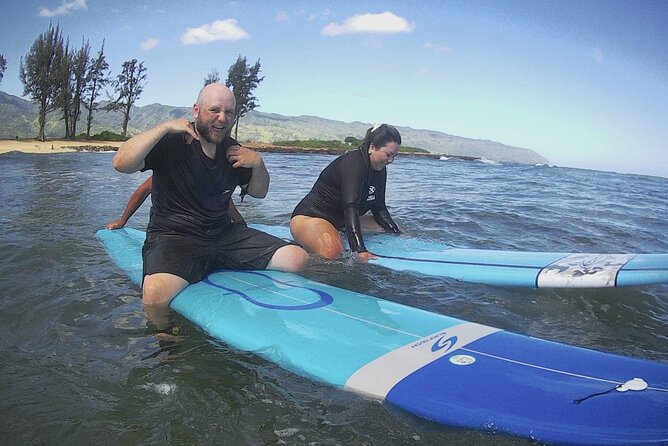
This activity is a good fit for a first-time surfer who wants close instruction rather than a crowded group class. It also suits a couple or small family group that wants to learn together while still receiving personal guidance.
You should be prepared for physical effort and repeated attempts. The lesson requires a moderate fitness level, and children need to attend with an adult.
I would choose this experience if you care about learning the basics correctly and want an instructor to help you find your first manageable waves. I would be more cautious if your schedule cannot handle a weather-related change or if you need guaranteed surf on one specific morning.
The inclusion of gear makes planning easier, while the private format gives the session a more personal feel. The strongest praise goes to Conor’s patience, clear land practice, and ability to guide beginners through active water. Instructor availability can vary, so you should not assume a particular person is guaranteed unless the provider confirms it.
Practical details before you book
The meeting point is Puaʻena Point Beach Park, Kahalewai Place, Haleiwa, Hawaii 96712. The activity ends at the same meeting point.
You receive confirmation when you book, and a mobile ticket is available. The site is near public transportation, but transportation to and from attractions is not included, so plan that part separately.
Service animals are allowed. The lesson runs in rain unless conditions are unsafe, and the activity is private for your group only.
Bring a realistic attitude toward progress. Your first goal should be learning how to handle the board, paddle, and stand safely. Longer rides and turns are welcome bonuses as your confidence grows.
Should you book this North Shore surf lesson?
Book it if you want a private introduction to surfing with gear included, clear safety instruction, and a real chance to catch small waves under direct guidance. The one-on-one setup is the main reason to choose this activity over a cheaper shared class.
Think twice if you need guaranteed conditions, dislike physical exertion, or mainly want unstructured beach time. The ocean may cancel the lesson, and two hours will not turn a beginner into an advanced surfer.
For most first-timers, this is a sensible way to try surfing on Oahu’s North Shore. Just leave room in your schedule for Mother Nature, and treat the first ride as the beginning of your surfing education rather than the final goal.
FAQ
Where does the surfing lesson begin?
The lesson begins at Puaʻena Point Beach Park on Kahalewai Place in Haleiwa, Hawaii.
Where does the activity end?
The activity ends back at the meeting point at Puaʻena Point Beach Park.
How long does the lesson last?
The lesson lasts approximately two hours.
Is the lesson private?
Yes. Only your group participates in the activity.
What equipment is included?
The experience includes a surfboard, leash, fins, and rash guards, along with a professional surf instructor.
What happens if the weather is poor?
Lessons run in rain unless conditions are too dangerous. If poor weather cancels the activity, you will be offered another date or a full refund.
Can I cancel for a full refund?
Yes. You can cancel at least 24 hours before the start time for a full refund. Cancellations made less than 24 hours before the experience are not refunded.
More Surf Lessons in the USA
- Oahu: Waikiki 2-Hour Beginner Group Surf Lesson
★ 4.9 · 191 reviews - Surf Lesson Without the Crowds Including GoPRO Videos
★ 5.0 · 167 reviews - North Shore Beginner Surf Lesson, Hawaii
★ 4.5 · 114 reviews - Group Surf Lesson in the Heart of Waikiki
★ 5.0 · 107 reviews
More Surf Lessons in Oahu
- Open Group Surfing Lesson in Waikiki, Hawaii
★ 4.5 · 582 reviews - Oahu: Beginner-Friendly Waikiki Beach Surfing Lesson
★ 4.9 · 425 reviews - Surfing Lessons On Waikiki Beach
★ 4.5 · 317 reviews - Surf Lessons on the North Shore of Oahu
★ 5.0 · 267 reviews
Just added around Oahu
- Surf Honolulu: Ala Moana Stand-up Paddleboard Lesson★ 5.0 · 3 reviews
- Surf Activity on the Wai Kai Wave in Ewa Beach★ 5.0 · 8 reviews
- Semi-Private Surfing Lesson in Waikiki, Oahu★ 5.0 · 26 reviews
- Waikiki 2 Hours Private Guided Surf Lesson★ 3.5 · 8 reviews
- Bodyboarding 1-to-1 Private Lesson with Waikiki Courtesy Shuttle★ 5.0 · 5 reviews
- Surf Lessons on the North Shore Great for Families and all Ages★ 5.0 · 27 reviews
- Family Stand Up Paddle Lesson with Waikiki Courtesy Shuttle★ 5.0 · 3 reviews
- Stand Up Paddle Open Group Lesson with Waikiki Courtesy Shuttle★ 4.5 · 6 reviews
Oahu Surf Trips, compared.
Oahu North Shore Experience: Activities, Waterfall & Free Time
Read our review →
Beginner-Friendly Waikiki Beach Surfing Lesson
Read our review →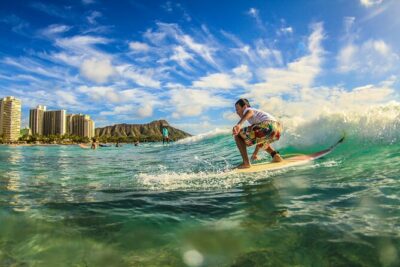

Family, Private & Group Surfing Lessons, Waikiki Courtesy Shuttle
Read our review →
Haleiwa River Paddle Board Rental with Blue Planet Adventure Co.
Read our review →Browse the lists this tour appears in