
Review · USA
Beginner Surfing in San Francisco at Pacifica Beach
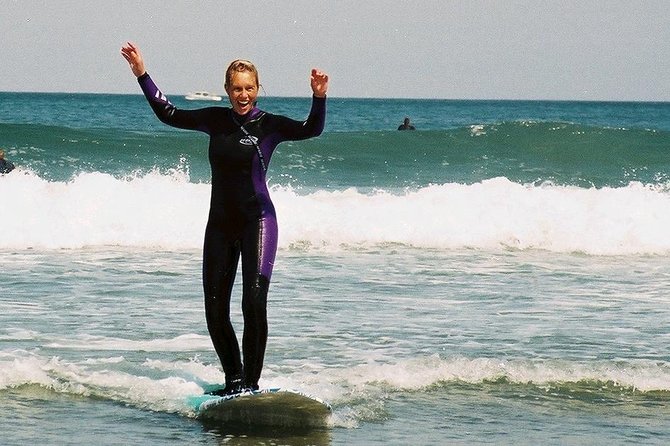
Pacifica Beach gives first-time surfers a friendly place to learn without the pressure of a serious surf crowd. You begin on the sand with ocean safety, wave reading, paddling, and the pop-up before moving into shallow whitewater with an instructor close by. The lesson is built for complete beginners, not people who already know their way around a board.
I like the small maximum group of eight and the amount of water time promised, roughly 90 minutes to two hours. I also like that the instructors are CPR, first-aid, and lifeguard certified, and that the equipment is included. The main drawback is the cold Pacific water and the fact that parking costs extra. You will need to be ready for a physical lesson, even though the teaching is gentle.
Key points to know before you book
- Pacifica Beach is the classroom: You practice first in shallow whitewater, a sensible setting for learning balance and timing.
- Expect about 2.5 hours overall: Around 30 minutes goes to changing, setup, and the beach lesson, leaving roughly 90 minutes to two hours in the water.
- All surf gear is included: Your wetsuit and board are provided, which keeps the $139 price from growing with rental fees.
- The group is capped at eight: That gives the instructor a reasonable chance to correct your stance and help you catch waves.
- Safety comes first: The lesson covers ocean awareness, currents, breaks, etiquette, and what to do in and out of the water.
- Minimum age is 12: Most people can take part, but you should be comfortable with a fairly active session.
Why Pacifica works for a first surf lesson
Pacifica is close to San Francisco, but the beach feels more like a working surf school than a sightseeing stop. The point here is not to admire the water from shore. You are there to learn how it moves, how to stay safe, and how to get a board under your feet.
That setting matters. Beginners need room to make mistakes without feeling watched by experienced surfers. The class is designed to keep things calm and practical, with no aggressive local attitude. You can concentrate on the next instruction instead of worrying about looking foolish.
The ocean is still the ocean, of course. Conditions can change, and Pacific water is cold. Your wetsuit helps, but you should not expect a warm-water beach day. The attraction is the chance to learn in real surf, with an instructor guiding you through each stage.
More Beginner Surf Lessons in the USA
- Maui: Two Hour Beginner Group Surf Lesson in Kihei
★ 5.0 · 950 reviews - Oahu: Beginner-Friendly Waikiki Beach Surfing Lesson
★ 4.9 · 425 reviews - Oahu: Waikiki 2-Hour Beginner Group Surf Lesson
★ 4.9 · 191 reviews
What happens during the first 30 minutes
The lesson starts with setup. You get fitted with a wetsuit and receive a surfboard, then head to the beach for the land portion of the class. This time is useful, not wasted. A first surf lesson can feel confusing if you are handed a board and pushed toward the water without context.
The instructor explains ocean awareness, wave breaks, current basics, and safety in and around the water. You also learn wave etiquette, which is important even if you only plan to surf once. Knowing where to wait, when to move, and how to avoid another surfer is part of being a safe beginner.
Next comes the body mechanics. You practice paddling, push-ups, and the pop-up motion on land. The goal is to make the movement familiar before the board starts rocking beneath you. You also get guidance on balance and riding position, so your first water attempt is not pure guesswork.
The lesson can feel technical at first. Pay close attention here. The short land session gives you a better chance of using the water time well, especially if you have never surfed or done a similar board sport.
From shallow whitewater to your first ride
Once the beach lesson is complete, you move into shallow water. The first target is whitewater, the broken foam that rolls toward shore after a wave has already broken. It is less intimidating than an unbroken wave and gives you a manageable way to learn timing.
You start by lying on the board, paddling, and feeling how the board moves. The instructor helps you position yourself and may push the board into a small wave so you can focus on the pop-up. From there, you work on getting your feet underneath you and finding balance as the board glides toward shore.
This is where the lesson becomes satisfying. You do not need to master surfing in one visit. A successful first session might mean holding your position, standing briefly, or riding a small wave a short distance. The teaching is structured around those small gains.
The listed water time is approximately 1.5 to two hours, though the exact amount depends on setup, conditions, and the pace of the class. That is a solid amount of practice for a first lesson. You will have time to repeat the movement, listen to corrections, and try again instead of getting only one or two attempts.
As you become more comfortable, you may be guided farther out, but the experience remains focused on beginner-level practice. The supplied information does not promise large waves or advanced instruction. That is a benefit for a first visit. You are learning control before chasing bigger surf.
The instructors make the biggest difference
The strongest part of this experience is the teaching. The instructor team is described as patient, attentive, safety-conscious, and encouraging. Those qualities matter more than flashy surf credentials when you are trying to stand on a board for the first time.
Several instructors are associated with the class, including Alan, Al, David, and Joao. Alan manages Adventure Out Surfing Clinic, while Al has been singled out for a careful and genuinely engaged teaching style. David is known for keeping beginners safe while helping them get upright. You may not receive a specific instructor, but the names give you a sense of the team behind the lesson.
Good surf teaching means more than shouting instructions from shore. The instructor needs to watch your stance, tell you what went wrong, and help you adjust without making you tense. The feedback described for this class is individual and hands-on, with instructors moving between participants and helping each person work through mistakes.
That matters in a group of up to eight. Eight people is still a group, so you should not expect a private lesson. But it is small enough that an attentive instructor can provide repeated corrections. If you want one-on-one coaching for every wave, a private session would be a better fit, though that is not what this experience offers.
Same coast, a different way into the water:
- Dolphin and Manatee Stand Up Paddleboard Tour in Daytona Beach
★ 5.0 · 2,328 reviews - Oahu North Shore Experience: Activities, Waterfall & Free Time
★ 5.0 · 1,799 reviews - Raccoon Island: Exploration on SUP/Kayak
★ 4.8 · 1,289 reviews - Dolphin, Manatee and SeaTurtle SUP Adventure Tour of St Augustine
★ 5.0 · 1,219 reviews
What the safety briefing adds
Surfing looks simple from the beach. Lie down, paddle, stand up. In practice, you need to understand the water before you worry about style.
The beach lesson covers wave breaks, ocean conditions, currents, and safety both in and out of the water. You also learn etiquette, which helps protect you and the people around you. For a beginner, this background is valuable because it replaces vague fear with a few clear rules.
The instructors are CPR, first-aid, and lifeguard certified. That does not remove the normal risks of ocean activity, but it is a useful standard for a beginner class. You are entering the water with a team trained to respond if something goes wrong.
The safety focus also helps nervous beginners. If you have thought surfing looked impossible, a clear explanation of the conditions can make the sport feel more approachable. You still need to follow directions and judge your own comfort. Do not mistake a beginner beach for a risk-free beach.
What the $139 price really covers
The price is $139 per person. At first glance, that is not a small casual activity fee. The value becomes clearer when you count what is included: instruction, wetsuit, surfboard, professional guidance, taxes, and other handling charges.
You are also paying for the structure of the lesson. The beach explanation, safety instruction, guided practice, and repeated attempts give you more than a simple board rental. Renting equipment alone would leave you to figure out ocean timing and pop-ups yourself.
The group cap helps the value. A maximum of eight is not private coaching, but it is more personal than a large beach class. If you catch even a few small waves and leave with a clear sense of what to practice next, the cost can be reasonable for a one-time San Francisco experience.
The value is weaker if you already surf comfortably. Experienced surfers will get little from a class devoted to paddling, safety, pop-ups, and whitewater. This is an introduction, not a performance clinic.
Remember that parking fees are not included. Build that extra cost into your plan, especially if you are driving to the meeting point at 5000 CA-1 in Pacifica. The meeting point is near public transportation, which may help you avoid parking altogether.
Timing, clothing, and practical planning
You can choose a morning or mid-day lesson. The best option depends on your schedule and the available conditions, since the activity requires suitable weather. The experience lasts approximately 2.5 hours, even though it is also described as a 3-hour beginner clinic, so allow at least three hours in your day for a relaxed arrival, changing, and departure.
You should arrive ready for an active beach session. The company provides the wetsuit and board, so you do not need to bring surf equipment. The water is cold enough that the wetsuit is an important part of the experience, not a minor accessory.
The activity ends back at the meeting point. That makes planning easier if you are fitting the lesson between other San Francisco plans. You will not need to arrange a separate return point after the class.
The minimum age is 12, and most people can participate. The supplied information does not give a detailed medical or swimming requirement, so use sensible judgment about your own fitness and comfort in the ocean. If you are unsure, contact Adventure Out LLC before booking.
Who will enjoy this Pacifica lesson most
This is a good pick if you have always wanted to try surfing but have been put off by the cold water, unfamiliar equipment, or fear of falling. The lesson takes away much of the guesswork and gives you a clear first step.
It also suits families with children aged 12 and older, couples, friends, and solo visitors. A solo booking can work well because the group setting gives you instruction without requiring you to bring a partner.
You should book it if your goal is to learn the basics and have a real attempt at catching a wave. You should not book it expecting a long free-surf session, large waves, advanced technique, or warm water.
The teaching style sounds particularly useful for nervous beginners. Patient instructors, individual corrections, and a safety-first approach can turn an intimidating sport into something you are willing to try again. The experience has received a 5 out of 5 rating from 45 ratings, with all recommenders giving it their approval, but your success will still depend on conditions, fitness, and how quickly the pop-up feels natural.
Cancellation and weather considerations
You can cancel for a full refund if you do so at least 24 hours before the local start time. Changes or cancellations made inside that window are not accepted and are not refunded.
Weather matters because this is an ocean activity. If poor conditions force a cancellation, you will be offered another date or a full refund. The same choice applies if the minimum number of participants is not reached.
I would avoid placing this lesson immediately before an important flight or fixed appointment. The listed duration is fairly clear, but outdoor activities can be affected by conditions and group pace.
Should you book Beginner Surfing in San Francisco?
Book this lesson if you want a structured, friendly introduction to surfing at a genuine Pacific beach. The included board and wetsuit, certified instructors, eight-person maximum, and generous water time make the $139 price easier to justify.
I would especially choose it for a first surf attempt, a family activity for ages 12 and up, or a solo day that gets you out of the city routine. Skip it if you dislike cold water, want private coaching, or already know how to surf.
Your best chance of enjoying it is to treat standing up as a bonus, not the only measure of success. Listen during the beach lesson, accept the safety rules, and expect to spend the first session learning how the board and waves work. If you catch one clean small wave, you may leave Pacifica with exactly the kind of memory that makes a second lesson tempting.
FAQ
Where does the surfing lesson meet?
The meeting point is 5000 CA-1, Pacifica, California 94044. The activity ends back at the same meeting point.
How long does the lesson last?
The experience lasts approximately 2.5 hours. It is also described as a 3-hour beginner clinic, with setup and changing included in the overall schedule.
How much time do I spend in the water?
You can expect approximately 1.5 to two hours in the water. About 30 minutes may be used for the beach lesson and setup.
Is surf equipment included?
Yes. The price includes rental gear, including a wetsuit and surfboard.
What will I learn?
You learn ocean awareness, wave breaks, ocean conditions, safety, wave etiquette, paddling, push-up and pop-up techniques, riding waves, and balance.
What age do I need to be?
The minimum age is 12 years.
How many people can join the class?
The maximum group size is eight participants.
Is the activity offered in English?
Yes. The lesson is offered in English.
What happens if the weather is poor?
If the experience is canceled because of poor weather, you can choose another date or receive a full refund. A full refund is also available when the minimum number of participants is not reached and the activity is canceled.
Just added around the USA
- Surfing Lesson in Santa Barbara (2 Hours)★ 5.0 · 10 reviews
- Private Surf Lesson in Morro Bay★ 5.0 · 42 reviews
- Private Surf Lessons At Stinson Beach In Marin★ 5.0 · 2 reviews
- Learn to Paddle Board on the San Francisco Bay!★ 5.0 · 4 reviews
- Private Surf Lesson★ 5.0 · 13 reviews
- Beginner Surf Lessons At Stinson Beach★ 5.0 · 5 reviews
- San Francisco Bay Kayak Or Paddle Board Tour★ 4.5 · 4 reviews
- 1 Day Adult Surf Retreat in San Diego★ 5.0 · 2 reviews
USA Surf Trips, compared.
Dolphin and Manatee Stand Up Paddleboard Tour in Daytona Beach
Read our review →
Oahu North Shore Experience: Activities, Waterfall & Free Time
Read our review →
Dolphin, Manatee and SeaTurtle SUP Adventure Tour of St Augustine
Read our review →
Guided Island EcoTour: CLEAR/Standard Kayak, SUP – Bonita Springs
Read our review →
UTV Dune Cruise and Surf at Coral Pink Sand Dunes
Read our review →
Browse the lists this tour appears in