
Review · USA
Beginner Surfing Lesson – Pacifica or Santa Cruz
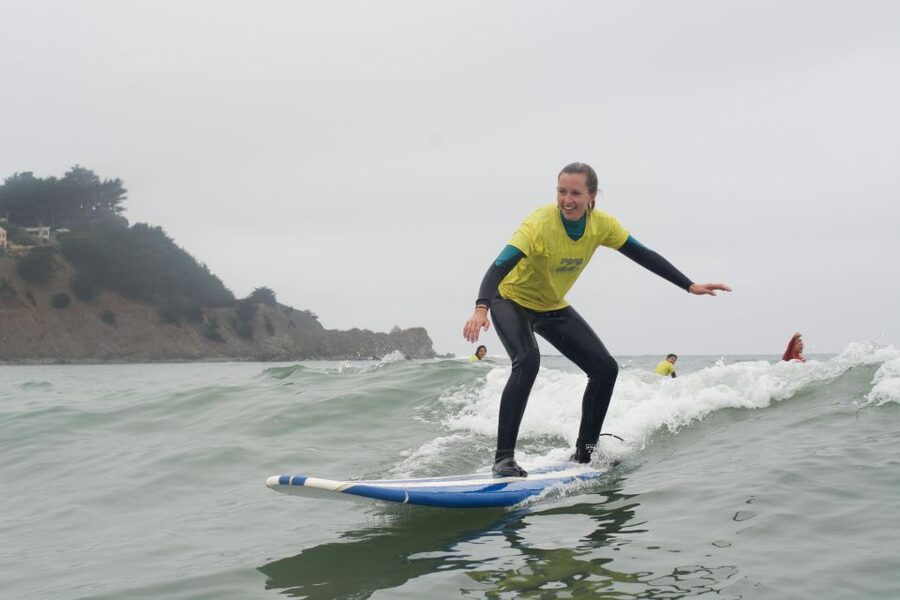
The best part of this lesson is its gentle start: you learn to read the ocean and ride whitewater in a shallow area before heading farther out. That makes surfing feel less like a stunt and more like a skill you can build one small wave at a time.
I like the lifeguard-certified instructors and the fact that your surfboard and wetsuit are included. I also like the personal teaching style reflected by coaches such as Jeff, Stephen, Gary, and David, who received especially warm praise. The main thing to consider is the cold water and physical effort. At $139, this is not a cheap beach activity, but it is a fairer deal if you want proper instruction rather than a board rental and a quick briefing.
Key points to know before you book
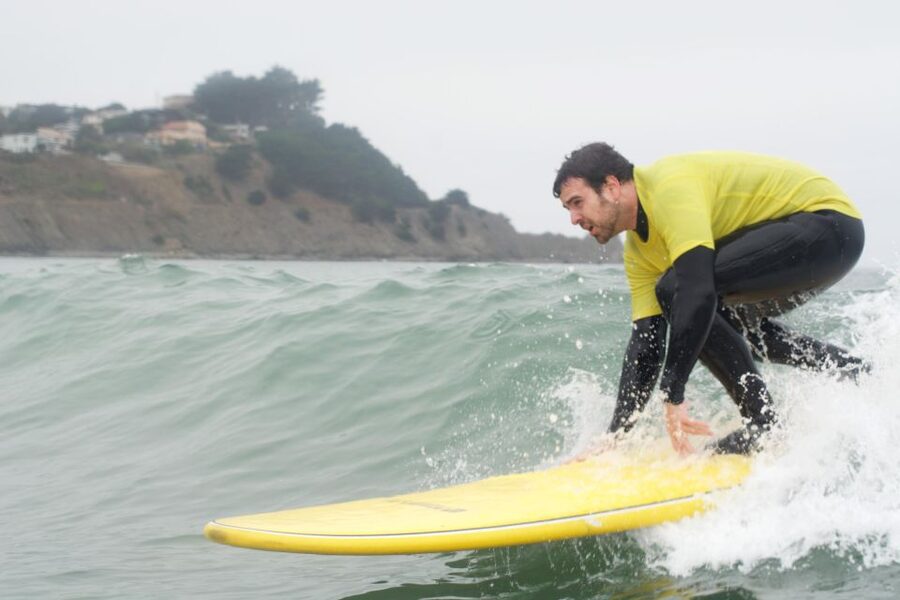
- You start in shallow whitewater, learning balance and pop-ups before trying more demanding waves.
- Safety is part of the lesson, with ocean awareness, wave breaks, conditions, etiquette, and water safety covered.
- Your wetsuit and surfboard are included, so you only need ordinary beach items.
- Pacifica or Santa Cruz gives you a choice of setting, though the meeting point depends on the option you select.
- The lesson lasts 150 minutes, enough time for instruction and practice without taking up a full day.
- Children under 12 cannot join, and the instruction is offered in English.
What the 2.5-hour surfing lesson is really like
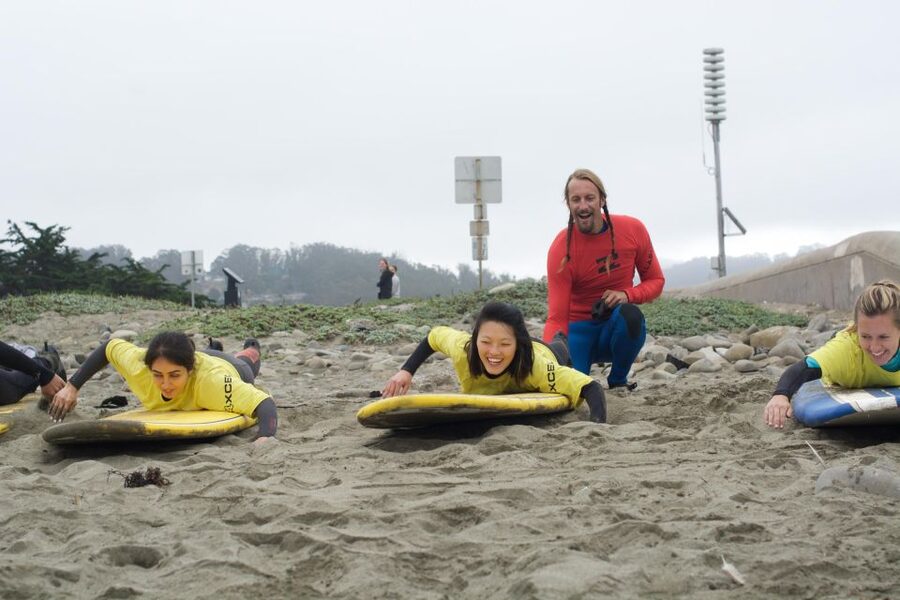
This is a beginner course, not a free-surf session for people who already know how to handle a board. The 150-minute format gives you time to learn the basics on land, enter the water, practice in a controlled area, and work toward standing on a moving wave.
Your instructor begins with the building blocks of surfing. You learn about ocean awareness, wave breaks, current ocean conditions, safety in and out of the water, and wave etiquette. These topics may sound less exciting than catching a wave, but they are the part that keeps a first lesson useful rather than reckless.
You then work on the physical skills. Expect instruction in paddling, push-up technique, the pop-up, standing, and balance. The pop-up is the quick movement from lying on the board to standing on it, and it often feels awkward at first. Practicing it correctly matters because a smooth, well-timed pop-up gives you a better chance of staying with the wave.
The lesson begins in shallow water with whitewater waves. This is a smart choice for a first session. Broken waves are easier to read than clean, unbroken waves, and you can focus on foot position and balance without first worrying about every part of the ocean around you.
Once you feel more comfortable, you may move farther out. The wording here matters: you are given a chance to progress, not promised a particular number of waves or a perfect ride. Ocean conditions shape what the instructor can offer on the day.
More Beginner Surf Lessons in the USA
- Maui: Two Hour Beginner Group Surf Lesson in Kihei
★ 5.0 · 950 reviews - Oahu: Beginner-Friendly Waikiki Beach Surfing Lesson
★ 4.9 · 425 reviews - Oahu: Waikiki 2-Hour Beginner Group Surf Lesson
★ 4.9 · 191 reviews
Pacifica or Santa Cruz: choosing your setting
You can book the lesson in Pacifica or Santa Cruz. The two locations give you flexibility when planning a Bay Area or Central Coast trip, but the exact meeting point varies with the option you choose. Check that detail carefully before setting out, especially if you are arranging your own transport.
Pacifica is the practical choice if you are staying near San Francisco or exploring the northern part of the coast. Santa Cruz fits better into a coastal day around the city and its nearby beaches. The supplied details do not identify one location as better for beginners, so I would choose based on your itinerary, travel time, and the available starting slot.
Both locations offer the same basic promise: an introduction to ocean movement and beginner surfing with an experienced coach. You are not simply being handed a board and sent into the water. The course connects the beach lesson, safety talk, and practice in the surf.
The seaside setting is part of the appeal, but it also means conditions can change. The instructors cover ocean conditions as part of the course, which is important for anyone used to swimming pools or calm lakes. A beginner lesson needs to teach you how to respect the water, not just how to stand on a board.
The instructors make the biggest difference
Surfing is a physical skill, but a good coach can save you a great deal of frustration. The strongest praise attached to this lesson focuses on the instructors. Jeff was singled out as wonderful for a group of three, while Stephen was praised for his teaching and overall organization. Another booking highlighted Gary and David, and one participant simply called the teacher the best ever.
Those names do not mean you can request a particular instructor or that one of them will lead your session. They do show the kind of teaching experience you might receive, with individual coaches making a clear impression on beginners.
I would pay attention to the word personalized in the description. In beginner surfing, that can mean correcting where you place your hands, helping you time the pop-up, or explaining why you fell instead of merely telling you to try again. The lesson is most valuable when the instructor watches your movement and gives you something specific to fix.
The coaching is in English. If you are comfortable following spoken instructions in English, the lesson should be easy to understand from a language point of view. If you are not, the practical nature of the activity still requires you to grasp safety directions clearly.
Equipment is included, but bring simple beach gear
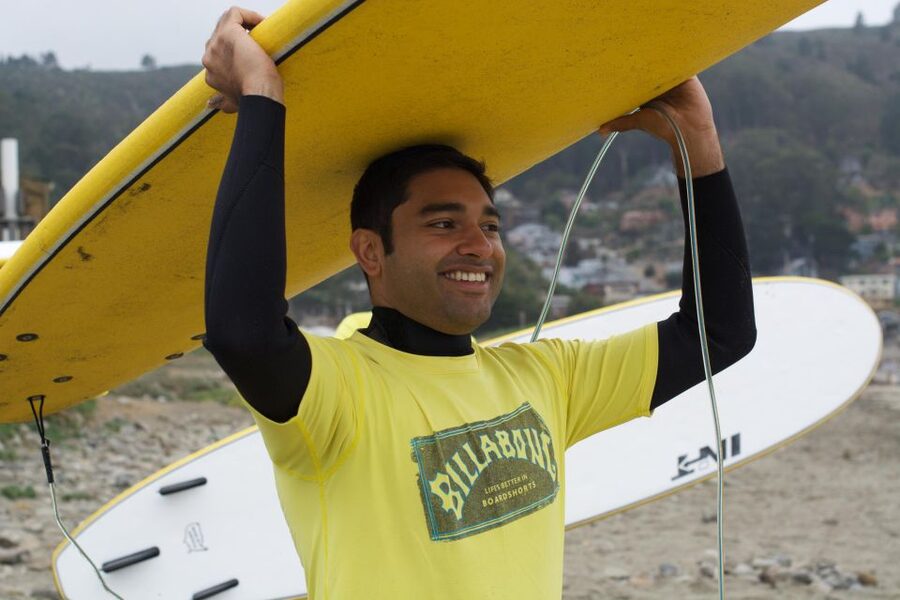
The $139 price includes all necessary surfing equipment, specifically a surfboard and wetsuit. That removes two common hurdles for first-timers. You do not need to buy a board, guess which size to rent, or arrange a wetsuit before arriving.
You should bring a swimsuit, towel, sunscreen, snacks, and water. A towel is especially useful after a lesson in cold ocean water, and sunscreen still matters on a cloudy beach day. The supplied guidance also calls for regular beach items, so pack as you would for a half-day at the shore rather than assuming the provider supplies every personal item.
Gratuity is not included. If your instructor gives you strong, attentive help, plan for that extra cost when judging the total price.
The wetsuit solves much of the cold-water problem, but it does not make the session effortless. Surfing uses your shoulders, arms, legs, and core. You will paddle, push up, stand, fall, and repeat the sequence. That is part of the fun, though you should not expect a relaxed sightseeing outing.
More Surf Lessons in the USA
- Open Group Surfing Lesson in Waikiki, Hawaii
★ 4.5 · 582 reviews - Outrageous Surf ScHool Lesson on Lahaina Side
★ 4.5 · 547 reviews - Los Angeles: Surfing Lesson in Venice Beach
★ 4.8 · 442 reviews - Po’ipu Surf Lesson
★ 5.0 · 361 reviews
Is $139 good value for a first surf lesson?
At $139 per person, this sits above the cost of a casual equipment rental. The comparison is not quite fair, though, because rental customers must already know how to choose a board, manage the water, and practice safely. Here, you get 2.5 hours of instruction, a surfboard, a wetsuit, safety guidance, and coaching in the water.
I see the value in the combination. A board rental may look cheaper, but it can leave a complete beginner guessing about wave selection, positioning, and etiquette. A lesson gives you a better first foundation and may help you avoid wasting the whole session falling in the wrong place.
The value is strongest if you have always wanted to try surfing but do not expect to become skilled in one visit. You are paying for a structured introduction, not a guaranteed long ride. If you are mainly looking for a low-cost beach activity, the price may feel high.
The option to reserve now and pay later also helps if you are planning a trip with several moving parts. You can hold a place without paying at the time of booking. Free cancellation is available up to 24 hours in advance for a full refund, which gives you some protection if your plans change.
Who will get the most from this experience
This lesson suits first-time surfers and people who have tried once or twice but never learned the basics properly. It also works well for a small group of friends or family members who want to learn together, as shown by the group of three who had Jeff as their instructor.
You should be at least 12 years old. The activity is not suitable for children under that age.
I would choose this course if you want an active coastal experience with real instruction. It is a good match for someone who likes learning by doing and does not mind falling into the water several times. The shallow-water start helps reduce the pressure, but surfing still asks you to paddle, balance, and keep trying.
I would think twice if you dislike cold water, strenuous activity, or unpredictable ocean conditions. The description promises a safe, non-threatening setting for beginners, but safe does not mean effortless or perfectly calm.
What makes the safety training useful
Ocean safety is not a side note here. The lesson covers wave breaks, conditions, etiquette, and safety both in and out of the water. For a beginner, this information can be more useful than a quick success on one wave.
Wave etiquette also matters because surfing takes place in shared water. Learning when to go, where to position yourself, and how to behave around other surfers helps you avoid turning a first attempt into a hazard for someone else.
The instructors are lifeguard certified. That does not remove the need to listen or follow directions, but it adds an important layer of professional water-safety training to the lesson.
Starting in whitewater is another safety advantage. You learn in the broken part of the wave before attempting to move farther out. That progression gives you time to understand the board and your own balance before adding more challenging conditions.
How to prepare for a better first attempt
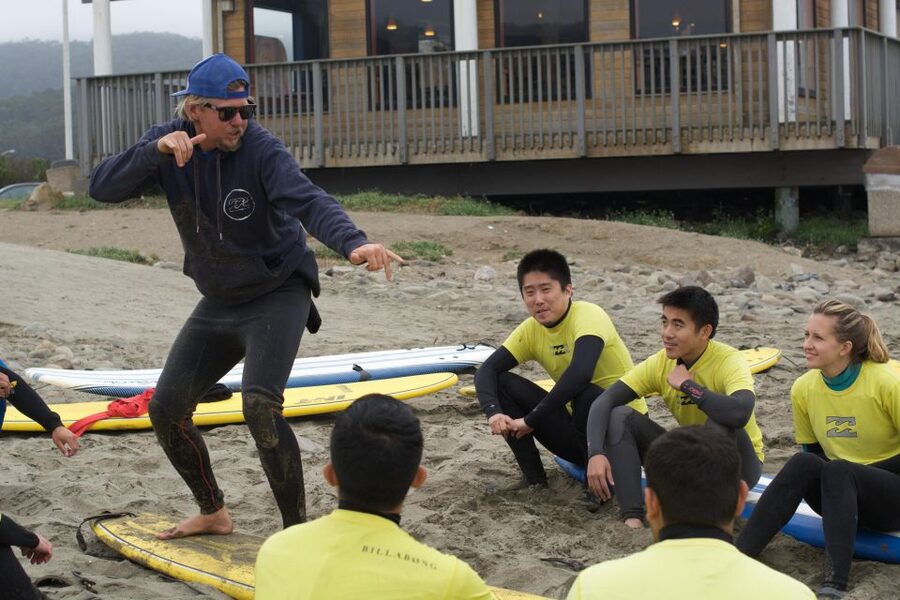
Arrive ready to use the water, not dressed for a long walk along the beach. Wear or bring your swimsuit, and pack a towel, sunscreen, water, and a snack. Since the meeting point may vary, confirm the exact location and allow enough time to find it.
Keep your expectations practical. Your first goal is not to look like a seasoned surfer. It is to understand the ocean, lie correctly on the board, paddle with purpose, complete the pop-up, and hold your balance for a short ride.
Listen closely during the land instruction. The movements can feel simple when explained, but they happen quickly once the board is moving. Remembering the hand position and foot sequence will help you make better use of your water time.
You may fall often. That is normal for a first surfing lesson, and the shallow-water practice gives you a more forgiving place to learn. Pay attention to the correction after each attempt instead of rushing straight into the next wave.
How the lesson compares with learning alone
Learning alone can be cheaper if you already own equipment, but it leaves you to solve several problems at once. You need to understand the waves, choose a safe area, handle the board, learn the pop-up, and follow local etiquette.
This course brings those pieces together. The instructor explains the ocean before asking you to ride it, then gives you a board and wetsuit suited to the lesson. That is why the price makes more sense for a complete beginner than for someone who can already stand and paddle confidently.
It also keeps your first session focused. Rather than spending the morning arranging gear or wondering where to start, you can use the 150 minutes for actual learning.
My verdict: should you book it?
Book this lesson if you want a proper first taste of surfing in Pacifica or Santa Cruz, with equipment included and a coach guiding you from shallow whitewater toward larger waves. The lifeguard-certified staff, clear safety training, and strong praise for instructors such as Jeff, Stephen, Gary, and David make it a sensible choice for a newcomer.
I would skip it only if $139 feels too steep for a single activity, or if you want a quiet beach day instead of a demanding one. For everyone else, the combination of hands-on coaching, wetsuit and board rental, and a 2.5-hour lesson gives you a solid start in an iconic ocean sport.
FAQ
How long does the beginner surfing lesson last?
The lesson lasts 150 minutes, or 2.5 hours.
Where does the surfing lesson take place?
You can choose Pacifica or Santa Cruz. The exact meeting point may vary depending on the option you book.
Is surfing equipment included?
Yes. The activity includes the necessary surfboard and wetsuit.
What should I bring?
Bring a swimsuit, towel, sunscreen, snacks, and water. These are personal beach items and are not listed as included.
Is the lesson suitable for children?
No. Children under 12 years old cannot join the activity.
What happens if I need to cancel?
You can cancel up to 24 hours in advance for a full refund. You can also reserve now and pay later to keep your plans flexible.
Just added around the USA
- Surfing Lesson in Santa Barbara (2 Hours)★ 5.0 · 10 reviews
- Private Surf Lesson in Morro Bay★ 5.0 · 42 reviews
- Private Surf Lessons At Stinson Beach In Marin★ 5.0 · 2 reviews
- Beginner Surfing in San Francisco at Pacifica Beach★ 5.0 · 45 reviews
- Learn to Paddle Board on the San Francisco Bay!★ 5.0 · 4 reviews
- Beginner Surf Lessons At Stinson Beach★ 5.0 · 5 reviews
- San Francisco Bay Kayak Or Paddle Board Tour★ 4.5 · 4 reviews
- Private Surf Lesson★ 5.0 · 13 reviews
USA Surf Trips, compared.
Dolphin and Manatee Stand Up Paddleboard Tour in Daytona Beach
Read our review →
Oahu North Shore Experience: Activities, Waterfall & Free Time
Read our review →
Dolphin, Manatee and SeaTurtle SUP Adventure Tour of St Augustine
Read our review →

Guided Island EcoTour: CLEAR/Standard Kayak, SUP – Bonita Springs
Read our review →
UTV Dune Cruise and Surf at Coral Pink Sand Dunes
Read our review →
Browse the lists this tour appears in