
Review · AUSTRALIA
Coolangatta: 2 Hour Surf Experience on the Gold Coast
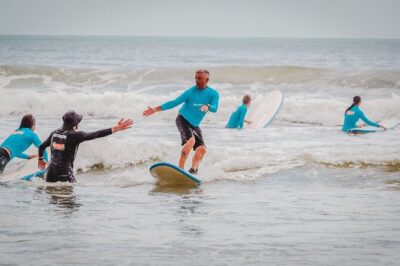
Standing up on a surfboard for the first time is the big prize here, and Coolangatta gives beginners a friendly place to chase it. You start on the sand, move into waist-deep water, and work toward catching small waves under an instructor’s eye.
I like the clear beginner structure and the use of soft-top boards, which make the first lesson less intimidating. I also like the warm Coolangatta setting and the patient teaching style associated with instructors such as Alex, Arthur, Blake, Johnny, and Nick.
The main consideration is that surfing is harder than it looks. One person found the lesson ended about 20 minutes early, and ocean conditions can affect how much time you spend riding. Bring water, arrive early, and expect a workout.
Key points for your Coolangatta lesson
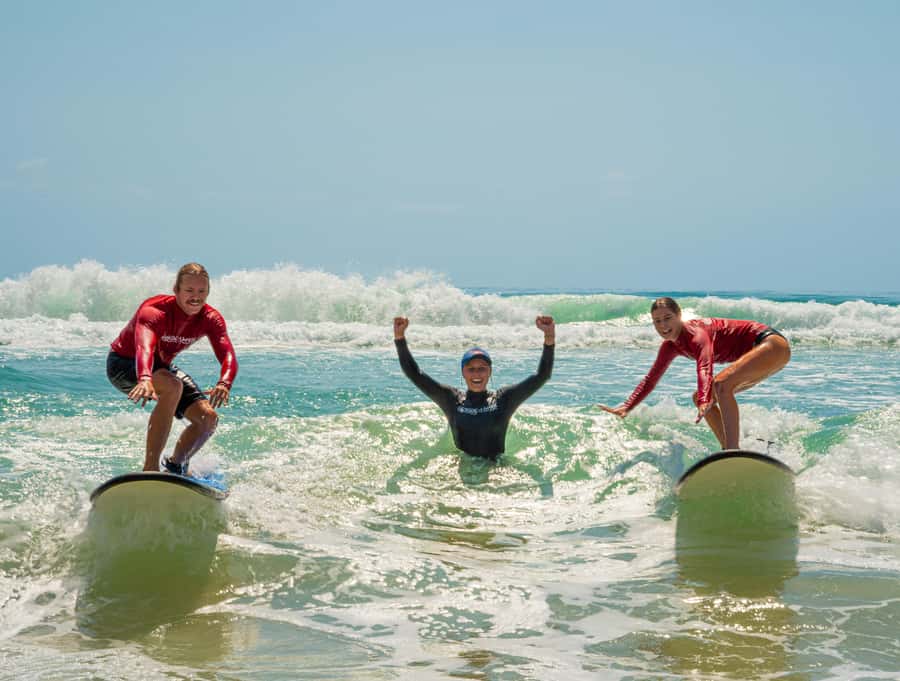
- Two hours of hands-on coaching: You spend time learning on the sand, then practicing in waist-deep water and catching beginner-friendly waves.
- Soft boards and safety gear included: A soft-top surfboard, long-sleeved rash shirt or wetsuit, and sunscreen are provided.
- Coolangatta is the classroom: The lesson takes place around Coolangatta and Greenmount, a well-known Gold Coast surfing area with gentle waves suited to first-timers.
- Named instructors praised for patient help: Alex, Arthur, Blake, Johnny, Daniel, and Nick have all been singled out for clear instruction and encouragement.
- Good for families with older children: The activity is not recommended for children under 8, and children under 9 need a participating parent nearby in the water.
- A first lesson, not a full surfing course: You can learn the basics in one visit, but a three-lesson progressive course is the better choice if you want steady improvement.
Why Coolangatta works for a first surf lesson
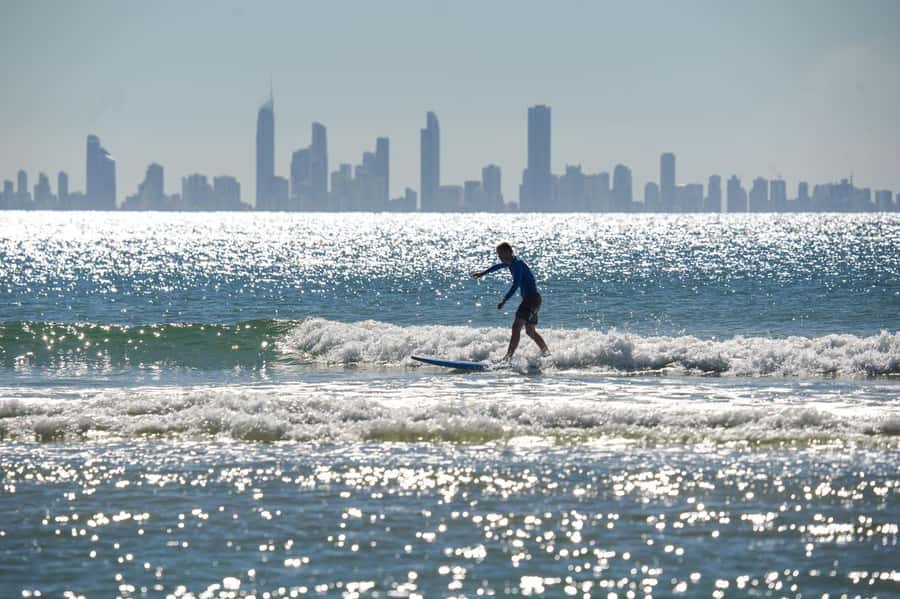
Coolangatta is one of the Gold Coast’s best-known surf areas, but this lesson is aimed at beginners rather than experienced surfers chasing large waves. The focus is on gentle rolling water, simple board control, and the basic movements needed to get upright.
That matters because your first lesson can feel awkward. You are learning where to place your hands, how to lie on the board, how to keep your balance, and when to stand. A forgiving beach and manageable waves give you room to make mistakes without feeling rushed.
The setting also adds something beyond the mechanics. You are not practicing on an indoor simulator or in a swimming pool. You are learning in the same coastal culture that makes Coolangatta a major stop for surfers, with the beach, boards, waves, and local surf atmosphere all around you.
I would choose this lesson if you want a taste of surfing during a Gold Coast holiday. It gives you enough instruction to understand the sport and enough water time to find out if you want more.
A few more sessions around Australia worth a look
- Bondi Beach: 2-Hour Surf Lesson Experience for Any Level
★ 4.9 · 935 reviews - Byron Bay: 2-Hour Small Group Surf Lesson
★ 4.8 · 657 reviews - Noosa Heads: 2 Hour Surf Experience on the Sunshine Coast
★ 4.9 · 644 reviews
Meeting the Go Ride A Wave team at Marine Parade
Your meeting point is the Learn To Surf Truck in the car park overlooking Coolangatta Beach. It is opposite the Coolangatta Rip Curl Surf Shop and Coolangatta McDonald’s, at the eastern end of Marine Parade, or the right-hand side when you are looking toward the ocean.
Arrive 15 minutes before the scheduled start. That extra time matters. You need to find the truck, check in, collect your equipment, and get ready without cutting into the lesson.
The meeting point is practical rather than fancy. You are close to the beach and can see where you will be learning, which helps you get your bearings before the briefing. Bring water. Food, drinks, bathers, and a towel are not included, so pack your swimwear and towel separately.
The activity is taught in English. That should be fine for most visitors who can follow basic spoken instructions, since the lesson relies on short demonstrations and repeated practice. If you have any concern about understanding safety directions, consider that before booking.
The sand lesson: safety before the first wave
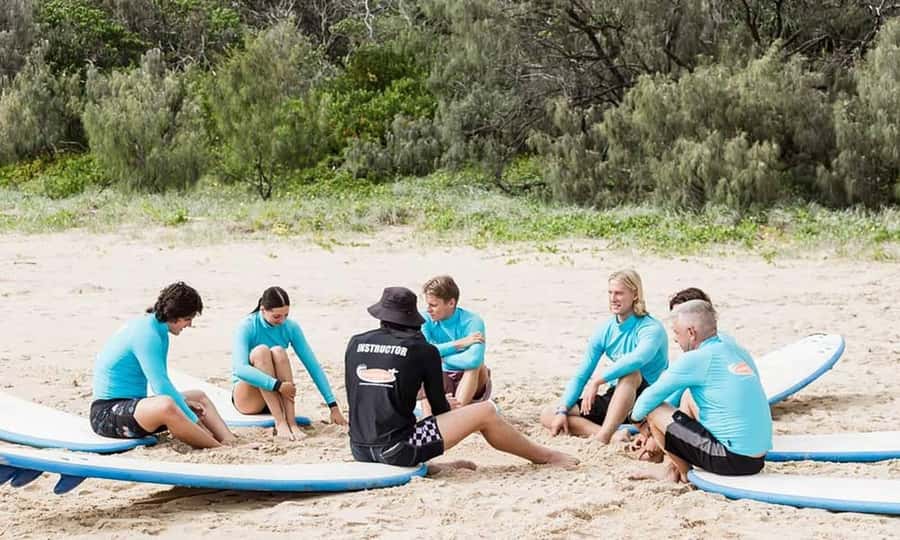
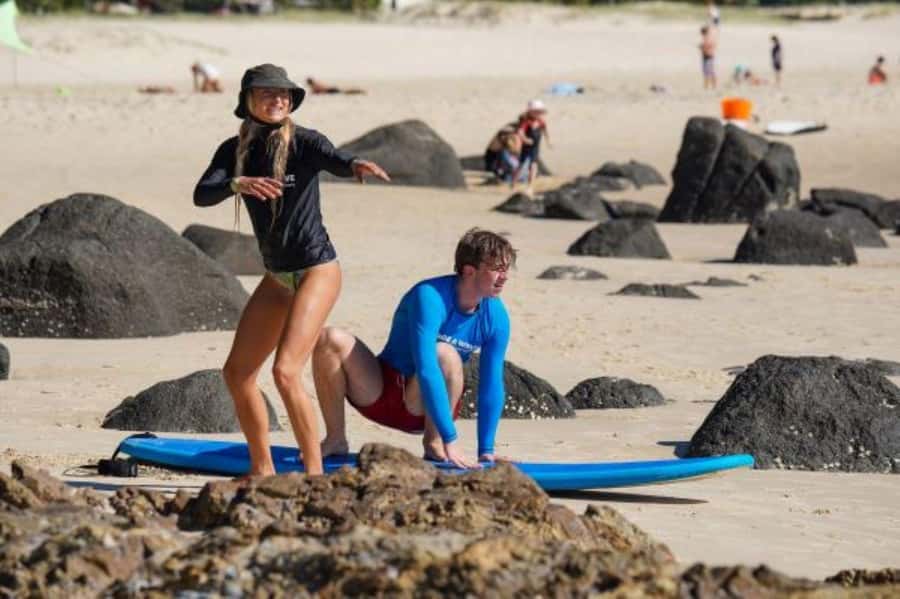
The session begins on the beach with a safety briefing and an introduction to the board. This part may feel less exciting than getting wet, but it is where you learn the habits that make the water session easier.
Your instructor covers basic safety, positioning, and board control. You learn how to lie on the board, where your weight should sit, and how your body position affects the board’s movement. You also practice the pop-up, the quick movement from lying down to standing.
The teaching style is practical. You are not expected to memorize a long lecture. Instead, the instructor explains the movement, shows you how it works, and gives you a chance to repeat it on the sand before the waves add another problem.
This is where instructors such as Alex, Arthur, Blake, Johnny, Daniel, and Nick have made a strong impression. The useful quality is not flashy surfing advice. It is the ability to give a first-timer simple instructions and enough encouragement to keep trying after a clumsy attempt.
Pay close attention to board position. Many beginners focus only on standing, but catching the wave starts earlier. You need to point the board in the right direction, lie in the right place, and paddle at the right moment.
Moving into waist-deep water
After the beach briefing, you take your soft-top board into the water. The lesson begins in waist-deep conditions, which lets you get used to the push and pull of the sea while still keeping the activity manageable for a beginner.
The soft board is a useful choice for this stage. It is more forgiving than a hard surfboard and feels less intimidating when you are learning to balance. You still need to handle it properly, but the equipment suits a first lesson rather than an advanced session.
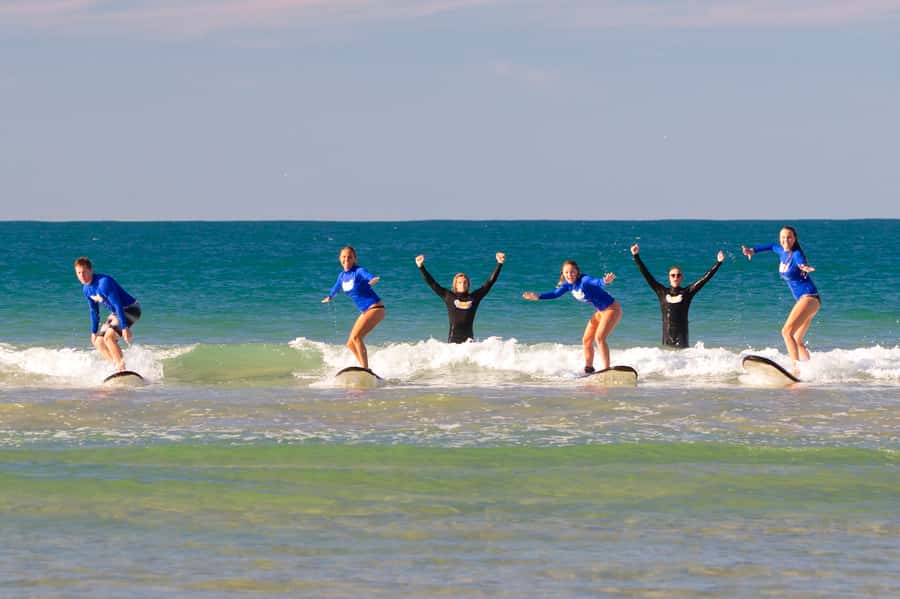
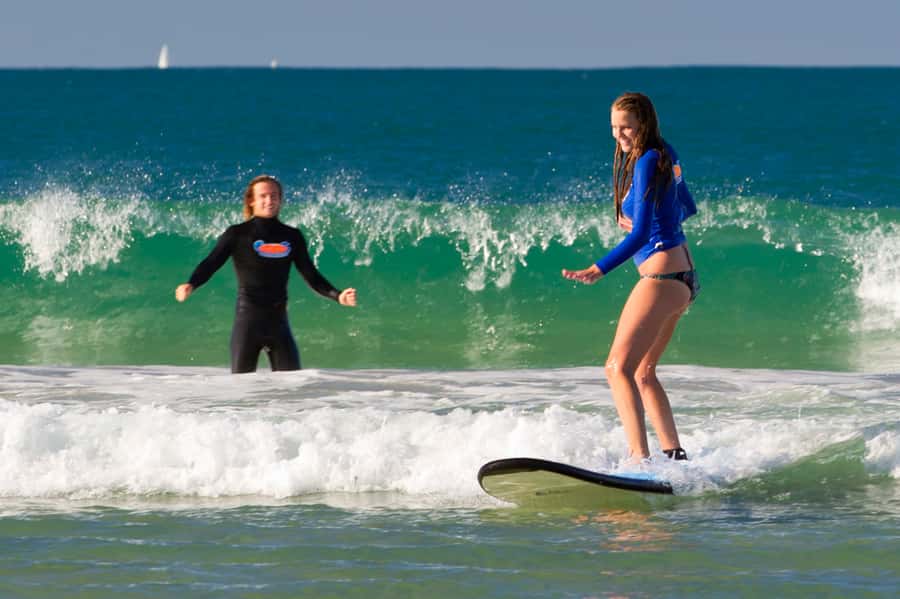
At first, your work is simple: control the board, feel the movement of the water, and catch small waves with help. Your instructor guides you through the timing and helps you understand what the board is doing beneath you.
This is also the point where you discover that surfing takes effort. You may need to carry the board, push through shallow water, paddle, reset your position, and try again. The lesson is fun, but it is physical. Comfortable swimwear, water, sunscreen, and a willingness to get knocked off balance will serve you well.
The supplied sunscreen is a useful touch, especially in Queensland. You still need to bring water, and you should not assume that the provided rash shirt or wetsuit replaces your own bathers.
Same coast, a different way into the water:
- Magnetic Island Discovery Tour with Snorkeling & Paddle Boarding
★ 5.0 · 1,372 reviews - Byron Stand Up Paddle Nature Tour
★ 5.0 · 384 reviews - Learn to Surf at Noosa on the Sunshine Coast
★ 5.0 · 277 reviews - Behind The Bay – Explore Like a Local: Waterfalls/paddleboarding
★ 5.0 · 275 reviews
The pop-up and your first ride
After you have practiced catching waves and controlling the board, you return to the beach for more advice on standing. This break gives the instructor a chance to correct common problems before you try again.
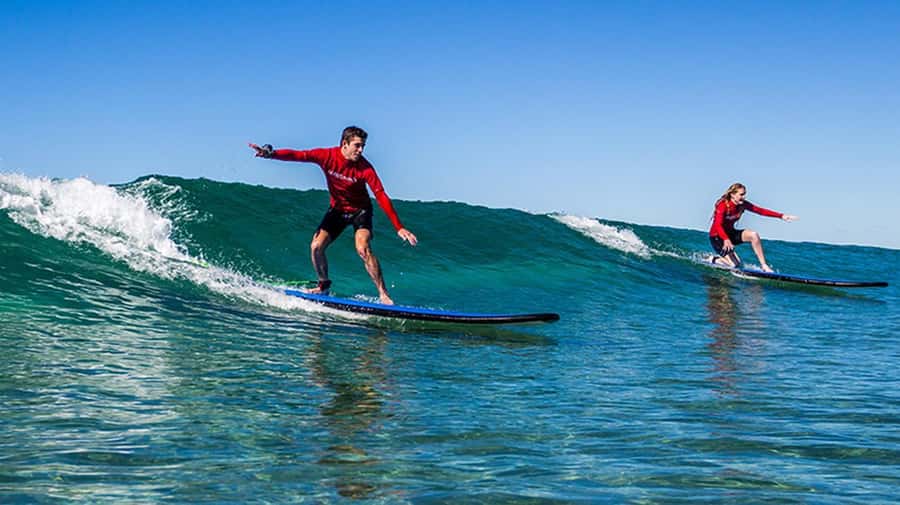
The pop-up is the moment most people remember. You move from lying on the board to standing in one quick sequence, then try to keep your knees bent and your weight centered. It sounds straightforward. It is not. One person summed up the lesson well by noting that surfing is harder than it looks.
The instructor’s job is to break the movement into steps. You learn where to place your hands, how to bring your feet underneath you, and how to stay loose instead of locking your knees. You will not master every part in two hours, but you can make real progress.
Several participants have managed to stand up during their first lesson, including a 10-year-old who was riding by the end of the session. That is encouraging, though it is not a promise that every beginner will have the same result. Wave conditions, fitness, balance, and your willingness to keep trying all matter.
Once you are back in the water, the goal is to catch waves and repeat the movement. Your instructor offers corrections as you go. The best part of the lesson is the quick feedback: try, fall, listen, adjust, and try again.
What the instructors add to the experience
The quality of beginner instruction can make or break a surf lesson. A good coach keeps the advice short, watches what you are doing, and gives you one useful correction at a time.
That is the pattern you should expect here. The instructors are Level 1 qualified, and the activity is built around teaching fundamentals rather than showing off. Alex has helped first-timers catch their first waves, Arthur has been praised for making people feel at ease, and Blake has been described as a superb teacher. Johnny has been noted for being friendly and informative, while Nick has been called an excellent coach.
Names and instructors can change on the day, so do not book expecting one specific person unless the provider confirms it. Still, the repeated emphasis on friendly help and clear explanations tells you what kind of lesson this aims to be.
Small groups are another advantage when available. One participant particularly appreciated having a small group, since it meant more room for personal help. Group size is not specified as a fixed number, so you should not assume every session will feel private.
If you want one-on-one attention, Go Ride A Wave also offers a 1.5-hour private lesson. For continued progress, the three-lesson, two-hour progressive course makes more sense than repeating isolated first lessons.
What is included, and what you still need
The $59 price covers the main items you need for the lesson:
- Two hours of instruction
- A soft-top surfboard
- A long-sleeved rash shirt or wetsuit
- Sunscreen
- A Level 1 qualified surf instructor
That is a fair package for a first attempt because you do not need to rent a board or buy a rash shirt for a single holiday activity. The equipment cost is handled for you, and the lesson has enough structure to make the session more than a simple board hire.
You still need to bring bathers and a towel. Food and drinks are not included, and water is specifically listed as something to bring. Pack these items before heading to Marine Parade so you are not trying to solve basic needs after arriving.
The advertised duration can appear as two to six hours depending on availability, but the actual surf instruction is two hours. Check the available start time and session details when booking so you understand the schedule you are selecting.
Is $59 good value?
At $59 per person, I consider this good value for a first surf lesson on the Gold Coast. You receive equipment, protective clothing, sunscreen, and two hours of coaching at a major beach location.
The value is strongest if you have never surfed before. Buying or renting a suitable board, working out where to go, and trying to teach yourself would be a poor use of a short holiday. An instructor can correct your stance and board position before bad habits settle in.
The price is less compelling if you already surf confidently. You would probably get more from board hire or a more advanced session, but this activity is not aimed at that market.
One practical caution is timing. A participant reported that the lesson finished around 20 minutes early. That may have been an individual scheduling issue or a condition on that day, but it is worth keeping in mind if you are planning another activity immediately afterward.
Who should book this lesson?
I would recommend it to first-time surfers, couples looking for an active Gold Coast outing, and families with children old enough to follow instructions. It also suits people who want to test surfing before committing to a multi-lesson course.
Children under 8 are not recommended for the activity. Children under 9 must be accompanied by a parent who is not taking the lesson, and that parent can enter the water to help. This is an important supervision rule, so plan your family booking carefully.
The lesson is not suitable for wheelchair users. It also requires you to manage a board, enter the water, and take part in physical practice, so it may not suit anyone looking for a low-effort beach activity.
You should also avoid booking if you expect guaranteed success. Standing up is a realistic goal, but it is still a goal. Some people will catch several waves, while others may spend most of the session learning how to position the board and pop up.
Flexible booking for changing beach plans
You can cancel up to 24 hours before the activity for a full refund. The reserve-now-and-pay-later option lets you hold a place without paying immediately, which is useful when your Gold Coast plans are still moving around.
Those terms help, but check the exact start time and availability before you commit. You need to arrive 15 minutes early, and the activity takes place outdoors, where conditions can affect the lesson.
Alcohol and drugs are not allowed. That is basic safety advice, but it matters more when you are handling a board and working in the ocean.
My verdict on the Coolangatta surf experience
Book this lesson if you want a well-organized first step into surfing, especially if standing on a board is one of your Gold Coast goals. The setting is attractive, the equipment is supplied, and the lesson moves logically from sand instruction to waist-deep water and repeated wave practice.
I especially like the focus on basics and the steady encouragement associated with instructors such as Alex, Arthur, Blake, and Johnny. You get a genuine chance to catch a wave without needing to arrive with any surfing experience.
Skip it if you want private coaching, advanced wave work, or a guaranteed two-hour ride with no pauses. In that case, choose the private lesson or the three-session progressive course. For most beginners, though, $59 buys a lively, physical introduction and a good answer to the question: can I actually surf?
FAQ
How long is the surf lesson?
The instruction lasts two hours. Availability may show activity durations from two to six hours, so check the available session details when booking.
Where do I meet the instructor?
Meet at the Learn To Surf Truck in the car park overlooking Coolangatta Beach. It is opposite Coolangatta Rip Curl Surf Shop and Coolangatta McDonald’s on Marine Parade.
How early should I arrive?
Arrive 15 minutes before the scheduled start time.
What equipment is provided?
The activity provides a soft-top surfboard, a long-sleeved rash shirt or wetsuit, sunscreen, and two hours of instruction.
Do I need to bring swimwear?
Yes. Bathers are not included, so bring your own. You should also bring a towel.
Should I bring water?
Yes. Water is listed as an item to bring. Food and drinks are not included.
What language is the lesson taught in?
The instruction is in English.
Is the lesson suitable for children?
The activity is not recommended for children under 8. Children under 9 must have a parent who is not taking the lesson accompany them, and that parent can enter the water to assist.
Can I cancel for a refund?
You can cancel up to 24 hours in advance for a full refund.
Is the activity suitable for wheelchair users?
No. The activity is not suitable for wheelchair users.
Just added around Australia
- Rainbow Beach: Surf Lesson Safari & Beach 4WD Double Island Point★ 5.0 · 12 reviews
- Stand Up Paddle Board Hire★ 4.5 · 9 reviews
- Stand Up Paddle Boarding – 2 Person Lesson – 1 Hour★ 5.0 · 12 reviews
- Noosa: Epic Stand Up Paddle Wildlife & Beach 4X4 Adventure★ 5.0 · 13 reviews
- Noosa Stand Up Paddle Group Lesson★ 5.0 · 19 reviews
- Golden Beach 1-Hour Stand-Up Paddleboard Hire on the Sunshine Coast★ 5.0 · 41 reviews
- Epic Surf Safari Beach 4WD Day Tour -Noosa to Double Island Point★ 5.0 · 34 reviews
- Private Surf Coaching Session in New South Wales★ 5.0 · 3 reviews
Australia Surf Trips, compared.
Magnetic Island Discovery Tour with Snorkeling & Paddle Boarding
Read our review →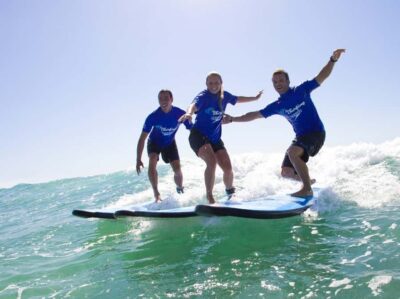
Bondi Beach: 2-Hour Surf Lesson Experience for Any Level
Read our review →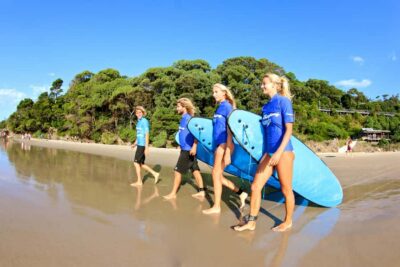
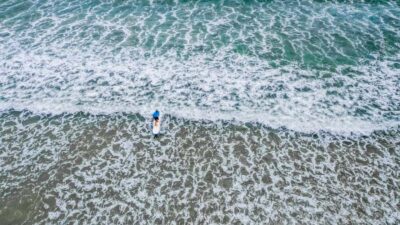
Noosa Heads: 2 Hour Surf Experience on the Sunshine Coast
Read our review →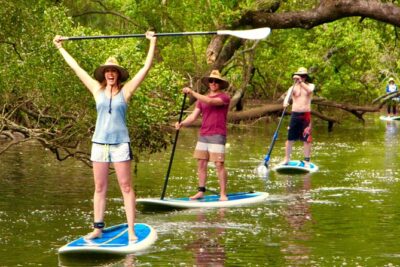
Behind The Bay – Explore Like a Local: Waterfalls/paddleboarding
Read our review →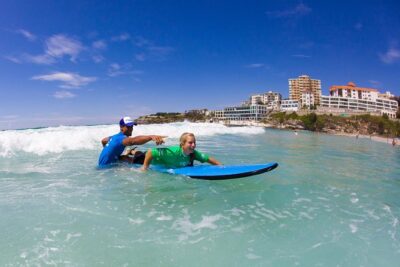
Browse the lists this tour appears in