
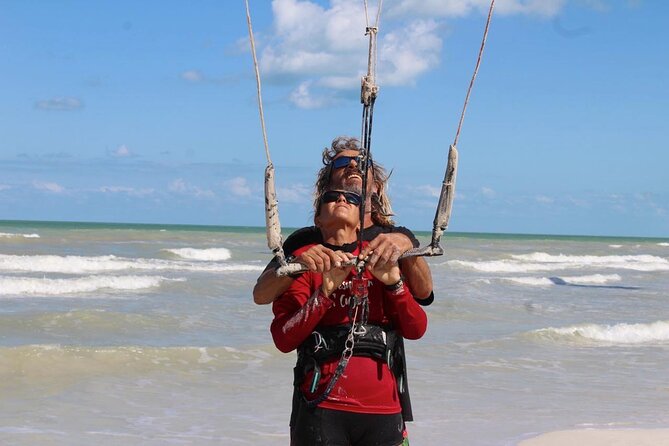
Review · MEXICO
Private Kiteboarding Lessons in El Cuyo
El Cuyo gives you a calm place to learn a sport that can feel busy and technical elsewhere. Your private lesson begins on the beach with wind theory, kite setup, safety systems, and self-rescue before you take the kite into the water. The careful safety work is one of the best features here, especially if you are new to kiteboarding.
I like the one-on-one format, since your instructor can adjust the pace instead of moving a whole class along. I also like the practical course design: you progress from kite control and body dragging to power strokes and waterstarts, rather than being rushed straight onto a board. The main drawback is the price: $270 is charged per group of up to one person, so this is a serious investment for a three-hour lesson.
- Quiet El Cuyo setting: A peaceful beach gives you room to focus on wind, kite control, and safety.
- IKO-certified instruction: You work through a recognized progression with an instructor trained to teach the sport.
- Private lesson format: The session is reserved for your group, with no unrelated participants joining in.
- Three-hour building block: A single lesson covers the foundations, while the full course takes about 12 hours.
- Modern kite gear included: You do not need to bring the kiteboarding equipment.
- Useful base facilities: Bathrooms and Wi-Fi are available at the meeting point.
Starting at Cucu Hotel & Kite El Cuyo
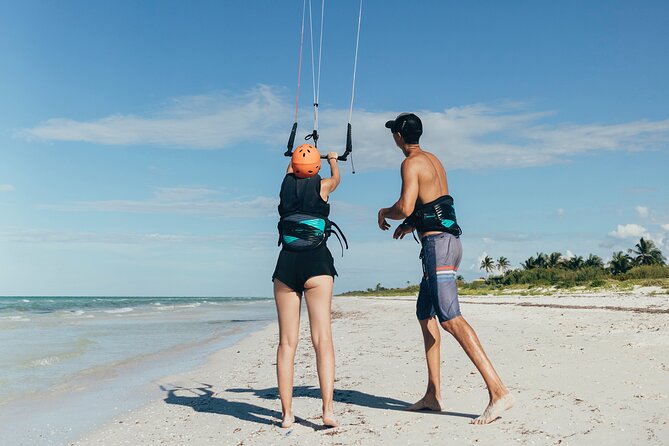
You meet at Cucu Hotel & Kite El Cuyo on Avenida Veraniega in El Cuyo, Yucatan. The lesson ends at the same meeting point, which keeps the day simple. You do not have to arrange a separate beach transfer, at least for the activity itself, since transportation is not included.
This is a private activity, so you are not sharing your lesson with a larger class. That matters more than it may sound. Kiteboarding has several small tasks happening at once: reading the wind, holding the bar correctly, understanding the lines, and knowing what to do if something goes wrong. With a private instructor, the teaching can stay focused on your pace.
The listed price is $270 per group of up to one person. In practical terms, you should think of this as a private solo lesson rather than a cheap group class. The value is in the personal attention and the equipment, not in covering lots of activities in one afternoon.
Your First Hour: Wind, Kite, and Safety
The lesson starts on land with kite and wind theory. This is the right place to begin. You need to understand how the wind affects the kite before you try to use its pull, and you need to know what the instructor is asking you to do once you are in the water.
Next comes kite and line setup. You learn how the equipment fits together instead of treating it as a mysterious bundle of fabric, cords, and handles. This part may feel less exciting than getting wet, but it gives you a better chance of spotting a setup problem later.
The bar and safety systems receive their own lesson. That is a key point for beginners. Kiteboarding is not just about making the kite fly. You also need to know how to reduce power and respond if the kite pulls too hard or the lines become difficult to manage.
Self-rescue is included before the water practice begins. I consider this one of the strongest parts of the course. You are not simply taught how to start moving. You are also shown a technique for handling trouble, which can make the first water session feel less intimidating.
The final land exercise is kite control. You learn to keep the kite in the correct position and respond to its movement. The instructor can correct problems at this early stage, before they become bad habits.
More Kitesurfing Lessons in Mexico
- Private Kiteboarding Lesson in Tulum
★ 5.0 · 90 reviews - Kitesurfing lessons in Isla Holbox
★ 5.0 · 78 reviews - Private Kiteboarding lesson in Cancun
★ 5.0 · 14 reviews
Body Dragging and Power Strokes in the Water
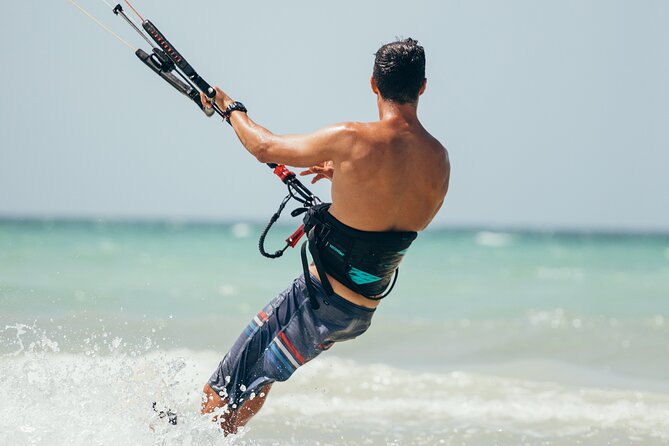
Once you move into the water, the focus changes from equipment handling to using the kite’s pull. Body dragging upwind comes first. You are pulled through the water without the board, learning how to move in relation to the wind and how to regain position.
This is a useful skill rather than a filler exercise. If you lose the board, you need a way to reach it. Body dragging also helps you understand the kite’s power before you add the extra challenge of standing on a board.
Power strokes follow. Here, you learn to create enough force from the kite to move through the water. Timing matters, and this is where private coaching can help. An instructor can watch how you steer and show you how to make the movement more controlled.
The course has a clear rhythm: first understand the kite, then control it, then use it to move your body. You should not expect instant riding after one short practice. Three hours gives you a solid block of instruction, but the full progression is estimated at about 12 hours.
Waterstarts With Assistance, Then Solo
The board enters after you have worked on kite control and water movement. The first waterstart is done with assistance. You learn how to position yourself, hold the board, and use the kite’s power to rise onto it.
This is often the moment beginners are eager to reach, but it can also be the least tidy part of learning. You may get up briefly, lose balance, or discover that steering the kite and controlling the board at the same time is harder than it looks. The instructor’s job here is to break the movement into manageable steps.
After assisted waterstarts, the course moves toward starting on your own. That solo start is a real measure of progress because it requires you to coordinate the kite, board, body position, and timing without the instructor physically guiding the process.
The course does not promise that you will master every stage in one afternoon. Instead, it gives you a sensible path from first setup to independent starts. If you book only three hours, you should treat it as one lesson in a longer course, not a guaranteed complete kiteboarding day.
Riding Downwind, Then Working Upwind
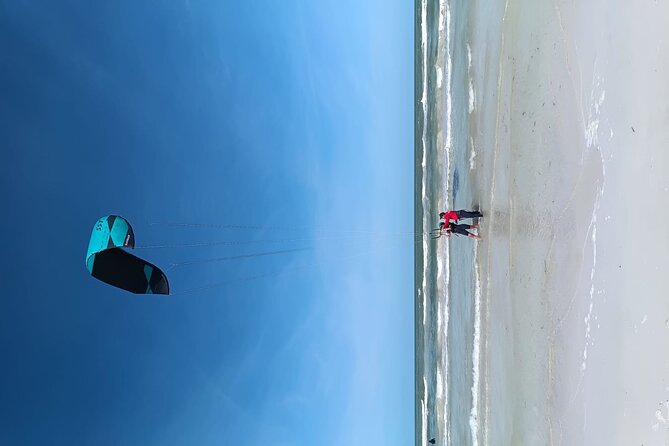
Once you can get moving, you work on riding downwind. This is usually the more natural direction because the board follows the wind’s general path. It lets you build confidence with the board under your feet and the kite producing steady pull.
The next step is riding upwind. This takes more control and better board handling. You are no longer simply going where the wind wants to take you. You are learning to manage your direction and return toward your starting area.
That progression has a practical benefit. It reduces the chance that every successful run carries you farther away from the meeting point. It also teaches you how to use the wind rather than merely react to it.
Transitions come last in the listed progression. A transition is the change from one direction to another while riding. It is a more advanced skill because you have to manage the kite and board during the turn. If your lesson reaches this stage, you have moved well beyond the basic introduction.
More Private Surf Lessons in Mexico
- Private Surf Lesson Experience at Puerto Vallarta
★ 5.0 · 115 reviews - Private Yacht Cruise 4 Hour- Snorkeling & Paddle Boarding
★ 5.0 · 74 reviews - Private Los Cabos Surf Lesson at Costa Azul
★ 5.0 · 68 reviews - 2 Hour Private Surfing Experience in Puerto Vallarta
★ 5.0 · 46 reviews
The Instructors and Their Teaching Style
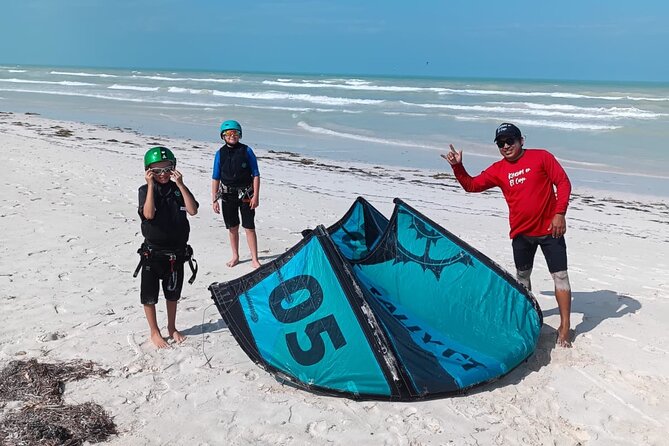
The school uses IKO-certified instructors, and the teaching emphasis is not limited to getting you upright on the board. Safety, theory, and personal well-being are built into the lesson from the start.
George, also referred to as Jirka, is specifically identified as an instructor who worked well with a student who already had windsurfing experience. That detail is useful if you have tried another wind sport. Old habits can carry over, and an attentive instructor may help you spot movements that do not work well for kiteboarding.
Pippo is also connected with the local teaching team. A previous three-hour wing foiling session with George moved to Punta Caracol, where the shallow, flat water and steady wind suited the lesson. That was a wing foiling session rather than this exact kiteboarding program, so you should not assume the same location is guaranteed. Still, it shows that the school may adapt the teaching site and activity to the day’s conditions.
There was also a session when the wind was not strong enough for kiteboarding, and surf instruction was offered instead. This is a helpful example of the school’s flexibility, but it should not be read as a promised substitute. Ask about the plan if wind conditions look uncertain.
Why El Cuyo Works for Beginners
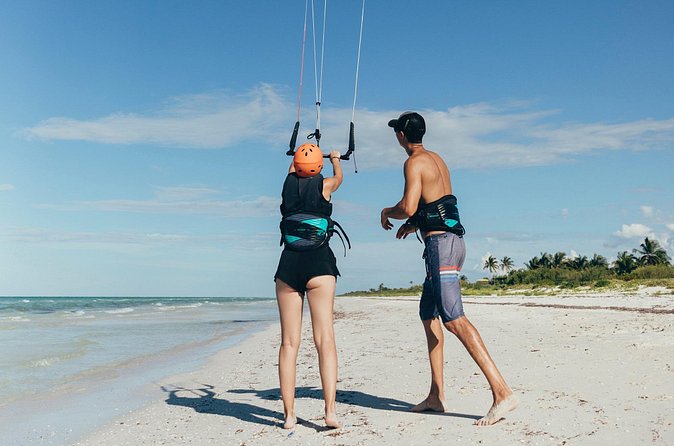
The setting is described as peaceful, which is a real advantage for a first lesson. You want enough room to pay attention to the kite without feeling overwhelmed by a crowded teaching area.
The exact water conditions can change, and the supplied details do not promise a particular depth, wind strength, or launch beach for every booking. That is why the instructor’s wind assessment matters. A calm teaching location is useful, but kiteboarding still depends on the weather.
El Cuyo also gives you a quieter base than a highly developed resort area. If you are staying nearby, the meeting point at Cucu Hotel & Kite keeps the outing grounded in the local town rather than making it feel like a large packaged beach attraction.
What the $270 Price Really Buys
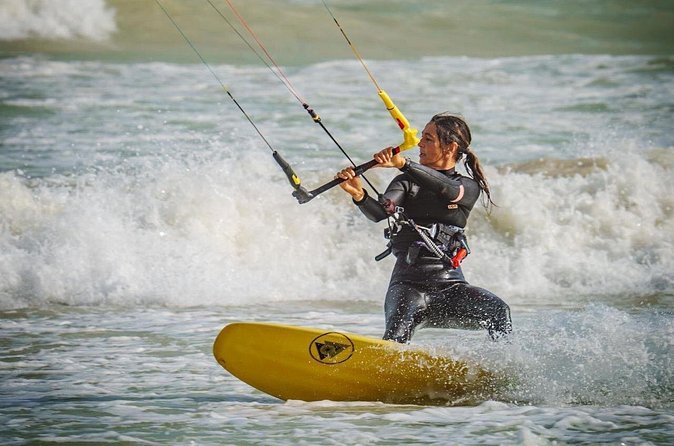
At $270 for a private group of up to one person, this is not a casual add-on for an afternoon at the beach. You are paying for a private instructor, kiteboarding gear, a three-hour lesson, and a structured progression that includes safety practice.
The price makes more sense if you value personal coaching or have a specific goal, such as learning the basics before taking more lessons. It may also suit someone who has tried windsurfing or another board sport and wants an instructor to correct technique directly.
It is less appealing if you only want to try a water activity once without a strong interest in continuing. One session may introduce the sport, but the complete course takes about 12 hours, with three hours recommended per day. Budget for additional lessons if your goal is to ride independently and handle turns.
Bathrooms and Wi-Fi are included, which are modest but useful comforts at a beach-based school. Snacks are not included, so plan your food separately. Transportation is also not included, and the meeting point is your responsibility.
Fitness, Timing, and What to Bring
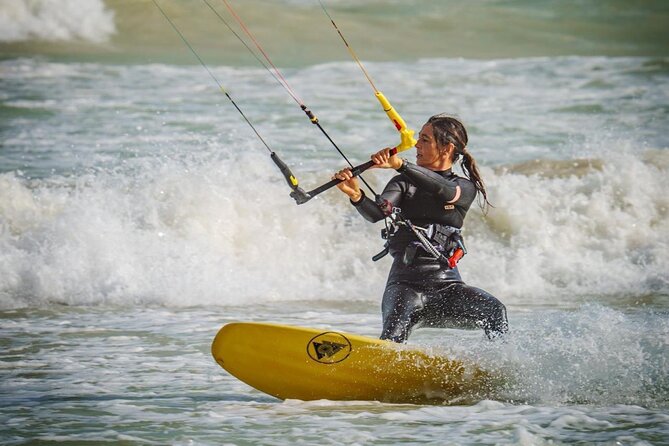
You should have a strong level of physical fitness for this activity. The course involves handling equipment on land, managing the kite in the water, body dragging, power strokes, and repeated attempts to stand on the board.
The lesson lasts about three hours. That is long enough for a serious training block, but you should expect physical effort rather than a relaxed beach outing. If you are planning several days of instruction, the recommended pattern is three hours per day, giving the full course roughly four lesson days.
The equipment is supplied, so you do not need to bring kiteboarding gear. The provided details do not specify a clothing list or personal equipment checklist, so you should confirm any packing questions with Mexican Caribbean Kitesurf before you go.
The activity is offered in English. Confirmation is provided at booking, and cancellation is allowed up to 24 hours before the experience for a full refund. Those terms give you some room to adjust if your schedule or conditions change.
Who Will Get the Most From This Lesson
I would choose this lesson if you want a proper introduction rather than a quick ride pulled behind someone else. The course teaches the reasons behind the movements, not only the movements themselves.
It also suits you if safety instruction is a priority. The inclusion of bar systems and self-rescue before the water work is reassuring, particularly for someone new to kiteboarding.
A private lesson can be a good fit for a determined beginner, a fit solo visitor, or someone with past windsurfing experience who wants help correcting technique. The school’s work with different wind sports suggests some adaptability, though the booking itself is for kiteboarding.
I would hesitate if you are not physically prepared or if your budget is tight. At $270 for one person, the cost is high compared with a shared class. I would also avoid treating this as a guaranteed one-day path to independent riding. The full course may take about 12 hours.
Should You Book Private Kiteboarding in El Cuyo?
Book it if you want focused, safety-first instruction in a quiet beach setting and you are ready to commit to learning a technical sport. The private format, included equipment, and clear progression from theory to waterstarts make the lesson useful beyond a simple first taste.
Skip it if you only want a low-cost beach activity, need transportation included, or are not in strong physical shape. Before booking, contact the school if you are concerned about wind conditions or want to know if an alternative activity may be available that day.
For a fit beginner who values personal coaching, this is a serious and well-structured way to start kiteboarding in El Cuyo.
FAQ
Where does the kiteboarding lesson start?
The lesson starts at Cucu Hotel & Kite El Cuyo, on Avenida Veraniega in El Cuyo, Yucatan, Mexico.
Where does the activity end?
The activity ends back at the meeting point.
How long is the lesson?
The lesson lasts approximately three hours.
How much does the private lesson cost?
The price is $270 per group of up to one person.
Is this a private activity?
Yes. Only your group participates in the activity.
Is kiteboarding equipment included?
Yes. Kiteboarding gear is included.
Are instructors certified?
The lesson is provided by IKO-certified instructors.
Is the lesson offered in English?
Yes. The activity is offered in English.
Are bathrooms and Wi-Fi available?
Yes. Use of bathrooms and Wi-Fi is included.
Is transportation included?
No. Transportation and snacks are not included.
Just added around Mexico
- 120 Min Surf Lesson / Great for All Levels★ 5.0 · 8 reviews
- 90 Min Surf Lesson / Great for Beginners★ 5.0 · 41 reviews
- Surf Expeditions (Half day)★ 5.0 · 39 reviews
- Private Surf Lesson in Baja, East Cape★ 5.0 · 3 reviews
- Cabo full day surf lesson and offroad baja beach adventure★ 5.0 · 18 reviews
- Surf Lessons in CABO with Mexico Surf Champ!★ 5.0 · 18 reviews
- Baja Surf Expeditions★ 5.0 · 27 reviews
- Surf classes in Puerto Vallarta with local instructors★ 5.0 · 9 reviews
Mexico Surf Trips, compared.
Los Cabos Power snorkel Adventure, Kayaking and Stand-Up Paddle
Read our review →
Pirate’s Channel & 3 Lagoons Kayak or SUP/Paddle Tour +Meditation
Read our review →
Bioluminescence by kayak or SUP to Los Arcos Puerto Vallarta
Read our review →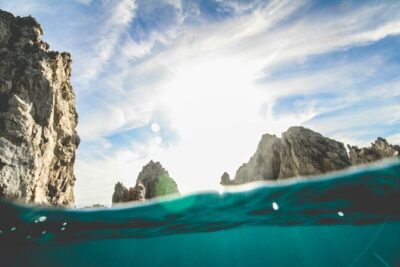
Cabo San Lucas Paddleboard and Snorkel at the Arch
Read our review →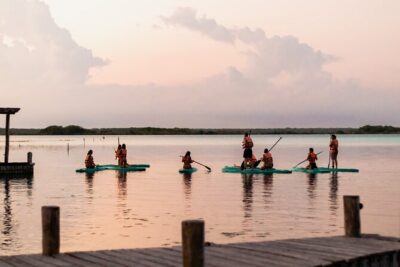
Paddleboarding and/or kayaking tour at sunrise in the lagoon of Bacalar
Read our review →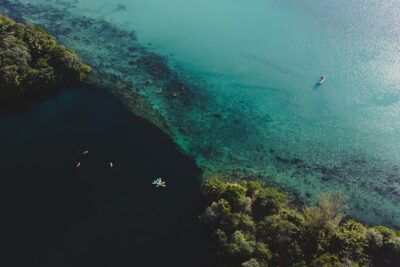
Bacalar Sunrise Stand Up Paddleboard Tour with Breakfast & Photos
Read our review →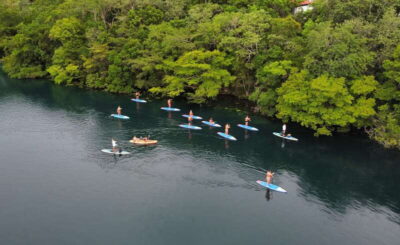
Bacalar: Sunrise Paddleboard Tour with Floating Picnic
Read our review →Browse the lists this tour appears in