
Review · OAHU
Stand-Up Paddle Yoga on the North Shore of Oahu
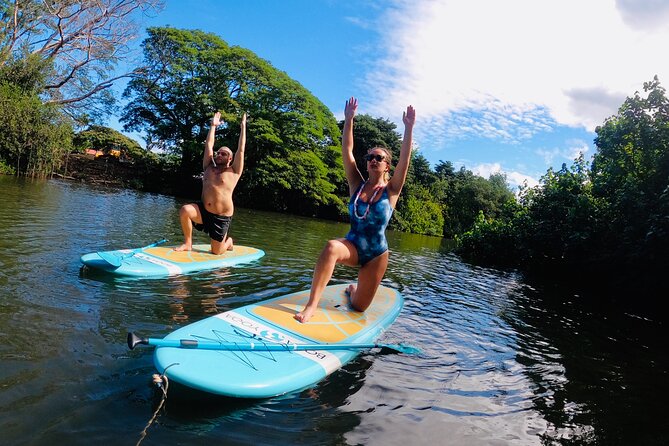
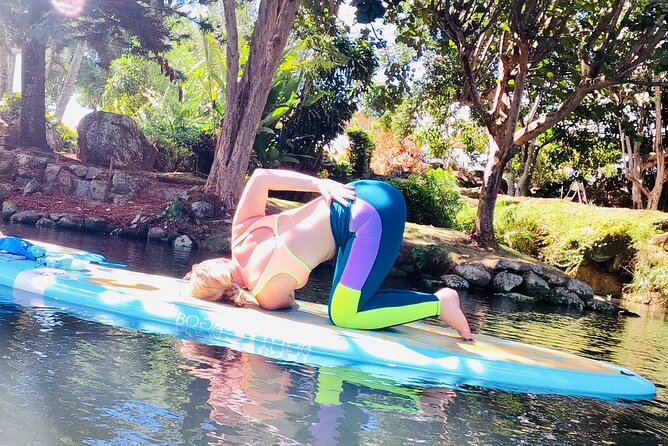
The unusual part comes first: your yoga mat floats. At 5 p.m., you carry a paddleboard from the beach into the bay, paddle toward the Anahulu River, and anchor in calm water for a guided practice. Yoga Kai keeps the class open to beginners, so you do not need paddleboarding or yoga experience to join.
I like the warm, shallow water and the patient instruction from Julie, who helps first-timers find their balance without making a slip feel like a crisis. I also like the private format: only your group takes part, which can make a birthday outing, family session, or quiet sunset activity feel personal. The main consideration is physical fitness. You will paddle, balance, kneel, stand, and move through yoga poses on an unstable surface.
Key points to know before you book
- Your yoga studio is a paddleboard: Practice on the North Shore’s crystal-blue water rather than on a fixed floor.
- The route includes the Anahulu River: You paddle from the beach through the bay to the place where the boards are anchored.
- The class suits beginners: The practice starts slowly, and the instructor teaches both basic paddling and board yoga.
- The session lasts about 90 minutes: The 5 p.m. start gives the outing an easy late-day rhythm.
- You receive the main equipment: A paddleboard, paddle, and anchor are provided.
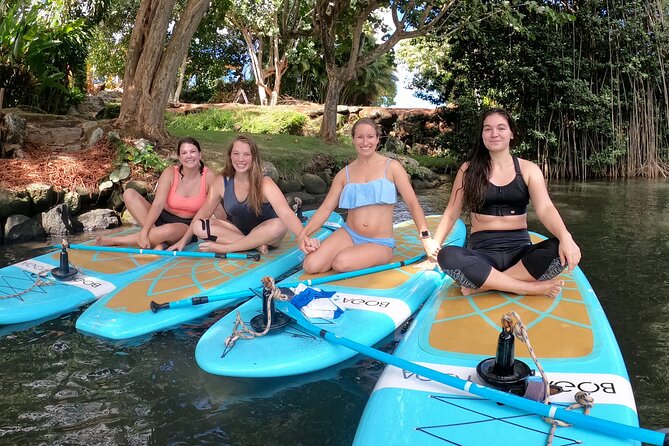
- It is a private activity: Your group participates together rather than joining a large class.
A floating yoga studio near Haleiwa
This experience takes yoga off the beach and onto the water. You meet at 62-490 Kamehameha Highway in Haleiwa, then walk out with your board, paddle, and anchor. The setting is part of the appeal, but the water also changes the practice itself. Every shift in weight asks you to pay attention.
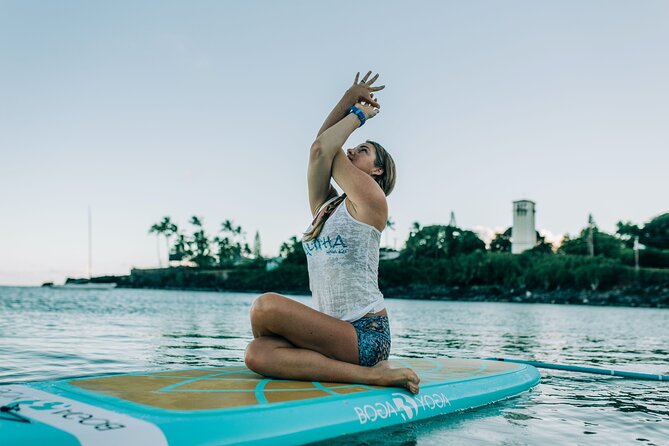
On land, you can often move through a pose without thinking much about your feet. On a paddleboard, your balance becomes impossible to ignore. A standing posture calls for small adjustments in your ankles, legs, and core. That can make simple yoga poses feel new, even if you attend classes regularly.
The class is designed for yoga enthusiasts and beginners alike. You do not need to arrive as a skilled paddleboarder. The instructor introduces the floating setup and lets you get used to the board before asking for more demanding movements. That gradual pace matters, especially if your first instinct is to grip the board or hold your breath.
The setting also keeps the mood light. Falling into warm, shallow water is possible, but it is not treated as a disaster. One participant found the special yoga boards easier than expected and fell only once, with no harm done. You should still expect to get wet if your balance goes, so plan your clothing with that in mind.
More Stand-Up Paddleboarding in Oahu
- Haleiwa River Paddle Board Rental with Blue Planet Adventure Co.
★ 5.0 · 215 reviews - Family, Private & Group Standup Paddle Lessons in Waikiki
★ 5.0 · 143 reviews - Lunar Legends Night Stand up Paddle Kayak Water Experience
★ 5.0 · 141 reviews
From the Haleiwa beach to the Anahulu River
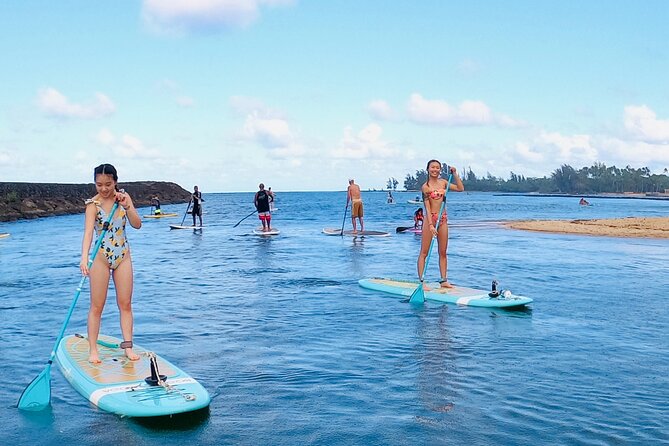
The outing begins with an introduction to the floating yoga studio. You and your group collect the supplied equipment, then walk into the water and paddle through the bay toward the Anahulu River. This first section is not just transport. It gives you time to learn how the board responds and to settle into the pace of the session.
If you have never paddleboarded before, this part may be the most demanding section at first. You need to manage a board, paddle, and your own balance while moving across the water. The information provided for the activity calls for a moderate level of physical fitness, so you should be comfortable with light exertion and basic movement.
The route brings you to the place where the group anchors down for yoga. Anchoring is useful because it keeps the boards from drifting while you focus on breathing and posture. It also changes the experience from a short paddle outing into an actual floating class.
You should not expect a sightseeing cruise or a long paddle expedition. The point is to reach a suitable practice spot, then use the water as your yoga floor. The bay and river setting gives the class a sense of place without requiring a full day away from Haleiwa.
The first poses help you get your bearings
Once the boards are anchored, the instructor begins slowly. The opening practice tunes you into your breath and gives you time to feel the movement beneath you. That slow beginning is especially helpful if you are new to either yoga or stand-up paddling.
You may notice that familiar instructions feel different on a board. A shift that would barely register on a studio floor can make the board tilt. The answer is not to freeze. It is to soften your knees, stay aware of your center, and let the instructor guide you through the adjustment.
This is also where private instruction can help. Because only your group takes part, the instructor can keep the pace suited to the people on the boards. A teenager and a parent, for example, may have very different levels of yoga and paddleboarding experience. Julie is described as patient and helpful with mixed-experience groups, which is useful when one person has never stood on a paddleboard before.
The class is not presented as a test of athletic ability. It is more about learning how to stay present when the surface shifts. That makes the opening section worthwhile for experienced yoga students too. A familiar pose can become a lesson in balance and attention.
Standing poses bring the real challenge
After the slower opening, the session moves into a more active flow with different standing postures. This is likely the point when you notice the difference between paddleboard yoga and ordinary yoga most clearly.
Standing on water asks for steady focus. You will work on strength and balance at the same time, with the board responding to your movements. The activity promises mindfulness, strength, and balance, but those ideas are not separate here. Keeping your balance requires you to pay attention. Holding a pose requires physical effort. Breathing helps you avoid turning every movement into a struggle.
Beginners should not assume that falling is a sign of failure. The supplied experience details make clear that the water is warm and shallow, and a firsthand account describes falling once without concern. Still, you should be comfortable with the possibility of getting wet and climbing back onto the board.
The class can work well for people who want something playful rather than solemn. The description specifically includes laughter alongside strength and mindfulness. That is a useful clue about the tone. This is not meant to feel like a strict performance or a competition. You can expect guidance, effort, and room for humor when the board has other plans.
If you already practice yoga, the session offers a fresh problem to solve. If you are new to yoga, the instructor’s gradual approach gives you a clear entry point. The hardest part may simply be trusting the board enough to stand.
More Stand-Up Paddleboarding in the USA
- Paddleboard Yoga Class in Honolulu
★ 5.0 · 120 reviews - Kahana Bay River to Ocean: Kayak and Stand Up Paddle Board Rental
★ 5.0 · 112 reviews - GLOW Stand Up Paddle at Twilight
★ 5.0 · 62 reviews - Stand Up Paddle Nature and Turtle tour-Guaranteed to see turtles
★ 5.0 · 56 reviews
Restorative poses and a long exhale
The active portion does not carry the session all the way to the end. The practice slows down into restorative postures, then finishes with savasana. On a floating board, that final rest should feel quite different from lying on a firm studio floor.
The transition from movement to stillness gives you time to notice what the session required. Your body has worked to stabilize itself, your attention has stayed on the water and your breath, and your mind can finally ease off the task of staying upright. The water provides gentle motion rather than a perfectly fixed surface.
I like that the class has a clear arc: introduction, paddle, breathing, standing work, restorative poses, and savasana. You are not simply taken onto a board and left to copy a few yoga poses. The sequence is built to help you adjust, work, and then settle down.
The ending also makes the 5 p.m. start appealing. You do not have to give up an entire day for the activity. You can spend the morning and early afternoon on other North Shore plans, then finish with a slower physical session. The exact light and conditions will depend on the day, but the late start naturally suits a calm end to your schedule.
What the $65 price really covers
The cost is $65 per person for about 90 minutes. That is not the cheapest way to spend an hour and a half in Hawaii, but the price includes more than access to a board. Your paddleboard, paddle, and anchor are provided, and an instructor leads the full session from the beach through the closing savasana.
The private format is the biggest factor in the value. You are paying for a session limited to your own group, rather than a large public class. That can be worthwhile for a family, couple, or small group with mixed ability. It also means the activity may feel more personal than a standard drop-in yoga class.
The value is less clear if you want a long paddle, a major sightseeing route, or a full-day North Shore adventure. This is a focused wellness activity, not a general water tour. The 90-minute duration includes getting the boards into the water, paddling to the practice location, the yoga session, and the return to the meeting point.
For a birthday or special occasion, the private setting adds appeal. Yoga Kai has also offered related experiences, including a mermaid spa activity, but this review concerns the stand-up paddle yoga session. You should book this experience for the water-based yoga itself, not expecting a package of extra treatments.
Who will enjoy this most
This activity fits several kinds of visitors:
- Yoga beginners: You receive a slow introduction before the more active poses.
- Paddleboard beginners: The instructor can help you learn the basic feel of the board and paddle.
- Experienced yoga students: The unstable surface adds a genuine balance challenge.
- Families with older children: The activity has been done by a parent and a 15-year-old daughter, with patience for different experience levels.
- Small private groups: Only your group participates, making the session easier to shape around your pace.
- Birthday groups: The private water setting can make a celebration feel different from a standard class.
You should think twice if you dislike water, do not want to risk falling, or have trouble with moderate physical activity. The session involves carrying equipment, paddling, kneeling, standing, and moving through postures. The activity is not described as accessible for every mobility level, so contact the provider before booking if you have specific physical concerns.
Service animals are allowed, and the meeting point is near public transportation. The activity ends back where it starts, which keeps the logistics simple. You still need to get yourself to the Haleiwa meeting point at 5 p.m.
Practical details that affect your day
Confirmation is provided when you book, and mobile tickets are accepted. Bring only what you need for a water activity, since you will be handling a board and paddle. The supplied information does not list a detailed packing list, so you should confirm any clothing, storage, or personal-item questions with Yoga Kai before setting out.
Good weather matters. If conditions force a cancellation, you can choose another date or receive a full refund. The same choice applies if the minimum number of participants is not met.
You can cancel for a full refund up to 24 hours before the start time. Cancellations or changes made less than 24 hours before the 5 p.m. start are not accepted for a refund, and all cutoffs use local Hawaii time. That policy is worth noting before you build the activity into a tightly planned day.
The activity is listed as private, but it also requires a minimum number of participants. Those details work together in a practical way: your booked group will be the only group taking part, but the provider still needs the required number for the session to run.
How this compares with ordinary yoga
A studio class gives you a firm floor, controlled temperature, and predictable movement. This session gives you water, shifting balance, and a strong sense of place. Neither is automatically better. They serve different moods.
Choose the paddleboard class if you want the physical practice to respond to the outdoors. The board makes you concentrate on each movement, and the paddle into the bay and Anahulu River gives the class a short adventure before the yoga begins.
Choose a regular class if you want precision, a long sequence, or a setting where you never need to worry about falling. The water is part of the appeal here, but it is also part of the challenge.
For most people, the best reason to book is not advanced yoga technique. It is the combination of a gentle introduction, a private group, and an unusual setting. The activity gives you something to talk about afterward without requiring you to be an athlete.
Should you book this North Shore session?
I would recommend it if you want a small-group activity that mixes light adventure with a calm finish. It is especially well suited to beginners, families with older children, and yoga fans who want to test their balance on water. Julie’s patient teaching style, the warm shallow water, and the supplied equipment remove several common worries for first-timers.
I would skip it if your main goal is a long paddle or a broad tour of Oahu’s North Shore. At $65, the value depends on wanting guided SUP yoga rather than simply renting a board. If that sounds right, the 5 p.m. start and 90-minute format make it an easy addition to a Haleiwa day.
FAQ
Where does the stand-up paddle yoga experience meet?
The meeting point is 62-490 Kamehameha Highway, Haleiwa, Hawaii 96712.
What time does the activity start?
The activity starts at 5:00 p.m.
How long does the experience last?
The session lasts approximately 1 hour and 30 minutes.
Is the activity suitable for beginners?
Yes. The class is designed for yoga enthusiasts and beginners, and the instructor guides you through yoga and basic stand-up paddling.
What equipment is provided?
A stand-up paddleboard, paddle, and anchor are provided.
Is this a private activity?
Yes. Only your group participates in the activity.
What happens if the weather is poor?
If poor weather causes a cancellation, you will be offered a different date or a full refund.
Just added around Oahu
- Surf Honolulu: Ala Moana Stand-up Paddleboard Lesson★ 5.0 · 3 reviews
- Surf Activity on the Wai Kai Wave in Ewa Beach★ 5.0 · 8 reviews
- Semi-Private Surfing Lesson in Waikiki, Oahu★ 5.0 · 26 reviews
- Waikiki 2 Hours Private Guided Surf Lesson★ 3.5 · 8 reviews
- Bodyboarding 1-to-1 Private Lesson with Waikiki Courtesy Shuttle★ 5.0 · 5 reviews
- Surf Lessons on the North Shore Great for Families and all Ages★ 5.0 · 27 reviews
- Family Stand Up Paddle Lesson with Waikiki Courtesy Shuttle★ 5.0 · 3 reviews
- Stand Up Paddle Open Group Lesson with Waikiki Courtesy Shuttle★ 4.5 · 6 reviews
Oahu Surf Trips, compared.
Oahu North Shore Experience: Activities, Waterfall & Free Time
Read our review →
Beginner-Friendly Waikiki Beach Surfing Lesson
Read our review →
Family, Private & Group Surfing Lessons, Waikiki Courtesy Shuttle
Read our review →
Haleiwa River Paddle Board Rental with Blue Planet Adventure Co.
Read our review →Browse the lists this tour appears in