
Review · MAUI
Waves Hawaii Surf School in Kihei Maui
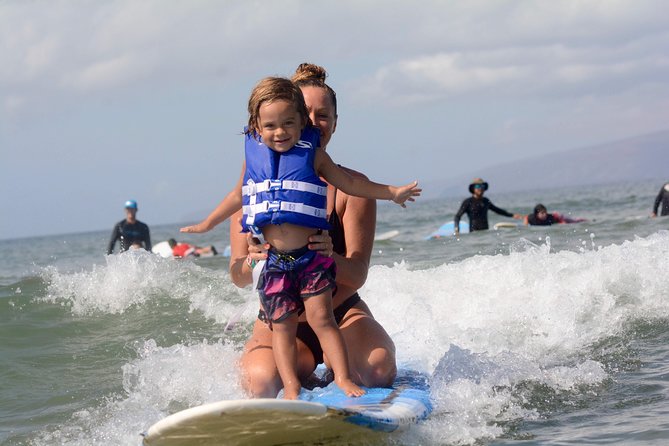
The best part of Waves Hawaii Surf School is how quickly it gets you from standing on the sand to trying a real wave. You begin with a short safety talk and land practice, then head into the water with an instructor who helps with timing, paddling, and board position. First-timers are the main audience, though stronger surfers can still work on technique.
I like the supplied reef shoes, especially since the bottom can be rocky, and I like the patient teaching style. Instructors such as Sophie, Jessica, Sasha, Lucas, and Funchie have helped children and adults get upright on their first attempts. The main drawback is that the water can get crowded later in the morning, so an early start is worth considering.
Key points to know before booking
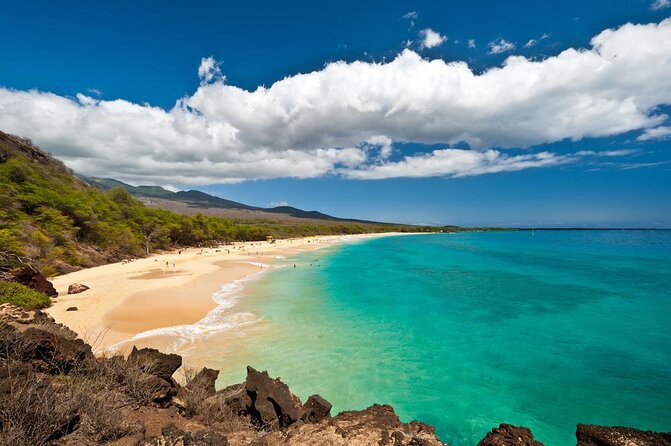
- Kalama Park is the easy-to-find starting point: You meet at 1900 S Kihei Road, close to shops and restaurants in central Kihei.
- Your two-hour lesson covers the full first-timer routine: Check-in, gear, safety, land practice, paddling, and attempts in the water.
- Reef shoes are more than a nice extra: The ocean bottom can be rocky, so use the footwear provided.
- Private and group lessons are available: Children under eight are advised to book a private one-on-one lesson.
- Early times can mean a better session: A 7:30 lesson may have fewer people in the water than a 9:30 start.
- The $103.12 price includes the main equipment: You receive instruction, a rash guard, reef shoes, and a surfboard, while photos cost extra.
Why this Kihei lesson works for first-time surfers
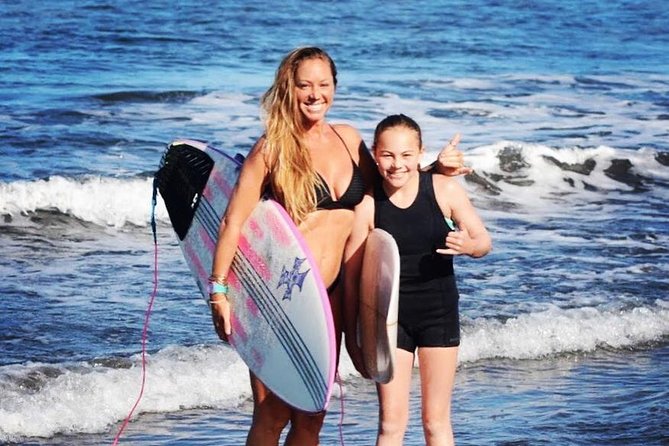
Surfing looks simple from the beach. Lie on the board, paddle, stand up, and ride. In practice, your feet, arms, balance, and timing all need to cooperate at once. A good beginner lesson takes away some of that confusion, and Waves Hawaii follows a sensible order.
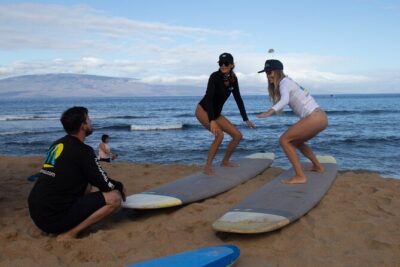
You first learn on land. Your instructor explains how to position yourself on the board, how to get up, and how to handle the board safely. That dry practice matters because you can focus on movement before waves, salt water, and nerves enter the picture.
After the land lesson, you head into the water. The instructor helps place the board, tells you when to paddle, and gives you a cue to stand. Once you begin improving, you can work more on your own timing instead of relying on every instruction.
That gradual handoff is useful for children and adults. It also means you do not need to arrive already knowing how to read a wave. You need a moderate level of physical fitness, but you do not need previous surf experience.
The lesson is conducted in English. The maximum group size is 30, though the teaching setup can include work with individuals at different skill levels. If you want the most direct attention, choose the private option when booking.
More Surf Lessons in Maui
- Maui: Two Hour Beginner Group Surf Lesson in Kihei
★ 5.0 · 950 reviews - Outrageous Surf ScHool Lesson on Lahaina Side
★ 4.5 · 547 reviews - Group Surf Lesson at Kalama Beach in Kihei
★ 5.0 · 264 reviews
Meeting at Kalama Park in central Kihei
Your meeting point is 1900 S Kihei Road, at Kalama Park. This is a practical place to begin because it sits in central Kihei, near local shops and restaurants. You can check in, get oriented, and watch the shoreline before your lesson begins.
Arrive a little early. You need time to check in and get fitted with the supplied equipment, and rushing into a surf lesson is not a great way to begin. The activity ends back at the meeting point, and hotel pickup and drop-off are not included.
Kalama Park also works well if some people in your party are not surfing. The shoreline gives them a place to watch, and the open setting makes it easier to see what is happening in the water. One family found it easy to film from shore, although any paid photography is separate.
Parking has been described as easy and convenient, but you should still allow time before your scheduled start. Morning sessions can be popular, and the average booking time is about 32 days ahead. If your Maui dates are fixed, I would reserve this early rather than leave it to the last few days.
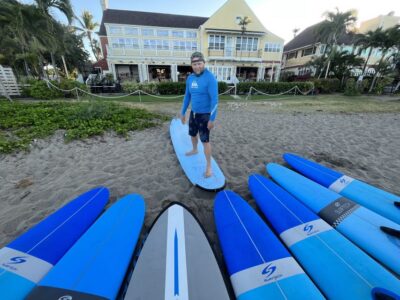
Getting fitted with a rash guard, shoes, and board
The equipment package is one of the clearest strengths here. Your instructor provides a rash guard, reef shoes, and a surfboard. That saves you from packing or renting the basic gear separately.
The rash guard helps protect your skin from rubbing against the board. The reef shoes are especially useful because the bottom can be rocky. Several people found the shoes important, and one specifically noted that the provided booties made the experience more comfortable.
Listen carefully when the instructor explains how to enter and leave the water. One lesson included guidance on a safe way to dismount because of rocks. That kind of advice may sound minor, but it can prevent a clumsy finish after a successful ride.
The boards supplied for instruction are intended to help beginners learn. Your job is not to bring a board, choose the perfect shape, or figure out the equipment on your own. The school handles the basic setup so you can concentrate on balance and technique.
The land lesson: where the hard part becomes manageable
The land portion is short, but do not treat it as filler. This is where you learn the motion that makes standing possible. Your instructor explains how to lie on the board, where to place your hands, how to bring your feet underneath you, and how to keep your balance.
You also get a safety briefing before going out. The lesson includes practical instruction about handling the board and getting off safely. For a first-time surfer, this makes the water feel less mysterious.
I like that the teachers adjust their help as you improve. At first, an instructor may position your board, tell you when to paddle, and give you the signal to stand. Once you show better control, you get more responsibility for judging the timing.
This is also where different ability levels can share a lesson without everyone receiving exactly the same instruction. One family described a group with varied skills, with instructors working one-on-one according to each person’s needs. That is useful if a parent, teenager, or partner has tried surfing before while someone else is starting from zero.
More Surf Lessons in the USA
- Maui Lahaina Group Surf Lesson
★ 4.9 · 235 reviews - Private Surf Lesson for Two Near Lahaina
★ 5.0 · 189 reviews - 2 Hour Beginner Group Surf Lessons
★ 5.0 · 154 reviews - Group Surf Lessons from Kaanapali Beach
★ 5.0 · 143 reviews
Into the water: catching your first ride
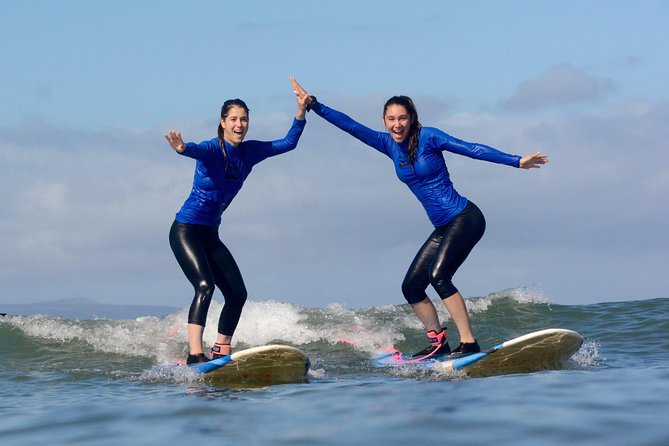
The water portion is the heart of the experience. Your instructor helps you get into position, then tells you when to paddle. The aim is to let you focus on the stand-up motion first, not make you solve every part of surfing at once.
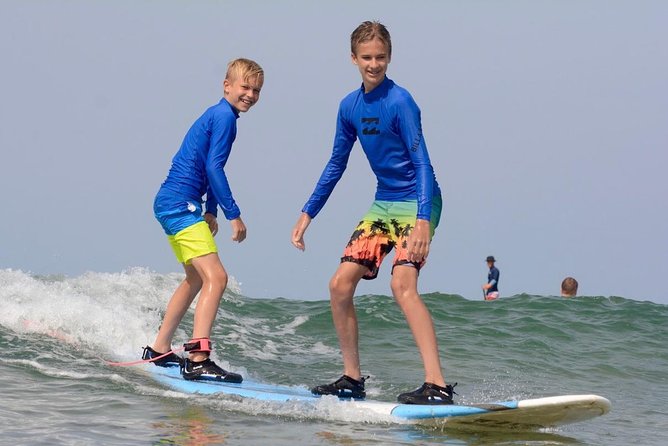
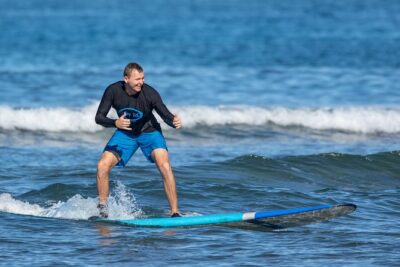
Several children have managed to stand on their first try, including a nine-year-old and a 16-year-old in the same family booking. That does not guarantee the same result for every person, since waves, balance, fitness, and timing vary. It does show that the lesson is built around early success rather than a long wait for perfect technique.
You should expect some paddling. One instructor helped a younger child paddle back out rather than letting the child use up all their energy. That is a good reminder that surfing is physical, especially when you must return to the starting position after each attempt.
The instructors also help with timing. Sophie and Jessica were described as telling beginners when to paddle and stand, then giving them more independence as their skills improved. This is the right approach for a first lesson. You get enough support to catch a wave, but you are not simply carried through the whole activity.
You might see sea turtles while paddling or riding. That has happened during past lessons, but it is a possible bonus, not something to count on. Keep your attention on the board and the instructions first.
Instructors who make the difference
Surf schools are only as good as the people in the water with you. The names attached to this experience include Sophie, Jessica, Sasha, Lucas, Carlos, and Funchie. The consistent pattern is patient, encouraging instruction, especially with children and nervous beginners.
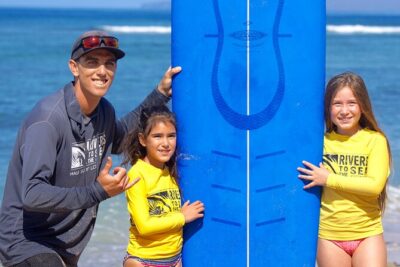
Sasha worked with two daughters, ages nine and 16, and helped both get up on their boards. Lucas made surfing feel easy and fun for two boys. Funchie was praised for working well with everyone in the group and helping first-timers stand.
That range matters. A strong instructor must manage more than one person, watch safety, offer useful corrections, and keep the mood light when someone falls. Surfing includes plenty of falling, so an upbeat teacher can make the difference between frustration and another attempt.
The school has also used a photographer in the water. You can purchase souvenir photos, but they are not included in the price. If you want pictures, treat them as an optional extra rather than part of the lesson package.
Choosing the best time and lesson style
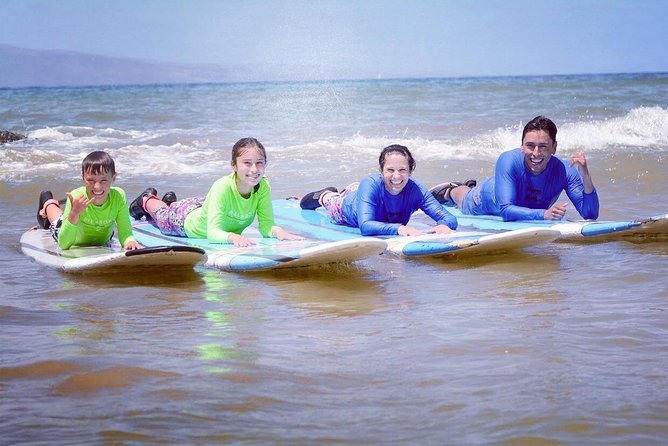
The experience lasts about two hours. You should consider that a full activity, not simply two hours of nonstop riding. Check-in, equipment fitting, safety instruction, land practice, getting into the water, and returning gear all fit into that window.
If you can choose among start times, an early lesson may be the smarter pick. A 7:30 session was offered as a quieter option with better wave and crowd conditions than a 9:30 start. The later booking still worked well, but the water was busier.
Conditions can change, so nobody can promise a particular number of rides or a perfectly empty surf area. Still, an early start gives you a better chance of avoiding the busiest period. It may also help if you want the rest of the day free for another Maui activity.
For families, think about age and confidence. Children under eight are advised to book a private one-on-one lesson. That costs more than sharing a group, but direct attention can help a young child stay calm, conserve energy, and understand the instructions.
Private lessons also make sense if you want focused help with a specific skill. Group lessons are a better value if you are happy learning alongside others and sharing the instructor’s attention.
What the listed Makena State Park stop means
Makena State Park appears in the activity itinerary, but the practical meeting and ending point is Kalama Park in Kihei. The provided schedule does not describe a separate transportation segment or a detailed stop at Makena State Park.
I would not book this as a sightseeing tour of Makena. The experience is a surf lesson based at Waves Hawaii Surf School, and hotel transportation is not included. If you want to visit Makena State Park, plan that separately unless the operator gives you updated instructions after booking.
This distinction matters because the lesson is focused. You are paying for surf instruction and equipment, not a broad island tour. That is good news if surfing is your priority, but less useful if you want a day of multiple Maui attractions.
Is $103.12 a fair price?
At $103.12 per person, the value depends on what you would otherwise need to arrange. The price includes a professional instructor, surfboard, rash guard, and reef shoes. It also includes the structure and safety guidance that make a first attempt more realistic.
You do not need to buy or rent those main items separately. You also avoid trying to teach yourself the basic stand-up motion while managing a board and waves at the same time. For a first Maui surf experience, that makes the price reasonable.
The price does not include hotel pickup, drop-off, or souvenir photos. You need to reach Kalama Park yourself, and you should budget separately if you want photographs of your rides.
Group size also affects value. The maximum is 30, so private instruction is the better choice if you need close attention. In a group, the value comes from the equipment, professional coaching, and the chance to try surfing without committing to a longer course.
Who should book this lesson?
I would choose Waves Hawaii Surf School if you want a straightforward introduction to surfing in Kihei. It fits families, couples, friends, and adults who have never stood on a board before.
It is especially suitable if:
- You want equipment included.
- You prefer a two-hour introduction instead of a full-day program.
- You are comfortable with moderate physical activity.
- You want an instructor to handle safety and timing.
- You are bringing children and can choose a private lesson for younger ones.
- You want to learn near shops and restaurants in central Kihei.
I would think twice if you dislike getting wet, have trouble with moderate physical exertion, or want a quiet private experience but are booking a large group. The water can be busy at later times, and the bottom may be rocky despite the supplied footwear.
The activity requires good weather. If poor weather forces a cancellation, you are offered another date or a full refund. You can cancel for a full refund up to 24 hours before the start time, but changes or cancellations inside that window are not accepted.
My final call: book early, and choose the right format
I would book this lesson if surfing is on your Maui wish list and you want a practical first attempt rather than a long, technical course. The patient instruction, included gear, central Kihei location, and strong record of helping beginners stand up make it a sensible choice.
Book early, especially for a family or a fixed vacation schedule. Choose an early time if possible, and select private instruction for a child under eight or anyone who needs close support.
If you are mainly looking for a sightseeing tour, this is not the right product. If you want to spend two active hours learning how to catch a wave, with the gear and basic safety work handled for you, Waves Hawaii Surf School earns serious consideration.
FAQ
How long is the Waves Hawaii Surf School lesson?
The surf lesson lasts approximately two hours. This includes check-in, equipment fitting, safety instruction, land practice, and time in the water.
Where do I meet the instructor?
You meet at Kalama Park, located at 1900 S Kihei Road, Kihei, Hawaii 96753. The activity ends back at the meeting point.
Is surf equipment included?
Yes. The price includes a professional instructor, rash guard, reef shoes, and surfboard.
Are private lessons available?
Yes. You can choose between private and group lesson options. Children under eight are advised to book a private one-on-one lesson.
Is hotel pickup included?
No. Hotel pickup and drop-off are not included. You must make your own way to Kalama Park.
What happens if bad weather cancels the lesson?
The experience requires good weather. If poor weather causes a cancellation, you can receive a different date or a full refund. Free cancellation is also available when you cancel at least 24 hours before the start time.
Just added around Maui
- 2-Hour Semi Private Hawaiian Surf Lesson with the best in Maui..★ 5.0 · 15 reviews
- Epic Surf Safari – Best of Maui★ 5.0 · 4 reviews
- Surf with ALOHA SURF SCHOOL★ 5.0 · 9 reviews
- 2-Hour Surf Lessons with a Pro★ 3.5 · 3 reviews
- Private Surf Lessons in Maui★ 5.0 · 2 reviews
- Private Surf Lessons in Lahaina, Maui★ 5.0 · 31 reviews
- Private Surf Lesson at Kalama Beach in Kihei★ 5.0 · 25 reviews
- Semi-Private Surf Lesson at Kalama Beach in Kihei★ 5.0 · 25 reviews
Maui Surf Trips, compared.


Private Stand Up Paddle Boarding Tour in Turtle Town, Maui
Read our review →
Browse the lists this tour appears in