Review · MAUI
2 Hour Beginner Group Surf Lessons
Maui is a fine place to try surfing for the first time, and this two-hour beginner lesson keeps the focus where it belongs: learning the basics, catching manageable waves, and having an instructor close by when you need help. Small groups of no more than five give you more turns and more personal attention than a crowded beach class.
I like that all core equipment is supplied, including reef shoes and rash guards, and that several lesson times make it easier to fit surfing into a busy Maui day. I also like the patient, upbeat teaching style reported from instructors such as Mario, Austin, Curran, Fabio, and Phillipe. The main consideration is that you must arrive 30 minutes early, and ocean conditions can affect the meeting location or the ease of your lesson.
Key points to know before you book
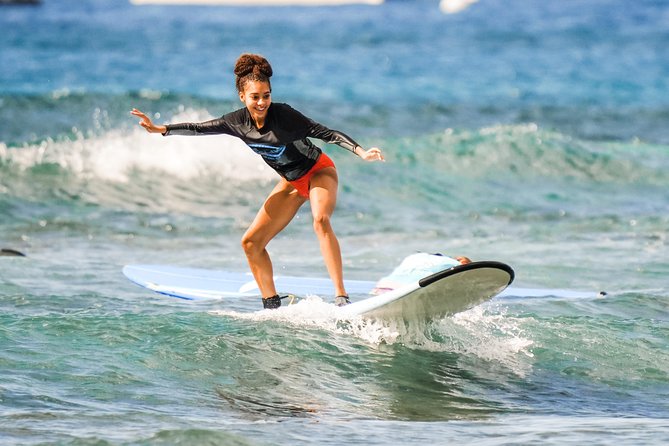
- Small groups of five or fewer: You get more direct coaching and more chances to practice.
- Beginner-friendly instruction: The lesson starts on land with the basic steps before you paddle out.
- Equipment is included: Boards, reef shoes, and rash guards are provided.
- Ages 9 and up: Children 8 and younger need a private lesson, with no exceptions.
- Two hours in the water and on shore: The length gives you time to learn, make mistakes, and try again without turning the session into an exhausting half-day.
- Lahaina meeting point: Check in at Hawaii 30HI-30, Lahaina, and return there when the lesson ends.
Why this Maui lesson works for first-time surfers
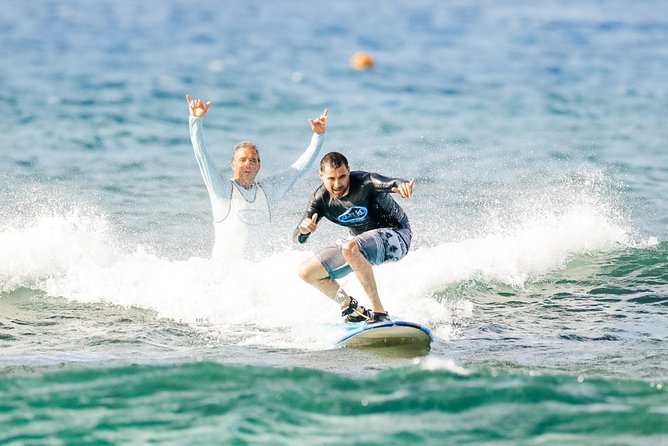
Surfing looks simple from the beach. A board, a wave, a quick jump to your feet. In practice, the timing is awkward at first, and a small correction can make the difference between riding toward shore and sliding off the side.
That is why instruction matters. This lesson breaks the process into manageable parts. You first learn how to position yourself, paddle, and rise on the board. Then you put those steps to work in the water with an instructor giving feedback as you go.
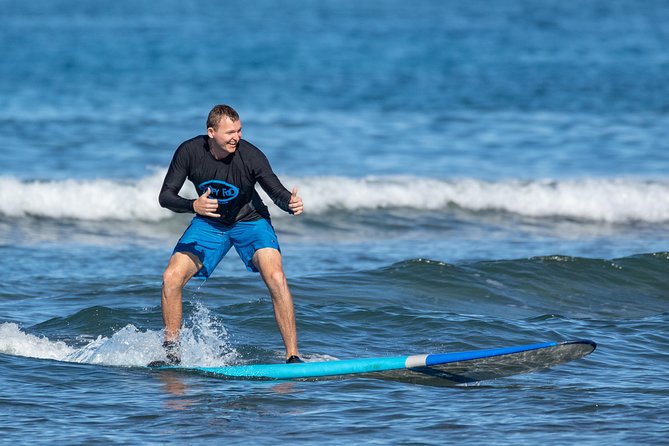
The goal is not to turn you into an expert surfer in two hours. The goal is more useful: help you understand the basic movement and give you a real chance to catch a few waves. Many participants manage to stand up during their first session, but your result will depend on the waves, your fitness, your balance, and how quickly the technique clicks.
I especially like the maximum group size of five. Surf lessons can lose their value when one instructor is trying to watch a large pack of beginners at once. Here, you should have a better chance of getting a useful correction instead of waiting while several other people take their turn.
More Beginner Surf Lessons in Maui
- Maui: Two Hour Beginner Group Surf Lesson in Kihei
★ 5.0 · 950 reviews - Private Beginner Paddleboard 101 Lesson: Makena Landing!
★ 5.0 · 68 reviews - Private Beginner Paddleboard Lesson with Snorkel in Turtle Town
★ 5.0 · 50 reviews
Arriving at Hawaii 30HI-30 in Lahaina
The listed meeting point is Hawaii 30HI-30, Lahaina, Hawaii. The activity finishes back at this same point, so you do not need to arrange a separate ride from the beach at the end.
Plan to arrive 30 minutes before your scheduled start time. That early arrival is part of the practical routine, not wasted time. You need to check in, receive your gear, and get ready before the two-hour lesson begins.
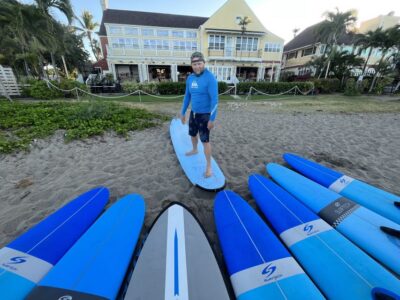
Come in your swim attire. Bring a towel, water bottle, and sunscreen. Rash guards and reef shoes are supplied, along with the necessary surfing equipment, so you do not need to pack your own board or build a special kit for the morning.
The location is near public transportation, and one reported outing found public parking about a three-minute walk away. The surf shop was also described as close to the Lahaina banyan trees and nearby restaurants, which makes it easy to pair the lesson with a meal or a walk through town.
Parking details can change, so I would still allow extra time. The most important mistake to avoid is arriving exactly at the start time. You want to be checked in and ready, not still sorting out equipment while the group is heading toward the water.
The land lesson: your first chance to get the motion right
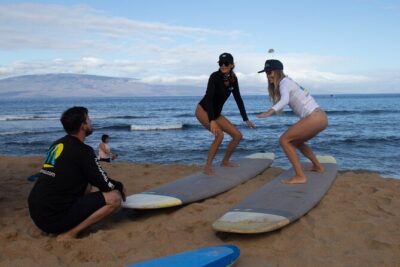
The session begins with an introduction on shore. This is where the instructor explains the basic body position and how to move from lying on the board to standing.
Pay attention here. It is tempting to treat the land portion as a quick formality because the ocean is waiting. In reality, practicing the movement before you get wet helps you use your water time better. You can focus on wave timing instead of trying to remember every step at once.
The teaching style appears to be practical and encouraging. Instructors including Austin, Mario, Joe, Phillipe, and Shane have been praised for giving simple directions, offering corrections without being condescending, and adjusting the pace to the student. That matters when one person in a couple has surfed before and the other has never tried it.
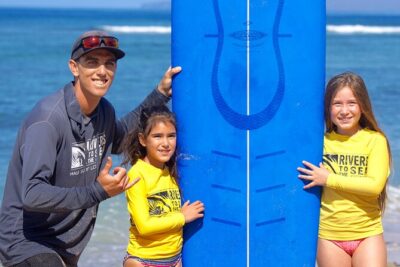
Families also get useful attention. Curran was described as staying close to children throughout the session, while other instructors helped younger students catch waves and kept them safe. The minimum group age is 9, so parents can join children in a shared beginner setting, provided every participant meets the age rule.
Paddling out and taking your first waves
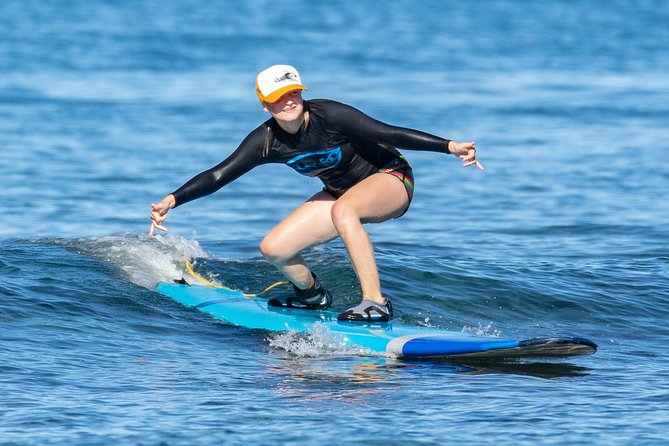
After the shore instruction, you head into the water and paddle to the area where the group will take turns. The format is active rather than lecture-heavy. Once you are positioned, you spend the rest of the lesson practicing the same cycle: get set, catch a wave, try to stand, receive feedback, and try again.
That repeated practice is the best reason to choose a two-hour lesson instead of a short introductory demonstration. You may fall on your first attempt. You may also stand up right away and then lose your balance on the next wave. Both are normal parts of learning.
The conditions described by participants were especially suitable for beginners, with steady waves that were not too large. Of course, the ocean is not a machine, and the exact feel of the lesson can change from day to day. A wave that feels gentle to one person may feel quick to another.
Instructors help by giving you a push or positioning you for a better attempt when needed. Mario was praised for offering feedback and helping students get back into position, while Austin was noted for letting students work through mistakes but stepping in with clear advice about form. That balance is useful. You need help, but you also need a chance to feel what your own body is doing.
More Beginner Surf Lessons in the USA
- Group Surf Lesson for Beginners in Kihei at Kalama Park
★ 5.0 · 11 reviews - Private Standup Paddleboard Lesson for Beginners in Kihei
★ 4.5 · 9 reviews - Beginner Group Surf Lesson on Maui South Shore
★ 5.0 · 9 reviews - Private Surf Lesson: Two Hours of Beginners Instruction in Kihei
★ 4.5 · 8 reviews
How much personal attention will you get?
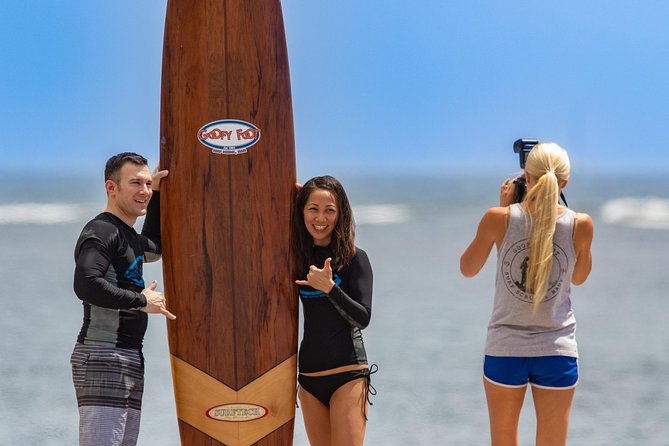
With a maximum of five participants, the class is small enough for the instructor to keep track of each person. That does not mean you receive a private lesson. You will still wait your turn at times, particularly when everyone is trying to catch waves.
The difference is that the waiting should be shorter and the feedback more specific than in a large class. One session had only two students, allowing nearly nonstop attempts after the basic instruction. Another had three students, all of whom managed to stand up early in the lesson.
This size works well for couples and families with mixed ability. A confident teenager can work on technique while a parent receives extra help with balance. Children may need more direct support, especially during their first few attempts, and the small group gives the instructor a better chance to stay nearby.
You should still be realistic about the word group. If you want an instructor beside you for every wave, a private lesson is the better choice. Children 8 and younger must take private instruction, and the provider does not make exceptions to that rule.
The instructors make the difference
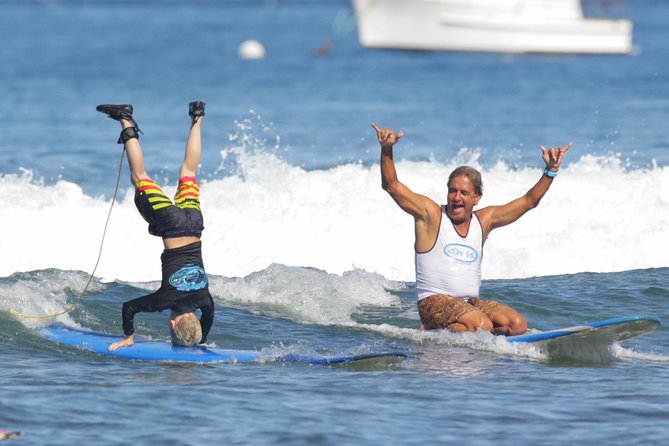
The strongest part of this activity is the quality of the coaching. Names that appear repeatedly in the experience include Mario, Austin, Phillipe, Joe, Curran, Fabio, Keith, Shane, Javier, Kailani, and Hugo.
Their approaches differ, but the useful pattern is clear. Good beginner instruction requires patience, plain directions, and encouragement after a fall. Javier was praised for breaking each step into smaller pieces. Phillipe adjusted his advice to the individual and gave a running explanation of what to change after an unsuccessful attempt. Fabio was also credited with paying close attention to conditions and moving a lesson to a better location when the surf forecast called for it.
That last point is worth noting. A lesson may sometimes be shifted to another spot to find more suitable waves. A location change can be inconvenient, but for a beginner, calmer or better-shaped surf is usually worth more than staying with a poor setup.
The instructors also appear attentive to comfort and safety. One child became seasick during a lesson, and the instructor helped her return to shore, checked on her, and allowed her to resume when she felt ready. That is the kind of response you want from an ocean activity: patient, alert, and not pushy.
Surfing with children and teenagers
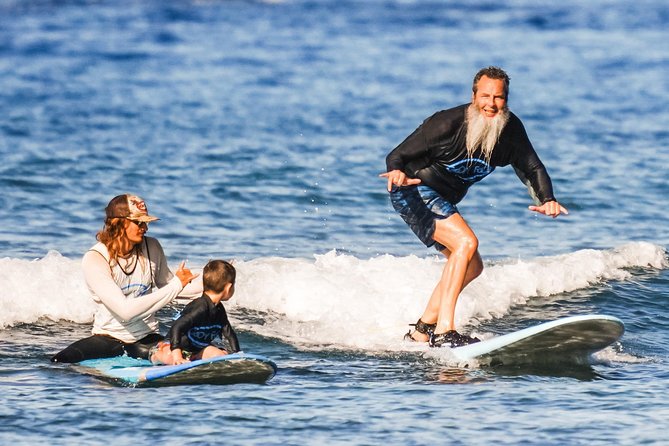
This lesson is a strong fit for families with children age 9 and older. Several instructors have worked especially well with kids, keeping them engaged while helping them understand what to do next.
For a family, the small group can make the session feel more personal. Parents can watch their children receive direct guidance rather than seeing them disappear into a large line of beginners. Teenagers may appreciate the quick progress, while younger participants often benefit from the instructor staying close until they feel secure.
The lesson can also give siblings a shared activity that suits different ages. One family with children ages 10, 13, and 16 reported that all three got repeated chances to stand and ride. Their instructor remained close to the youngest while still giving the older children useful advice.
Do not book a group lesson for a child under 9. The rule is firm: students age 8 or younger need private instruction. Also remember that surfing uses more energy than it appears to from shore. Bring water, use sunscreen, and expect the children to be tired afterward.
Photos, nearby plans, and the value of the day
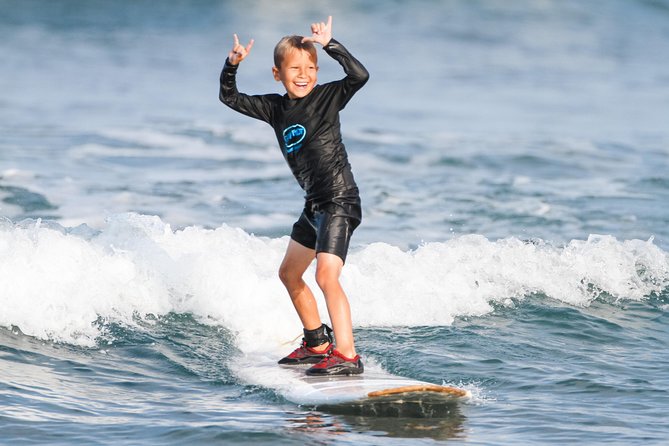
A photographer may be available during the lesson. Gabriel was offered as a professional photographer in one family outing, with an additional fee for the images. Photos are not part of the stated lesson inclusions, so treat them as an optional extra rather than an assumed feature.
I can see the appeal. Parents often spend the entire session watching from shore or worrying about whether a child will catch a wave. Having someone else take action shots lets you pay attention to the lesson. If you are considering photos, ask about the current fee and what is included before agreeing.
The lesson lasts about two hours, which is a sensible length for a first attempt. It is long enough to get several turns and short enough that tired arms do not ruin the rest of your day. One participant found the duration appropriate and felt a longer session might have become tiring.
Afterward, you can use the rest of the day for a meal, a walk, or another Maui activity. The meeting point is near the banyan trees and restaurants, according to one detailed account. I would avoid scheduling something with a strict start time immediately afterward. Check-in begins 30 minutes early, and ocean activities can take a little longer to wrap up than expected.
Is the lesson good value?
No price is provided here, so I cannot judge the exact dollar amount. I can still explain what you are paying for. The package includes the board and other required surf equipment, reef shoes, a rash guard, shore instruction, water practice, and an instructor working with a group capped at five.
That is better value than a low-priced class with a large crowd if your main goal is to get useful coaching and actual time on a board. The chance to stand up is not guaranteed, but the structure gives you repeated attempts rather than a short introduction followed by a quick exit.
The value is also higher for families. You can book one shared activity for parents and children age 9 and older, with the instructor adapting advice to different ability levels. For a couple where one person has surfed before, the class can still work well because the coach can correct technique without leaving the first-timer behind.
The extra costs to keep in mind are personal items such as sunscreen and water, plus any optional photography. The supplied gear means you do not need to rent a board separately for this lesson.
Who should book this experience?
I would choose this for a first-time surfer, a cautious adult who wants clear instruction, or a family with children age 9 and up. It is also suitable if you have tried surfing once before but still need help with timing, positioning, or standing technique.
The lesson is less suitable if you already surf confidently and want advanced coaching. It is also not the right group format for children age 8 or younger, who must book private instruction.
Your best chance of enjoying it is to arrive early, bring the requested items, listen closely during the shore lesson, and accept that falling is part of the process. Do not judge the session by your first attempt. A small change in foot position or timing can make the next wave feel completely different.
Cancellation and practical booking notes
You can cancel up to 24 hours before the local start time for a full refund. Cancellations or changes made less than 24 hours before the experience are not accepted for a refund.
The activity is offered in English. Confirmation is provided when you book. Service animals are allowed, and the meeting point is near public transportation. Most people can participate, but you should consider your own comfort and ability in the ocean before booking.
Should you book the Goofy Foot beginner lesson?
Book it if you want a well-organized first surfing lesson with a genuinely small group, supplied equipment, and plenty of encouragement. The strongest reasons are the maximum of five participants, the patient instruction from coaches such as Mario, Austin, Phillipe, and Curran, and the repeated chances to practice rather than simply watch.
Families should pay close attention to the age rule, and everyone should allow time for early check-in. If you want private attention, book a private lesson instead. For most beginners age 9 and older, though, this is a practical way to try surfing in Maui without buying gear or committing your whole day.
FAQ
How long is the surf lesson?
The lesson lasts approximately two hours.
Where does the activity begin?
It begins at Hawaii 30HI-30, Lahaina, Hawaii 96761, USA.
Where does the activity end?
The activity ends back at the meeting point.
What should I bring?
Come in swim attire and bring a water bottle, sunscreen, and a towel.
Is surfing equipment provided?
Yes. Necessary surfing equipment, reef shoes, and rash guards are provided.
What is the minimum age for a group lesson?
Students must be at least 9 years old for a group lesson. Children age 8 or younger require private instruction, with no exceptions.
How large is the group?
The group has a maximum of five participants.
More Group Surf Lessons in the USA
- Semi-Private Surf Lesson at Kalama Park in Kihei
★ 5.0 · 102 reviews - Group Surf Lesson at Ka’anapali Beach
★ 4.5 · 82 reviews - Semi-Private Surf Lesson at Ka’anapali Beach
★ 4.5 · 76 reviews - Semi-Private Surf Lesson – 3 Students 1 Instructor
★ 4.5 · 73 reviews
More Group Surf Lessons in Maui
- Group Surf Lesson at Kalama Beach in Kihei
★ 5.0 · 264 reviews - Maui Lahaina Group Surf Lesson
★ 4.9 · 235 reviews - Group Surf Lessons from Kaanapali Beach
★ 5.0 · 143 reviews - 2 Hour Private Group Surf Lesson in Lahaina Maui
★ 5.0 · 129 reviews
Just added around Maui
- Epic Surf Safari – Best of Maui★ 5.0 · 4 reviews
- Surf with ALOHA SURF SCHOOL★ 5.0 · 9 reviews
- 2-Hour Semi Private Hawaiian Surf Lesson with the best in Maui..★ 5.0 · 15 reviews
- 2-Hour Surf Lessons with a Pro★ 3.5 · 3 reviews
- Private Surf Lessons in Maui★ 5.0 · 2 reviews
- Private Surf Lessons in Lahaina, Maui★ 5.0 · 31 reviews
- Private Surf Lesson at Kalama Beach in Kihei★ 5.0 · 25 reviews
- Semi-Private Surf Lesson at Kalama Beach in Kihei★ 5.0 · 25 reviews
Maui Surf Trips, compared.


Private Stand Up Paddle Boarding Tour in Turtle Town, Maui
Read our review →