Review · MAUI
Semi-Private Surf Lesson – 3 Students 1 Instructor
Learning to surf in Lahaina means more than renting a board and hoping for the best. You begin on land with ocean safety, board handling, and the basic pop-up, then head to the Breakwall to try those skills on real waves. The small-group setup is the key advantage here: the advertised format is three students with one instructor, while groups may reach six.
I like the clear progression from sand practice to the water, and I like that the instructors work with children, teens, nervous first-timers, and intermediate surfers. Instructors such as Kahala, Fred, Tiare, Trinity, and Waio are praised for patience, encouragement, and useful coaching. The main drawback is time: 90 minutes passes quickly, and the surf area can feel crowded when other lesson groups are nearby.
Key points to know before booking
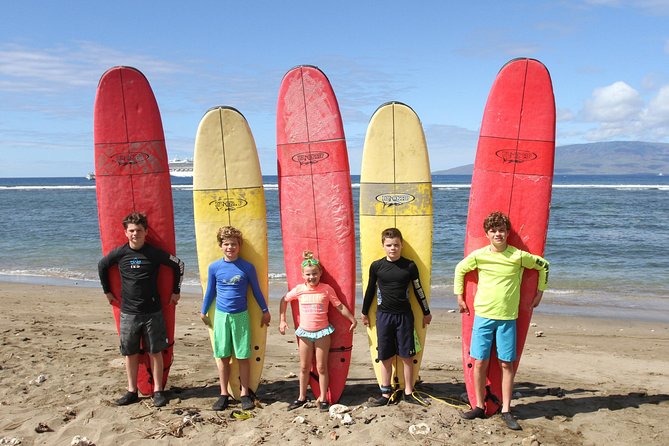
- You practice on land first: Learn safety, paddling, board position, and the pop-up before facing the waves.
- The water session takes place at Lahaina’s Breakwall: You paddle out after getting comfortable on your board and try to catch manageable waves.
- The group is kept small: The experience is sold as three students with one instructor, with group sizes limited to six.
- It works for first-timers and improving surfers: Beginners receive step-by-step help, while intermediate surfers can refine technique.
- Sun and board protection matter: Bring a swim shirt to reduce sun exposure and rubbing from the surfboard.
- Photos are available: A photographer may capture your session, though the extra cost is separate from the lesson.
What the 90-minute Lahaina lesson is really like
This is a practical introduction to surfing, not a long beach day with a few tips tacked on. The session starts with safety and technique on land, then shifts into active practice in the ocean. That order matters. You get a chance to understand what your body and board should do before you are trying to remember everything while a wave approaches.
The lesson is designed for beginners, but it is not limited to people who have never surfed. If you already have some experience, the instructor can focus more on timing, balance, and catching waves. The title describes a three-student, one-instructor format, which is especially useful for a family or a few friends who want to learn together. The general group limit is six, so confirm the exact arrangement when booking if personal attention is your top concern.
Your instructor supplies the surfboard and the basic surf gear used during the session. Some families also received a surf shirt and shoes, though you should still bring a swim shirt for comfort and sun protection. A surfboard can rub against your chest and stomach during repeated paddling, so this small piece of clothing is more useful than it sounds.
The meeting point is listed at QCW7+M5X in Waikapu, Hawaii, and the activity ends back there. Since the experience is described as a Lahaina lesson with access to the Breakwall, pay close attention to the booking directions and local timing before setting out. The meeting information should be clear on your confirmation, which arrives when you book.
More Group Surf Lessons in Maui
- Maui: Two Hour Beginner Group Surf Lesson in Kihei
★ 5.0 · 950 reviews - Group Surf Lesson at Kalama Beach in Kihei
★ 5.0 · 264 reviews - Maui Lahaina Group Surf Lesson
★ 4.9 · 235 reviews
Starting on the sand: safety before surfing
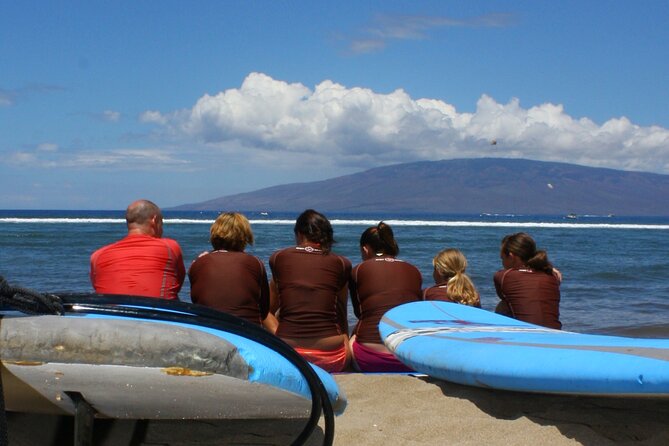
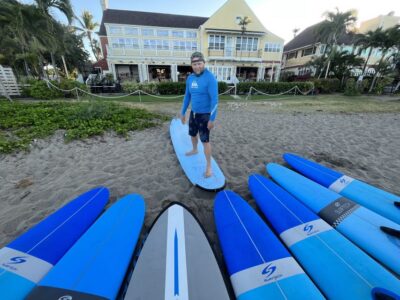
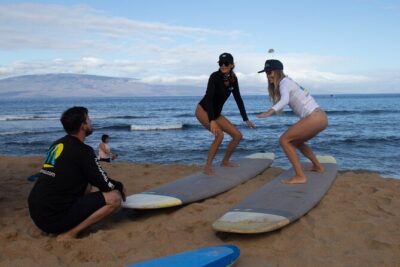
The land lesson is not filler. It gives you the basic rules for handling the board and moving safely around other people in the water. You practice surf techniques and the motion needed to get from lying on the board to standing.
That pop-up is the moment most beginners are waiting for, but it is also where rushed instruction can cause trouble. A good coach breaks it into simple movements, and the feedback here points to that approach. Instructors are repeatedly described as patient, encouraging, and firm when needed. One family was nervous before beginning and found the clear instruction helped them relax.
Pay attention during the safety section, especially if you are with children. Ocean conditions can change, and one session had rough currents. The instructor’s attention to safety was a major reason the lesson remained comfortable in those conditions. You should expect to listen, follow directions, and respect the limits set by the instructor rather than treating the lesson as a free-for-all.
This is also when you can ask questions about board position, where to place your hands, and how to fall safely. The more seriously you take the practice on shore, the less mental work you need once you reach the waves.
Paddling to Lahaina’s Breakwall
After the beach practice, you take your board into the water and paddle toward the break. The exact feel of the session depends on the weather and surf, but the goal is to get comfortable with the board before trying to stand.
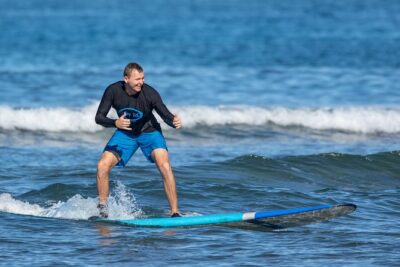
The Breakwall gives the lesson a real surfing setting rather than a shallow-water demonstration. You learn to read the approaching waves, position the board, paddle at the right moment, and push up when the instructor signals. For a first lesson, those steps can feel like a lot. The instructor’s job is to simplify the sequence and help you try again after a missed wave.
The strongest praise for this experience centers on the instructors’ encouragement. Tiare and Trinity are noted for patient coaching, while Waio is described as fun, authentic, and generous with tips. Kahala helped a young surfer stay motivated, and Fred focused on making a private family session enjoyable. These individual names are not a guarantee of who will teach your class, but they give you a useful sense of the teaching style you may encounter.
Expect effort. Even when the waves are friendly, paddling and repeatedly climbing onto the board can tire you out. One young participant needed plenty of encouragement and ended the lesson exhausted. That is normal for a first surf session, and you should not plan something physically demanding immediately afterward if you want a little recovery time.
Why small groups make a difference
A surf lesson can lose its value when one instructor has too many people to watch. The three-student format gives you a better chance to receive corrections on board position, paddling, and the pop-up. It also lets the instructor spend time encouraging each person instead of simply sending the whole group toward the same wave.
The experience can still include up to six people, according to the stated group limit. That is small compared with a large class, but it is not the same as a one-on-one lesson. If your group includes mixed ages or ability levels, ask how the session will be arranged. A family with two teens and younger children may need more individual attention than a group of adults with similar fitness.
The private activity format means only your booked group participates, which is valuable for families and friends who want to learn together. It does not necessarily mean one instructor for every person. The title specifies three students per instructor, so use that figure when judging the price and the level of attention you expect.
The surf area itself may also be shared with other instructors. That can make the beach and water feel busy, especially during popular times. It is a manageable drawback, but you should expect a working surf school environment rather than a completely private stretch of ocean.
More Group Surf Lessons in the USA
- 2 Hour Beginner Group Surf Lessons
★ 5.0 · 154 reviews - Group Surf Lessons from Kaanapali Beach
★ 5.0 · 143 reviews - 2 Hour Private Group Surf Lesson in Lahaina Maui
★ 5.0 · 129 reviews - Semi-Private Surf Lesson at Kalama Park in Kihei
★ 5.0 · 102 reviews
How good is the $109 price?
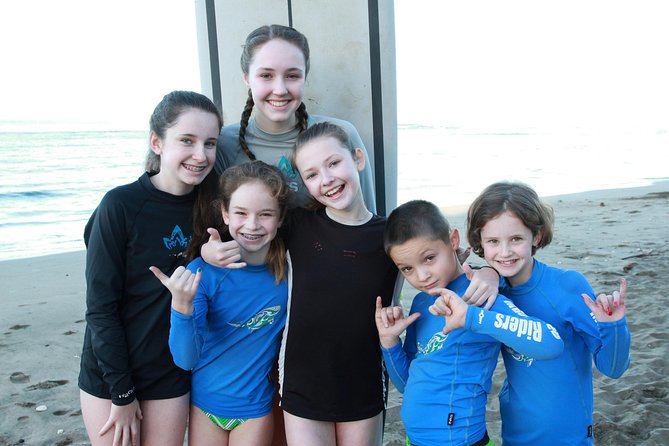
At $109 per person, this is not the cheapest way to get on a surfboard, but the price is reasonable if you value instruction and equipment rather than simply water time. You receive a structured lesson of about 90 minutes, board use, coaching, safety guidance, and access to a small group format.
The value improves when everyone in your party is genuinely participating. Several families had all members standing on their boards by the end, including children and teens who had never surfed before. If you are booking for three people and the three-student format applies, the cost buys a fair amount of personal attention.
The value is less clear if you are already a confident surfer and only want to rent a board. In that case, you may not need a formal lesson. Intermediate surfers can still benefit from coaching, but the session is built around instruction, safety, and repeated practice rather than extended independent surfing.
Photos cost extra. A photographer may work from shore or nearby with professional equipment, and the images can be useful when family members are busy surfing instead of taking pictures. Some people found the photos worth paying for, while others may prefer to keep the base price down. Treat this as an optional souvenir, not part of the $109 package.
Families, children, and nervous first-timers
This lesson suits families particularly well. Children and teens received repeated encouragement, and the instruction is designed to help people stand up rather than simply paddle around. One family had a 10-year-old who received close attention from the guide and a trainee, with encouragement after each attempt.
That said, surfing is physical. You need a moderate level of fitness, and the session involves paddling, balancing, getting back onto the board, and repeated attempts. The experience information does not set a specific minimum age, so ask before booking if a child is younger than the participants described here.
Nervous adults should also feel comfortable giving it a try. The first push onto a moving board can feel awkward, but the sand lesson and instructor support take away much of the guesswork. You do not need to arrive knowing how to surf. You do need to be willing to listen, fall, reset, and try again.
Bring a swim shirt even if you normally surf without one. It protects you from the sun and from friction caused by the board. The provided surf attire may include a shirt and shoes, but the direct advice to bring your own swim shirt is worth following.
Conditions, safety, and the honest drawbacks
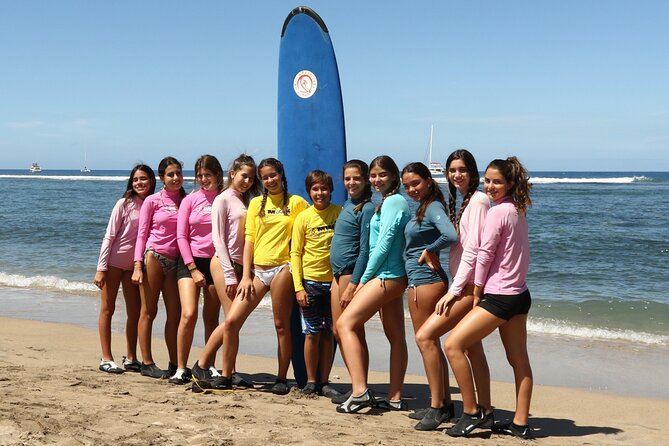
Good weather is required. If poor weather cancels the session, you can choose a different date or receive a full refund. That policy protects you from forcing a water activity into unsafe conditions, but it can create a scheduling headache during a short Maui visit.
The ocean may not cooperate perfectly even when the weather is acceptable. One session had rough currents, and the instructor’s close attention to safety helped the group manage them. You should expect the instructor to adjust the lesson to the conditions, which may mean fewer suitable waves or less time standing.
A 90-minute lesson also has limits. You spend part of that time checking in, practicing on land, paddling out, and receiving instruction. Do not book this expecting an uninterrupted hour and a half of riding waves. The trade-off is a safer and more useful first experience.
Parking is described as easy, with public parking close to the surf location, and the area is near public transportation. The information does not promise a dedicated parking arrangement, so allow enough time to arrive, find the meeting point, and get ready without rushing.
Cancellation is free if you cancel at least 24 hours before the start time. Changes or cancellations inside that window are not accepted and are not refunded. The cut-off follows local time, so keep that in mind when coordinating a Maui itinerary.
Who should book this surf lesson?
I would choose this for a first-time surfer, a family with older children or teens, or a small group of friends who want to learn together. The strongest part of the experience is the coaching. You are not left to guess how to catch a wave, and the small group gives the instructor a real chance to correct mistakes.
It also works for an intermediate surfer who wants a short refresher or help with technique. Just keep your expectations in check. This is still a beginner-friendly lesson, and the group may include people standing on a board for the first time.
I would think twice if you dislike physical activities, have very limited fitness, or want a quiet, uncrowded water session. I would also avoid placing it immediately before another demanding excursion. Surfing looks easy from shore, but repeated paddling and pop-ups work your whole body.
FAQ
Where does the surf lesson take place?
The lesson is in Lahaina in West Maui, with the group paddling to the Breakwall to practice catching waves. The listed meeting point is QCW7+M5X, Waikapu, HI 96793, USA, and the activity ends back at the meeting point.
How long does the experience last?
The lesson lasts approximately 1 hour and 30 minutes. That time includes the land-based safety and technique practice, preparation in the water, and attempts to catch waves.
Is this lesson suitable for complete beginners?
Yes. The experience begins with a sand lesson and covers ocean safety and basic surf techniques before you enter the water. It is also suitable for intermediate surfers who want additional coaching.
How many people are in each group?
The experience is sold as a semi-private lesson for three students and one instructor. The stated group limit is six people, so check the exact group arrangement when booking.
What should I bring?
Bring a swim shirt for sun protection and to reduce rubbing from the surfboard. The experience provides the surfboard and may provide surf attire such as a shirt and shoes.
What happens if bad weather cancels the lesson?
You can choose another date or receive a full refund if poor weather causes the cancellation. You can also cancel for a full refund if you cancel at least 24 hours before the experience start time.
Should you book it?
Book this if your Maui plans include a first surf attempt and you want real instruction instead of trial and error. The $109 price is fair for a 90-minute lesson with equipment, safety coaching, and a small group, especially when several people in your party take part.
The best reason to choose it is the patient, hands-on teaching style associated with instructors such as Kahala, Fred, Tiare, Trinity, and Waio. The main cautions are the short session, possible crowds near other lesson groups, changing ocean conditions, and the physical effort required. For a family hoping to see everyone catch a wave, this is a strong pick.
More Private Surf Lessons in the USA
- 2 Hour Private Surf Lesson in Lahaina
★ 5.0 · 83 reviews - Semi-Private Surf Lesson at Ka’anapali Beach
★ 4.5 · 76 reviews - Private Beginner Paddleboard 101 Lesson: Makena Landing!
★ 5.0 · 68 reviews - Semi-Private Surf Lesson 2 Students 1 Instructor
★ 4.5 · 68 reviews
More Private Surf Lessons in Maui
- Private Stand Up Paddle Boarding Tour in Turtle Town, Maui
★ 5.0 · 293 reviews - Private Surf Lesson for Two Near Lahaina
★ 5.0 · 189 reviews - 2 Hour Private Surf Lesson For Two In Lahaina
★ 5.0 · 102 reviews - Private Surf Lesson for Group of 3-5 Near Lahaina
★ 5.0 · 93 reviews
Just added around Maui
- Epic Surf Safari – Best of Maui★ 5.0 · 4 reviews
- Surf with ALOHA SURF SCHOOL★ 5.0 · 9 reviews
- 2-Hour Semi Private Hawaiian Surf Lesson with the best in Maui..★ 5.0 · 15 reviews
- 2-Hour Surf Lessons with a Pro★ 3.5 · 3 reviews
- Private Surf Lessons in Maui★ 5.0 · 2 reviews
- Private Surf Lessons in Lahaina, Maui★ 5.0 · 31 reviews
- Private Surf Lesson at Kalama Beach in Kihei★ 5.0 · 25 reviews
- Semi-Private Surf Lesson at Kalama Beach in Kihei★ 5.0 · 25 reviews
Maui Surf Trips, compared.



Private Stand Up Paddle Boarding Tour in Turtle Town, Maui
Read our review →