
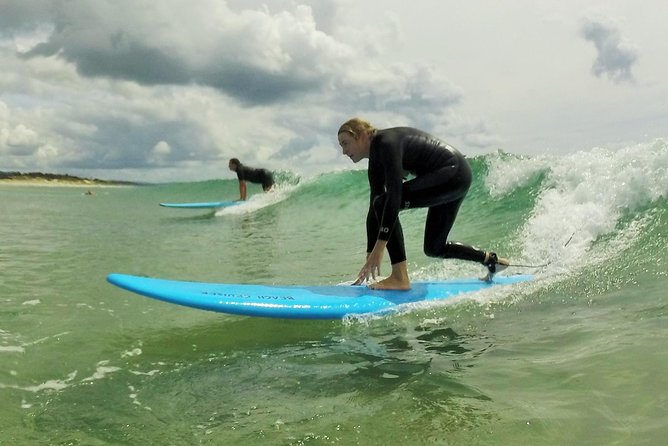
Review · NEW ZEALAND
Beginner Surf Lesson at Te Arai Beach
The best part of this lesson is its clear path from sand to surf. At Te Arai, Saltwater Eco starts with beach safety and board skills, then helps you carry those basics into the water. The small group limit of 12 gives instructors room to work with first-timers, children, and adults at different fitness levels.
I like two things right away: wetsuits and boards are included, and the lesson is timed around the tides rather than simply fixed to the clock. Instructors such as Locke, Lydia, and Kirsty are praised for calm, patient coaching, especially with nervous beginners. The main drawback is that you must arrange your own transport, and the beach location is described as both Te Arai and Omaha Beach, so confirm the exact meeting details before setting out.
Key points at a glance
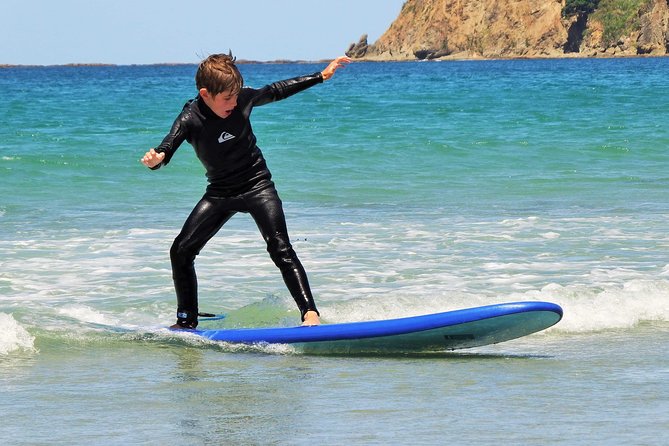
- A genuine first-surf lesson: You learn water safety, equipment use, paddling, and the pop-up before trying to catch waves.
- Small groups of up to 12: The format allows instructors to give more direct help than a large beach class.
- Equipment is supplied: Your surfboard and wetsuit are included in the price.
- Tide-timed sessions: The lesson schedule is shaped by sea conditions, not just convenience.
- Family-friendly instruction: Children aged 10 and 12 have taken part, and most participants can join.
- Photos and videos included: You receive souvenir images and video clips from the lesson.
From Auckland to Te Arai Beach
At about $49.03 per person, this is priced as an accessible introduction to surfing rather than a full-day beach outing. The lesson lasts around two hours, which is long enough to learn the main movements without making your first session feel like a test of endurance.
The meeting point is 708 Te Arai Point Road, Te Arai 0975. The activity returns to this same meeting point, and transport is not included. That makes this easiest as a self-drive outing from Auckland. The area is described as being near public transportation, but you should check the route carefully before booking because no transfer service is supplied.
There is one point worth clearing up. The experience is presented as a Te Arai lesson, while the description and several customer accounts refer to Omaha Beach. Both names appear in the supplied details, but the meeting point is clearly listed at Te Arai Point Road. I would confirm the exact beach and arrival instructions with Saltwater Eco before leaving Auckland, especially if you are relying on public transport or a tight day-trip schedule.
The session runs from 11 a.m. to 1 p.m. in the listed operating period, though surf lessons are tied to the tides. That matters. A beginner needs manageable water and a safe place to stand, so the start time may not always feel like the most convenient part of your day. Check the confirmed time rather than assuming every date follows the same schedule.
More Beginner Surf Lessons in New Zealand:
- Mount Maunganui: Group Beginner Surf Lesson
★ 5.0 · 16 reviews - Greymouth: 2-Hour Beginner Surf Lesson
★ 4.5 · 2 reviews - Legian Beach, Bali: Beginner or Intermediate Surf Lessons
★ 4.9 · 1,019 reviews
Your first minutes on the sand
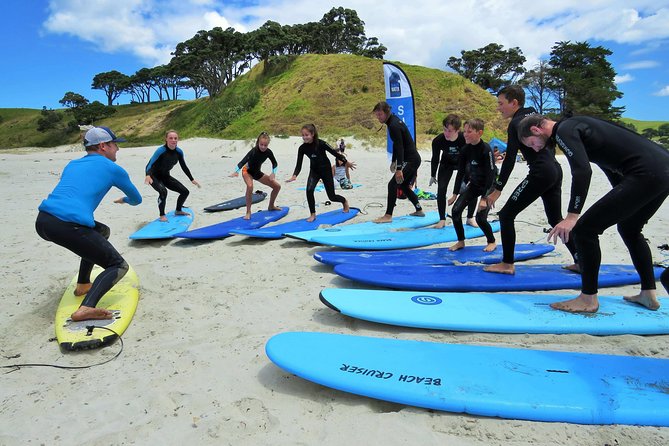
You do not simply grab a board and walk into the surf. The lesson begins with the basics on the beach, where mistakes are easier to fix and you can focus without the push of the water.
The first topic is water and beach safety. You learn how to behave around your board, how to use your equipment correctly, and what to watch for before paddling out. This is especially useful if you are nervous. A surfboard is large, buoyant, and awkward to handle at first, so learning where to hold it and how to carry it saves energy later.
Beach practice also gives you time to get used to the board. You work on your stance, paddling position, and pop-up technique before attempting to ride a wave. The goal is not to turn you into an expert in two hours. It is to give you a set of movements you can repeat with less confusion.
The instructors aim to match the technique to your ability and fitness. That distinction matters. A child, a reasonably fit adult, and someone who has never trained for water sports should not all receive the same coaching. A smaller group helps make that adjustment possible.
Learning the pop-up before the water
For most first-timers, the pop-up is the awkward part. You begin lying on the board, then use your hands and feet to rise into a balanced standing position. Done poorly, it feels rushed and unstable. Done with clear instruction, it becomes a simple sequence you can practice again.
Saltwater Eco places strong focus on paddling and pop-up skills. That is a practical choice because beginners often concentrate only on standing. In reality, catching a small wave also depends on paddling at the right time and keeping your body in the right position on the board.
You should expect repeated practice rather than a long technical lecture. The supplied details describe beach-based activities before entering the ocean, so this first part is likely to be active. Wear something you can move in under the wetsuit, and arrive ready to listen closely before you get wet.
The lesson also covers correct surf equipment use. The board and wetsuit are included, which improves the value for anyone testing surfing for the first time. You do not need to buy or rent gear separately for this session, and you can find out if surfing suits you before spending more money on equipment.
Taking the board into the ocean
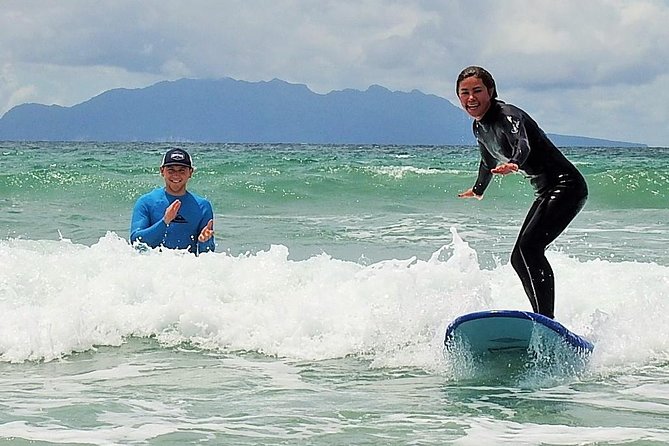
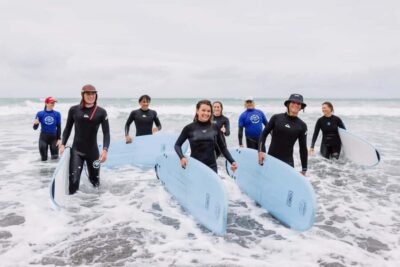
Once the main skills are covered, you take the board into the water. The session is built around a beginner wave, with the aim of helping you catch a first ride rather than sending you into difficult surf.
That sounds simple, but this is where patient instruction counts. You need help choosing a wave, keeping the board pointed in the right direction, paddling with enough effort, and trying the pop-up at the right moment. The experience is not a private lesson, so you will share the water with the rest of your group. Still, a maximum of 12 participants gives the instructors a workable group size.
Saltwater Eco instructors named in the feedback include Locke, Lydia, and Kirsty. Locke is singled out for patience with beginners and for helping a young surfer stand up quickly. Lydia is associated with both children’s lessons and a girls on curls session, while Kirsty is praised for a calm approach. Those details suggest a teaching style that focuses on reassurance as well as technique.
You should keep your expectations sensible. Catching one wave is possible, but it is not guaranteed for every person on every day. The weather and tide affect the session, and your result will also depend on balance, timing, and comfort in the water. Even if you spend much of the lesson practicing, you leave with skills you can work on again.
More Surf Lessons in New Zealand:
- 2 Hour Surf Lesson – Te Arai Beach
★ 5.0 · 119 reviews - Raglan: Group Surf Lesson
★ 5.0 · 79 reviews - Auckland: Group Surfing Lesson with Muriwai Surf School
★ 4.9 · 34 reviews - Raglan: 2 Day Surf Lesson Package
★ 4.8 · 6 reviews
Why the beach setting matters

The beach is described as having white sand and clear water, with a clean, beginner-friendly feel. That setting adds real value to the lesson. Surf instruction is easier to enjoy when the beach itself feels pleasant, especially for family members who are watching or for anyone who wants a day by the sea rather than a narrow sports appointment.
The beach also provides a useful contrast to a formal indoor activity. You learn in the same setting where you will use the skill, with the sound and movement of the sea making the lesson feel immediate. You are not studying surfing in theory. You are handling a board, reading the water, and trying the movements in real conditions.
Still, an attractive beach does not remove the physical demands. You may need to carry a board, paddle, repeatedly stand, and fall into the water. The wetsuit helps with comfort, but the activity still requires enough mobility and fitness to take part. The stated guidance says most people can participate, though the information does not give a detailed accessibility assessment.
The value of the $49.03 price
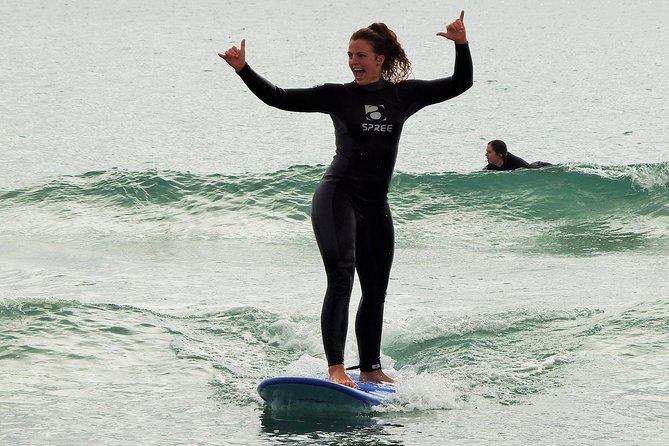
The price makes the lesson good value for a first attempt because it covers the two main items that would otherwise add cost: the surfboard and wetsuit. You also receive a two-hour coached session, rather than simply hiring equipment and trying to work things out alone.
The small-group limit improves the value further. You are not paying for a private lesson, but a group of up to 12 is more manageable than a mass class. The difference is important for beginners. You want an instructor to notice when you are lying too far forward, paddling too slowly, or trying to stand before the wave has carried you.
Souvenir photos and videos are included as well. These are more than a nice extra if you want to see what your technique looked like. You can use the footage to remember the correct body position and share the day with family members who did not join the water.
The price does not include transport, meals, or anything beyond the stated surf equipment and lesson. If you are visiting Auckland, add the cost and time of reaching Te Arai to your budget. The lesson itself is reasonably priced, but the full day-trip cost depends on how you get there.
Who will enjoy this lesson most
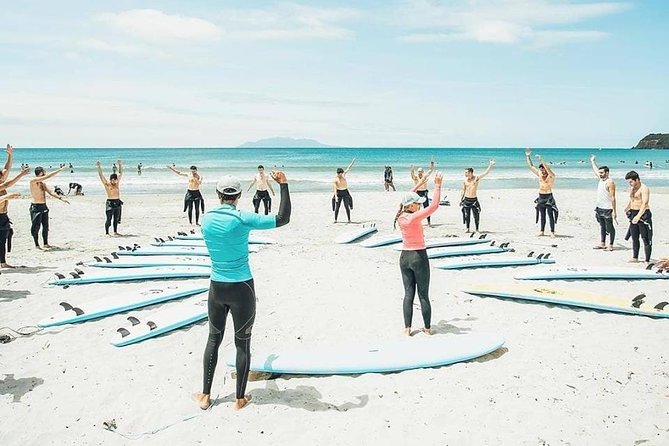
This is a strong choice for a first surf attempt, especially if you want direct instruction without paying private-lesson prices. It suits adults who feel unsure about the water, families with older children, and anyone who wants a practical activity outside central Auckland.
The experience appears particularly helpful for nervous beginners. Several instructors are praised for patience, calm guidance, and creating a friendly atmosphere. That matters more than flashy technique when you are trying to stand on a board for the first time.
Children aged 10 and 12 have taken part successfully, but the supplied information does not state a formal minimum age. If you are booking for a younger child, ask Saltwater Eco first. You should also mention any fitness or mobility concerns before arrival, since the activity involves carrying equipment and working in the water.
This is less suitable if you want advanced coaching, long free-surf time, or a private session. The lesson concentrates on beginner skills, and the group may include people with very different abilities. If you already surf confidently, you may find the pace too basic.
Weather, tides, and the practical details
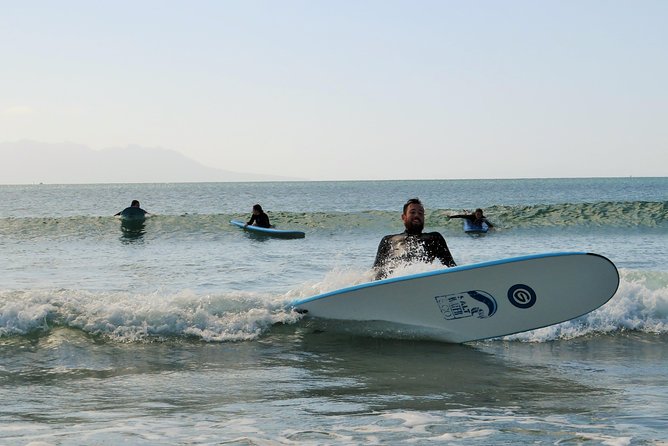
The lesson requires good weather. If poor conditions cause cancellation, you are offered another date or a full refund. You can also cancel for a full refund if you do so at least 24 hours before the start time. Changes or cancellations inside that 24-hour window are not accepted for a refund.
Because the tide shapes the lesson time, check your booking details carefully. Do not assume that the advertised 11 a.m. to 1 p.m. window applies unchanged to every date. Arrive at 708 Te Arai Point Road with enough time to get organized, and confirm whether the surf takes place at Te Arai or Omaha Beach.
The mobile ticket makes entry simple, and confirmation is provided when you book. There is no need to bring a surfboard or wetsuit, but you should plan for ordinary beach needs such as a change of clothes and a way to manage wet gear after the session. Those items are not listed as included, so do not expect the operator to supply them.
Should you book Saltwater Eco?
I would book this lesson if you want an affordable, well-structured first step into surfing near Auckland. The strongest reasons are the included equipment, tide-aware scheduling, small group size, and patient instructors such as Locke, Lydia, and Kirsty.
Before booking, confirm the exact beach location and transport plan. The Te Arai meeting point is clear, but Omaha Beach is also named in the activity details. If you are happy to make your own way there and accept that weather and surf conditions shape the day, this is a sensible introduction to the sport.
FAQ
Where does the surf lesson start?
The meeting point is 708 Te Arai Point Road, Te Arai 0975, New Zealand. The activity ends back at the meeting point.
How long does the lesson last?
The lesson lasts approximately two hours. The listed session time is 11 a.m. to 1 p.m.
Is transport included?
No. You must arrange your own transport to the lesson location.
Are a surfboard and wetsuit provided?
Yes. The lesson includes use of a surfboard and wetsuit.
How many people can join the lesson?
The maximum group size is 12 participants.
Is the lesson suitable for beginners?
Yes. The session covers beach and water safety, equipment use, paddling, and pop-up skills for first-time surfers.
Are photos and videos included?
Yes. Souvenir photos and videos from the lesson are provided.
What happens if the weather is poor?
If the experience is canceled because of poor weather, you can choose another date or receive a full refund. Free cancellation is also available up to 24 hours before the start time.
Just added around New Zealand
- Private 2 Hour Surf Lesson★ 5.0 · 5 reviews
- Kinloch: Lake Taupo Catamaran Cruise with Paddleboarding★ 5.0 · 4 reviews
- Raglan: Private Surf lesson 2:1★ 5.0 · 3 reviews
- Raglan: 2 Day Surf Lesson Package★ 4.8 · 6 reviews
- Raglan: Private 1:1 Surf Lesson★ 5.0 · 2 reviews
- Queenstown: White Water Surfing Along the Kawarau River★ 4.6 · 30 reviews
- Raglan: 2 Day Surf Lesson & Rental Package★ 4.6 · 5 reviews
- Raglan: 3 Day Surf Lesson Package★ 5.0 · 2 reviews
New Zealand Surf Trips, compared.
Day Cruise & Island Tour – Snorkel/Wildlife/Paddleboard/Islands
Read our review →
Auckland: Group Surfing Lesson with Muriwai Surf School
Read our review →
Queenstown: White Water Surfing Along the Kawarau River
Read our review →
Queenstown: Kayaking or SUP Experience on Moke Lake
Read our review →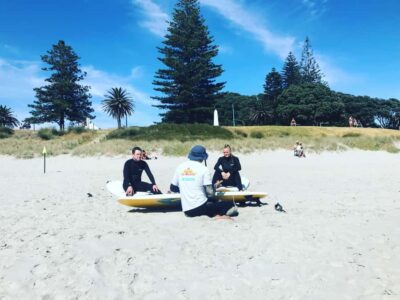
Browse the lists this tour appears in