
Review · CABO SAN LUCAS
Cabo epic private surf and video photography adventure
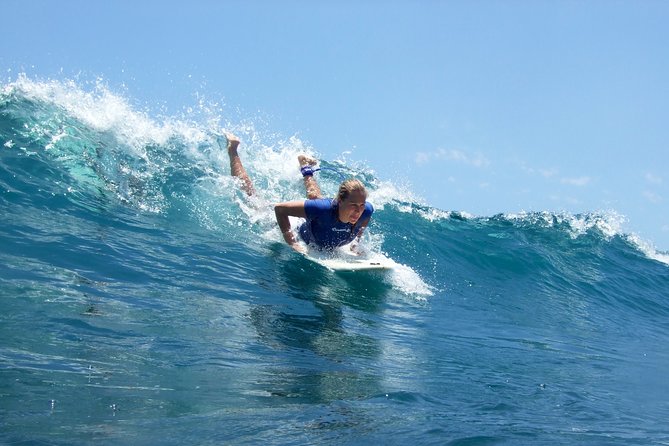
The best part of this Cabo outing is that you are not just riding waves, you are being photographed from inside the action. A professional photographer works from the water and the sand, using long lenses, fisheye gear, and waterproof housings to capture the moments you normally miss.
I like the private group format, which keeps the session personal for a couple, family, or up to four friends. I also like the serious camera setup, including Canon 7D bodies and L series lenses, because the pictures are meant to show more than a distant speck on a wave.
The main consideration is time. Two hours goes quickly, especially if you need coaching, board time, and several photo passes. Weather and surf conditions also matter, and transportation or food should be confirmed before booking since those extras appear in some past arrangements but are not clearly listed as part of this specific photo session.
Key points at a glance
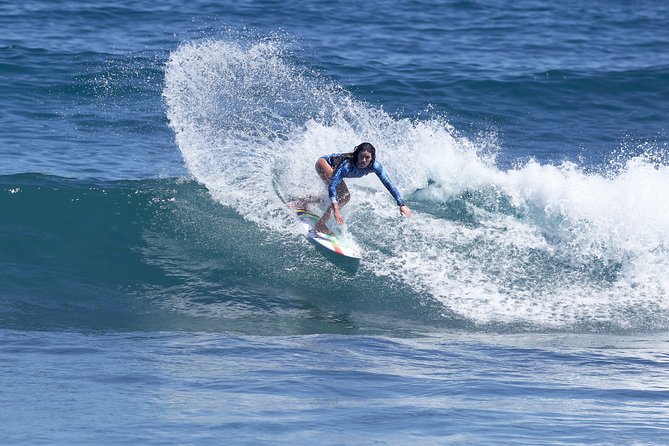
- Photographs from water and shore: You get close action shots, wide compositions, and natural moments between waves.
- Up to four people per booking: The private setup works well for a family, couple, or small surf crew.
- Professional waterproof equipment: Canon 7D and 7D Mark II cameras, L series lenses, and Nimar water housings are used.
- Useful for improving technique: Clear photos can help you study balance, posture, wave position, and timing.
- Martin and Emiliano are associated with the team: Martin is described as the owner, guide, and photographer, with Emiliano also assisting on surf lessons.
- Two hours in Cabo San Lucas: The session ends at the original meeting point, with weather-based rescheduling or a refund available.
Why a surf photo session is worth your Cabo time
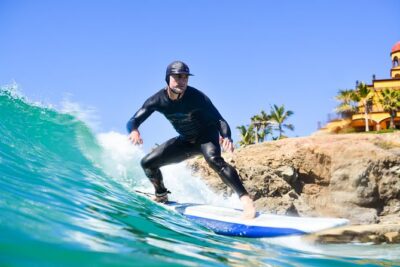
Most beach photos show you standing beside a board. This experience aims for something better: you actually surfing. The photographer works from the water and shore, so you can receive several kinds of images from one session.
From inside the lineup, the camera can catch your face as you take off, the board cutting across the wave, and the split second when your balance either holds or disappears. From the sand, a longer lens can frame the full wave and show how you fit into the scene.
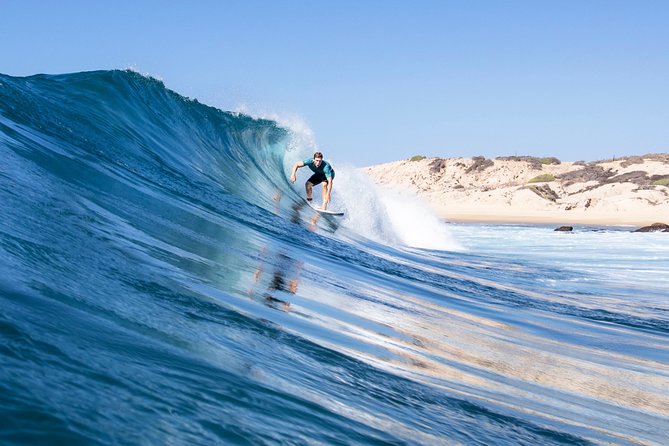
That combination matters. Close water shots give you emotion and detail. Shore-based photos give you context. You can see the wave shape, your position on it, and how your body moves from takeoff to the ride.
I also like that the pictures can serve two purposes. They are keepsakes from Cabo, but they can also help you improve. A beginner may notice that the front foot lands too far forward. A more experienced surfer may spot a missed turn, poor posture, or a better line for the next wave.
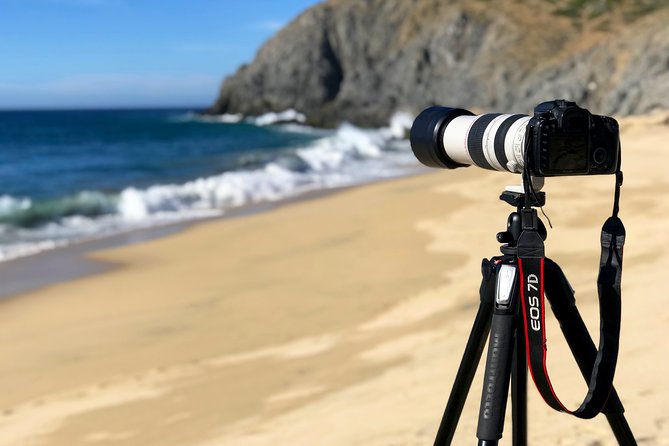
This is not simply a photographer standing on the beach with a telephoto lens. The equipment list includes Canon 7D and 7D Mark II cameras, plus Canon L series lenses in several useful ranges:
- A 100 to 400 millimeter lens for distant action from shore
- An 8 to 15 millimeter fisheye for dramatic close water images
- A 17 to 40 millimeter wide-angle lens for broader scenes
The cameras are placed in Nimar water housings. That is important because water photography is hard on equipment and requires more than a normal beach camera. It also means the photographer can work close to the surfer instead of relying only on distant shots.
More Private Surf Lessons in Mexico
- Private Surf Lesson Experience at Puerto Vallarta
★ 5.0 · 115 reviews - Private Kiteboarding Lesson in Tulum
★ 5.0 · 90 reviews - Private Yacht Cruise 4 Hour- Snorkeling & Paddle Boarding
★ 5.0 · 74 reviews
What the two-hour session is likely to feel like
The published meeting point is in Cabo San Lucas, and the activity ends back there. The available details do not provide a fixed stop-by-stop route, so you should think of this as a focused surf session rather than a sightseeing tour with several scheduled attractions.
At the start, you meet the Cabo Surf Tours team and get set for the water. If you are working with Martin, you may also be dealing with the person described as the owner, guide, and photographer. That can make communication simpler, especially if you want specific shots or have a clear goal for the session.
The central part is time in the surf while the photographer changes position. You may be photographed as you catch a wave, while riding, and during the moments between attempts. The photographer can work from the water for close action, then shoot from the sand for wider views.
With four people sharing one session, your time on camera will depend on how active the group is. A couple or solo surfer can expect more concentrated attention. A group of four gets the benefit of a private booking, but each person should keep expectations realistic. Two hours is enough for a useful collection of images, not an endless personal photo shoot.
The session then returns to the meeting point. The supplied details do not specify an exact delivery time or image count, so ask how and when the photos will be delivered before you book. One past arrangement involved downloading images after returning home, which suggests digital delivery may be possible, but you should confirm the current process directly.
The private format makes a real difference
A private booking for up to four people costs $200 per group, not per person. For four surfers, that works out to $50 each. For two people, it is $100 each, and for a solo surfer the entire cost rests with one person.
That pricing is most attractive when you fill the group. Four friends can split the cost while sharing the same photographer and session. A family can also keep the outing together instead of sending different members into separate group activities.
The private format also gives you more control than a large surf school. If one person is learning, the photographer can focus on that person for part of the session. If everyone already surfs, the group can concentrate on action images rather than spending much of the time on basic instruction.
Still, this is not automatically the best value for everyone. A solo beginner may prefer a longer lesson with more coaching. The photo session can help you understand your technique, but the primary product is photography, not a full surf course. If instruction is your main goal, ask whether a lesson can be added or whether you should book one of the provider’s separate private surf lessons.
What the camera setup means for your pictures
The equipment list is unusually specific, which helps you understand what you are paying for. The 100 to 400 millimeter lens is suited to action from the beach, where the photographer can compress the scene and follow you across the wave.
The fisheye lens offers a different look. When the photographer is close in the water, it can place you, the wave, and the surrounding sea in one dramatic frame. These shots often show the surfer’s expression, which is one of the small details that makes a surf photo feel personal rather than generic.
The 17 to 40 millimeter wide-angle lens can show more of the setting and the people around you. That is useful for group images, beach scenes, and pictures that tell the story of the whole outing.
The Nimar housings are just as important as the lenses. A waterproof case protects the camera and lets the photographer work in the surf. Water photography has a different feel from shooting from shore, since the photographer has to manage waves, position, and timing while keeping the housing steady.
You should not expect every image to be a perfect poster. Surf photography depends on wave shape, light, your position, and the photographer’s timing. The strength of this setup is variety: close-ups, full-wave action, and wider scenes give you a better chance of receiving a useful set of images.
Same coast, a different way into the water:
- Los Cabos Power snorkel Adventure, Kayaking and Stand-Up Paddle
★ 4.5 · 872 reviews - Pirate’s Channel & 3 Lagoons Kayak or SUP/Paddle Tour +Meditation
★ 5.0 · 564 reviews - Los Cabos Surf Lesson at Costa Azul
★ 5.0 · 398 reviews - Bioluminescence by kayak or SUP to Los Arcos Puerto Vallarta
★ 5.0 · 343 reviews
A good option for beginners, with one important limit
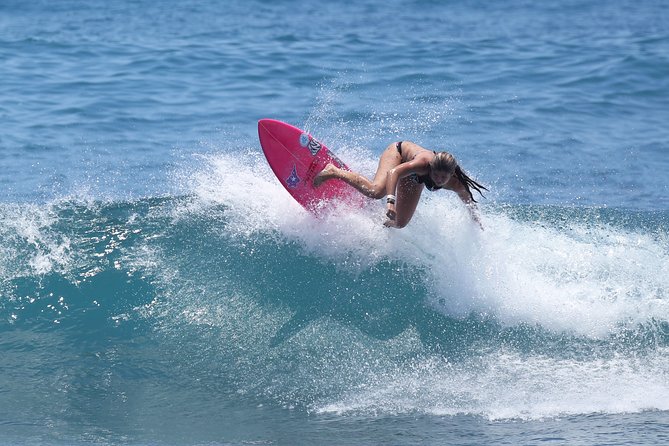
You do not need to be an advanced surfer to get value from the session. A beginner can use the pictures to see what happened during a wave, even when the ride felt too fast to remember clearly.
The provider’s broader surf work includes one-on-one help in the water and beach instruction. Martin and Emiliano have been associated with beginner-friendly private lessons at quieter surf spots, with ongoing feedback during the session. That background suggests the team may be comfortable working with newer surfers, but you should not assume this two-hour photo experience includes the same level of instruction unless it is confirmed.
For a beginner, I would ask three direct questions before booking:
- How much coaching is included in the photo session?
- Are boards supplied for this specific booking?
- Will the photographer focus on learning progress, action shots, or both?
The difference matters. If your main wish is to learn to stand up, you need time spent listening and practicing. If your main wish is to document a day you already know how to surf, you can use more of the session for repeated wave attempts and different camera angles.
What families and small groups should know
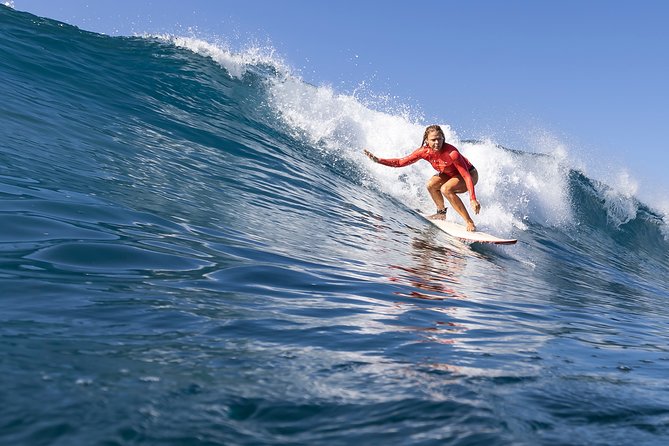
The four-person limit is practical for families and friends. You can share the cost, encourage one another from the beach, and receive pictures of the whole group instead of only one participant.
A family should decide in advance who wants the most water time. Younger or newer surfers may need more attempts before they are ready for the camera. If everyone takes turns, the private format makes it easier to keep the group together, but the two-hour limit remains fixed.
Couples may find the session especially appealing. One person can surf while the other watches, then switch roles, with the photographer capturing both. Friends can also treat it as a shared activity rather than a formal lesson.
I would not book this expecting a large group party. The experience is designed for a small private group, and that is its strength. If you want constant action from several surfers at once, discuss the group plan beforehand so the photographer knows what matters most.
Transportation, boards, food, and other practical questions
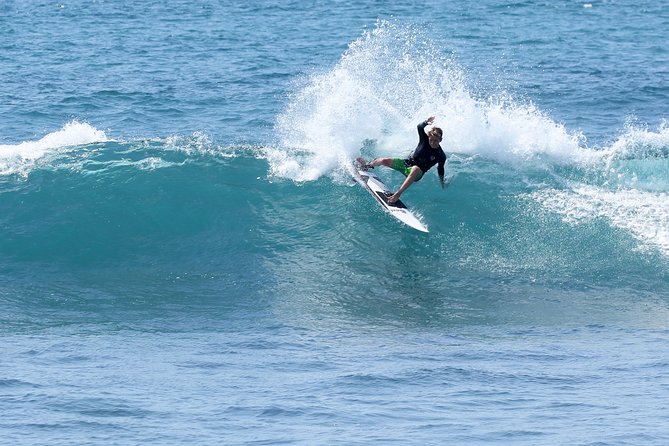
The formal details identify Cabo San Lucas as the start and end point. They do not promise hotel pickup, food, drinks, or boards as part of this specific photo product.
Some past arrangements with the Cabo Surf Tours team included door-to-door service, boards, snacks, drinks, and food. Those extras may be available in certain bookings or on related surf tours, but you should confirm them rather than assume they are included here.
That is especially important if you are staying outside central Cabo San Lucas. Ask where the exact meeting point is, how you will reach it, and whether any transfer fee applies. Also confirm what you need to bring for the water and how the digital photos will be sent.
The activity is mobile-ticket friendly, and confirmation is normally sent at booking. If you book within 12 hours of the start time, confirmation may arrive as soon as possible, subject to availability.
Service animals are allowed, and most people can participate. The supplied details do not list specific swimming, age, or fitness requirements, so anyone with a concern should ask before reserving.
Weather and cancellation rules
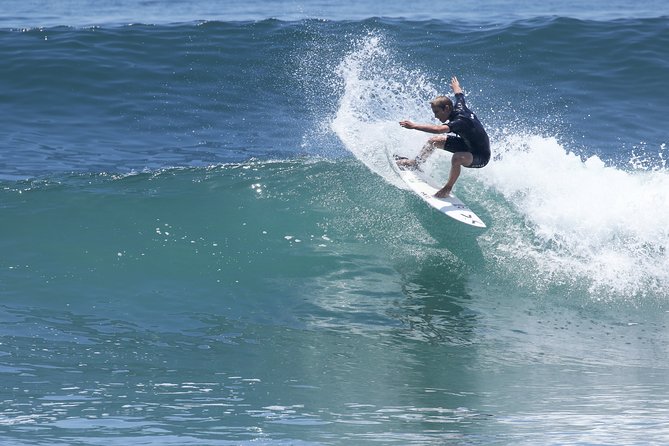
Surf photography depends on safe and workable conditions. If poor weather causes the activity to be canceled, you are offered another date or a full refund.
You can cancel for a full refund if you do so at least 24 hours before the start time. Cancellations or changes made inside that 24-hour window are not refunded or accepted, and the cutoff uses local Cabo time.
This policy gives you useful protection if weather disrupts the session, but it is less flexible for a last-minute change in your own plans. I would avoid booking too close to other fixed activities, especially flights or a packed excursion schedule.
Who should book this Cabo surf experience
I would consider this a strong match for:
- Surfers who want sharp action photos rather than ordinary beach snapshots
- Couples who want a private activity and pictures of both people
- Families or friends who can split the $200 group price
- Beginners who want visual feedback on their technique
- Experienced surfers who already know how to ride and want water-level images
- People who value a small personal session over a large surf-school group
I would be more cautious if you want a long lesson, a full-day outing, or guaranteed hotel transportation. The two-hour length is focused and convenient, but it limits how much teaching and photography can happen.
The booking is also less appealing if you are traveling alone and mainly want instruction. At $200 for one person, the value depends on how important professional surf photography is to you.
Should you book it?
Book this experience if the photos are the main reason you are heading into the water. The combination of water-level shooting, shore-based action images, serious camera gear, and a private group can produce far more useful memories than a few phone pictures from the beach.
I especially like it for a small group that can share the price. Martin’s role as guide, owner, and photographer adds a personal touch, while the team’s experience with beginner lessons may help newer surfers feel at ease.
Before paying, confirm the meeting point, board use, transport, coaching, and photo delivery. If those details fit your plans, this is a focused and personal way to bring home proof that you really caught the wave.
FAQ
How long does the Cabo surf photography experience last?
The session lasts approximately two hours.
How many people can join one booking?
Up to four people can participate in the private activity.
What does the experience cost?
The price is $200 per group of up to four people.
Where does the experience start and finish?
It starts in Cabo San Lucas, Baja California Sur, Mexico, and ends back at the meeting point.
What photography equipment is used?
The team uses Canon 7D and 7D Mark II cameras, Canon L series lenses, and Nimar water housings. Listed lenses include 100 to 400 millimeter, 8 to 15 millimeter fisheye, and 17 to 40 millimeter wide-angle lenses.
Can I cancel for a full refund?
Yes. You must cancel at least 24 hours before the scheduled start time for a full refund. Changes or cancellations made less than 24 hours before the start are not accepted or refunded.
What happens if bad weather cancels the session?
If poor weather causes a cancellation, you will be offered a different date or a full refund.
More Photo Sessions in Mexico
- Bacalar Sunrise Stand Up Paddleboard Tour with Breakfast & Photos
★ 5.0 · 308 reviews - Kayak or Paddle Board & Snorkel to the Arch with Photos included
★ 5.0 · 164 reviews - Puerto Vallarta: Guided SUP Board Tour with Digital Photos
★ 4.0 · 7 reviews - Tenerife: Surfing Lesson for All Levels, Photos included
★ 4.9 · 1,314 reviews
Just added around Mexico
- 120 Min Surf Lesson / Great for All Levels★ 5.0 · 8 reviews
- 90 Min Surf Lesson / Great for Beginners★ 5.0 · 41 reviews
- Surf Expeditions (Half day)★ 5.0 · 39 reviews
- Private Surf Lesson in Baja, East Cape★ 5.0 · 3 reviews
- Cabo full day surf lesson and offroad baja beach adventure★ 5.0 · 18 reviews
- Surf Lessons in CABO with Mexico Surf Champ!★ 5.0 · 18 reviews
- Baja Surf Expeditions★ 5.0 · 27 reviews
- Private Kiteboarding Lessons in El Cuyo★ 5.0 · 2 reviews
Cabo San Lucas Surf Trips, compared.
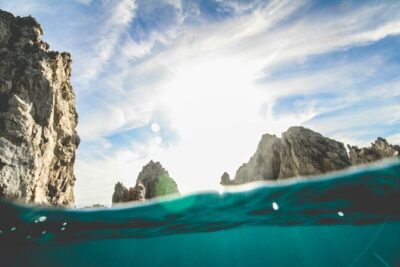
Cabo San Lucas Paddleboard and Snorkel at the Arch
Read our review →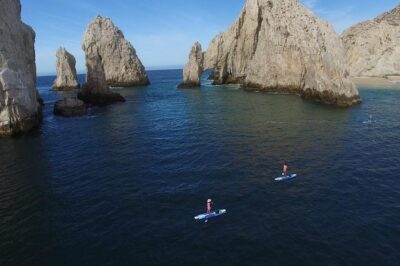
Kayak or Paddle Board & Snorkel to the Arch with Photos included
Read our review →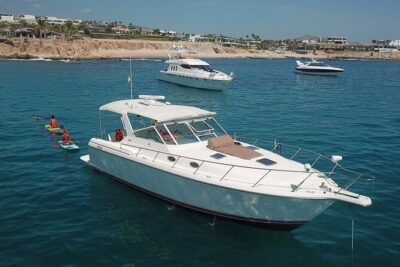
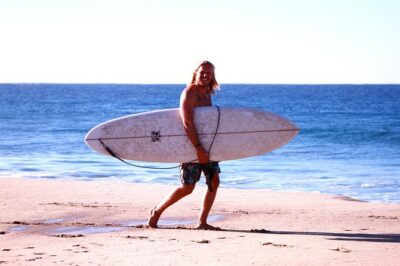
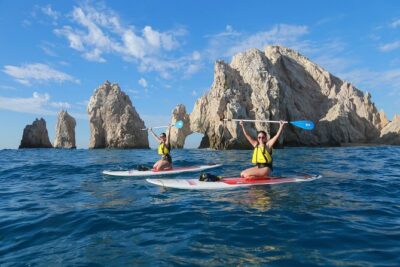
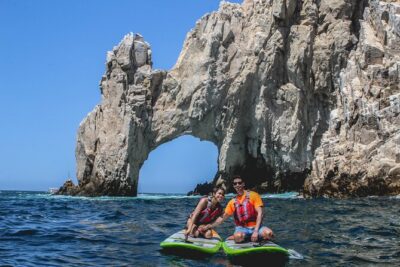
Paddleboard Expedition to the Arch of Cabo San Lucas, Lovers Beach & Snorkel
Read our review →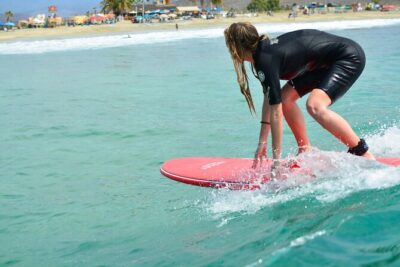
Browse the lists this tour appears in