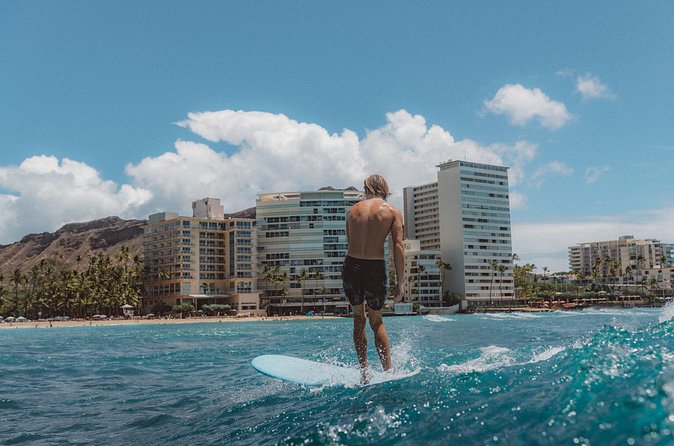
Review · OAHU
Private Surfing Lesson: Two Hours of Beginner Instruction
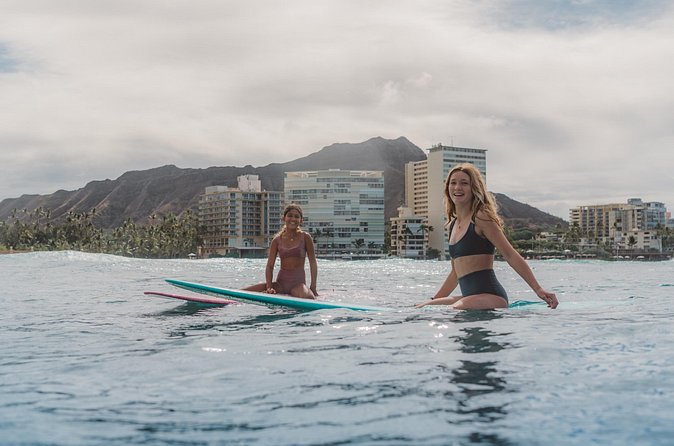
The best part of this lesson is the one-on-one pace. You are not trying to keep up with a large class, so the instructor can focus on your balance, timing, and comfort in the water. I like the short land briefing and the hands-on help once you reach the waves. I also like that all equipment is supplied and the instructors hold American Red Cross CPR and lifeguard certification.
The main consideration is that two hours can pass quickly, especially if you need time to get used to paddling and standing. Kids 10 and under and weak swimmers must take a private lesson, so this format is not just a luxury for them. It is a safety requirement.
Key points at a glance
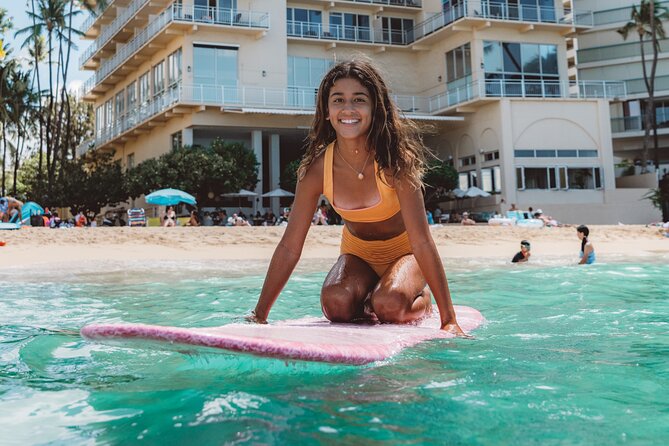
- Private instruction: Your group receives personal coaching instead of sharing an instructor with strangers.
- Two hours at Kaimana Beach: The lesson starts and ends at Kaimana Beach Hotel on Kalākaua Avenue.
- Built for beginners: You learn board position, paddling, wave handling, turning, standing, and balance.
- Safety comes first: Instructors are certified in CPR and lifeguarding by the American Red Cross.
- Equipment is provided: You need to bring a swimsuit and towel, but the surfing gear is included.
- A good first step: Noah, one of the instructors connected with this experience, has been praised for helping a first-time surfer gain confidence and want her own board.
Why a private lesson makes sense for first-time surfers
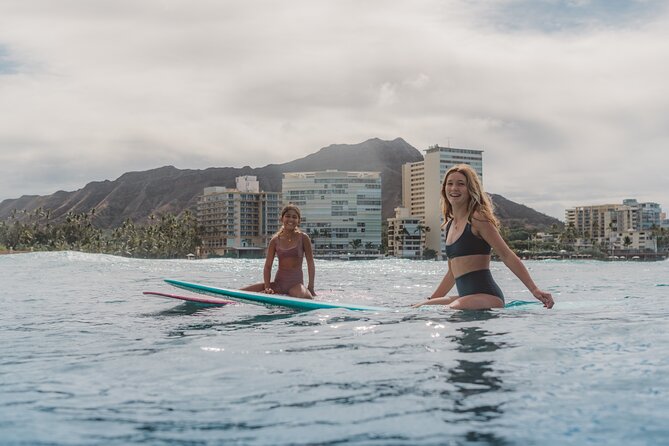
Surfing looks simple from the beach. Lie on the board, paddle, stand up, and ride. In practice, each step takes timing, body control, and a bit of nerve. A private lesson gives you room to work through those steps without feeling rushed.
That matters most if you have never handled a surfboard. You can ask the same question twice, take a breath after a fall, or repeat a movement until it feels natural. Your instructor can also adjust the lesson to your starting point. Someone with a little experience may spend less time on basic board handling and more time on catching waves or improving stance.
I also like the private setup for families. Parents can watch a child receive direct attention, and the instructor can keep the lesson focused on the child’s ability and comfort. Kids 10 and under must take private instruction, as must weak swimmers. That rule narrows your booking choices, but it also makes sense for a water activity that requires close supervision.
The lesson is offered in English. It is a good fit if you want clear spoken instruction and a straightforward introduction to surfing rather than a large, fixed group class.
More Beginner Surf Lessons in Oahu
- Oahu: Beginner-Friendly Waikiki Beach Surfing Lesson
★ 4.9 · 425 reviews - Oahu: Waikiki 2-Hour Beginner Group Surf Lesson
★ 4.9 · 191 reviews - North Shore Beginner Surf Lesson, Hawaii
★ 4.5 · 114 reviews
Meeting at Kaimana Beach Hotel
Your meeting point is Kaimana Beach Hotel, at 2863 Kalākaua Avenue in Honolulu. The activity begins and ends at this same location, which keeps the logistics simple. You do not need to arrange separate transportation between a shop, a beach, and a final pickup point.
The meeting point sits by Kaimana Beach, giving the lesson a direct connection to the water rather than making you spend part of your two hours getting there. Since the full activity lasts about two hours, that efficiency matters. A lesson that loses time to transfers leaves less time for actual practice.
You should arrive ready to change into your swimsuit. Bring a towel, since those are specifically not listed as provided. The supplied equipment means you do not need to arrive with a surfboard or other surfing gear.
The details are basic, but they are worth handling before you leave your hotel. A swimsuit and towel are the two clear personal items. The confirmation is issued at booking, so keep that information available on your phone because the ticket is mobile.
The land lesson gives you a safer start
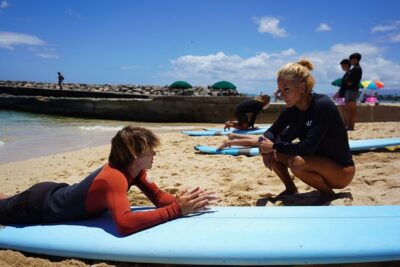
Before you head into the water, the instructor gives you a quick land lesson. This is not filler. It is where you learn the movements that are hard to absorb once you are balancing on a moving board.
You will cover the proper position on the surfboard first. Board position affects nearly everything that follows. Lie too far forward and the nose may push into the water. Lie too far back and the board may drag. Starting with the right body placement helps you paddle more efficiently and gives you a better chance of catching a small wave.
Paddling technique is another key topic. Beginners often use only their arms and tire quickly. A short explanation on land can help you understand how to keep your body centered and make each stroke useful. You will also learn how to maneuver over waves, a basic skill that keeps you from simply meeting every wave head-on.
The instructor explains how to turn the board and how to get to your feet. You will practice the proper surf stance and balance techniques before the water adds motion. Safety rules are part of this briefing as well.
I appreciate this order. You are not simply handed a board and sent toward the waves. You get a basic plan first, then work on applying it in the water.
Practicing in the water at your own pace
Once you enter the water, the instructor helps you catch waves and guides you toward a standing position. The important point is that the lesson is personal. Your instructor can respond to what you are doing instead of giving the same advice to an entire line of beginners.
That direct help can make the first successful ride come sooner. It can also make failure less frustrating. You may stand too early, lose your balance, or miss the wave. Those are normal parts of learning, and the instructor can help you understand what happened and try again.
You will work on more than simply standing up. The lesson includes paddling, getting over waves, turning the board, stance, balance, and safety. Those pieces fit together. If your board position is wrong, paddling becomes harder. If your stance is too narrow or unstable, standing becomes brief. If you do not know how to move over a wave, you may spend too much energy before the real practice begins.
The private format lets the instructor give you corrections in real time. You can expect coaching aimed at helping you catch waves, get to your feet, stay safe, and enjoy the process. The goal is not to turn you into an expert in one morning. It is to give you a useful base and a fair chance to feel what surfing is about.
More Beginner Surf Lessons in the USA
- Surf lessons for beginners in Waikiki
★ 4.0 · 40 reviews - Oahu: Waikiki Beginner Private Surf Lesson- Female Guide
★ 4.9 · 40 reviews - Group Surf Lesson: Two Hours Of Beginners Instruction
★ 5.0 · 32 reviews - Beginner Surf Lesson in North Shore, Oahu
★ 5.0 · 26 reviews
Safety and the right level of supervision
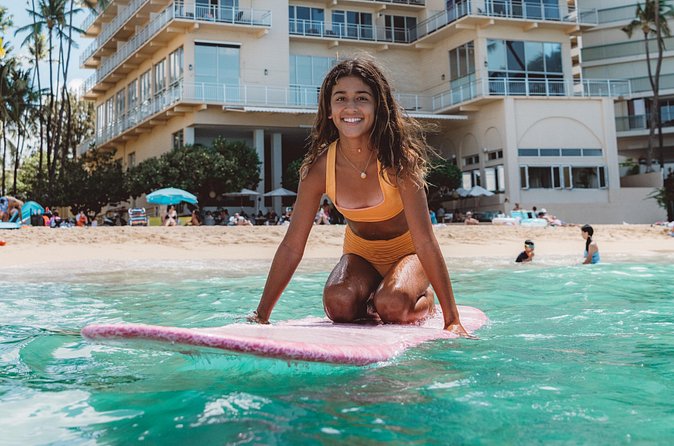
Every instructor is certified in CPR and lifeguarding by the American Red Cross. That does not remove the normal risks of ocean activity, but it adds an important layer of preparation.
You should still be honest about your swimming ability when booking. Weak swimmers must take a private lesson, and children 10 and under must also have private instruction. These requirements are especially important because the lesson takes place in the water, where confidence can change quickly once the board begins moving.
The safety portion covers rules as well as technique. Learning how to handle the board, maneuver over waves, and position yourself correctly can help you avoid wasting energy and losing control. Listen closely during the land briefing, even if you are eager to get in the water. Those few minutes may be the most useful part of the lesson for someone completely new to surfing.
Most people can participate, according to the activity information, but that does not mean every person should treat the lesson casually. Tell the provider about concerns related to swimming or comfort in the water. For children and weak swimmers, the private requirement is already clear.
What makes the instruction feel personal
A private activity is only worth the extra cost if the teaching benefits you. Here, the structure supports that idea. The instructor can focus on your group, set the pace, and spend more time on the skill that gives you trouble.
If you are nervous, that may mean more attention to safety and board control. If you have tried surfing a few times, it may mean working on the part that has not clicked yet. The experience is designed for first-time surfers and people who have made a few attempts but are still trying to get the hang of it.
An instructor named Noah has been praised for helping a daughter enjoy her first surfing experience. The useful detail here is not simply the praise. It is the result: clear, effective help gave a new surfer enough confidence to start thinking about owning a board. That is a good sign for families looking for patient instruction.
You should not assume every lesson will feel identical, since the instructor and conditions can affect the pace. Still, private coaching gives you a better chance of receiving advice that matches your ability instead of a standard speech delivered to everyone.
Is two hours enough time?
Two hours is a sensible length for a first lesson. It gives you time to receive the land instruction, enter the water, practice paddling, try to catch waves, and work on standing. It is long enough to learn the basic sequence without committing your whole day to an activity that may be physically demanding.
The limitation is that two hours is not a full surfing course. You will not master wave reading, turns, or consistent balance in a single session. Beginners may spend a fair portion of the time learning how to position themselves and getting used to the board.
That is not wasted time. Surfing depends on repetition, and a first lesson is mainly about building a feel for the equipment and the movements. If you catch a few waves and learn what to practice next, the session has done its job.
You may also feel tired by the end. Paddling uses your arms and shoulders, while repeatedly getting to your feet takes effort. The private format lets you work at your own pace, but it cannot remove the physical demands of surfing.
What the price is buying you
No price is provided here, so I cannot judge the exact dollar value. The right comparison is with the amount of personal attention you receive, not just the number of hours.
You are paying for a private lesson, a local guide, the use of necessary equipment, safety instruction, and two hours of coaching. If you would otherwise rent a board and try to teach yourself, the lesson offers a more efficient start. You avoid guessing about board position, paddling, standing, and safety rules.
The value is strongest for first-timers, children, weak swimmers, and people who have already tried surfing but cannot quite stand consistently. It is less compelling for experienced surfers who already understand the basics and only need independent water time.
Because the activity is private, the cost may be higher than a large group class. That extra expense buys privacy and flexibility rather than a longer itinerary. If you want the cheapest possible introduction, compare the rate with group lessons before booking. If you want direct coaching and a slower, more personal pace, the private format can justify the difference.
What to bring and what to expect afterward
Wear a swimsuit and bring a towel. All necessary surfing equipment is provided, so you do not need to arrange your own board or gear.
The activity ends back at the meeting point. That makes it easy to plan the rest of your day, though you should allow yourself time to dry off and change after the lesson. The supplied information does not specify changing facilities, so do not count on a particular locker room or shower setup unless the provider confirms it.
You receive confirmation at the time of booking, and the mobile ticket makes the check-in process easier. The experience is offered in English, and the local guide leads the lesson from the beach briefing through the water practice.
Free cancellation is available if you cancel at least 24 hours before the local start time. Changes or cancellations made inside that window are not accepted for a refund. That is useful flexibility when planning ahead, but watch the cutoff if your schedule is still uncertain.
Who should book this Oahu surf lesson?
I would choose this for a first-time surfer who wants direct help instead of trial and error. It also suits a parent booking for a child 10 or under, since private instruction is required for that age group.
Weak swimmers must book privately, making this format the appropriate choice for them. People who have tried surfing a few times but still struggle with standing can also benefit from targeted corrections.
I would think twice if you already surf confidently and only need a board. The lesson is built around teaching, safety, and beginner progress. You would likely get more from independent equipment rental, if available, than from paying for instruction you no longer need.
Should you book it?
Book this lesson if you want a focused introduction to surfing at Kaimana Beach, especially if you are new, nervous, booking for a child, or still struggling with the basics. The strongest reasons are the private format, the safety-certified instructors, the included equipment, and the chance to learn at your own pace.
Skip it if you want a large social class, a full-day surf program, or advanced coaching. For the right beginner, two hours can provide a clear start, useful safety habits, and the satisfying possibility of catching a first wave under close instruction.
FAQ
How long is the private surfing lesson?
The lesson lasts approximately two hours.
Where does the activity begin and end?
It begins at Kaimana Beach Hotel, 2863 Kalākaua Avenue, Honolulu, Hawaii. The activity ends back at the same meeting point.
Is this lesson suitable for complete beginners?
Yes. It is designed for first-time surfers as well as people who have tried surfing a few times and are still learning the basics.
Are surfing boards and other equipment provided?
Yes. All necessary surfing equipment is provided. You should wear a swimsuit and bring a towel.
Do children 10 and under need private instruction?
Yes. A private surf lesson is required for children 10 years old or younger. Private instruction is also required for weak swimmers.
Can I cancel for a full refund?
Yes, if you cancel at least 24 hours before the experience start time, based on local time. Cancellations or changes made less than 24 hours before the start are not accepted for a refund.
More Private Surf Lessons in the USA
- Oahu Private Surfing Lesson
★ 5.0 · 113 reviews - Private 1-on-1 Surf Lesson with Videos and Photos
★ 5.0 · 107 reviews - Private Surf Lesson at Waikiki Beach
★ 5.0 · 107 reviews - Family, Private & Group Bodyboard Lessons in Waikiki
★ 5.0 · 106 reviews
More Private Surf Lessons in Oahu
- Waikiki Private Group Surf Lesson
★ 5.0 · 298 reviews - Family, Private & Group Surfing Lessons, Waikiki Courtesy Shuttle
★ 5.0 · 216 reviews - Private Surfing Lessons in Waikiki
★ 5.0 · 176 reviews - Family, Private & Group Standup Paddle Lessons in Waikiki
★ 5.0 · 143 reviews
Just added around Oahu
- Surf Honolulu: Ala Moana Stand-up Paddleboard Lesson★ 5.0 · 3 reviews
- Semi-Private Surfing Lesson in Waikiki, Oahu★ 5.0 · 26 reviews
- Waikiki 2 Hours Private Guided Surf Lesson★ 3.5 · 8 reviews
- Surf Activity on the Wai Kai Wave in Ewa Beach★ 5.0 · 8 reviews
- Bodyboarding 1-to-1 Private Lesson with Waikiki Courtesy Shuttle★ 5.0 · 5 reviews
- Surf Lessons on the North Shore Great for Families and all Ages★ 5.0 · 27 reviews
- Stand Up Paddle Open Group Lesson with Waikiki Courtesy Shuttle★ 4.5 · 6 reviews
- Family Stand Up Paddle Lesson with Waikiki Courtesy Shuttle★ 5.0 · 3 reviews
Oahu Surf Trips, compared.
Oahu North Shore Experience: Activities, Waterfall & Free Time
Read our review →
Beginner-Friendly Waikiki Beach Surfing Lesson
Read our review →

Family, Private & Group Surfing Lessons, Waikiki Courtesy Shuttle
Read our review →