
Review · NEW ZEALAND
Greymouth: 2-Hour Beginner Surf Lesson
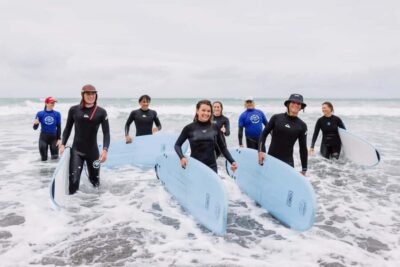
Greymouth’s beginner surf lesson gets you from beach briefing to board practice in one neat two-hour session. You start with ocean safety and basic technique, then head into the water to move, turn, catch white-water waves, and try standing up.
I like the way the lesson breaks the learning into two water sessions, with a short return to shore for hydration and pop-up practice in between. I also like the small group format, with no more than six students per instructor and a total group limit of eight.
The main thing to consider is the timing. Lessons are arranged around the tide, with a preference for lower tide, so the exact start time is confirmed after booking. You also need to bring your own towel, water, sunscreen, and warm clothes for afterward.
Key points for your Greymouth surf lesson
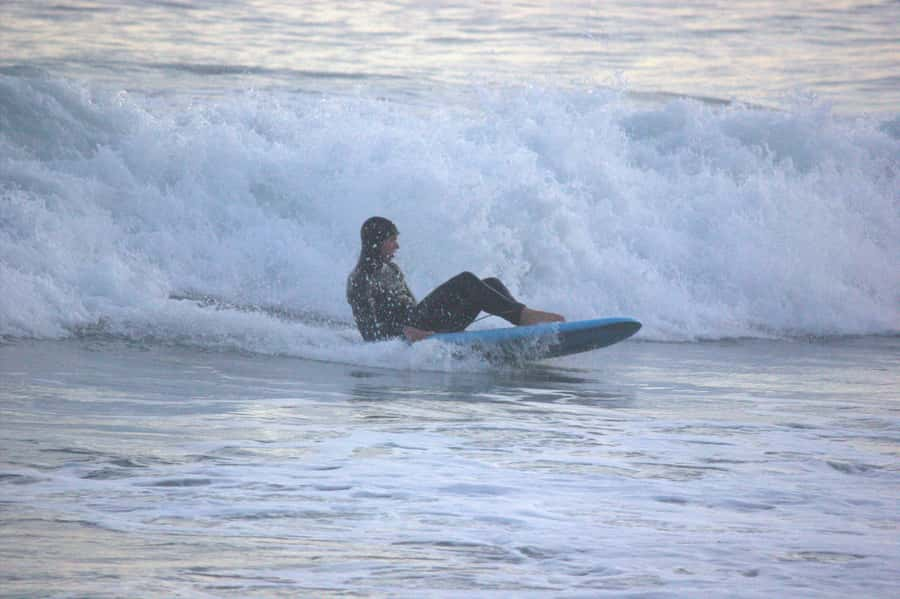
- Two stages in the water: First work on board movement, turning, and white-water waves, then return for pop-up practice before trying to stand.
- Safety comes first: The session begins with a beach briefing covering the basics of surfing and ocean safety.
- Small-group coaching: The maximum instructor-to-student ratio is 6:1, with no more than eight people in the group.
- Equipment is supplied: You only need to bring swimwear, a towel, warm layers, sunscreen, and water.
- Tide-based scheduling: Out The Back contacts you with the correct lesson time on the day you booked.
- Best for confident swimmers: The activity is not suitable for non-swimmers, children under eight, or people with back problems.
Starting beside the surf trailer in Greymouth
Your meeting point is the car park near the public toilets. Look for the trailer loaded with surfboards. Transportation is not included, so you need to make your own way there and allow enough time to locate the trailer without a last-minute scramble.
That simple meeting point is useful once you know what to expect. Do not look for a large visitor centre or a formal reception desk. The surf trailer is the landmark. Bring your swimwear if you want to wear it under the wetsuit, along with a towel, sunscreen, drinking water, and warm clothes for the trip home.
Greymouth weather can shift, and you will appreciate having a dry layer ready after the lesson. Even if the air feels mild when you arrive, two hours around cold water can leave you wanting a proper jacket and warm trousers.
The instructor teaches in English. Group size is limited to eight, while the advertised maximum ratio is six students for each instructor. That should give you a better chance of receiving a quick correction when your feet land in the wrong place or your board starts pointing somewhere unhelpful.
More Beginner Surf Lessons in New Zealand:
- Mount Maunganui: Group Beginner Surf Lesson
★ 5.0 · 16 reviews - Beginner Surf Lesson at Te Arai Beach
★ 5.0 · 6 reviews - Legian Beach, Bali: Beginner or Intermediate Surf Lessons
★ 4.9 · 1,019 reviews
The beach lesson: safety before the first wave
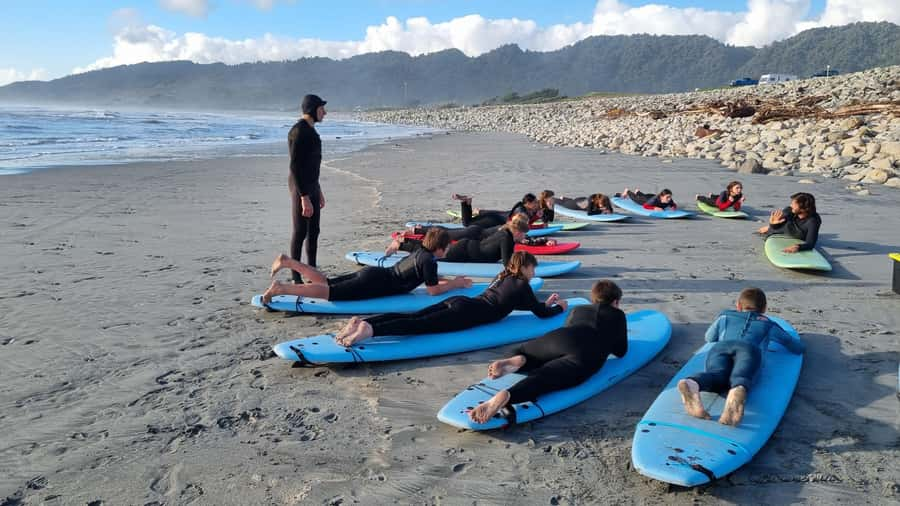
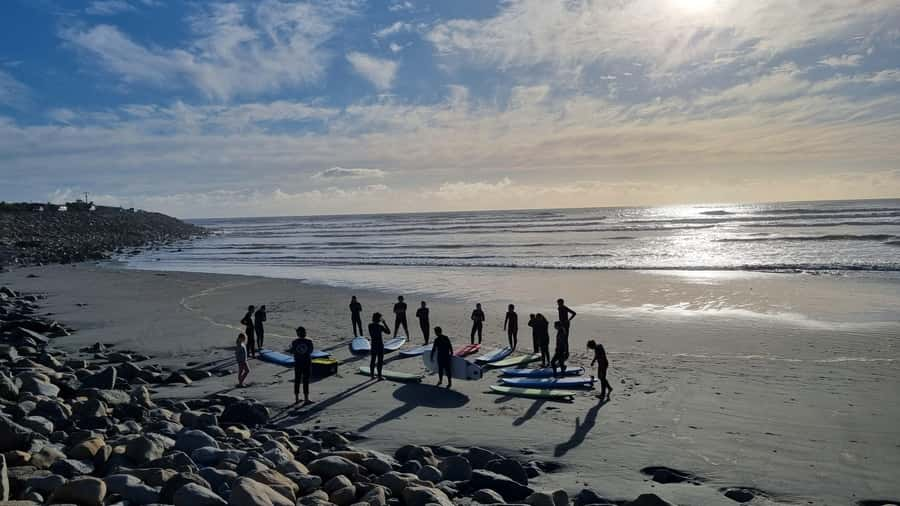
The session begins on land with a safety briefing and a short introduction to surfing. This is not wasted time. For a first lesson, knowing how to handle the board and read the immediate water conditions matters just as much as learning the pop-up.
You will cover the fundamentals of ocean safety before entering the water. The supplied information does not set out every safety topic in detail, so expect a practical introduction rather than a long classroom lecture. The useful point is that you get oriented before trying to manage a board and moving water at the same time.
The beach is also where the instructor can show you the basic body position. You need to understand where to lie on the board, how to keep it stable, and how the standing movement works before a wave gives you very little time to think.
I like this land-based opening because beginners often focus only on standing up. A sound safety briefing helps you understand what to do when the board turns, when a wave passes under you, or when you need to get back to shore. It also lets the instructor spot questions before everyone spreads out in the water.
First water session: moving, turning, and catching foam
After the beach briefing, you head into the water to get used to the board. The first goal is not a graceful surf stance. It is learning how the board moves beneath you and how your body affects its direction.
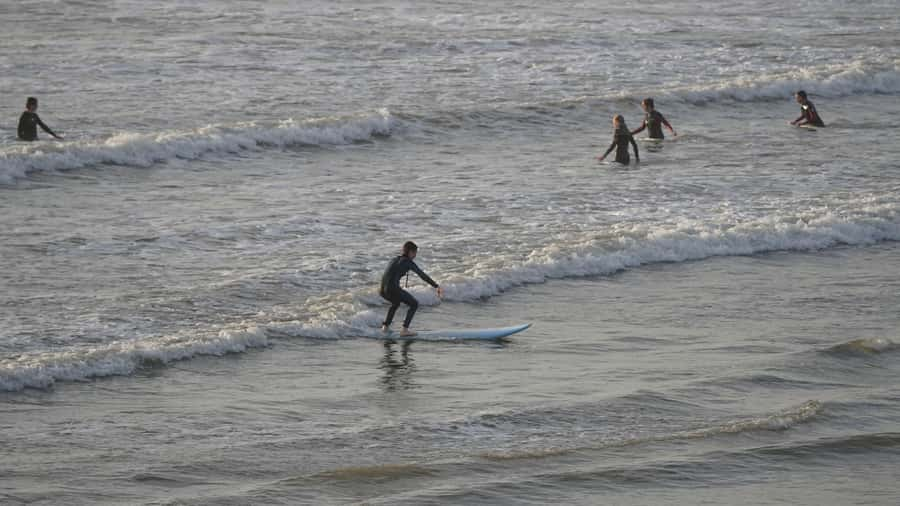
You will practice moving around on the board and work on turning techniques. The session then focuses on catching white-water waves, the broken waves that roll toward shore after the wave has already peaked.
For a beginner, white water is a sensible place to start. It gives you a push without asking you to position yourself on an unbroken wave. You can concentrate on timing, balance, and direction rather than trying to judge every part of a clean wave.
This part may feel busy at first. You are watching the water, holding the board, listening for instructions, and trying to remember which foot goes where. That is exactly why the small group setup matters. With fewer people around you, the instructor can offer short, useful corrections instead of giving one general speech to a crowd.
Do not judge the lesson by how quickly you stand. A first session is also about learning to move safely, keep control of the board, and catch a wave in the first place. The program gives you a clear progression: board handling, turning, white-water practice, then standing.
The short shore break and the pop-up lesson
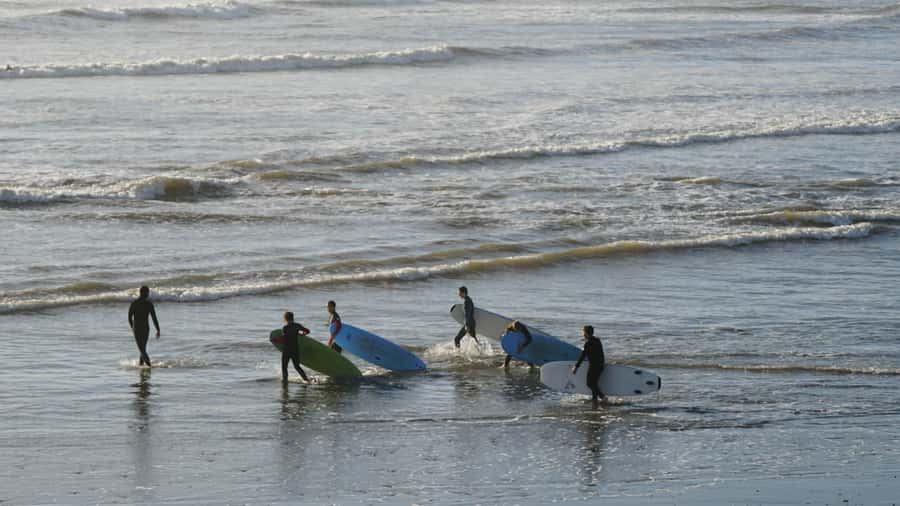
After the first water session, you return to land for hydration and a demonstration of the pop-up. This pause divides the lesson into manageable parts and gives you a chance to reset.
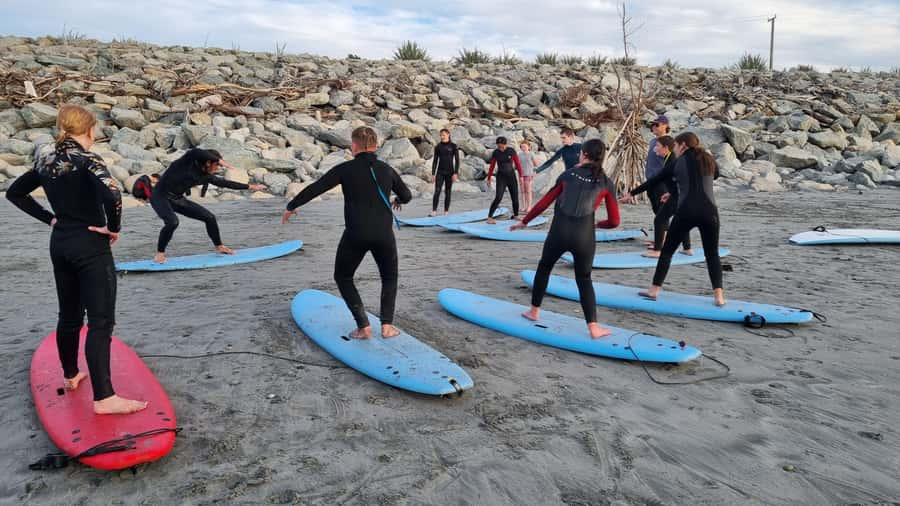
The pop-up is the quick movement from lying on the board to standing in a surf stance. It looks simple when someone else demonstrates it. In practice, beginners often put their hands too far forward, bring their knees underneath themselves, or stand with their feet facing the wrong way.
A shore-based demonstration gives you time to watch the movement without a wave pushing the board. You can focus on the order of the steps and ask for a correction before trying again in the water.
Bring your own water because drinks are not included. The break is not described as a meal stop, and food is not provided. Think of it as a short practical pause, not a full rest period.
I consider this two-part structure one of the strongest features of the experience. You are not asked to absorb every skill at once. The first session builds comfort on the board, the shore break sharpens the pop-up, and the second water session gives you a chance to apply it.
More Surf Lessons in New Zealand:
- 2 Hour Surf Lesson – Te Arai Beach
★ 5.0 · 119 reviews - Raglan: Group Surf Lesson
★ 5.0 · 79 reviews - Auckland: Group Surfing Lesson with Muriwai Surf School
★ 4.9 · 34 reviews - Raglan: 2 Day Surf Lesson Package
★ 4.8 · 6 reviews
Second water session: trying to stand on a wave
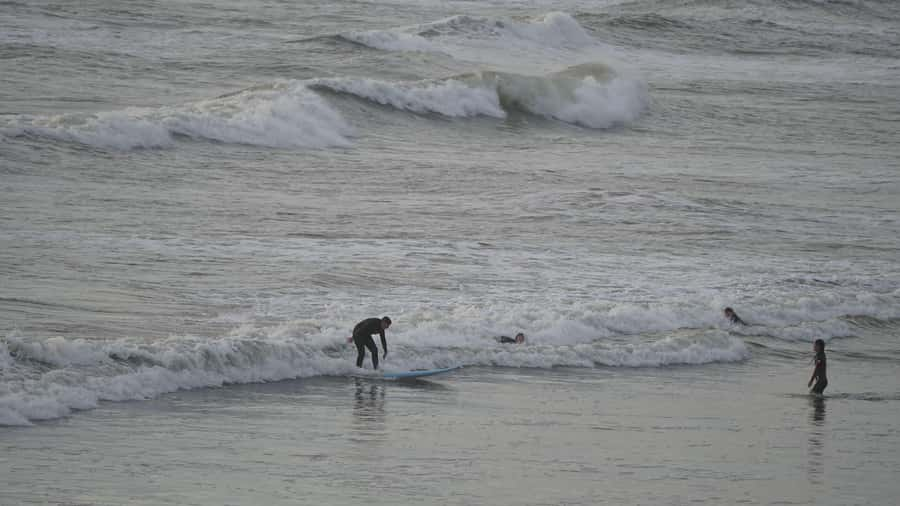
The final water section is aimed at standing up on a wave. By this point, you should have had time to understand the board, practice turning, and feel how white water pushes you toward shore.
The instructor will guide you through the attempt. You may stand briefly, get as far as a crouch, or spend much of the session repeating the movement. The supplied information promises practice rather than a guaranteed perfect ride, so keep your expectations realistic.
That is important for choosing this activity. If you want a polished surf experience with long rides from the start, a beginner lesson may feel more basic than you expect. If you want a structured first try with coaching and equipment included, the format makes sense.
The second water session also gives you a chance to correct mistakes from the first. Perhaps you were too far forward on the board, turned too sharply, or waited too long before trying to stand. The instructor can help you make a small adjustment and try again.
The two-hour length is enough to make the session feel like a real activity rather than a quick taster. At the same time, it is short enough to fit into a wider Greymouth day without consuming the whole schedule.
What the small group means in practice
The group is limited to eight people, and the maximum instructor-to-student ratio is 6:1. Those figures are worth checking together. The total group cap keeps the lesson from becoming a large beach class, while the ratio gives a clear upper limit for instructor attention.
A smaller group helps most during the water practice. You need the instructor to see your board position and body movement, not just give instructions from far away. It also makes it easier to hear corrections and keep track of when to paddle for a wave.
The session is designed as a group lesson, so you will be learning alongside other beginners. That can make the first attempts feel less awkward. Everyone is working through the same basic problems, and you can learn by watching the instructor correct someone else.
The strongest praise in the available feedback focuses on the instructor rather than on the scenery or equipment. One verified note highlights the instructor’s conduct, expertise, and enthusiasm. Another says the instructor was kind and clearly explained what needed improvement. Those points fit the demands of a first surf lesson, where calm corrections and clear direction matter more than grand speeches.
No individual instructor name is provided, so you should not book expecting a specific person. The useful expectation is English-language instruction with an emphasis on practical improvement.
Price and value at $71 per person
At $71 per person, the price covers a two-hour beginner lesson, the safety briefing, instruction, and all necessary equipment. That makes it easier to judge the cost against what you would need to arrange separately.
You do not have to bring a board or other surf equipment. That is a real benefit for visitors who are only trying surfing once, since buying or renting gear and finding an instructor on your own can add both cost and hassle.
The price does not include transport, food, or drinks. If you are staying away from the meeting point, add the cost and time of getting there. You also need to provide the small personal items that make the session comfortable: swimwear, sunscreen, water, a towel, and warm clothing.
I think the value is strongest for a first-time surfer who wants a guided introduction rather than an unstructured board rental. The instruction, safety briefing, and small group format give the session a clear purpose. The value is weaker if you already surf comfortably and only need equipment, since the lesson is built for beginners.
The reserve-now, pay-later option can help if your South Island plans are still moving around. Free cancellation is available up to 24 hours before the activity for a full refund. Since the time depends on the tide, that flexibility is useful, but you still need to watch for the direct message confirming your lesson time.
Tide timing and planning your Greymouth day
Lesson times vary with the tide, with the operator aiming for lower tide conditions. Once you book, Out The Back contacts you directly with the correct time for the day you selected.
Do not plan a tight connection immediately before or after the lesson until you know the confirmed start time. The two-hour duration is fixed, but your day needs some breathing room for changing clothes, finding the trailer, and warming up afterward.
This tide-based schedule is a practical feature rather than an inconvenience. Surf conditions change with the tide, and a beginner lesson needs a suitable window for instruction. You give up some control over the clock, but you gain a session arranged around the water.
Keep your phone available after booking so you do not miss the time update. Since the meeting point is by a trailer at a public car park, having the correct time matters more than arriving at a broad all-day window.
Who should book, and who should skip it
This lesson suits adults and children aged eight and over who can swim and want a guided first attempt. It is also a good fit if you are traveling without surf gear and want everything essential supplied.
It works well for people who prefer learning by doing. The lesson does not stop at a beach talk. You move into the water, practice board control and turns, return to shore for the pop-up, and then try to stand on a wave.
You should skip it if you are a non-swimmer, have back problems, or are looking for a private lesson. The activity is not suitable for children under eight, and the supplied details do not promise one-to-one coaching.
You should also think carefully about the weather and your tolerance for cold water. Warm clothes afterward are specifically required, not just a nice extra. Bring sunscreen too, since bright conditions can catch you even during a short water activity.
Practical packing list for a comfortable session
Pack lightly, but do not forget the items that are not supplied:
- Swimwear, if you want to wear it under the wetsuit
- A towel
- Warm clothing for afterward
- Sunscreen
- Drinking water
Alcohol and drugs are not allowed, and littering is prohibited. Keep your belongings and rubbish under control around the meeting area and beach.
Food is not included, so eat beforehand or plan a meal afterward. The session includes a hydration break, but you should carry your own water rather than expect drinks to be provided.
My verdict on Out The Back’s beginner surf lesson
I would book this Greymouth surf lesson if you want a practical first taste of surfing with equipment, safety instruction, and a small group included in the price. The two-stage water plan is well suited to beginners because it builds from board control to white-water waves and then to standing.
The main tradeoffs are the tide-based start time, the need to arrange your own transport, and the fact that you must be a swimmer with no back problems. You also need to bring your own towel, water, sunscreen, and warm layers.
Book it if your goal is to learn the basics and make a genuine first attempt at catching a wave. Skip it if you need a guaranteed stand-up ride, private coaching, or a fixed start time. For a two-hour introduction at $71, the combination of instruction and included equipment offers solid value for the right beginner.
FAQ
How long is the Greymouth beginner surf lesson?
The lesson lasts two hours. It includes a beach safety briefing, instruction on surfing basics, water practice, a short return to shore for hydration and pop-up practice, and a second water session focused on standing on a wave.
What equipment is included?
All necessary equipment for the beginner lesson is included. You still need to bring swimwear, a towel, sunscreen, drinking water, and warm clothes for afterward.
Where is the meeting point?
Meet at the car park near the public toilets. Look for the trailer with the surfboards.
What time does the lesson start?
Lesson times vary according to the tide, with the operator aiming for lower tide conditions. After booking, Out The Back contacts you directly with the correct lesson time on your selected day.
Is the lesson suitable for children and non-swimmers?
The activity is not suitable for children under eight or for non-swimmers. It is also not suitable for people with back problems.
Can I cancel the booking?
You can cancel up to 24 hours in advance for a full refund. The reserve-now, pay-later option allows you to book without paying at the time of reservation.
More 2-Hour Experiences in New Zealand
- Private 2 Hour Surf Lesson
★ 5.0 · 5 reviews - Canggu: 2-Hour Surf Course
★ 4.8 · 1,053 reviews - Maui: Two Hour Beginner Group Surf Lesson in Kihei
★ 5.0 · 950 reviews - Bondi Beach: 2-Hour Surf Lesson Experience for Any Level
★ 4.9 · 935 reviews
Just added around New Zealand
- Beginner Surf Lesson at Te Arai Beach★ 5.0 · 6 reviews
- Private 2 Hour Surf Lesson★ 5.0 · 5 reviews
- Kinloch: Lake Taupo Catamaran Cruise with Paddleboarding★ 5.0 · 4 reviews
- Raglan: Private Surf lesson 2:1★ 5.0 · 3 reviews
- Raglan: Private 1:1 Surf Lesson★ 5.0 · 2 reviews
- Raglan: 2 Day Surf Lesson Package★ 4.8 · 6 reviews
- Queenstown: White Water Surfing Along the Kawarau River★ 4.6 · 30 reviews
- Raglan: 2 Day Surf Lesson & Rental Package★ 4.6 · 5 reviews
New Zealand Surf Trips, compared.
Day Cruise & Island Tour – Snorkel/Wildlife/Paddleboard/Islands
Read our review →

Auckland: Group Surfing Lesson with Muriwai Surf School
Read our review →
Queenstown: White Water Surfing Along the Kawarau River
Read our review →
Queenstown: Kayaking or SUP Experience on Moke Lake
Read our review →
Browse the lists this tour appears in